
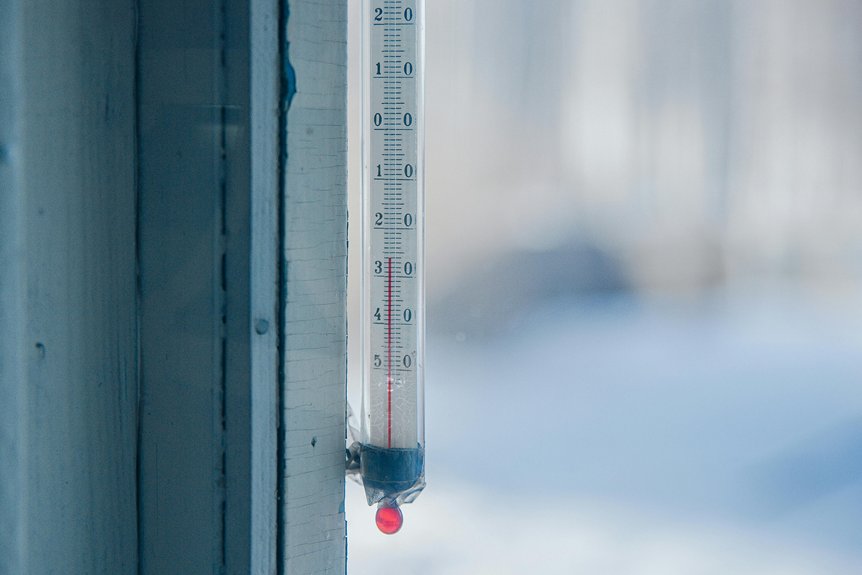
I’ll place my thermometer in the thickest part of the thigh first—it’s the slowest region to cook and gives me the most honest doneness check. I insert it horizontally, avoiding bone, aiming for that thermal center where heat reaches last. The tip needs to hit my thermometer’s minimum depth, usually half an inch to three-quarters inch deep. I’m targeting 165°F for safety, then I’ll verify with a second thermometer in the breast to catch any uneven cooking surprises.
Step 1: Choose Your Thermometer Type (Leave-In or Instant-Read)
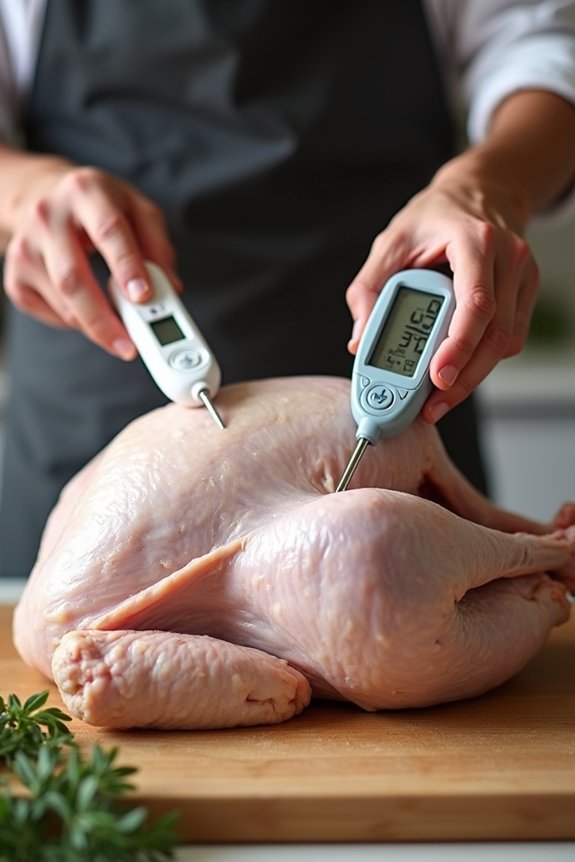
The thermometer-selection decision is your foundation for nailing turkey doneness, and I’d recommend using two different types rather than relying on just one. A leave-in thermometer stays in your bird throughout cooking, giving you real-time temperature updates without opening the oven door repeatedly. An instant-read thermometer lets you verify doneness quickly at the end, catching any last-minute surprises. Think of the leave-in as your cooking companion and the instant-read as your final confirmation—they work together beautifully. The leave-in probe needs to be oven-safe, ideally a Pro-Series model, so it withstands high heat. Your instant-read thermometer should deliver results in seconds. Together, these tools eliminate guesswork and join you in confidently delivering a perfectly cooked turkey your family will remember.
Step 2: Why Placement Matters: Heat Gradients, Thermal Centers, and Probe Design
Now that you’ve picked your thermometer, here’s where things get interesting—because where you stick that probe makes all the difference between a perfectly cooked turkey and one that’s dry on the outside but raw in the middle.
Heat doesn’t travel evenly through meat. The exterior warms up fast while the interior lags behind. That’s why you need to find the thermal center—the thickest part of the breast, farthest from any heat source. Your probe’s design matters too. Instant-read probes sense temperature at the tip, about 1/8 inch down. Dial thermometers need deeper insertion, roughly 4 inches, for accuracy.
Here’s the catch: avoid bones entirely. They conduct heat differently and’ll throw your reading completely off track. Aim horizontal from the neck cavity into that thickest breast tissue where your probe tip reaches the true thermal center.
Step 3: Breast, Thigh, or Both? Which Spot Gives You the Most Reliable Reading?
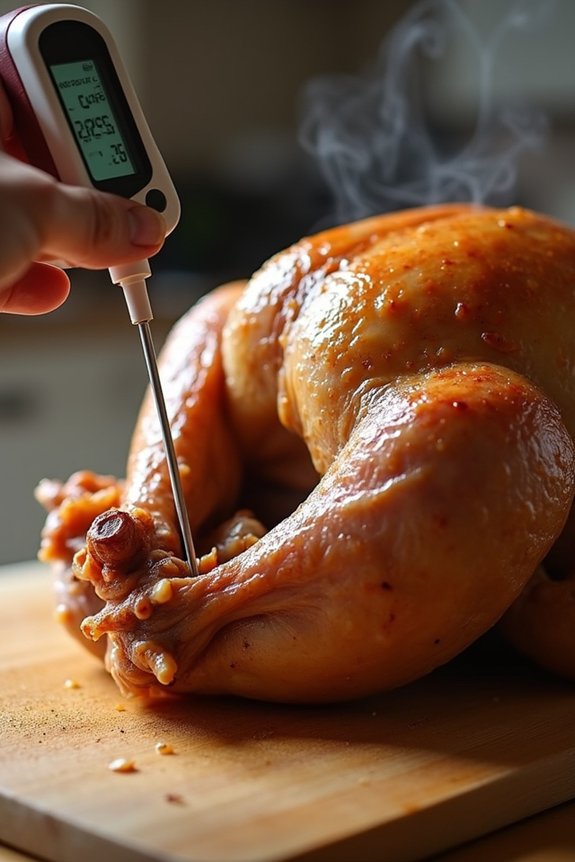
I’ll be honest—the thigh is your most reliable spot because it cooks slower than the breast, so when it hits 165°F, you know the whole bird is safe. That said, I recommend checking both the thigh and breast with a dual-probe setup or two separate readings, since the breast can finish cooking while the thigh’s still climbing toward doneness (or vice versa). If your thigh reaches 165°F but the breast lags behind, carryover cooking during rest will usually finish the job, but a quick second check after resting gives you that final peace of mind.
Breast Temperature Priority
Your breast meat’s doneness matters most because it’s often the first part to reach safe temperatures, yet it’s also the easiest to overcook and dry out. I recommend placing your leave-in probe in the thickest part of the breast, steering clear of bone entirely. Insert it horizontally from near the neck cavity, positioning the tip about half to one inch from the internal cavity—this captures your meat’s true thermal center rather than surface readings. Your breast temperature should hit 165°F for food safety. However, don’t ignore your thigh. If it’s still cooking slower, add a second probe there to confirm doneness from the slowest-cooking region. This dual-probe approach prevents undercooked thighs while keeping your prized breast meat perfectly juicy and safe to serve.
Thigh Doneness Verification
Where should you really trust your thermometer reading—the breast or the thigh? I’ll tell you straight: the thigh’s your best friend here. It’s the slowest-cooking part, so it reaches safe temperature last. That’s actually good news for accuracy.
For proper thermometer placement, insert your instant-read thermometer into the innermost thigh portion, steering clear of bone and cartilage. You’re aiming for 165°F—that’s your safety target. Here’s the thing: carryover cooking will bump that temperature up slightly while your turkey rests, so you’re actually in good shape.
Avoid joints and pan edges when inserting your probe. Make sure it reaches proper depth without touching bone. The thigh reading gives you the most reliable final verdict on doneness across your entire bird.
Step 4: Probe the Thigh First-It’s the Slowest Part to Cook
I’ll probe the thigh first because it’s the slowest-cooking part of the turkey, meaning if it’s done, everything else is definitely ready. You’ll want to insert your thermometer horizontally into the innermost portion of the thigh, aiming for the center of the thickest part without hitting bone—think of it as finding the sweet spot where the meat is deepest and most insulated. Once your probe reaches the target depth, you’re watching for that magic 165°F (74°C) mark, which tells you the turkey’s safe to eat and you can stop the cooking clock.
Why Thighs Cook Slower
Ever wonder why turkey thighs seem to take forever while the breast finishes early? It’s all about thickness and density. Thigh meat contains more muscle fibers packed tightly together, which means heat penetrates slower than in the thinner breast area. Additionally, bones conduct heat differently than meat does—a phenomenon called bone conduction. This means the thigh’s internal temperature rises at its own pace, independent of surrounding areas.
Since thighs reach 165°F last among all turkey parts, they’re your safety checkpoint. When you check the thigh temperature first, you’re confirming the slowest-cooking section has finished properly. This approach guarantees the entire bird is safely cooked without overdoing the white meat. Trust the thigh reading, and you’ll nail perfectly cooked turkey every time.
Proper Thigh Probe Placement
Now that you understand why thighs take longer to cook, it’s time to find the right spot for your thermometer—and that spot is definitely in the thigh itself. For accurate thermometer placement, insert your probe horizontally into the innermost portion of the thigh, positioning the tip about 1/2 to 1 inch from the thigh cavity. This placement ensures you’re reading the center of the thickest area without hitting bone, which conducts heat differently and throws off your reading. Your thigh probes shouldn’t touch bone or gristle at all—aim for 165°F as your target temperature. If your turkey’s large or you can’t reach the center from one angle, reposition your probe to another thigh spot to confirm consistent temperature. This smart thermometer placement technique gives you confidence your turkey’s truly done.
Step 5: Insert the Probe Horizontally Into the Thickest Part of the Thigh
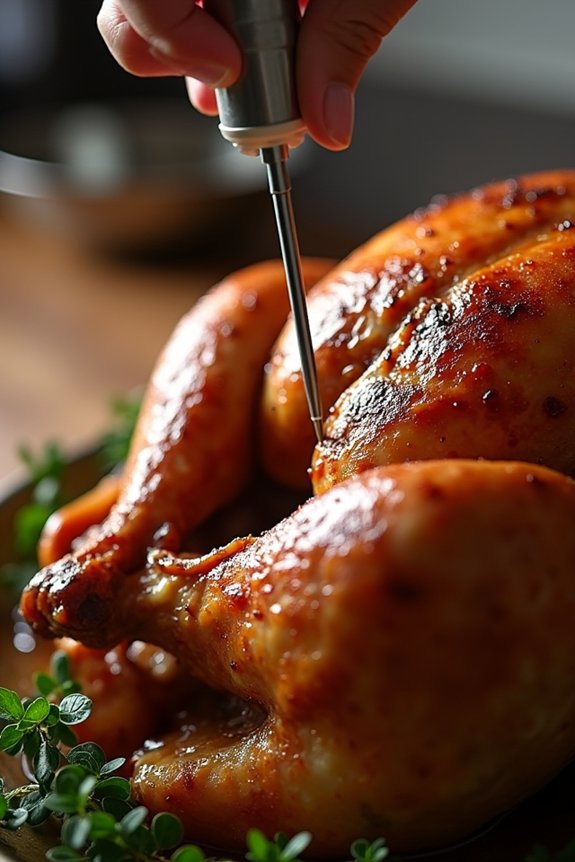
Why does the thigh matter most? It’s the slowest-cooking part of your turkey, so nailing your thermometer placement here ensures everything’s done perfectly.
I’ll insert the probe horizontally—not at an angle—directly into the thickest portion of the thigh meat. Here’s what you’re doing:
- Position the thermometer parallel to the thigh’s length, sliding it straight through the meatiest section
- Push until the probe tip reaches the center, being careful not to touch bone
- Stop immediately when you feel bone resistance, then back out slightly
This horizontal approach gives you the most accurate reading because you’re measuring the meat that takes longest to cook. You’re checking the spot that matters most, avoiding joints and cartilage that throw off temperatures. That’s how you join the ranks of turkey-cooking success.
Step 6: Insert a Secondary Probe Into the Breast (Optional but Recommended)
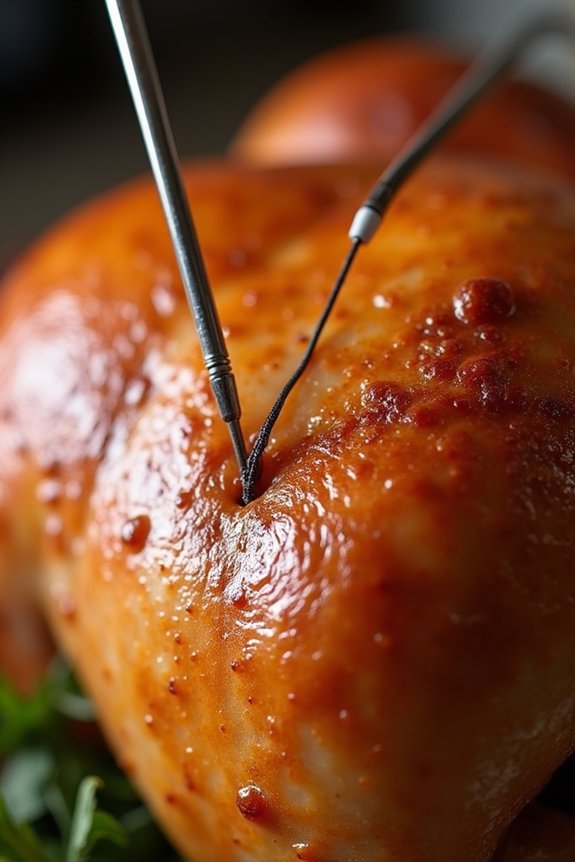
A secondary breast probe might sound like overkill, but it’s your insurance policy against undercooked poultry. I insert this breast thermometer horizontally into the inner breast area, positioning it away from bones and the pan. This second reading catches temperature gradients you’d otherwise miss.
| Probe Location | Placement Goal | Why It Matters |
|---|---|---|
| Primary | Thickest thigh section | Ensures thigh doneness |
| Secondary | Center inner breast muscle | Detects uneven heating |
| Tip Depth | 1/8 inch immersion | Accurate temperature capture |
I aim for the breast’s center, checking that the tip doesn’t touch bone. When both probes show matching temperatures, you’re golden—your turkey’s cooked evenly throughout. Larger birds especially benefit from this dual-probe approach, giving you confidence that every bite’s safe and delicious.
Step 7: Make Sure Your Probe Reaches the Minimum Depth
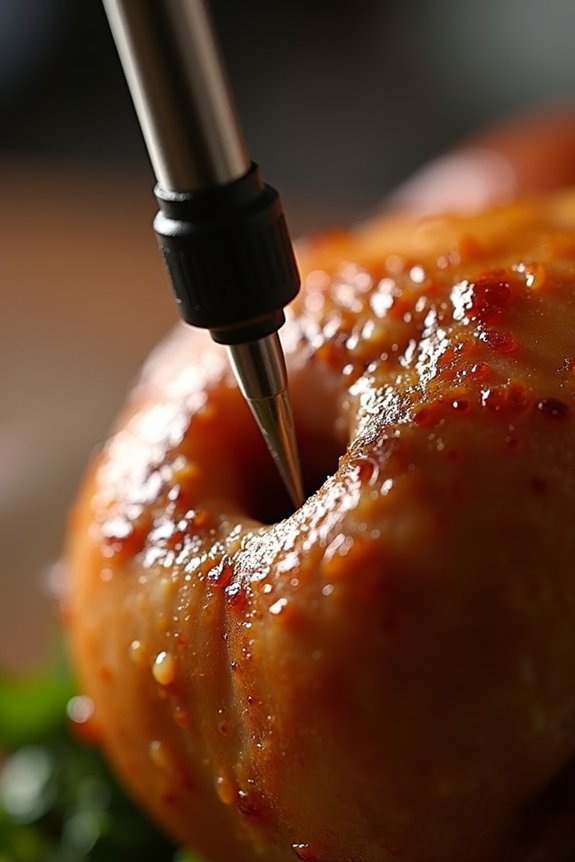
Most thermometers require a minimum immersion depth—typically 1/2 to 3/4 inch (1.3–2 cm)—for accurate readings, and this isn’t just a suggestion you can brush off. You’re measuring the thermal center of your turkey, not just the surface temperature. Here’s what you need to do:
Most thermometers require a minimum immersion depth of 1/2 to 3/4 inch for accurate turkey doneness readings—don’t skip this critical step.
- Check your thermometer’s instruction manual for the exact immersion depth requirement and locate the minimum line marked on your probe.
- Insert the probe until the tip reaches or exceeds that minimum depth, ensuring the sensor sits fully submerged in the meat.
- If the probe can’t reach the required immersion depth from your insertion point, reposition it slightly or insert from the opposite side.
Once positioned correctly, your reading becomes reliable. You’ll know you’ve nailed the probe depth when the display stabilizes—that’s your signal that you’re genuinely measuring the turkey’s doneness.
Step 8: Monitor Both Temperatures as Your Turkey Cooks
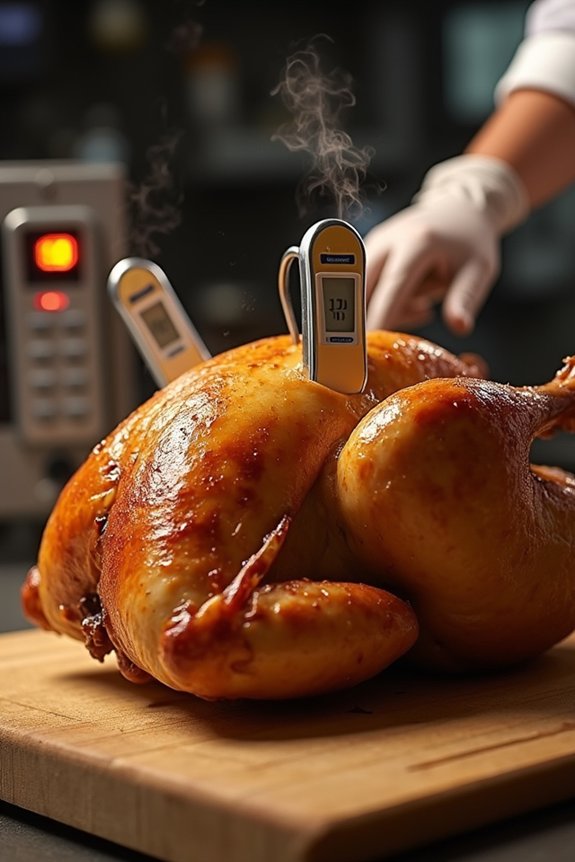
Now that you’ve got your probe positioned correctly, here’s where things get interesting—you’re not done inserting thermometers yet. Using a dual-probe thermometer lets you track both the breast and thigh simultaneously as your turkey roasts. I’d recommend checking readings every fifteen to twenty minutes during the final hour of cooking. You’re essentially playing temperature detective here. Watch for the breast to reach 165°F while the thigh climbs toward 170–175°F. If your readings diverge, don’t panic—that’s normal. The thigh typically finishes last, so let it guide your doneness decision while you monitor the breast’s progress. This dual thermometer placement strategy prevents the frustration of either dry breast meat or undercooked thighs, keeping your bird perfectly balanced.
Step 9: Verify Doneness With a Second Thermometer When the Bird Nears 165°F
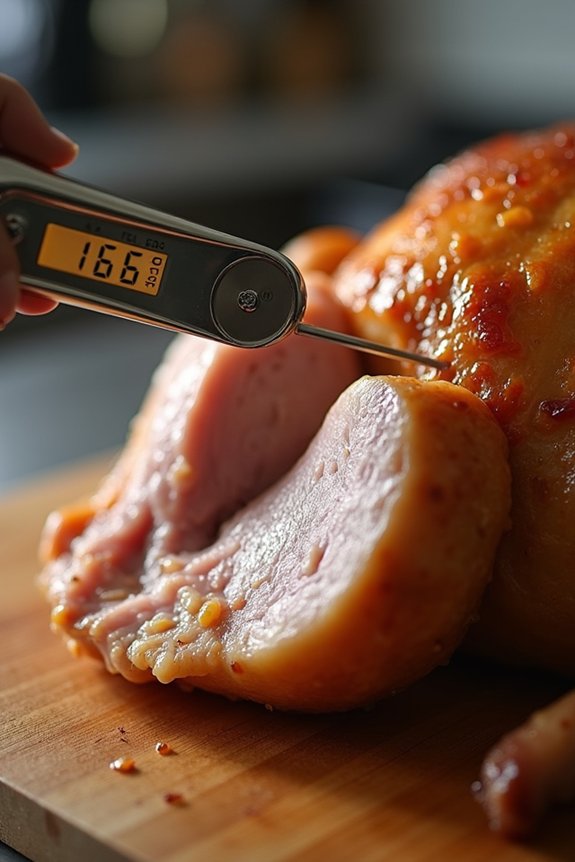
When your turkey’s breast or thigh hits around 165°F, I want you to grab a second instant-read thermometer and insert it into a completely different spot—like the thickest part of the opposite leg or another breast section—making sure the probe tip lands in the meat’s center and nowhere near bone. This double-check matters because it confirms your turkey’s actually cooked through from multiple angles rather than just one lucky spot, giving you real confidence that you’ve nailed food safety. If both thermometers read within a few degrees of each other (5°F or less), you’re golden; if they’re further apart, keep cooking until both locations hold steady at 165°F or higher before you let that bird rest.
Why Double-Check Matters
Why settle for one thermometer reading when your turkey’s safety depends on accuracy? Here’s what I’ve learned about thermometer placement and double-checking doneness:
- Uneven heat distribution means your breast might read 165°F while your thigh sits at 160°F or 170°F—you won’t know without checking both spots.
- Independent confirmation gives you peace of mind; two thermometers in different locations tell the real story of whether your bird’s actually done cooking.
- Calibration check ensures both thermometers give honest readings, so you’re not trusting faulty equipment when food safety matters most.
I’ve found that waiting for that second thermometer to corroborate removes all doubt. You’re part of a community that takes turkey doneness seriously—and rightfully so.
Instant-Read Thermometer Confirmation
Your first thermometer reading is just the beginning of your safety check. Now I’m grabbing a second instant-read thermometer to verify consistency. I’ll insert this probe into the opposite location—if I checked the breast first, I’m now checking the thigh, or vice versa. The thermometer placement matters tremendously here. I’m positioning it in the thickest portion, away from bone and the pan, just like before. Both readings should register 165°F or higher for true doneness. When my two instant-read thermometer readings differ by more than 5°F, I’m continuing to cook and rechecking both spots. Quick readings minimize heat loss, and I’m allowing slight carryover cooking after removing the turkey. This double-check approach guarantees I’m serving safe, properly cooked poultry every single time.
Step 10: Clean and Calibrate Your Thermometer for Next Year
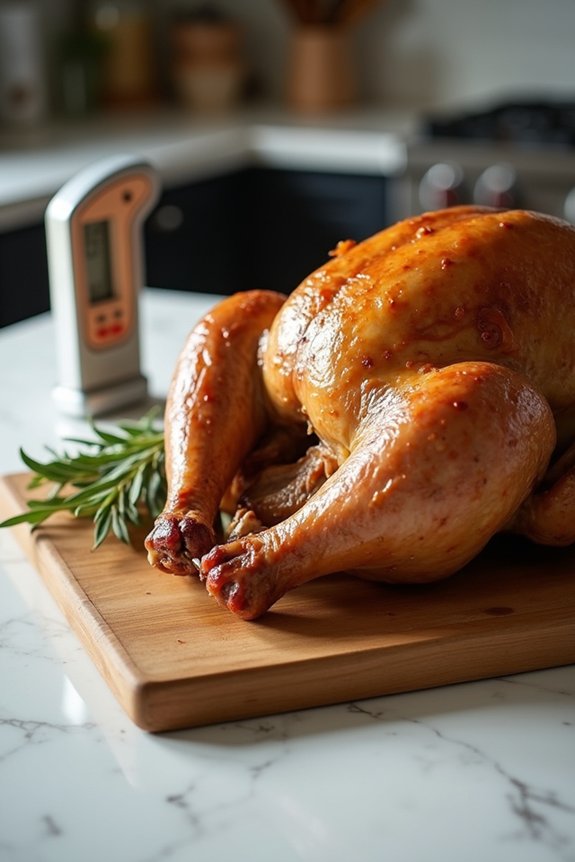
Taking care of your thermometer after the holiday cooking’s done isn’t just thoughtful—it’s the key to getting accurate readings next year.
Think of thermometer calibration and cleaning and sanitation as your way of joining the ranks of serious home cooks. Here’s what I do:
- Wash immediately – I rinse my oven-safe thermometer with hot, soapy water right after use, then wipe the stem with an alcohol swab for proper sanitation.
- Calibrate using ice water – I place the probe in a 32°F ice-water bath and adjust until it reads exactly 32°F.
- Store correctly – I keep my thermometer clean, dry, and away from heat or direct sunlight to prevent sensor drift.
Your future self will thank you when next year’s turkey turns out perfectly cooked.