
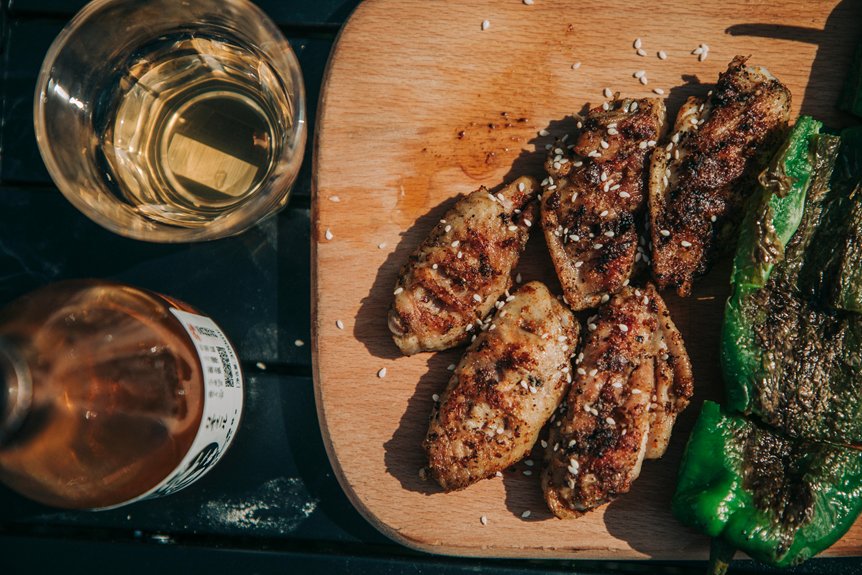
A chicken wing’s calories swing wildly depending on how you prepare it. A raw, skinless wing has about 24 calories, but cook it with skin on and you’re looking at roughly 99 calories. Throw it in a deep fryer? You’ll hit around 164 calories per wing once sauce enters the picture. The skin’s your biggest calorie driver, followed closely by cooking method and whatever dip you’re dunking into. Your preparation choices matter far more than you’d think.
How Many Calories Are in a Chicken Wing? The Short Answer
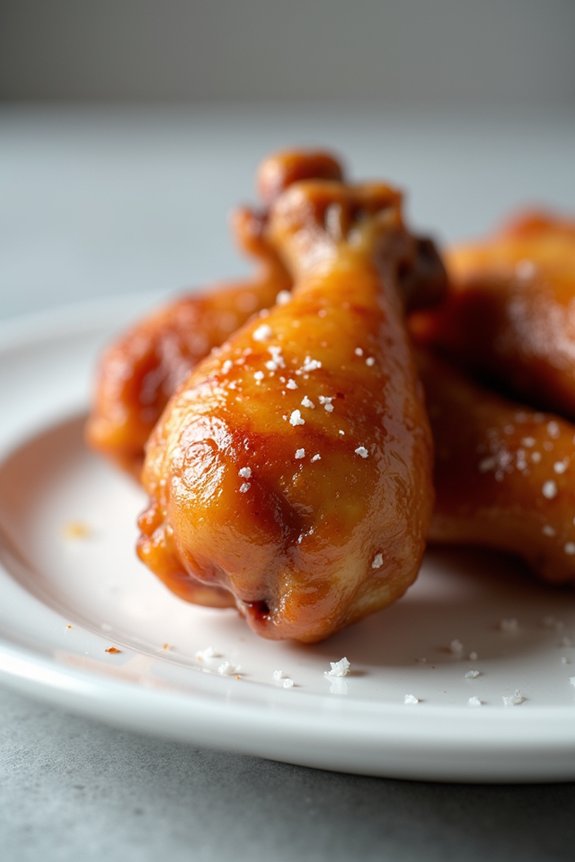
Ever wonder why chicken wings seem like a lighter option until you’ve eaten a dozen? That’s because calories in chicken wings vary wildly depending on how they’re prepared.
A raw chicken wing with skin contains about 43 calories, but cooking bumps that up to 99 calories. Remove the skin, and you’re looking at roughly 24 raw calories or 42 cooked calories per wing.
Here’s the catch: cooking method matters tremendously. Fried wings pack significantly more calories than baked or grilled versions. You’ll typically find 80–203 calories per wing depending on size and preparation.
The real culprit? Sauces and sides. “Naked” wings represent your baseline. Once you add sauce, fries, or dip, those numbers climb fast. Understanding your wing’s preparation is key to tracking what you’re actually eating.
Why Calorie Counts Vary: Skin, Cooking Method, and Sauce
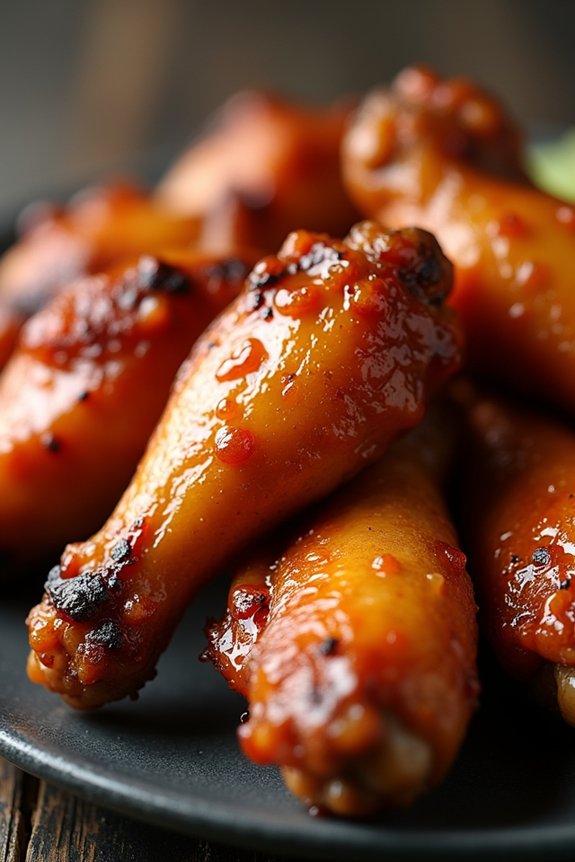
Why does one chicken wing pack 42 calories while another contains nearly 200? The answer lies in three major factors that dramatically shift your wing’s calorie count.
First, skin makes a huge difference. Raw wings with skin contain about 43 calories each, but cooked skin-on wings jump to roughly 99 calories. Remove that skin, and you’ll drop the calories significantly—though you’ll lose some crunch too.
Raw wings clock in at 43 calories, but cooking with skin nearly doubles that to 99 calories per wing.
Second, your cooking method matters. Frying absorbs oil, packing in extra calories and fat. Grilling or baking keeps things leaner.
Finally, sauces and coatings are calorie game-changers. A basic wing’s relatively modest, but slather it in sauce? You’re looking at serious calorie increases depending on what you choose.
Understanding these three variables helps you make wings work for your goals.
Raw vs. Cooked: How Heat Changes a Wing’s Calories
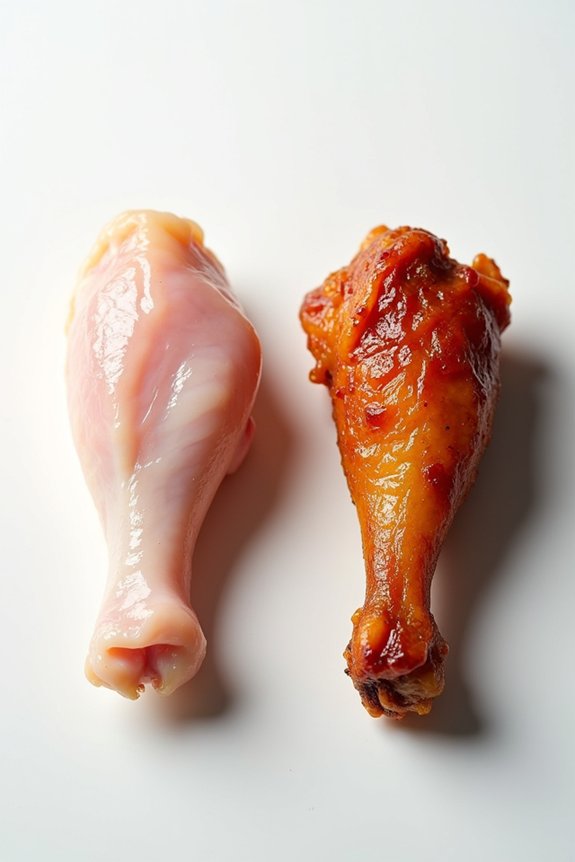
When you cook a chicken wing, you’re not actually adding calories—you’re concentrating them. Raw wings lose water as heat transforms the proteins and fat, so a cooked wing weighs slightly more (22–24g versus 20g raw) because the nutrients pack more densely, jumping from 43 calories raw to 99 calories when skin is on. Your cooking method matters just as much as the heat itself: frying absorbs oil and amps up calories significantly more than baking or grilling, which use dry heat and let excess fat drip away.
Water Loss and Concentration
a cooked chicken wing actually packs more than twice the calories of a raw one, even though they’re basically the same piece of meat. Here’s what’s happening behind the scenes—water loss.
When you cook a wing, moisture evaporates. A raw wing weighs about 20 grams, but after cooking, it shrinks to 22–24 grams of denser meat. That concentration means calories and protein squeeze into a smaller package. Your raw wing has roughly 43 calories and 6 grams of protein. Cook it? You’re looking at 99 calories and 9 grams of protein.
Think of it like making juice concentrate—you’re removing the water, leaving the good stuff more concentrated. That’s exactly what heat does to your chicken wing.
Cooking Method Impact
How you cook your chicken wing matters just as much as whether you cook it at all. I’ve found that your cooking method directly shapes calories per wing. Here’s what you should know:
- Frying – Increases calories and fat content dramatically compared to other methods
- Grilling – Lowers total calories by allowing excess fat to drip away
- Baking – Reduces calories similar to grilling without added oils
- Boiling – Minimizes calorie absorption, though it affects flavor
A fried wing packs way more punch than a grilled one. When you grill or bake, you’re letting that fat escape naturally. Frying, though? That oil gets absorbed right into the meat. So your 99-calorie cooked wing could jump dramatically higher depending on your cooking choice. Pick your method wisely to match your goals.
Skin On or Skin Off? The Calorie Difference Explained
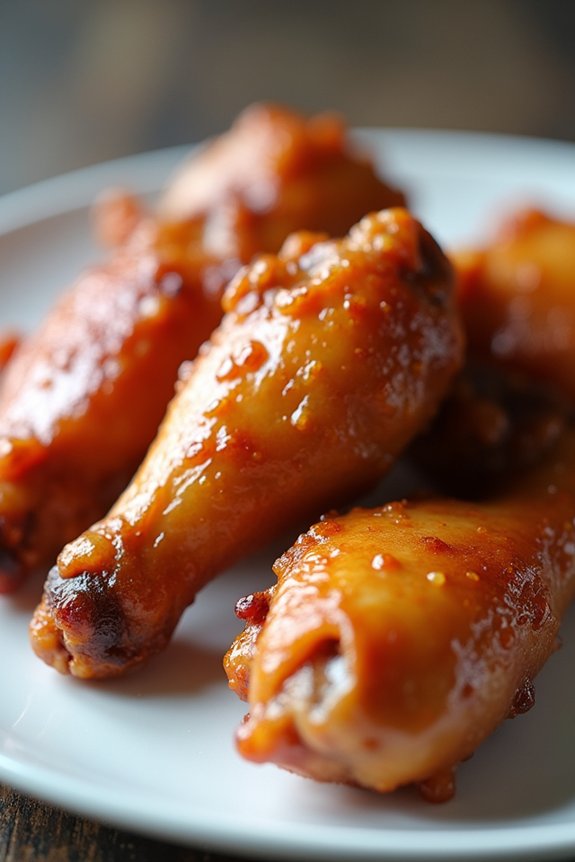
When you compare raw skin-on wings at roughly 43 calories each to their skinless counterparts at about 42–43 calories, the difference seems tiny—but here’s where cooking method changes everything. Once you fry, bake, or grill those wings, the skin becomes a calorie multiplier: a medium cooked wing with skin jumps to around 99 calories, while skinless versions stay lean at 42–43 calories, meaning the skin alone accounts for more than half the total energy. I’ll show you why this matters: if you’re watching your intake, removing the skin trades that satisfying crunch for a dramatically lower-calorie meal without sacrificing the protein you’re after.
Raw Wings Calorie Comparison
Ever wonder why keeping the skin on a chicken wing makes such a big difference to your calorie count? I’ll break down what you’re actually eating when you choose one way over the other.
Here’s what I found comparing raw wings:
- Skin-on wings contain about 43 calories per wing with 6g protein and 3g fat
- Skinless wings clock in at roughly 24 calories per wing with 5g protein and 1g fat
- The difference between them is approximately 19 calories per wing—that’s meaningful when you’re tracking
- The trade-off is that skin-on wings retain more moisture and flavor, while skinless options are leaner
Cooked Wings Nutrition Impact
Once you cook those wings, the numbers shift pretty dramatically. A cooked skin-on wing jumps to about 99 calories, nearly double the raw version. That’s because cooking concentrates the fat and removes moisture, making the calories denser. You’re looking at roughly 9 grams of protein and 6.5 grams of fat per cooked wing.
Here’s where skin matters most: skin-off cooked wings contain only about 42 calories each. That’s less than half the skin-on option. The difference? That flavorful skin adds serious fat content.
Your cooking method counts too. Frying packs on more calories than baking or grilling, even before sauces hit the pan. So if you’re watching your calorie intake, choosing skinless wings and baking them gives you the leanest result. You’ll feel good about that choice.
Skin’s Role In Calories
Why does chicken skin make such a huge difference in calories? It’s simple—skin contains fat, and fat packs more than twice the calories per gram as protein. Here’s what I found that matters:
- Raw wings with skin: 43 calories versus skinless at 24 calories
- Cooked wings with skin: 99 calories versus skinless at 42 calories
- Fat content jumps from 3g (skin-on raw) to just 1g (skinless raw)
- Cooking concentrates nutrients, making the skin’s impact even more dramatic
The difference isn’t small. When you’re tracking what you eat, removing skin cuts your calorie intake roughly in half. Whether you’re grilling, baking, or frying, skin remains the primary driver of calorie variation. You’re making a real nutritional choice when you decide skin-on or skinless.
Fried, Grilled, or Baked: Which Method Adds the Most Calories
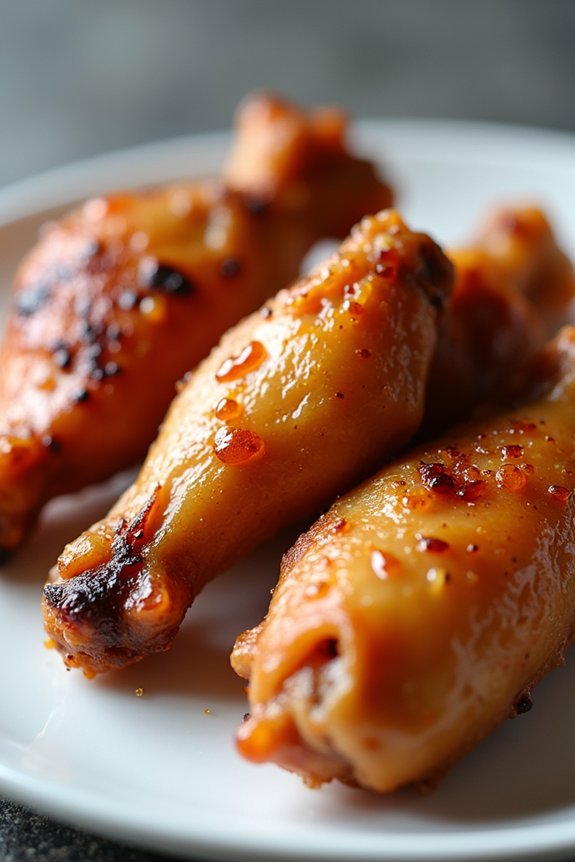
When you’re deciding how to cook chicken wings, the method you choose makes a surprisingly big difference in calories. Fried wings pack the heaviest punch—about 1,640 calories for ten sauced wings, or roughly 164 per wing. That’s because frying adds oil, which dramatically increases calories and fat content.
Baked wings are your lighter option at roughly 690 calories for ten wings, about 69 per wing. Grilled wings fall somewhere in between. Here’s the thing: grilling concentrates calories and protein while water loss reduces fat, creating a leaner profile than fried wings but slightly heavier than plain baked.
If you’re watching your calorie intake, baking gives you the best numbers. Want more flavor without the extra calories? Grilling offers a nice balance.
Sauces and Coatings: The Hidden Calorie Trap
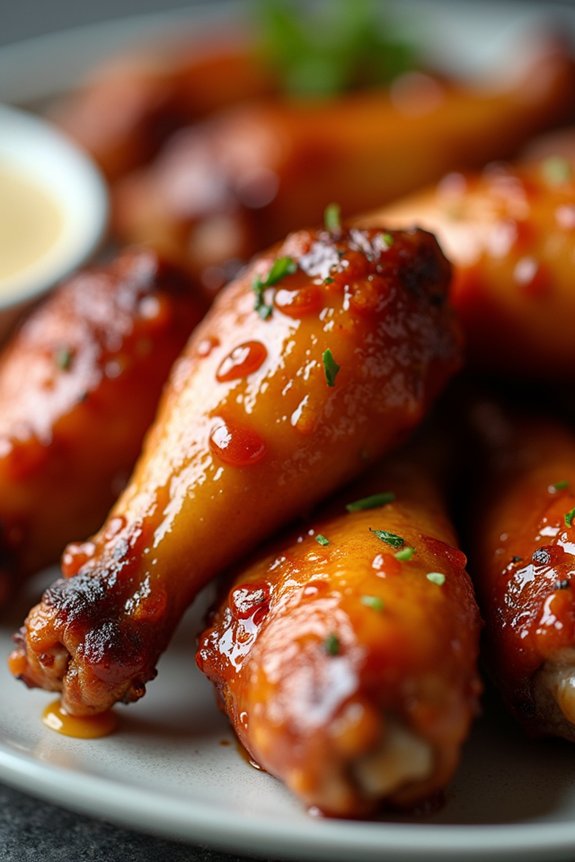
You’ve picked your cooking method and you’re feeling good about those baked or grilled wings—but here’s where things get tricky. Sauces and coatings can sneakily transform your healthy choice into a calorie bomb. Plain wings sit at around 260 calories, but slather on Buffalo sauce and you’re suddenly looking at 370 calories. That’s a 110-calorie jump for the same portion.
Here’s what you need to know:
- Sauce adds serious calories and fat – Buffalo, BBQ, and teriyaki coatings pack extra sugars and fats beyond the meat itself
- Ranch dip doubles down – Two tablespoons contain roughly 140 calories, making your veggie sides less helpful
- Dry seasonings win – Cajun or lemon pepper deliver flavor without hidden calories
- Request sauce on the side – This gives you control over how much you actually use
Smart choices matter here.
How Chicken Wings Stack Up Against Breast, Thigh, and Drumstick
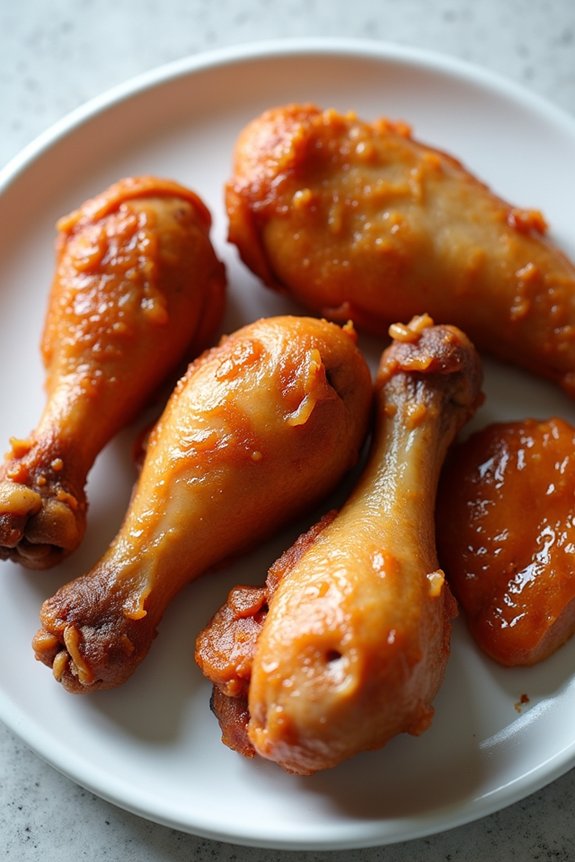
So how do wings actually compare to other chicken parts? Here’s what I’ve found: chicken breast leads the pack with just 165 calories per 3.5-ounce serving and an impressive 31 grams of protein. Thighs come in at 179 calories with 24 grams of protein. Wings land right in the middle at 203 calories with 30 grams of protein. Now, here’s the thing—wings contain more fat than breast meat, especially when cooked with skin. If you’re watching your calorie count, skinless wings are definitely your leaner option. The takeaway? You’re not making a terrible choice with wings, but breast gives you more protein with fewer calories. Wings work best when you’re enjoying them occasionally or choosing skinless versions.
The Protein Benefit: Why Wings Are Surprisingly Filling
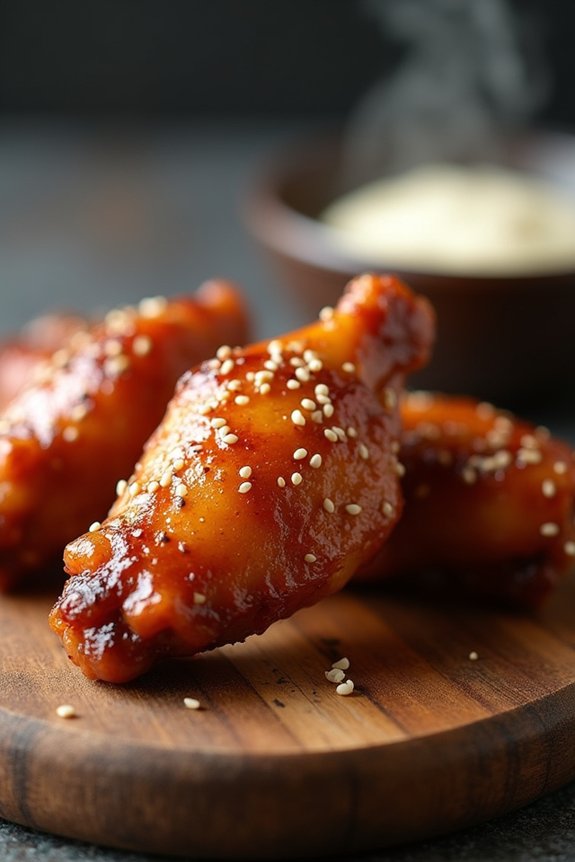
Why does a plate of chicken wings leave you feeling fuller longer than you’d expect? The answer lies in protein—that muscle-building nutrient that keeps hunger at bay.
Here’s what makes wings surprisingly satisfying:
- High protein content – A medium wing delivers 9–10 g of protein, so ten wings pack roughly 60–68 g
- Favorable calorie ratio – A 3.5 oz serving offers about 203 calories with 30–31 g of protein, making wings efficient fuel
- Skin-on advantage – Keeping the skin boosts protein density while adding staying power
- Sustained satiety – Protein digests slower than carbs, meaning you’ll feel full longer after eating
Whether you’re grilling, baking, or frying them, you’re getting a protein powerhouse. That’s why wings are your go-to when you want real satisfaction without overdoing calories.
Can You Eat Chicken Wings on a Weight Loss Diet?
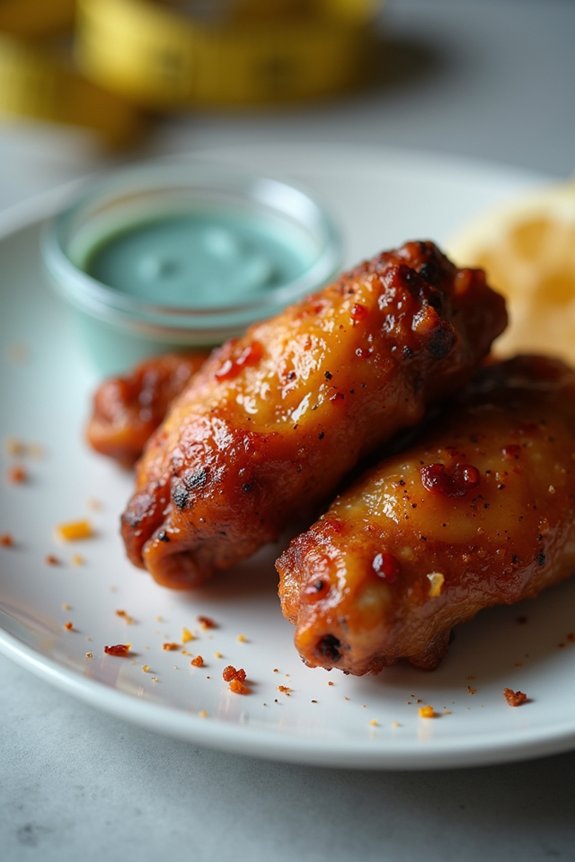
I’ll tell you straight: you can absolutely eat chicken wings while losing weight, but how you prepare and portion them makes all the difference. Your best move is choosing baked or grilled skin-on wings (about 99 calories each) over fried versions, skipping heavy sauces, and sticking to 4–6 wings per serving paired with veggie sides like celery or steamed broccoli. When you compare wings to other proteins like a 3-ounce chicken breast (around 165 calories), you’re getting similar nutrition in a more satisfying package—plus wings’ high protein content keeps you fuller longer, so they’re actually a solid choice for a weight loss plan if you’re strategic about preparation and pairing.
Smart Preparation Methods Matter
The method you choose to cook chicken wings dramatically shapes their calorie count—and whether they’ll fit into your weight loss plan. I’ll show you how different techniques impact your goals.
- Baking plain wings delivers roughly 690 calories per ten-wing serving with minimal added fat
- Grilling without sauce keeps calories modest while adding appealing char and flavor
- Deep-frying with sauce shoots calories up to 1640—thanks to oil absorption and sugary coatings
- Removing skin beforehand reduces calories by roughly 30%, since skin contains most fat
The biggest difference? Oil and sauce. When I prepare wings for weight loss, I bake or grill them skinless, then use light vinegar-based sauces instead of heavy ones. Pair these with vegetables or salads, and you’ve got a satisfying meal that actually supports your progress.
Portion Control And Pairing
Can you actually enjoy chicken wings while losing weight? Absolutely. The key’s portion control and smart pairing. I’d recommend eating 4–6 wings per meal—that’s a reasonable amount that fits weight-loss goals. Wings with skin contain about 99 calories each, so staying within this range keeps you accountable.
Here’s what I do: I pair my wings with nutrient-dense sides like broccoli or salad. These high-volume, low-calorie vegetables fill me up without adding many calories, which helps me feel satisfied longer.
I also manage sauces carefully. Instead of drowning wings in heavy sauces, I request them on the side or choose lighter options and dry rubs. This simple swap cuts calories substantially.
You’re not giving up wings—you’re eating them smarter.
Wings Versus Other Proteins
How do chicken wings stack up against other protein sources you might eat on a diet?
Wings deliver solid protein—about 30–31 g per 100 g with skin. However, they’re not your leanest option. Here’s how they compare:
- Chicken breast (skinless) contains 165 calories per 100 g with 31 g protein and only 3.6 g fat—significantly leaner than wings
- Wings with skin pack 203 calories per 100 g, making them higher in fat and calories despite similar protein content
- Cooking method matters greatly—fried wings plus sauce create substantially higher calorie counts than baked or grilled versions
- Skinless wings offer a middle ground at 155 calories per 100 g with minimal fat
If you’re watching your weight, skinless chicken breast remains your best bet. Wings can work occasionally, but their fat content means you’ll consume more calories for equivalent protein.
When Fried Wings and Sugary Sauces Work Against Your Goals
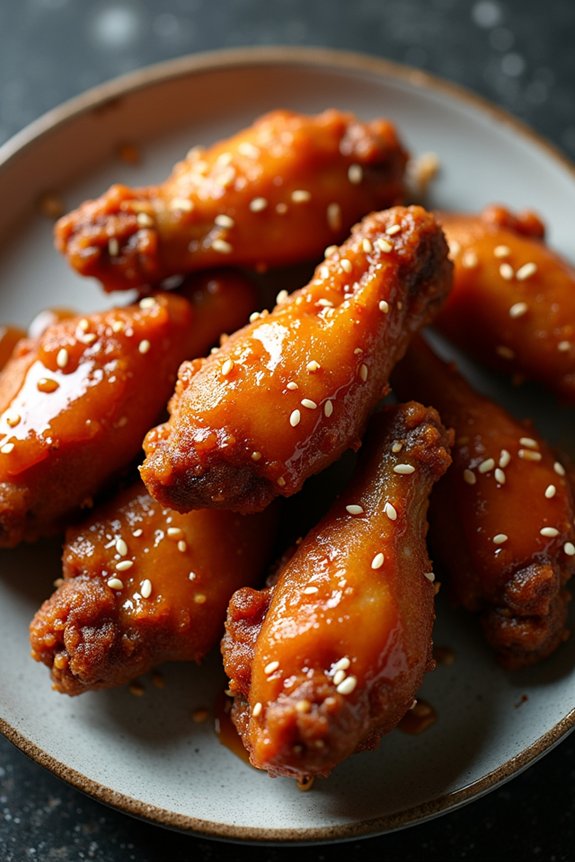
Why do fried wings pack so many more calories than their baked or grilled cousins? Oil absorption during frying dramatically increases calorie density per wing. Five fried plain wings contain 260 calories, while boneless fried wings hit 290 calories—that’s serious fat content. Here’s where it gets tricky: add Buffalo sauce, and you’re looking at 370 calories for five wings. Those sugary sauces aren’t innocent bystanders; they pile on additional calories beyond the base wing. Pair this with ranch or bleu cheese dip, and your snack spirals quickly. If you’re working toward specific health goals, fried wings with sugary sauces can sabotage your efforts fast. The combination of frying oil and sweet sauce creates a calorie-dense one-two punch that’s tough to recover from nutritionally. Portion control becomes essential here.
Portion Control: How Much Is a Reasonable Serving
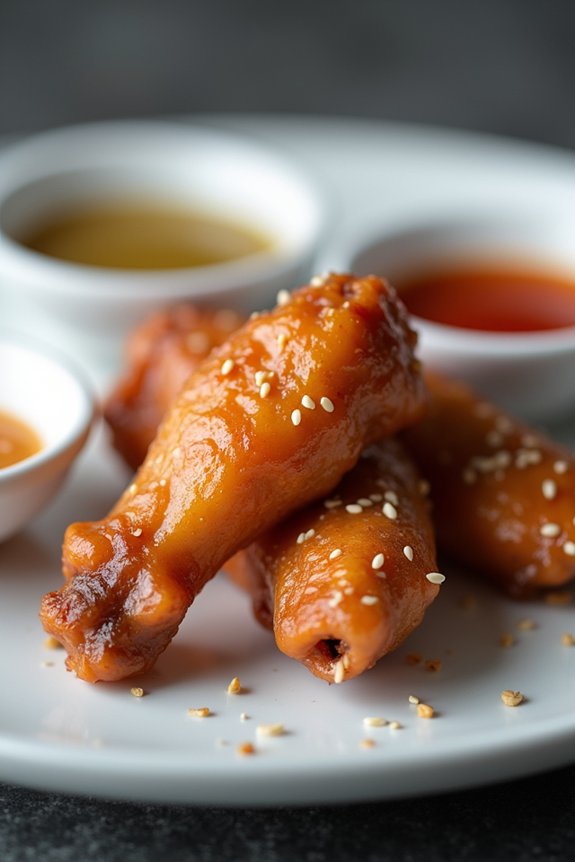
Once you’ve decided on your cooking method, the real work begins—figuring out how many wings you can actually eat without derailing your goals. Here’s the thing: you don’t have to skip wings entirely. With roughly 99 calories per wing when cooked, a reasonable serving of 4–6 wings fits perfectly into most meal plans while leaving room for sides and sauces.
- Start with 4 wings as your baseline portion
- Add vegetables or salad to increase fullness
- Choose lighter sauces to manage total calories
- Adjust upward only if your daily calorie budget allows
Think of wings as your protein star, not the whole show. When you build your plate this way, you’re joining folks who actually enjoy their food while staying on track. That’s the balance that sticks.
Pairing Wings With Vegetables to Balance Your Meal
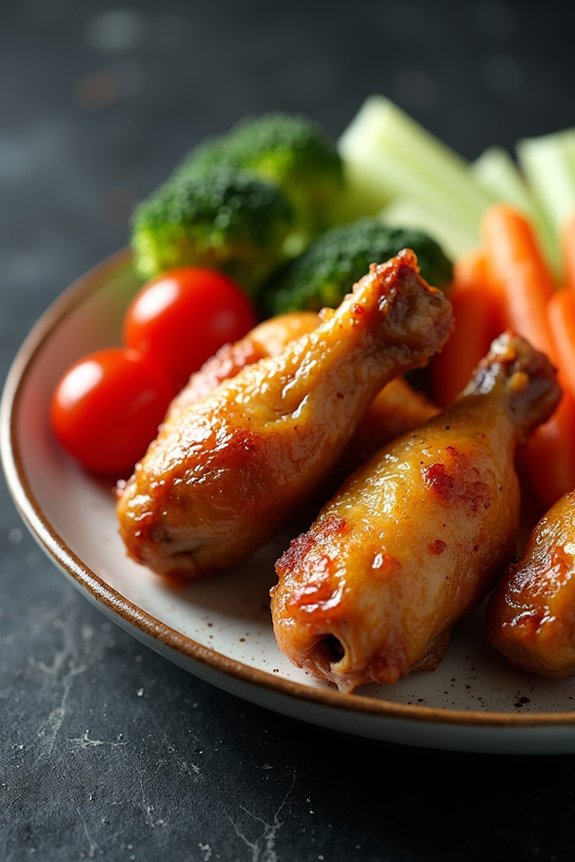
I’ll show you how to transform your wing meal by adding vegetables that boost nutrition without exploding your calorie count. You can pair your wings with broccoli or celery—both deliver fiber and essential micronutrients that balance the protein-heavy main dish. If you’re dipping celery or broccoli in ranch, remember that sauce adds calories, so keeping it on the side (rather than pre-mixed) gives you control over how much you actually use.
Vegetable Side Options
When you’re enjoying chicken wings, here is the thing: adding vegetables to your plate doesn’t just make it look better—it actually helps you eat smarter.
I’ve found that vegetables are your strategic asset for a balanced meal. They boost fiber and vitamins without drastically increasing your calorie count. Consider these options:
- Broccoli—steamed or raw, it’s nutritious and filling
- Celery with ranch or bleu cheese dip (though dips add 140-150 calories per 2 tablespoons)
- Cauliflower wings with parmesan-garlic seasoning for about 421 total calories
- Mixed raw vegetables served alongside your wings
The trick? Keep wet sauces on the side so you control how much you use. This approach lets you enjoy flavor while managing calories effectively. You’ll feel satisfied and part of the smart-eating crowd.
Balancing Nutrition And Calories
Why not make your chicken wings meal actually work for your body instead of just tasting good? I’ll show you how pairing wings with vegetables creates a balanced plate that satisfies cravings while managing calories.
| Pairing Option | Calories | Nutritional Benefit |
|---|---|---|
| Wings + Broccoli | 350-400 | Fiber, vitamins, volume |
| Wings + Celery (small dip) | 320-370 | Low-cal crunch, hydration |
| Wings + Fries | 600+ | High fat, minimal nutrition |
When I add broccoli or celery to my wings, I’m not just filling space on my plate. I’m getting fiber and vitamins that support digestion. The vegetables add volume without dramatically increasing calories. Serving sauce on the side lets me control sugars and fats while keeping that protein-packed wing flavor I love. Baked or grilled wings with veggie sides beat fried options every time for balanced nutrition.
Tracking Wing Calories: A Practical Portion System
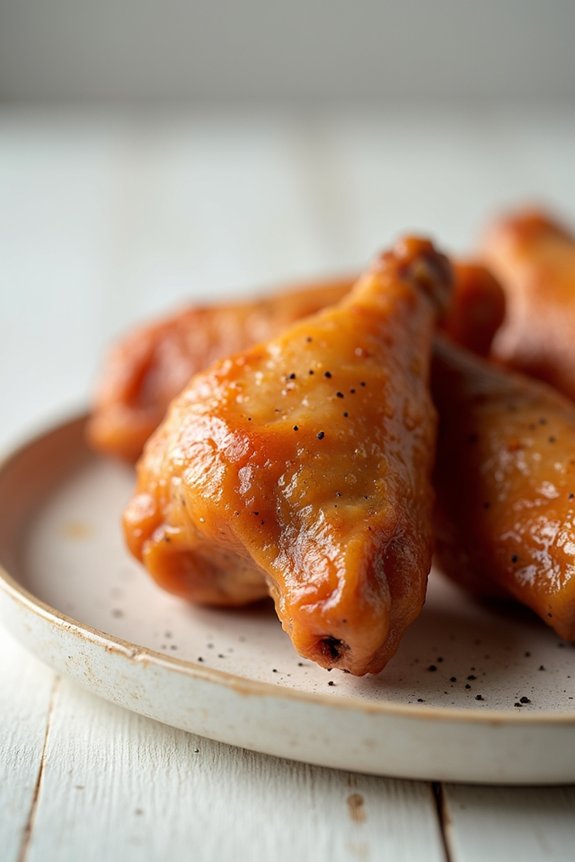
How do you keep track of chicken wing calories without feeling like you’re doing math homework at dinner?
I’ve found that understanding calories per wing makes portion control straightforward. A cooked wing averages about 99 calories, so you can quickly estimate your intake. Here’s my practical system:
- Start with 4–6 wings per meal — this gives you roughly 400–600 calories, a solid main course portion
- Choose your cooking method wisely — baked wings run about 690 calories per ten, while deep-fried versions hit 1640 calories
- Put sauces on the side — this prevents excessive calorie creep since sauces dramatically increase energy density
- Pair wings with vegetables — salads and roasted veggies stretch your meal without adding many calories
This approach lets you enjoy wings guilt-free while staying accountable. You’re not restricting yourself; you’re making informed choices.
Building a Sustainable Wing-Eating Strategy
Once you’ve mastered portion control, the real payoff comes from building eating habits that actually stick. I’ve found that choosing baked or grilled wings over deep-fried versions cuts calories considerably—we’re talking about reducing your intake by roughly 65 calories per wing. Here’s my approach: I request skinless wings whenever possible, which eliminates about 100 calories per serving compared to skin-on varieties. I also ask for sauce on the side, giving me control over how much I use. This simple swap keeps calories manageable without feeling deprived. I pair my wings with low-calorie sides like broccoli, making the meal feel complete and satisfying. These aren’t restrictive rules—they’re practical choices that let me enjoy wings regularly while staying aligned with my health goals.