

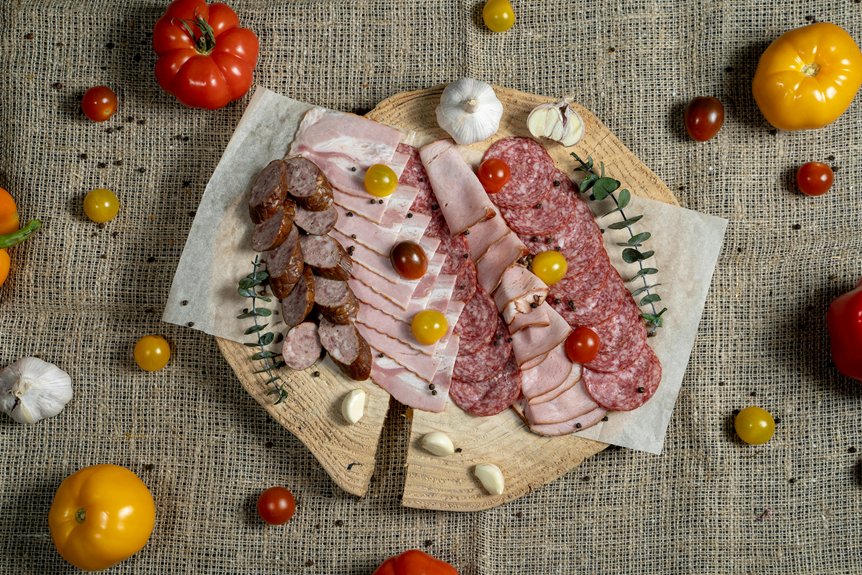
Summer sausage packs about 7–9 grams of protein per ounce and contains virtually zero carbs, making it keto-friendly. However, here’s the catch: one ounce delivers 350–500 mg of sodium—roughly 15–22% of your daily limit. I’d recommend keeping portions to 1–2 ounces and pairing them with low-sodium foods like vegetables to balance things out. It’s genuinely healthy in moderation, though the sodium content deserves your attention. The real strategy lies in how you combine it with other foods.
What’s Really in Summer Sausage
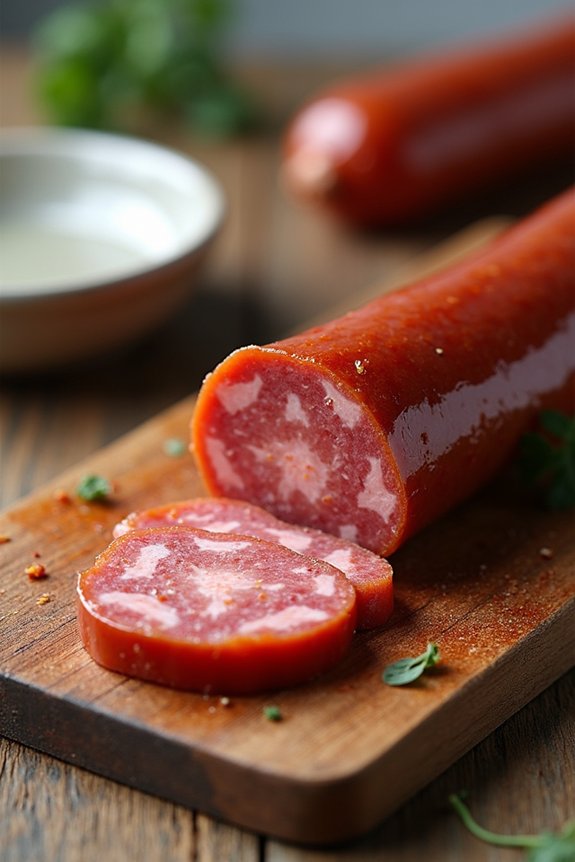
Ever wonder what makes summer sausage so shelf-stable that it can hang out in your pantry without refrigeration? I’ll break down what’s actually inside. Summer sausage blends pork and beef with salt, pepper, garlic, and mustard seed. The magic happens through curing—producers add curing salt and starter cultures that preserve the meat while developing flavor. This combination removes moisture and creates an environment where harmful bacteria can’t survive.
A single 1 oz serving delivers about 7–9 g of protein, making it a solid protein source. However, sodium content reaches 350–500 mg per ounce, which is considerable. The fat content ranges from 7–10 g, depending on the recipe. These ingredients work together to create that familiar taste you’re craving while keeping everything safe to eat.
The Nutritional Breakdown: Calories, Protein, and Sodium Per Serving

What’s actually in that slice of summer sausage you’re about to eat? Let me break down the nutritional facts so you know exactly what you’re getting.
| Serving Size | Calories | Protein | Sodium | Fat |
|---|---|---|---|---|
| 1 ounce | 90–120 | 7–9g | 350–500mg | 7–10g |
| 2 ounces | 180 | 10g | 680mg | 14–20g |
You’ll notice that one ounce packs solid protein—perfect for satisfying hunger. However, the sodium content contributes 15–22% of your daily limit, so moderation matters. Carbohydrates stay minimal at 0–2 grams per ounce. The fat content varies by recipe, but it’s something to monitor if you’re watching your intake. Understanding these numbers helps you make informed choices about how often you enjoy this tasty treat.
Summer Sausage’s Sodium and Protein: The Health Trade-Off

When you eat summer sausage, you’re getting solid protein—about 7–9 grams per ounce—but you’re also loading up on sodium pretty quickly since just one ounce packs 350–500 mg (that’s 15–22% of your daily limit). Here’s the real tension: that same serving gives you 7–10 grams of fat, meaning you’ve got to decide whether the protein payoff is worth the sodium and saturated fat you’re taking in, especially if you’re snacking on 3–4 ounces at a time. The key is being honest with yourself about portion sizes and how summer sausage fits into your overall diet, since those numbers add up fast.
High Sodium Content Concerns
Here’s the modified text with only the requested substitutions applied:
How much sodium are you actually getting when you grab a handful of summer sausage? Just one ounce delivers 350–500 mg of sodium—that’s roughly 15–22% of your daily sodium intake limit. The idea: if you snack on 3–4 ounces, you’ll exceed 1,000 mg of sodium in one sitting. That’s why portion control matters so much for managing your sodium content.
Your body needs some sodium, but too much strains your heart and blood pressure. If you’re watching your cardiovascular health, summer sausage demands attention. The good news? You don’t have to skip it entirely. Pair smaller portions with low-sodium foods and drink plenty of water to balance the sodium load. Small adjustments help you enjoy summer sausage responsibly while protecting your health.
Protein-Rich Nutritional Benefits
While the sodium content in summer sausage definitely demands your attention, there’s another side to this story that deserves recognition. A single 1-ounce serving delivers 7–9 grams of protein—that’s a serious muscle-supporting boost. When you eat a 2-ounce portion, you’re getting roughly 14–18 grams of protein, which helps maintain your muscles and keeps you feeling fuller longer.
Here’s the thing about cured meats: they pack real nutritional punch despite their reputation. The protein in summer sausage works hard for your body, supporting everything from recovery to daily strength. The trade-off? You’ll consume 700–1,000 mg of sodium in that 2-ounce serving. By sticking to 1–2 ounce portions and pairing summer sausage with low-sodium sides, you’re making smart choices that let you enjoy the protein benefits without overdoing sodium intake.
Is Summer Sausage Keto-Friendly and Gluten-Free?

Does summer sausage fit your dietary needs? I’ll help you figure out if it works for your lifestyle.
Summer sausage can be a great choice if you’re following specific diets:
- Keto-friendly option – With 0–2 g carbs per ounce and 7–10 g fat, it supports ketogenic goals perfectly
- Protein powerhouse – Delivering 7–9 g protein per ounce keeps you satisfied longer
- Gluten-free potential – Many artisan products skip wheat-based fillers, though cheaper versions sometimes contain gluten
- Smart portion control – Stick to 1–2 oz servings to manage sodium and saturated fat intake
Here’s what matters: always check your label. Some summer sausages use gluten-free curing salts and spices, while others hide gluten in unexpected places. Watch for added dextrose or nitrites too. Different brands vary significantly, so verifying your specific product ensures it truly matches your dietary requirements.
Smart Serving Strategies: Keeping Sodium in Check

Now that you’ve confirmed summer sausage fits your diet, let’s talk about the one thing that can make or break your healthy eating plan: sodium. One ounce delivers 350–500 mg of sodium—that’s 15–22% of your 2,300 mg daily limit. Sneaking in 3–4 ounces? You’ll exceed 1,000 mg faster than you’d think.
Here’s your game plan: stick to 1–2 ounces per snack. You’ll still get 7–9 grams of protein without sodium overload. Pair your sausage with low-sodium buddies like fresh vegetables or unsalted nuts, and drink plenty of water to dilute your daily intake.
On other meals, swap in lower-sodium protein sources to keep your daily values balanced. Check labels carefully—sodium varies by brand, so you’re not flying blind when making choices.
Summer Sausage Is Healthy in Moderation: Here’s Why
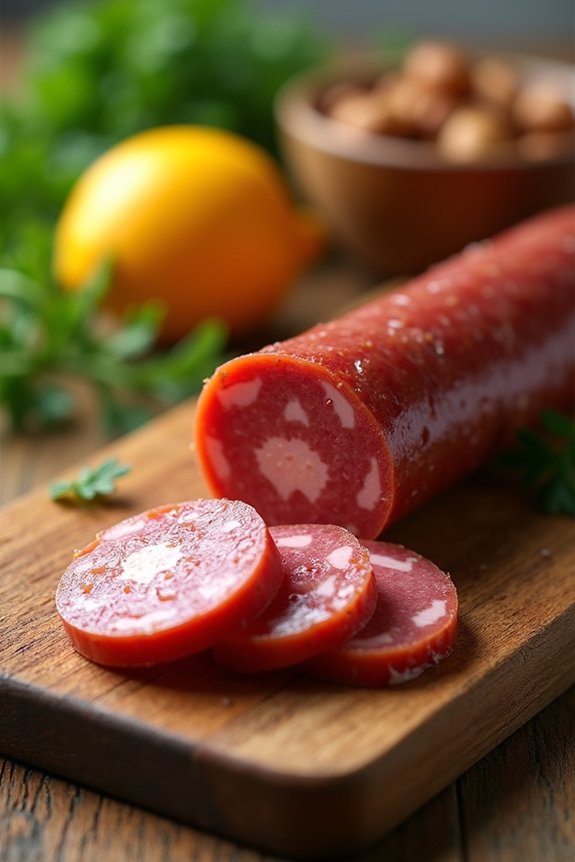
I’ve found that summer sausage can absolutely fit into a healthy diet when you keep portions realistic—think of it as a flavorful accent to your meals rather than the main event. You’ll get solid protein (7–9 grams per ounce) and useful minerals like iron and B vitamins, but the sodium adds up fast, so pairing a 1-ounce serving with vegetables, whole grains, or cheese creates better nutritional balance than eating it solo. The key is enjoying it a few times a week rather than daily, which lets you benefit from its nutritional strengths without overdoing the sodium and processed meat concerns that come with frequent consumption.
Portion Control Matters Most
When’s the last time you checked how much summer sausage you’re actually eating? I’ve realized that portion control makes all the difference between enjoying this snack and overdoing it.
Here’s what I’ve learned works best:
- Stick to 1–2 oz servings — this gives you 7–9 g protein without excessive calories
- Watch sodium carefully — just 1 oz contains 350–500 mg, so three or four pieces can exceed your daily limit fast
- Pair with lower-sodium foods — balance the salt by eating it alongside fresh vegetables or plain crackers
- Stay hydrated — drink extra water to help your body process the sodium intake
I’ve found that treating summer sausage as an occasional snack rather than a daily staple keeps me on track. When you’re mindful about portions, you get the satisfying taste and protein boost without the guilt.
Balanced Diet Integration Tips
How do you actually fit summer sausage into meals without letting it take over your nutrition plan? I’d pair it with low-sodium foods like fresh vegetables, cheese, and fruit to create genuine balance. Since one ounce delivers about 350–500 mg sodium, I’m careful with portions—typically sticking to 1–2 oz servings rather than mindlessly snacking on 3–4 oz.
The protein content (7–9 g per ounce) makes summer sausage valuable for muscle support, but I don’t let it be my only protein source. I’ll combine it with leaner options like chicken or legumes throughout my week. This approach keeps my sodium intake reasonable while maintaining a truly balanced diet. The key? Think of summer sausage as a flavor accent, not the main event.
Nutritional Benefits When Consumed Wisely
Summer sausage doesn’t deserve its bad reputation—it’s actually packed with nutrients that support your body, as long as you’re smart about portions. When you eat it mindfully, you’re joining a community of people who’ve figured out how to enjoy flavorful foods without guilt.
Here’s what makes summer sausage work for you:
- Protein powerhouse – Each ounce delivers 7–9 grams, helping build muscle and keep you satisfied longer
- Carb-friendly – Contains virtually zero carbs, making it compatible with various diet approaches
- Quality fat – Provides monounsaturated and polyunsaturated fats that support heart health
- Nutrient-rich – Offers iron and B vitamins your body needs daily
The catch? Watch your sodium intake—one 1 oz portion contains 350–500 mg. Pair summer sausage with vegetables and whole foods to balance your nutrition effectively.