
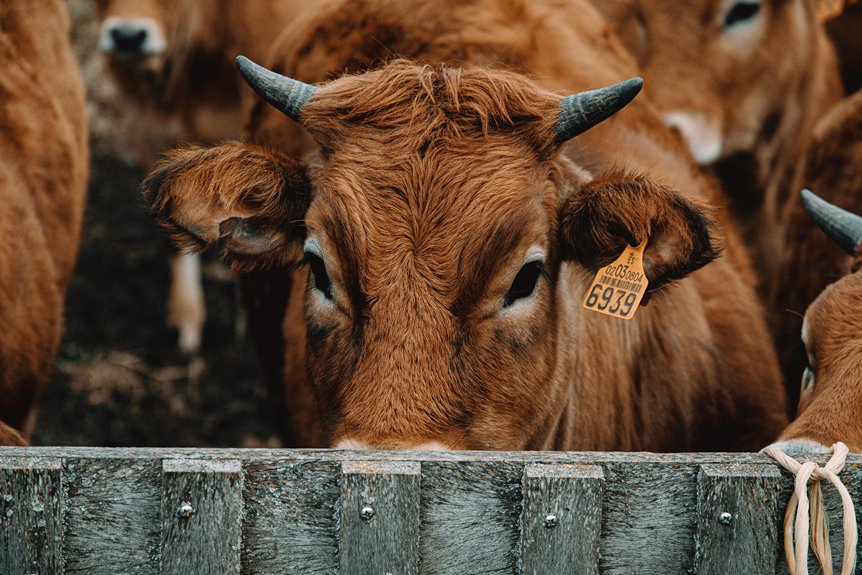
Wagyu beef originates from four specific Japanese cattle breeds, with Japanese Black dominating over 97% of production. You’ll find authentic Wagyu across several prefectures—Hyogo produces Kobe beef, Mie creates Matsusaka, Yamagata raises Yonezawa, and Shiga yields Ōmi. Each region develops its own strain through generations of selective breeding, creating distinctive marbling and flavor profiles. Japan’s Beef Traceability Law tracks every animal from birth to sale, ensuring you’re getting genuine Wagyu. The specific region and bloodline determine what makes each variety special.
What Makes Wagyu Different From Other Japanese Beef?
What’s really in a package of Japanese beef at the grocery store? The answer matters more than you’d think. True Wagyu comes from four specific improved Japanese breeds, with Japanese Black cattle dominating over 97% of production. These cattle are famous for their exceptional marbling—those beautiful white lines of fat running through the meat that make it so tender and flavorful.
Here’s what sets Wagyu branding apart: it’s tied directly to geographic origins and original breed lineages. Western dairy cattle raised in Japan? That’s labeled as domestic beef, not Wagyu. The distinction isn’t just marketing. Japan’s Beef Traceability Law requires detailed tracking from birth through sale, ensuring you’re getting authentic Wagyu when you pay premium prices.
The Four Japanese Wagyu Breeds and Their Origins

I want to show you how Japan’s Wagyu cattle come from four distinct breeds, each with unique genetic traits that’ve shaped regional beef production. The Japanese Black dominates the landscape, making up over 97% of all Wagyu cattle in Japan, while the Japanese Brown, Japanese Polled, and Japanese Shorthorn complete the quartet—each developed and distributed across different prefectures to suit local farming conditions. Understanding these breeds’ origins helps explain why Wagyu from Hyogo Prefecture (Kobe beef) tastes different from Matsusaka in Mie or Yonezawa in Yamagata, since selective breeding in each region emphasized distinct characteristics over generations.
Breed Characteristics And Genetics
The foundation of Japan’s Wagyu beef industry rests on four carefully developed cattle breeds, each with distinct characteristics that’ve shaped the beef we recognize today. The Japanese Black breed dominates this landscape, accounting for over 97% of all Wagyu cattle raised across Japan. This isn’t by accident—Japanese Black cattle naturally develop the heavy marbling and high fat content that define premium Wagyu beef. Their genetics create that signature tender texture and rich flavor you’re after. The other three Wagyu breeds—Japanese Brown, Japanese Polled, and Japanese Shorthorn—contribute to Japan’s beef diversity, though they’re raised in smaller numbers. Understanding these breed differences helps explain why Japanese Black beef commands such respect among enthusiasts and chefs alike.
Regional Distribution And Development
Once you understand which breeds make up Japan’s Wagyu cattle, you’ll quickly discover that geography matters just as much as genetics. The Japanese Black dominates the landscape, accounting for over 97% of Wagyu cattle raised across the country. But here’s where it gets interesting: regional strains within this breed create distinct differences. The Tajima strain, for instance, develops unique marbling profiles that set it apart from other Japanese Black lines. This geographic specificity fuels Wagyu branding strategies tied to specific prefectures. Regions like Kobe, Matsusaka, and Yonezawa each claim their own heritage and lineage, transforming cattle into celebrated culinary treasures. You’re not just buying beef—you’re investing in a place’s reputation and tradition.
Japanese Black: The Dominant Wagyu Breed
Japanese Black cattle dominate Japan’s Wagyu production, accounting for roughly 97% of all Wagyu raised in the country, and they’re the primary reason Wagyu’s famous marbling exists. What makes Japanese Black stand out isn’t just one thing—it’s their natural ability to develop those intricate fat patterns throughout the meat, their agricultural significance across Japan, and the distinct regional strains that’ve developed over generations in places like Matsusaka, Kobe, and Yonezawa. I think understanding these regional variations matters because each area’s unique breeding practices and heritage directly shape the final quality and characteristics you’ll find in that particular Wagyu beef.
Dominance In Japanese Agriculture
Why does one breed of cattle matter so much in Japan’s beef industry? I’ll tell you—Japanese Black cattle dominate Wagyu production because they’re simply superior at what makes Wagyu special: marbling.
| Breed | Percentage of Wagyu | Key Feature | Market Position |
|---|---|---|---|
| Japanese Black | 97% | Superior marbling | Dominant |
| Japanese Brown | 2% | Leaner meat | Secondary |
| Japanese Shorthorn | <1% | Limited use | Minimal |
| Japanese Poll | <1% | Rare breeding | Niche |
You’re joining a tradition where Japanese Black’s fat distribution sets the standard. This breed’s genetic predisposition creates those delicate white lines running through beef that define authentic Wagyu. When you’re choosing Wagyu, you’re almost certainly selecting Japanese Black—the breed that literally built Japan’s beef reputation and continues driving the industry forward.
Marbling Excellence And Quality
Now that you understand why Japanese Black cattle reign supreme in Japan’s beef industry, let’s examine what actually makes their meat so exceptional.
Japanese Black cattle produce something truly remarkable: intramuscular fat that creates those mesmerizing white streaks throughout the meat—what we call marbling. This isn’t just pretty to look at. The marbling fundamentally changes how the beef tastes and feels when you eat it.
About 97% of Wagyu raised in Japan comes from Japanese Black breeds, and they’re chiefly responsible for this famous marbling characteristic. When you bite into properly marbled Japanese Black beef, the fat melts at lower temperatures than other beef. This creates an incredibly tender, flavorful experience that honestly spoils you for ordinary steaks.
That’s why Japanese Black dominates the Wagyu world.
Regional Strain Variations And Heritage
How’d you like to know where your Wagyu beef actually comes from? Japan’s Wagyu system relies heavily on regional branding, and I’m here to break that down for you. Japanese Black cattle dominate the industry, accounting for roughly 97% of all Wagyu raised in Japan. These cattle are the real stars behind that incredible marbling you’ve heard about. But here’s where it gets interesting: different regions produce distinct varieties. Kobe beef comes from Hyogo Prefecture, while Matsusaka, Yonezawa, and Ōmi represent other prestigious regional brands. Each area develops its own strain variations, creating unique flavor profiles and characteristics. Understanding these regional differences helps you appreciate what makes your wagyu beef special and where its heritage truly lies.
Regional Wagyu Brands and Their Signature Characteristics
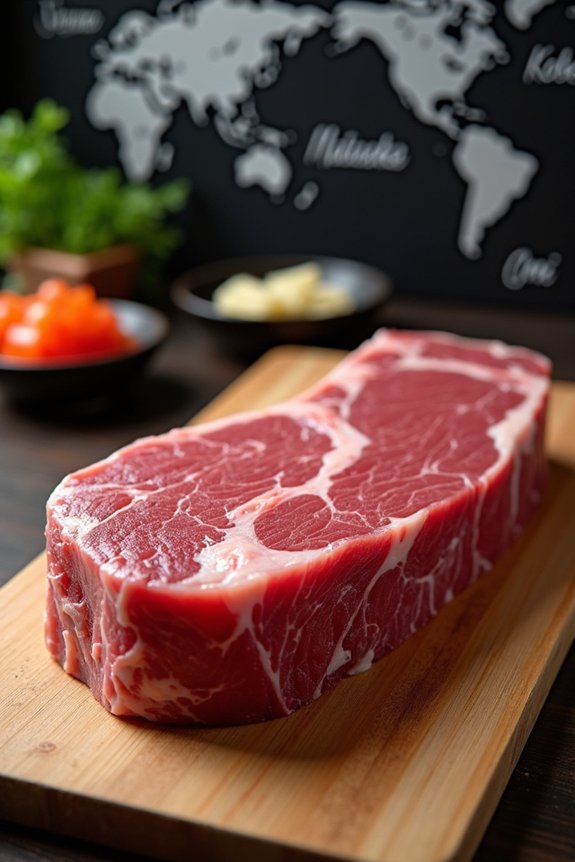
When you see “Kobe” or “Matsusaka” printed on a package of beef, you’re looking at something much more specific than just a type of meat—you’re seeing a regional brand with its own identity and reputation. These regional branding names tie directly to where cattle are raised and how they’re cared for. Japanese Black cattle, which make up over 97% of beef cattle, create that signature marbling you’re after. Since 2015, these brands gained official protection, meaning you know exactly where your beef comes from.
| Brand | Prefecture | Key Characteristic | Heritage |
|---|---|---|---|
| Kobe | Hyogo | Extreme marbling | Historic city identity |
| Matsusaka | Mie | Rich flavor | Ancient tradition |
| Yonezawa | Yamagata | Tender texture | Regional excellence |
| Ōmi | Shiga | Balanced quality | Long-established |
| Olive-Fed | Kagawa | Unique feeding | Modern distinction |
Japan’s Top Wagyu Prefectures
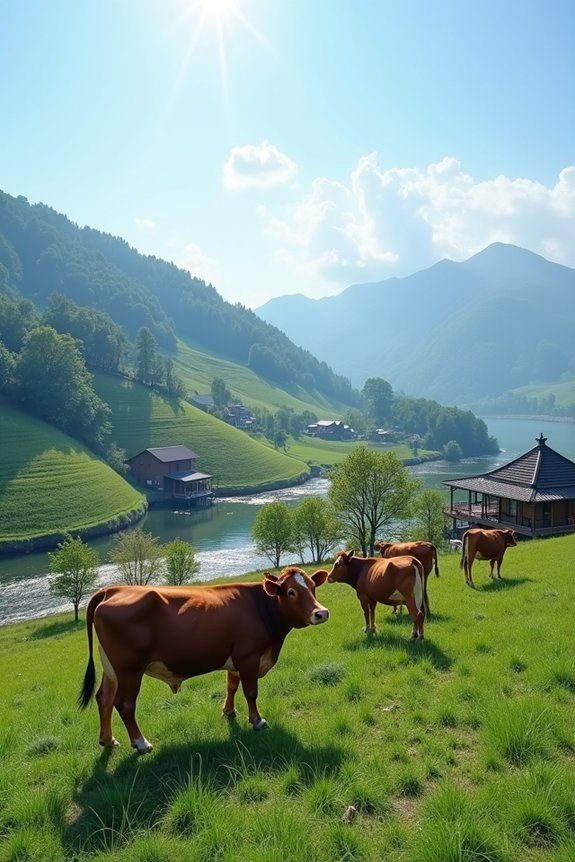
Understanding these regional brands gives you only part of the picture—the real story unfolds when you look at the prefectures where Japan’s best Wagyu actually comes from.
Five prefectures dominate Japan’s Wagyu beef production. Hyogo Prefecture produces Kobe beef, the most famous variety, using cattle from the Tajima strain with exceptional marbling. Miyazaki, Kagoshima, and Miyagi prefectures each raise their own celebrated Wagyu beef with distinct characteristics. Ishikawa rounds out the top tier with high-quality production.
Beyond these major players, Shiga Prefecture produces Ōmi beef, one of the oldest branded Wagyu varieties. Mie Prefecture’s Matsusaka beef and Yamagata Prefecture’s Yonezawa beef also command respect among enthusiasts.
Each prefecture’s cattle-rearing traditions create unique flavor profiles and marbling patterns that make their Wagyu beef instantly recognizable.
How Selective Breeding and Feeding Shape Authentic Wagyu
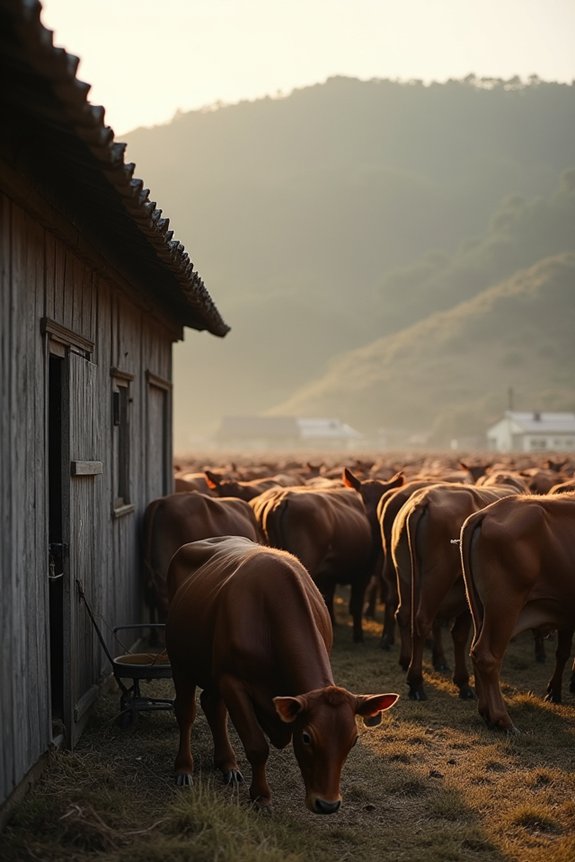
What separates authentic Japanese Wagyu from other beef comes down to centuries of careful breeding choices and specialized feeding practices. I’ll show you how breeders create that signature marbling you’re after.
Japanese Black cattle dominate the scene, accounting for over 97% of Wagyu raised in Japan. These animals aren’t randomly selected—breeders track bloodlines meticulously, selecting only the finest genetics for reproduction. The Beef Traceability Law ensures every animal has an ear tag and complete documented history from birth onward.
| Breeding Factor | Impact |
|---|---|
| Japanese Black genetics | Creates superior marbling potential |
| Selective lineage tracking | Ensures consistent quality |
| Multi-generational selection | Develops marbling traits |
| Geographic bloodlines | Produces regional distinctions |
Feeding matters equally. Specialized grain diets and careful weight management over 28-32 months develop that distinctive fat distribution throughout muscle tissue. This combination—genetics plus nutrition—creates authentic Wagyu’s unmatched quality.
How Wagyu Traceability Ensures Authenticity
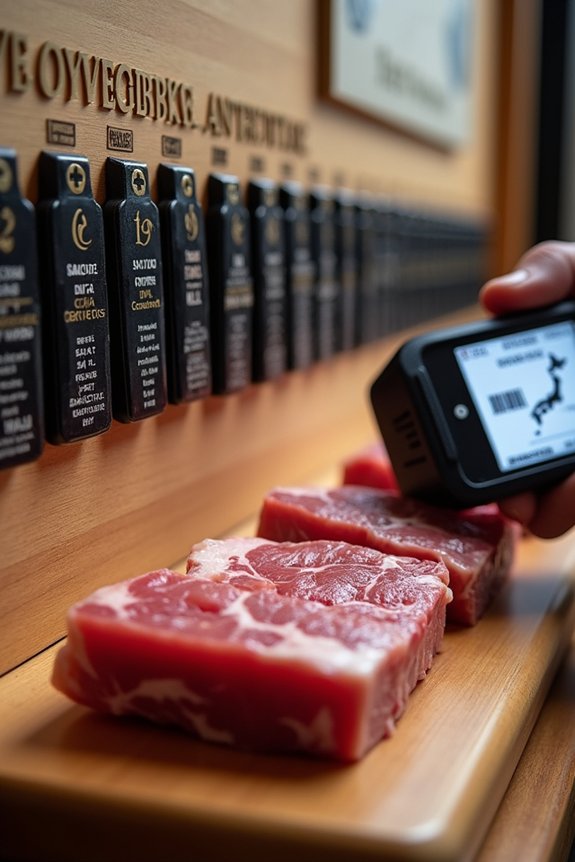
How’d you like to know exactly where your Wagyu came from, who raised it, and what it ate?
Japan’s Beef Traceability Law (2003) makes this possible. Every piece of Wagyu gets an ear tag at birth, creating a complete history from ranch to your plate. I find this transparency reassuring—you’re basically getting a beef biography.
Here’s what traceability gives you:
- Birth records linking cattle to their parents and lineage
- Farm location data showing where animals were raised
- Feed documentation proving proper diet and care
- Processing records confirming authenticity before sale
The Wagyu branding system relies on this traceability. Regional names like Kobe, Matsusaka, and Yonezawa mean something because the law verifies them. When you buy authentic Wagyu, you’re not guessing—you’re joining thousands who trust verified, tracked beef backed by real data.
What Keeps Wagyu Authentically Japanese?
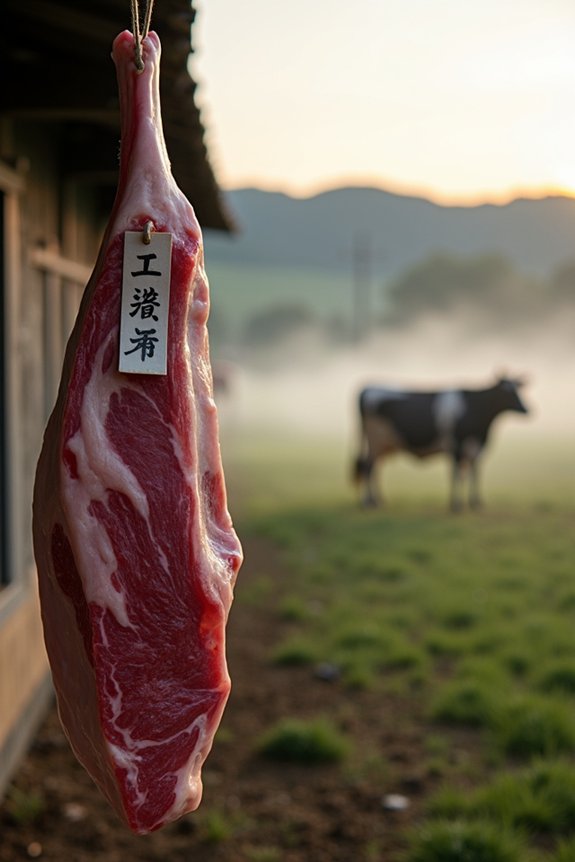
I’ll show you what keeps Wagyu authentically Japanese through three key safeguards. First, strict breeding standards ensure that over 97% of Wagyu beef comes from Japanese Black cattle and their established crossbreeds (the four kairyō wagyū), while native lineages like Mishima and Kuchinoshima remain protected—dairy breeds used for beef are simply labeled domestic beef, not Wagyu. Second, regional certification matters enormously; authentic Wagyu carries geographic labels like Kobe, Matsusaka, Yonezawa, or Ōmi that verify both origin and breedline, so you know exactly where your beef comes from. Finally, Japan’s 2003 Beef Traceability Law requires ear tags and documented birth-to-beef history for every animal, creating an unbreakable chain that protects you from knockoffs and confirms food safety compliance.
Strict Breeding Standards
Precision in bloodlines—that’s what separates true Japanese Wagyu from beef that just happens to be raised in Japan. I want you to understand that strict breed standards aren’t just rules; they’re what make Wagyu branding mean something real.
Since 2007, Japan’s been serious about this. Only four improved breeds qualify as authentic Wagyu. Here’s what matters:
- Breed verification: All cattle must trace back to approved Wagyu genetics
- Ear tagging system: Every animal gets tracked from birth through processing
- Birth-to-beef documentation: The Beef Traceability Law ensures complete provenance
- Lineage requirements: Crossbreds only count if they meet specific breeding criteria
This isn’t bureaucratic overkill—it’s your assurance that what you’re buying is genuinely Japanese Wagyu, not just domestic beef with a fancy label.
Regional Origin And Certification
When you see “Matsusaka” or “Kobe” stamped on a package of Wagyu beef, you’re not just getting a fancy name—you’re getting a guarantee of where that animal came from and what bloodline it carries. Japan’s Beef Traceability Law, enacted in 2003, makes this possible. Every single beef animal receives an ear tag and a birth-to-beef history record. This certification system lets you trace your meat from farm to table, confirming its regional origin and authenticity.
These regional brands—Matsusaka, Kobe, Yonezawa, and Ōmi—represent more than marketing. They’re tied to specific genetics and local breeding standards. When you choose certified Wagyu from these regions, you’re joining a community that values transparency and quality. That traceability gives you real confidence in what you’re eating.
Why Japanese Origin Matters for Wagyu Authenticity
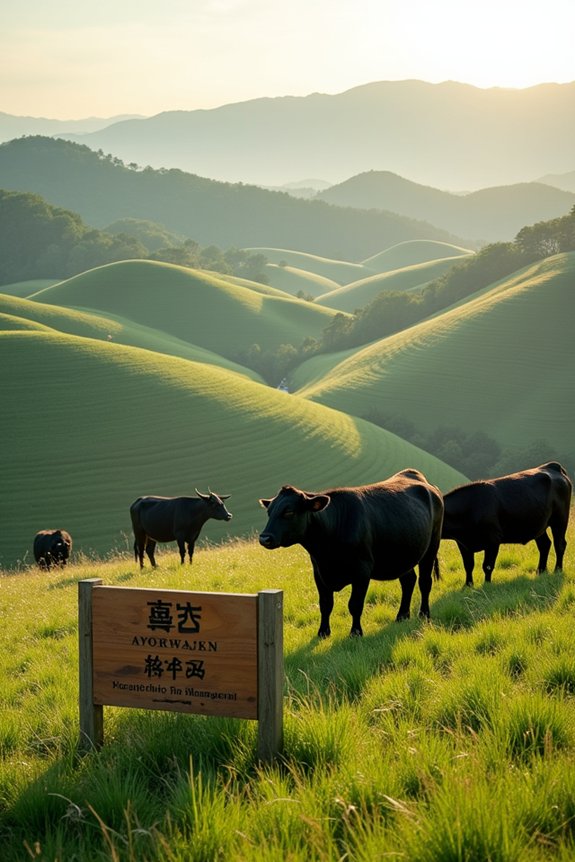
What makes Wagyu from Japan fundamentally different from beef labeled “Wagyu” elsewhere in the world? Japanese origin isn’t just geography—it’s your guarantee of authenticity. When you’re buying true Wagyu, you’re getting beef from the Japanese Black breed, which accounts for 97% of authentic Wagyu production. The Beef Traceability Law ensures every animal’s journey from birth to your plate gets documented with ear tags.
Here’s what Japanese origin truly delivers:
- Breed Purity: Japanese Black cattle produce the signature marbling you’re seeking
- Legal Traceability: Complete documentation tracks every animal’s history
- Regional Certification: GI protections since 2015 verify region-specific Wagyu brands like Kobe and Matsusaka
- Quality Standards: Domestic regulations enforce consistency that international producers can’t match
This origin story matters because it separates legitimate Wagyu branding from imitations worldwide.
Key Wagyu Regions and What Makes Them Special

Japan’s Wagyu story doesn’t end with breed purity—it actually gets more interesting when you zoom in on specific regions, because geography shapes everything from how cattle are raised to the exact flavor profile you’ll taste.
Kobe beef, for instance, comes exclusively from the Tajima strain in Hyogo Prefecture. It’s the gold standard—think of it as Wagyu’s VIP club. Beyond Kobe, you’ve got regional powerhouses like Matsusaka, Yonezawa, and Ōmi, each with its own protected designation. These aren’t just marketing labels. Each region has distinct raising practices, feed traditions, and climate conditions that create unique beef characteristics. The Beef Traceability Law guarantees you’ll know exactly where your Wagyu beef originated. That transparency? It’s what separates authentic regional Wagyu from everything else.