
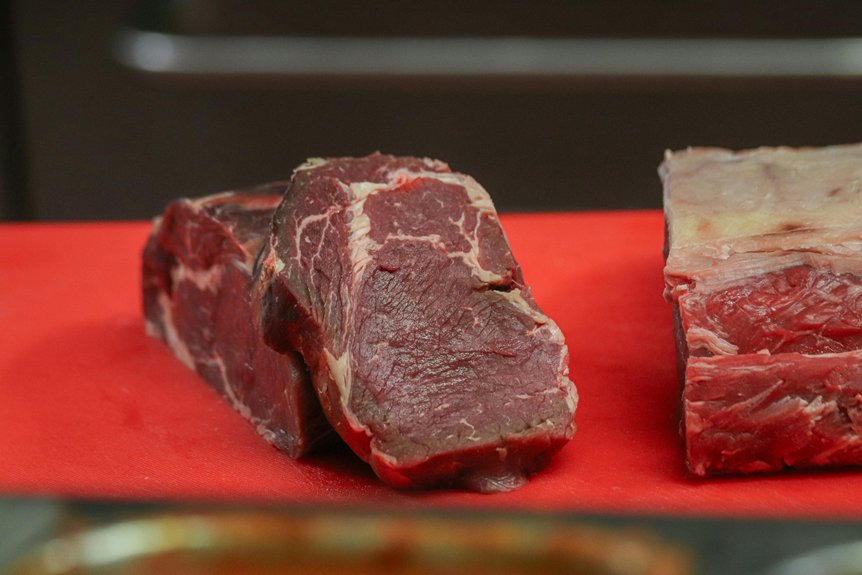
Brisket comes from both beef and pork, though beef’s the real star. Beef brisket weighs 18–20 pounds and comes from a cow’s lower chest, making it perfect for feeding crowds. Pork brisket is much smaller—just 2.25–3.5 pounds—and harder to find since butchers often grind it instead. Beef delivers that deep, savory flavor barbecue lovers crave through marbling that melts during low-and-slow smoking. Pork brisket offers subtler flavor and finishes faster, suiting smaller gatherings. Your choice depends on crowd size and what your local butcher stocks. There’s plenty more to discover about cooking each one right.
Brisket Exists on Both Beef and Pork: Here’s the Anatomy
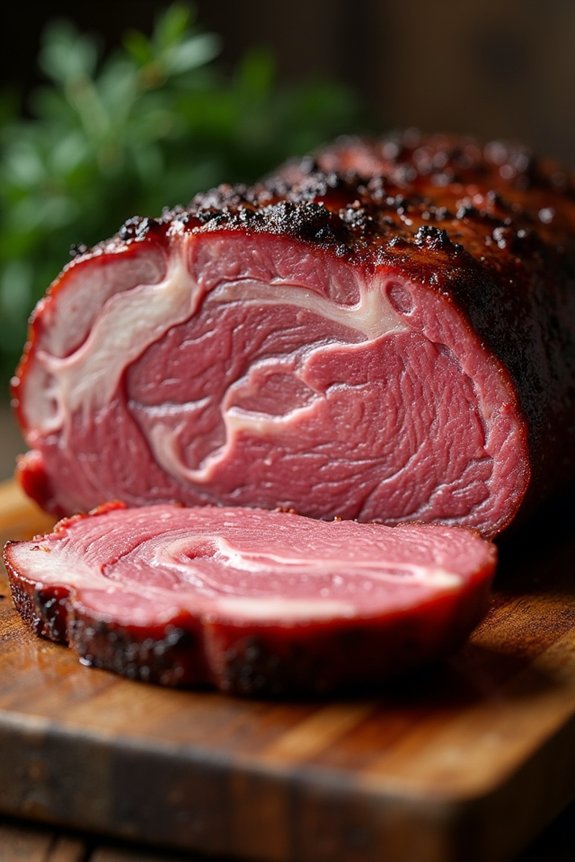
Ever wonder why brisket shows up on both barbecue menus and pork recipes? I’ll tell you—brisket isn’t exclusive to beef. Both beef and pork have this cut, though they’re pretty different animals (literally).
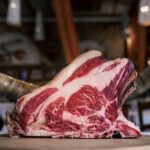
Here’s the anatomy breakdown: beef brisket comes from a cow’s lower chest and weighs around 18–20 pounds whole. It’s got distinct flat and point sections that require specific cooking approaches. Pork brisket is smaller, typically 2.25–3.5 pounds skinless, and features two muscles connected by a fat strip. Sometimes pork brisket gets sourced from the picnic ham region, combining shoulder components.
These anatomical differences matter because they affect how you’ll cook each one. Understanding where your brisket comes from helps you choose the right technique and timing.
Why Beef Brisket Became the BBQ Standard
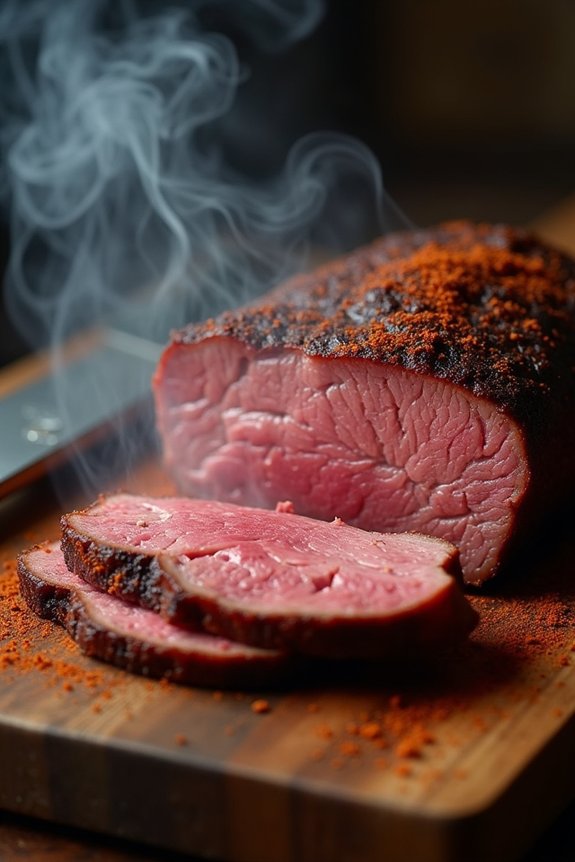
Beef brisket’s rise to BBQ royalty stems from three major factors: its natural marbling creates juicy, flavorful results that pork brisket simply can’t match, plus cattle are large enough to yield substantial briskets worth the long smoking process. Texas barbecue traditions of the mid-20th century cemented beef brisket’s status by showcasing how low-and-slow smoking transforms its tough connective tissue into fork-tender slices with a prized bark and smoke ring. The economics worked too—a single cow provides enough brisket to feed crowds, making it the practical choice for pitmasters looking to impress diners rather than a novelty cut.
Beef’s Superior Marbling
When you slice into a properly smoked beef brisket, you’ll notice something that sets it apart from pork: those thin lines of fat woven throughout the meat itself, a characteristic called marbling. This intramuscular fat is the secret ingredient that transforms beef brisket into BBQ gold. During long, low-temperature cooking—think 225 to 275 degrees over many hours—that marbling melts directly into the meat, creating remarkable tenderness and deep, savory flavor. The fat doesn’t just disappear; it bastes the beef from within, keeping everything moist and tender. That’s why experienced pitmasters choose beef brisket. You’re not just getting cooked meat; you’re getting a self-improving masterpiece that rewards patience with restaurant-quality results.
Historical Barbecue Traditions
Why’d barbecue masters pick beef brisket over pork? When you look at traditional barbecue cultures, especially in Texas, you’ll find that beef brisket became the gold standard for good reasons. Beef brisket’s larger size and robust flavor made it ideal for feeding crowds at barbecue gatherings. Pork briskets exist, but they’re smaller and deliver lighter taste profiles that didn’t match what barbecue traditions demanded.
The real magic happened when pitmasters figured out low-and-slow smoking techniques. These methods broke down the beef brisket’s connective tissue over hours, creating that tender, moist meat with a smoky bark everyone craves. Regional barbecue traditions embraced this approach enthusiastically. Salt rubs, extended smoking, and hot slicing became the signature moves that cemented beef brisket’s legendary status in smoked meat culture.
Cattle Size and Yield
Just how big does a beef brisket get compared to its pork counterpart? The following is the thing—cattle are considerably larger animals, which means their beef brisket cuts are much bigger. A whole beef brisket from the lower chest typically weighs 18–20 pounds, giving you serious smoking potential. That substantial yield comes from the sheer size of cattle and the generous muscle and fat distribution in the chest area. This heft matters because it supports those marathon smoking sessions we’re after. The weight also lets you slice generous portions for service without running out quickly. Pork briskets? They’re notably smaller. This size difference is precisely why beef brisket became the BBQ standard in Texas-style barbecue—the cattle size and yield simply make it the superior choice for traditional smoking.
Pork Brisket: Smaller, Harder to Find, Different Flavor
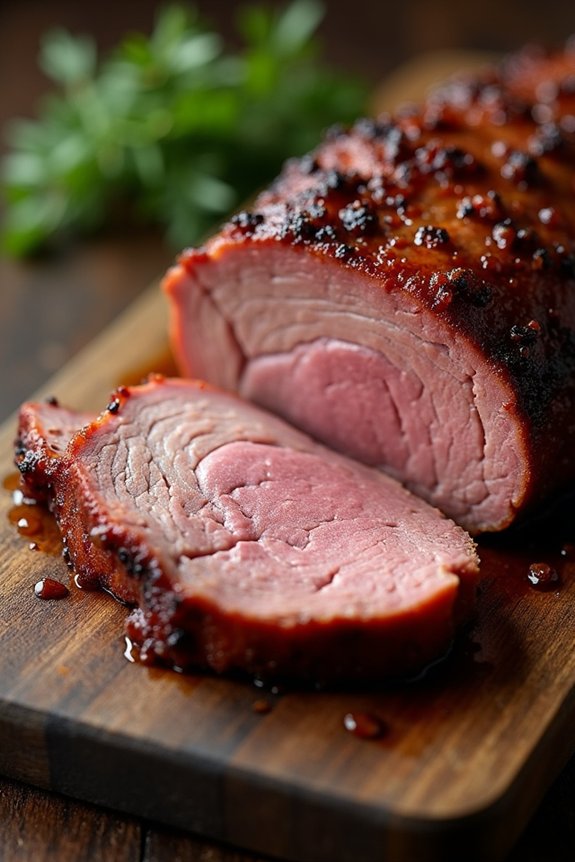
How’s a pork brisket different from its beef counterpart? I’ll tell you—it’s smaller, trickier to find, and delivers its own distinctive flavor profile that’ll surprise you.
Pork brisket weighs just 2.25 to 3.5 pounds (skinless) or about 4 pounds with skin. That size matters because it means careful monitoring during slow cooking. Here’s what distinguishes it:
- Harder to source: You’ll need local butchers or specialty suppliers like Porter Road
- Smaller portions: Perfect for smaller gatherings, not feeding a crowd
- Unique flavor: Less intense than beef, with subtle marbling throughout
- Requires precision: Low-and-slow methods prevent drying out this leaner cut
The pork brisket comes from the chest area, often part of the picnic shoulder. It’s got lean meat mixed with marbled sections, creating complexity. You won’t find it on most BBQ menus, which makes sourcing one feel like joining an exclusive club.
How to Cook Beef vs. Pork Brisket Differently
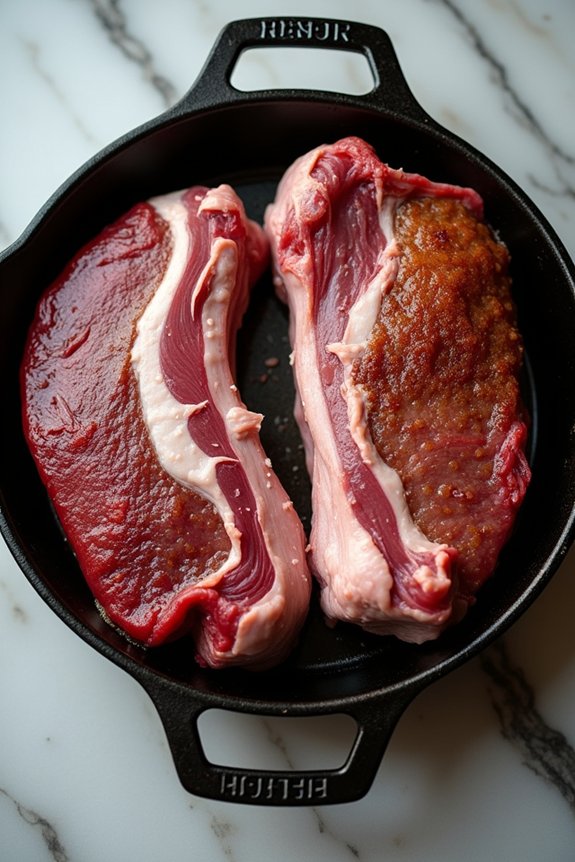
Cooking beef and pork brisket requires you to adjust your approach because these cuts behave differently in the smoker or oven. Beef brisket demands low-and-slow treatment—I smoke it around 225–275°F until it reaches fork-tenderness with that coveted thick bark. Pork brisket, being smaller and fattier, offers flexibility. You can roast, smoke, or braise it depending on your preference and time available. The internal temperature guides your finishing method: aim for 175–200°F if you’re slicing, or 160–203°F if you’re shredding. Pork brisket won’t develop the same beef-style bark, but its fat distribution creates its own delicious texture. Pick your cooking method based on the cut you’re working with, and you’ll nail it every time.
Where to Buy Pork Brisket (and Why It’s Tough)
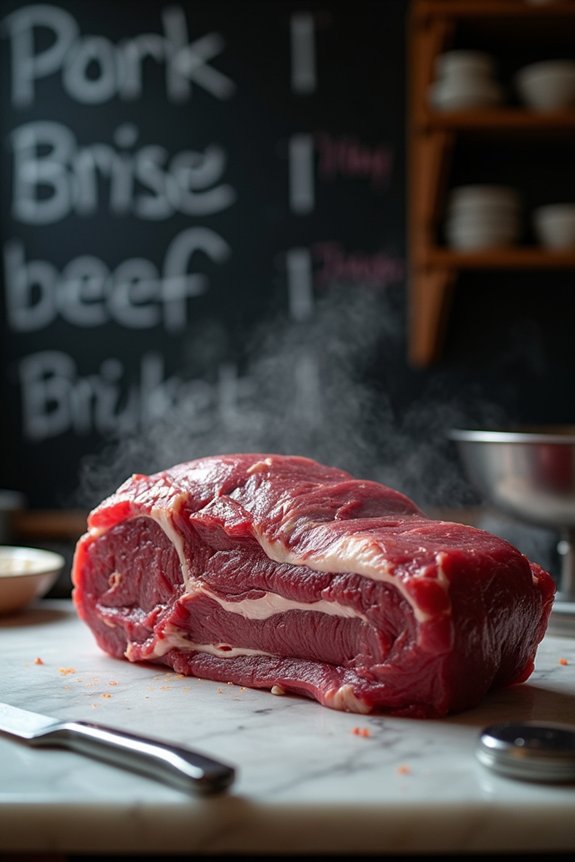
Finding pork brisket isn’t like hunting down beef brisket at your local supermarket—I’ll be honest, it’s genuinely tough because most pig processors turn these cuts into ground pork or sausage instead. Your best bet is contacting local butchers or pig farmers directly; places like Porter Road (online) and Peterson Craftsman Meats sometimes carry pork brisket, though availability varies by location and you’ll want to plan ahead. Since pork brisket typically weighs 2.25 to 3.5 pounds without skin or around 4 pounds with skin, knowing these measurements helps you reach out to suppliers with realistic expectations.
Locating Quality Pork Brisket
Where can you actually buy pork brisket? I’ve found that sourcing this cut takes some detective work because most butchers convert it into ground pork or sausage instead of selling it whole. Here’s where I look:
- Local butchers who process their own hogs—they’re your best bet for fresh cuts
- Pig farmers selling directly, especially those running farmers markets
- Specialized suppliers like Peterson Craftsman Meats that focus on quality pork
- Online retailers such as Porter Road, though you’ll want to confirm availability first
Pork brisket typically weighs 2.25 to 3.5 pounds without skin, making it more manageable than beef versions. I’ve learned that calling ahead saves frustration. Building relationships with your local butchers means they’ll set aside quality cuts for you, and you’ll join a community of people who actually know their meat.
Processing Challenges And Availability
Why does pork brisket seem to vanish the moment you start looking for it? The reality is straightforward: most retailers trim pork brisket into ground pork or sausage rather than selling it whole. This processing challenge makes pork brisket availability frustratingly limited in mainstream supermarkets.
Your best bet? Find a local butcher or pig farmer who processes their own hogs. These sources understand butcher sourcing and can actually get you whole cuts. Online suppliers like Peterson Craftsman Meats and Porter Road exist, though regional and seasonal variations affect what’s actually available.
Since pork brisket typically weighs just 2.25 to 3.5 pounds—much smaller than beef brisket—consider alternative cuts like picnic shoulder or Boston butt if you can’t locate the exact cut. Building relationships with local butchers opens doors that mainstream shopping simply can’t.
Beef Brisket vs. Pork: Which Should You Cook?
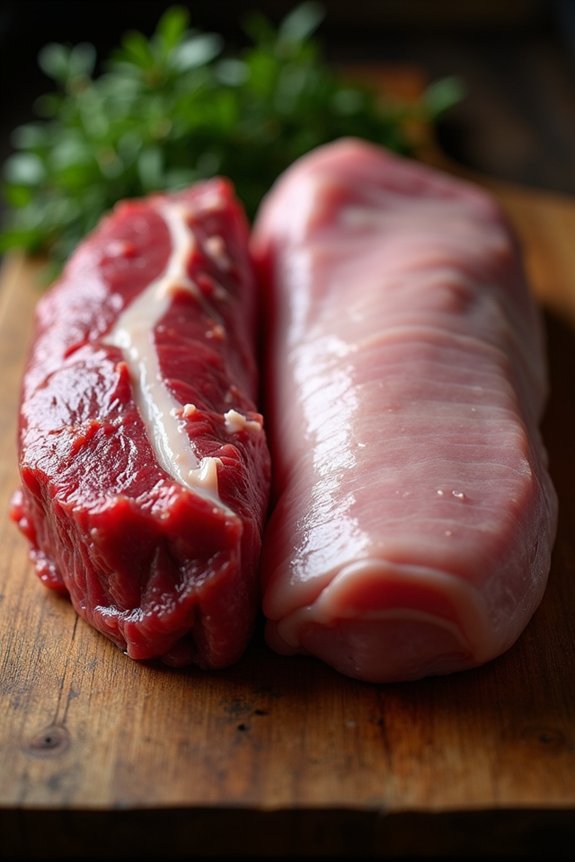
So you’re standing at the butcher counter trying to figure out which brisket to throw on the smoker—beef or pork?
Here’s what I’d consider:
- Beef brisket delivers that iconic deep flavor barbecue lovers crave, perfect for serious slow cooking projects
- Pork brisket weighs just 2.25–4 pounds, making it ideal for smaller gatherings or quicker cooking times
- Beef requires low-and-slow smoking to render connective tissue and achieve perfect tenderness
- Pork benefits from braising or careful smoking to prevent drying out
Honestly, beef brisket’s your go-to for traditional Texas barbecue. Its larger size and robust flavor justify the long cook time. But if you’re cooking for fewer people, pork brisket delivers tenderness with less commitment. Choose based on your crowd size and cooking style—you can’t lose either way.
Size, Price, and Availability: What You Need to Know
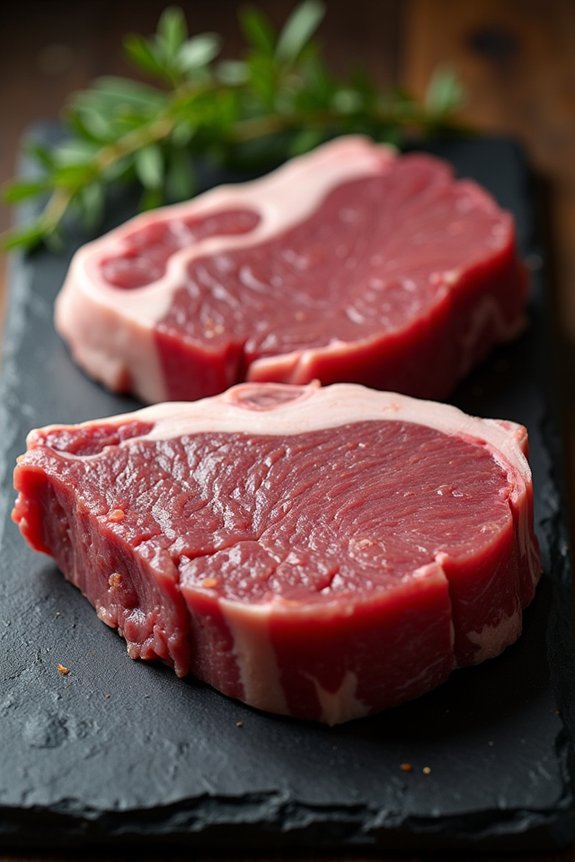
When you’re comparing briskets at the butcher counter, the size difference between beef and pork jumps out immediately—and it’s one of the biggest factors affecting your decision. Beef brisket typically weighs 18–20 pounds, while pork brisket ranges from 2.25 to 3.5 pounds skinless, or around 4 pounds with skin. That’s a substantial difference that impacts your cooking time and portion planning.
Price-wise, pork brisket costs less per pound than beef brisket, making it budget-friendly for smaller gatherings. However, availability tells a different story. You’ll find beef brisket at most grocery stores, but pork brisket requires hunting. Local butchers and specialty vendors like Porter Road offer pork brisket more readily than typical supermarkets do. Regional differences matter too—pork brisket appears rarely on BBQ menus nationwide.
Ready to Choose? A Quick Buying Guide
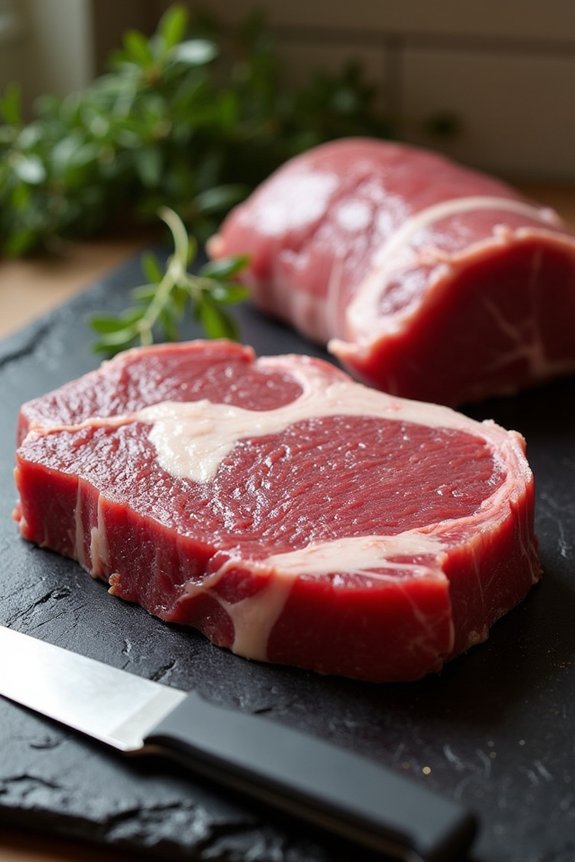
Now that you’ve got the details about size, price, and availability down, it’s time to figure out which brisket actually works for your kitchen.
Consider these factors:
- Budget matters: Beef brisket costs more upfront but feeds a crowd. Pork brisket won’t break the bank and serves smaller households.
- Storage space: Beef brisket needs serious freezer room at 18–20 pounds. Pork brisket’s 2.25–3.5 pounds fits easier.
- Cooking time: Both need slow cooking, but pork finishes faster than beef.
- Temperature targets: Pork brisket reaches 160–180°F for slicing or 175–203°F for shredding. Plan accordingly.
If you’re cooking for a family dinner, pork brisket delivers excellent flavor without the commitment. Want to feed an army? Beef brisket’s your move. Either way, you’re joining a community of serious barbecue enthusiasts.