
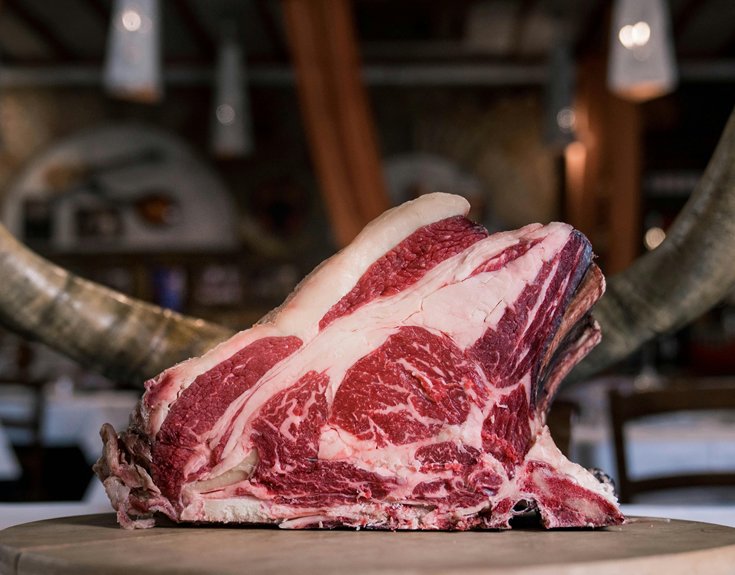
I’ve ranked beef’s leanest cuts by fat content, and here’s what you need to know: Eye of Round takes first place with just 10 grams of fat per 8-ounce serving, followed by Top Round at 9.8 grams. Sirloin Tip Center comes next at 16 grams, while Tenderloin Steak sits at 20.3 grams—still remarkably lean. These cuts shine when you choose Select or Choice grades over Prime, trim visible fat carefully, and use techniques like marinating or slow-cooking. Want to maximize tenderness while keeping calories minimal? The details ahead reveal exactly how.
USDA Lean vs. Extra-Lean Labels: What the Definitions Actually Mean
Ever wonder what “lean” actually means when you’re standing in the meat section? I’ll break it down for you. The USDA lean label means a 3.5-ounce serving contains less than 10 grams total fat, under 4.5 grams saturated fat, and below 95 milligrams cholesterol. Extra-lean is stricter: under 5 grams total fat, under 2 grams saturated fat, and under 95 milligrams cholesterol per 3.5 ounces.
Here’s the thing—these labeling definitions aren’t about beef grading like Prime or Choice. They’re purely about fat content. You’ll find that most cuts can technically meet these standards, so don’t assume a “lean” label tells the whole story. Check those specific fat measurements yourself for accuracy.
Why Beef Grades (Prime, Choice, Select) Matter for Fat Content
When you’re hunting for the leanest beef, I’ll tell you that the USDA grade on the label matters just as much as the cut itself—Prime beef’s got the most marbling (that’s the fat running through the meat), while Select has the least, which means a Select ribeye will have fewer grams of fat than a Prime one from the same animal. Choice sits right in the middle, giving you a solid option if you want decent flavor without all that extra fat, and here’s the thing: you can find genuinely lean cuts in Choice or Select grades that’ll easily beat out a Prime cut for your health goals. So when I’m picking beef, I’m looking at both the grade and the cut name together to nail down the lowest fat content possible.
Marbling Levels By Grade
Why does the same cut of beef from different grades taste so different? The answer lies in marbling—those tiny fat lines running through the meat. I’ll break down how USDA grades affect fat content and tenderness.
| USDA Grade | Marbling Level | Fat Content |
|---|---|---|
| Prime | Abundant | Highest |
| Choice | Moderate | Medium |
| Select | Minimal | Lowest |
Prime beef contains the most intramuscular fat, making it incredibly tender and flavorful. Choice offers a solid middle ground—decent marbling without excessive fat. Select cuts are leaner and extra-lean options, though they can feel drier since marbling adds juiciness. When shopping for lean cuts, understanding these grade differences helps you balance fat vs tenderness. You’re making smarter choices by recognizing how USDA grading directly impacts your beef’s fat content and eating experience.
Selecting Lower-Fat Grades
Now that you understand how marbling creates those flavor and tenderness differences, it’s time to use that knowledge to your advantage when hunting for leaner beef. Thus, USDA grading and lean labeling are actually separate systems. Prime beef has more marbling—and thus more fat—than Choice or Select. If you’re watching your fat content, choosing Select or Choice grades naturally reduces intramuscular fat. You’ll also spot “lean” and “extra-lean” labels, which follow regulatory standards: lean means less than 10 grams of total fat per 3.5 ounces, while extra-lean stays under 5 grams. Check the nutrition label to compare actual fat content between grades and cuts. This smart approach helps you find beef that satisfies both your taste buds and your health goals.
Eye of Round: the Leanest Cut at 363 Calories per 8 Oz
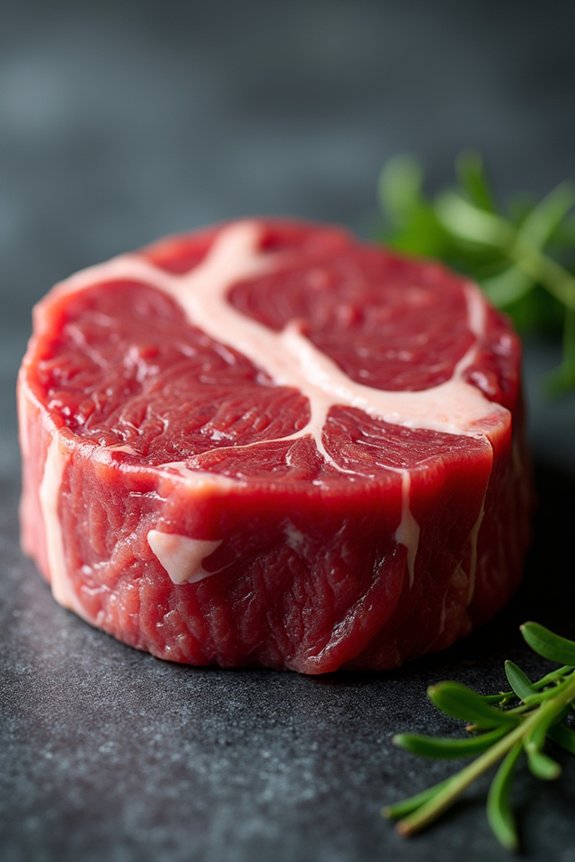
How’d you like to enjoy a hearty beef steak that won’t derail your lean diet goals? I’m talking about Eye of Round—the champion of leanest cuts. At just 363 calories per 8 oz serving, this cut delivers serious protein without the fat baggage. You’ll get 66.9 g of protein, which is excellent for building muscle while staying lean. The fat content? A mere 10 g total fat, with only 3.9 g saturated fat. That means you’re getting a satisfying, filling steak that supports your health objectives. Eye of Round proves you don’t sacrifice taste for nutrition. It’s the smart choice when you’re committed to leaner eating without feeling deprived.
Top Round Steak: Second-Leanest With Maximum Protein Density
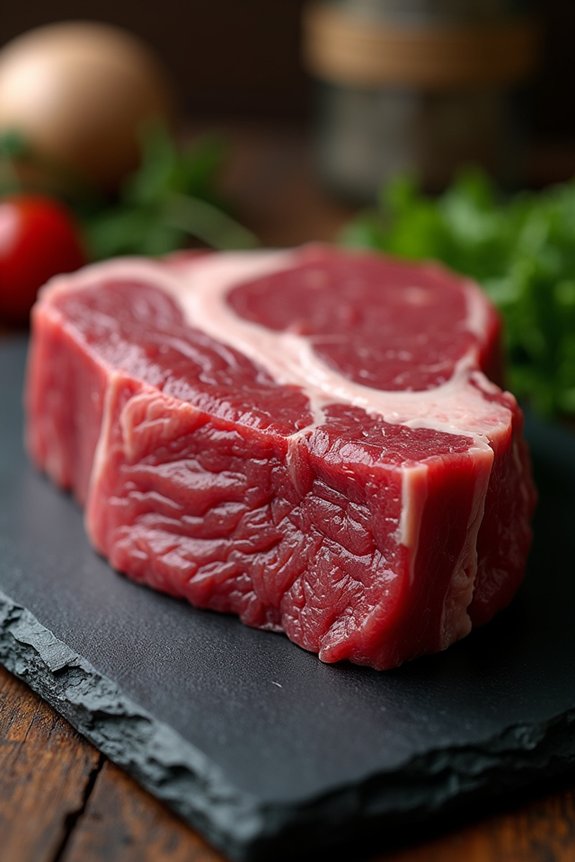
Top Round Steak packs an impressive 68.6 grams of protein per 8-ounce serving while keeping total fat at just 9.8 grams—making it a protein powerhouse that won’t derail your lean eating goals. I’d recommend marinating your Top Round for at least 4-6 hours or slow-cooking it at 275°F to break down the muscle fibers and boost tenderness, since this cut can be a bit tough if you rush the cooking process. These cooking methods preserve the meat’s lean profile while transforming it into a genuinely flavorful meal that delivers serious nutritional bang for your buck.
Protein Content And Leanness
When you’re choosing a lean cut of beef that won’t skimp on protein, Top Round Steak deserves serious consideration. This cut delivers an impressive 68.6 grams of protein per 8 oz serving while maintaining relatively low fat content. With only 9.8 grams of total fat and 4.3 grams of saturated fat, Top Round ranks as the second-leanest option available, sitting right behind Eye of Round. What makes Top Round special is its outstanding protein-to-fat ratio. Unlike cuts with heavy marbling, Top Round gives you maximum protein density without excess fat, making it ideal for anyone serious about lean dieting. It’s the sweet spot between superior leanness and substantial protein intake—exactly what you need for building muscle while staying lean.
Cooking Methods For Tenderness
Since Top Round Steak’s lean profile makes it naturally tougher than well-marbled cuts, you’ll want to use cooking methods that add moisture and break down its muscle fibers gradually. Slow cooking is your best friend here. Braising—cooking the lean steak low and slow in liquid—transforms it into tender, flavorful meat. You can also try roasting at controlled temperatures around 275°F for gentle, even cooking. Marinating before cooking works wonders too; even a few hours helps tenderize the meat while boosting flavor. These methods keep your Top Round from drying out while maximizing tenderness. The key? Patience and moisture. Skip the quick high-heat sear, and you’ll discover why this lean steak deserves a spot on your table.
Nutritional Benefits Per Serving
Now that you’ve mastered the cooking techniques that’ll make this lean cut shine, let’s talk about what’s actually on your plate. Top Round delivers impressive nutritional benefits that make it a standout among lean cuts. An 8 oz serving provides 68.6 g of protein—seriously impressive for building and maintaining muscle. The fat content? Only 9.8 g total fat and 4.3 g saturated fat, which aligns with USDA lean standards. This protein density means you’re getting maximum nutritional bang for your buck. The lean beef profile supports heart-healthy eating without sacrificing satisfaction. When you choose Top Round, you’re joining others committed to smart nutrition. You’re getting substantial protein to fuel your goals while keeping fat intake reasonable, making this lean cut an excellent addition to any balanced diet.
Sirloin Tip Center: A Lean Cut With Excellent Tenderness
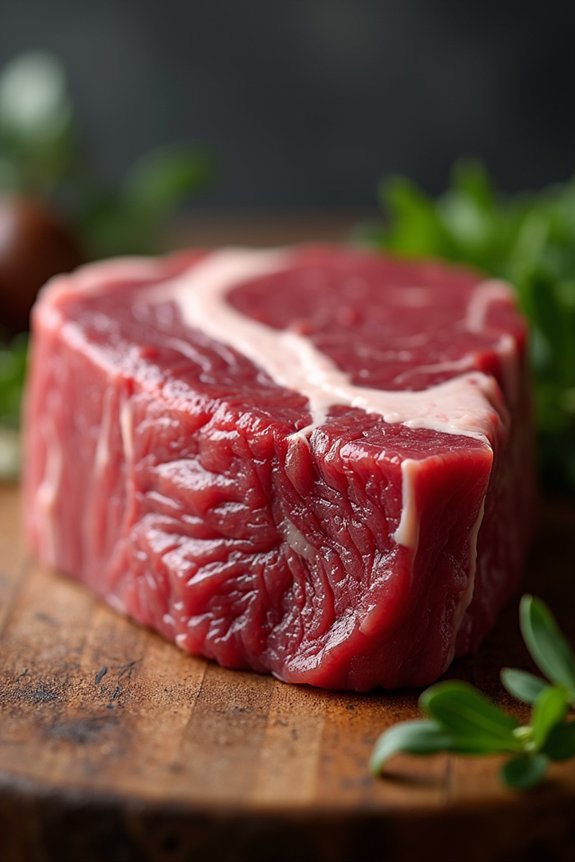
Why should you consider sirloin tip center when you’re hunting for a lean beef cut that doesn’t sacrifice tenderness? I’ll tell you—this cut delivers impressive results without the guilt.
Here’s what makes sirloin tip center stand out:
- Nutritional Profile: An 8 oz portion gives you 405 calories, just 16g total fat, and a whopping 62.9g protein
- Flavor Enhancement: Marinating transforms this cut, boosting both tenderness and taste remarkably
- Cooking Flexibility: Grilling, pan-frying, or roasting all work beautifully, especially after marination
This lean beef option proves you don’t need excessive fat content for excellent results. The sirloin tip center offers genuine tenderness while keeping fat minimal—your wallet and waistline will appreciate it. Whether you’re grilling for family or trying lean cuts for health reasons, this cut belongs in your rotation.
Flank Steak: Lean Protein With Bold Beef Flavor
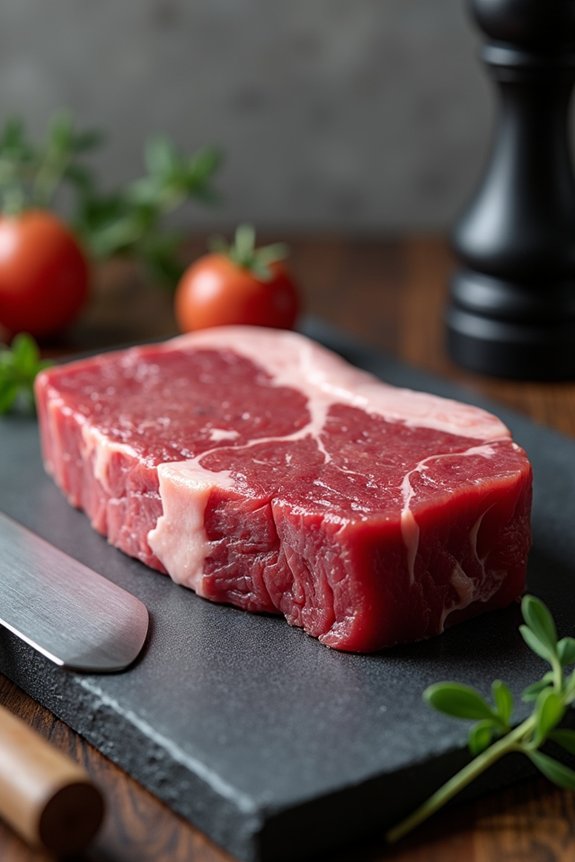
Looking for a lean cut that doesn’t skimp on flavor? Flank steak delivers exactly that. With just 18.7g of fat per 8oz serving, it’s genuinely one of our leanest cuts. You’re also getting an impressive 63.3g of protein—perfect for building muscle without excess fat content.
What makes flank steak stand out is its bold beef flavor despite minimal marbling. Sure, it’s tougher than premium cuts, but that’s fixable. I recommend marinating it beforehand to boost tenderness and taste. Grilling works wonderfully, or try stir-frying for quick results. Here’s the key: slice against the grain after cooking. This simple step maximizes tenderness and changes everything about your eating experience.
Tenderloin Steak: Lean and Buttery Without the Calories
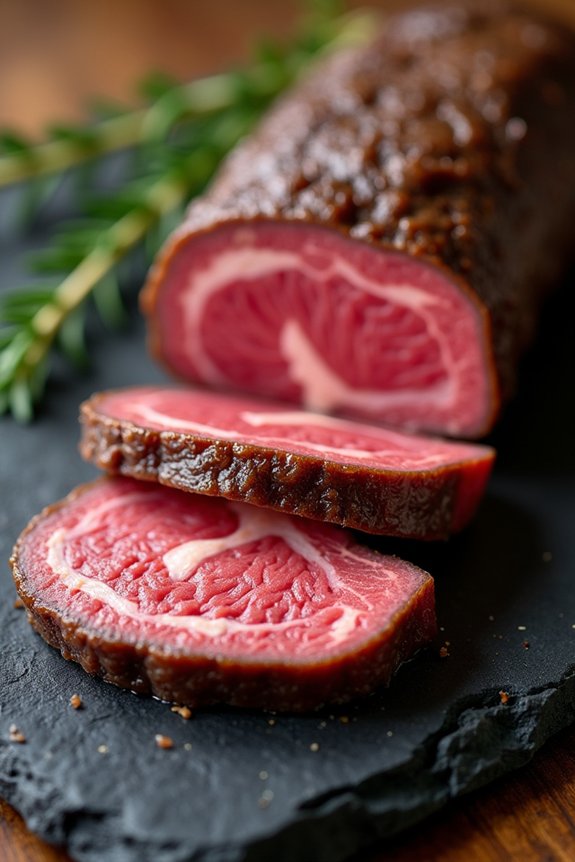
I’ll show you why tenderloin steak deserves its spot among the leanest beef cuts—it delivers an impressive 69.7 grams of protein per 8-ounce serving while keeping saturated fat to just 8 grams, making it a smart choice if you’re watching calories without sacrificing that creamy, buttery texture. The magic happens when you sear it hard in a hot skillet to develop a flavorful crust, then finish it in the oven, which locks in tenderness while you’re basically getting all the indulgence with none of the guilt. This approach works because high heat seals the surface quickly, preventing moisture loss while the mild, tender meat stays perfectly cooked inside.
Nutritional Profile and Benefits
How does tenderloin steak manage to be both incredibly tender and surprisingly lean? It’s all about understanding what makes this cut special nutritionally.
When you choose tenderloin, you’re getting serious protein without excessive fat. Here’s what I want you to know about its nutrition facts:
- Protein powerhouse: An 8 oz serving delivers 69.7 g of protein, fueling your muscles effectively
- Moderate fat content: With only 20.3 g total fat and 8 g saturated fat per serving, it fits lean beef guidelines perfectly
- Calorie-conscious choice: At 482 calories per 8 oz, you’re getting substantial nutrition without unnecessary calories
The secret? Tenderloin has minimal intramuscular fat, meaning the meat itself stays lean while maintaining that buttery texture you crave. This makes it ideal for health-conscious eaters seeking premium lean cuts without sacrificing flavor or tenderness. You’re basically getting the best of both worlds here.
Optimal Cooking Methods
Now that you understand why tenderloin’s nutritional profile makes it such a smart choice, let’s talk about how to cook it properly—because even the leanest cut can turn dry if you’re not careful.
I recommend high-heat searing followed by oven finishing. Start by trimming fat carefully to maintain that lean labeling advantage. Sear your tenderloin in a hot skillet for 2-3 minutes per side, then transfer to a 400°F oven until it reaches your desired doneness.
Here’s the pivotal moment: rest your steak for 5-10 minutes after cooking. This preserves juiciness despite marbling reduction. The resting period lets moisture redistribute throughout the meat, preventing that dry texture lean cuts sometimes struggle with.
This method honors tenderloin’s natural tenderness while maximizing flavor and texture.
Cooking Lean Beef Cuts: 4 Techniques to Keep Them Tender
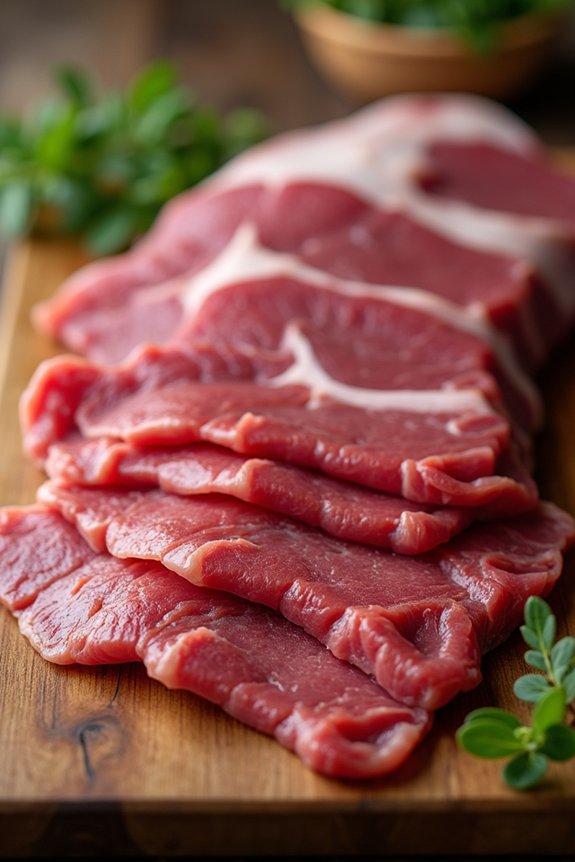
Lean beef cuts like eye of round, top round, and sirloin tip are fantastic choices if you’re watching your fat intake, but they’ll cook up tough and dry if you don’t handle them right. I’ve found these four techniques transform lean labeling cuts into tender, juicy meals:
Lean beef cuts cook tough and dry without the right techniques—but proper handling transforms them into tender, juicy meals.
- Marinate lean cuts for 4-8 hours using acidic ingredients like vinegar or citrus to boost tenderness and flavor before cooking.
- Braise or slow roast using low temperatures (275°F) for extended periods, allowing collagen to break down while keeping moisture locked in.
- Rest your meat for 5-10 minutes after cooking so juices redistribute throughout, improving perceived tenderness.
These tenderness techniques ensure you’ll enjoy flavorful results every time.
Trimming External Fat: Calculate Your Real Calorie Savings
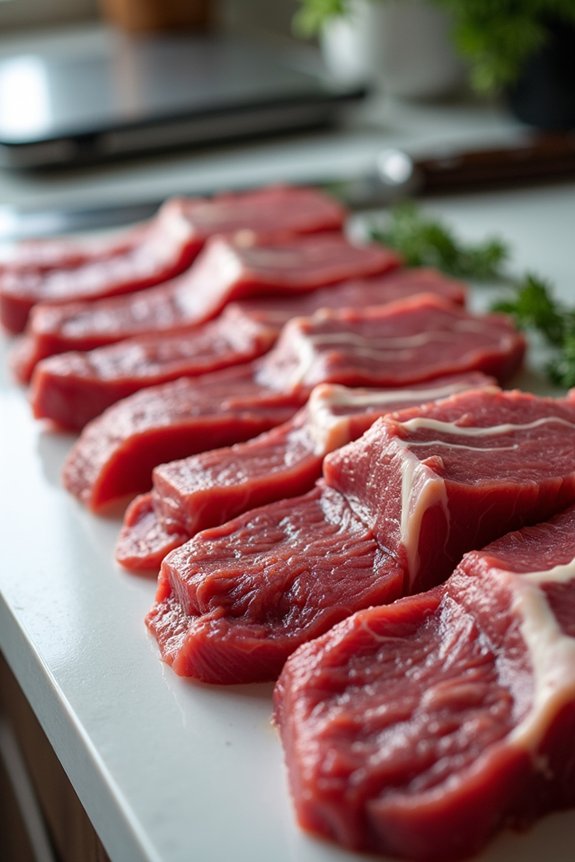
Ever wondered why that fancy ribeye steak costs more per pound than leaner cuts, yet could actually fit your diet goals better than you’d think? I’ll show you how trimming external fat transforms expensive cuts into budget-friendly wins.
When you trim visible fat before cooking, you’re slashing total fat and calorie content substantially. A 12 oz ribeye starts at 43.6 g total fat—but remove that external layer, and you’ve reclaimed real calorie savings without losing tenderness.
| Cut | Before Trimming | After Trimming | Calorie Savings |
|---|---|---|---|
| Ribeye | 43.6 g fat | ~25 g fat | ~165 calories |
| Eye of Round | 8 g fat | 5 g fat | ~27 calories |
| Flank | 6 g fat | 3 g fat | ~27 calories |
You’ve got options. Trim at home before cooking or request pre-trimmed lean cuts at checkout. Drain ground meat, then skim hardened fat from resting juices. These practical moves align your favorite beef with genuine health goals.
What to Ask Your Butcher to Get the Leanest Cuts
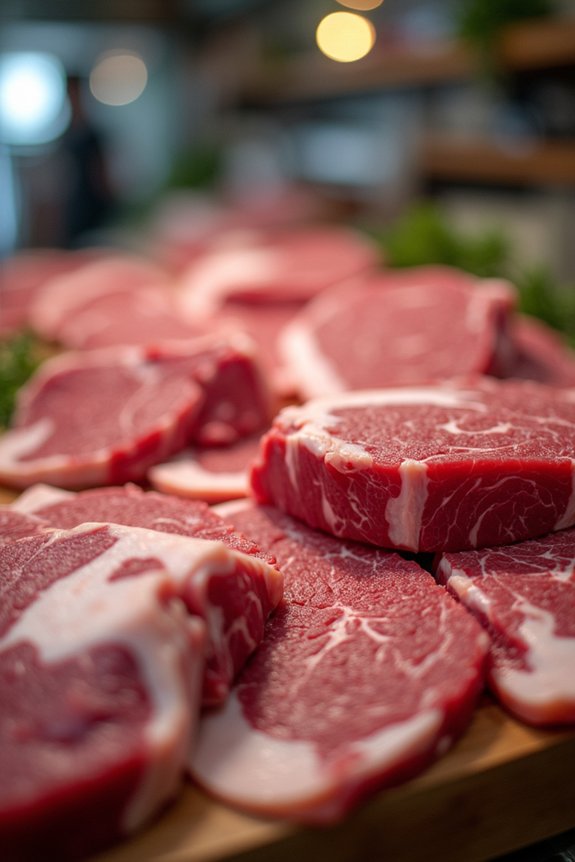
Want to nail your beef selections without playing guessing games at the meat counter?
Your butcher is your concealed weapon for finding the leanest cuts. Here’s what you should ask for:
- Request USDA lean or extra-lean cuts specifically—these meet strict fat content standards under 10g fat per 3.5 oz serving, so you’re not guessing about nutrition.
- Ask for round and loin cuts by name—Eye of Round, Top Round, and Top Sirloin Steak are proven leanest options that deliver protein without excess fat.
- Inquire about pre-trimming services—your butcher can remove external fat before you leave, saving you prep time and calories.
Don’t confuse Prime/Choice/Select grades with lean status; those relate to marbling, not fat content. Ask your butcher for butcher guidance on labels, and you’ll confidently walk out with genuinely lean beef every time.