
Ground beef prices will hover around $6.70 to $6.90 per pound in 2026, and here’s why they’re staying put: the national cattle herd hit a 75-year low, ranchers can’t afford expansion due to skyrocketing input costs, tariffs block cheaper imports, and four major processors control most of the market. Strong consumer demand isn’t helping either. You won’t see meaningful relief until late 2028. But there’s more to understand about what’s driving these stubborn prices.
Ground Beef Prices: Why Cattle Herds Are Shrinking
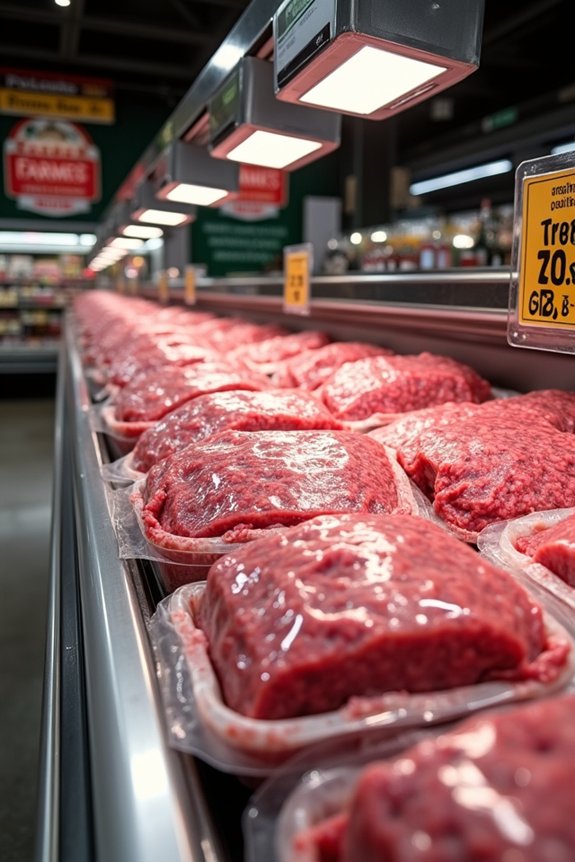
Several major factors are squeezing the U.S. cattle supply, and they’re all working together to drive up ground beef prices. The national cattle herd hit its smallest size since 1951, dropping 8.2 million head—an 8.6% decline from 2020 levels. This matters because supply and demand directly impact what you’ll pay at the checkout counter.
Ranchers aren’t rebuilding herds quickly because production costs remain stubbornly high. Drought, expensive feed, and elevated interest rates make expansion risky. Here’s the real challenge: cattle take about 18 months from birth to slaughter. That delay means tight ground beef supplies will likely persist through 2026. Breeding stock depletion compounds the problem, creating a multi-year squeeze on availability that’ll keep ground beef prices elevated longer than many expect.
Ground Beef Prices: How Tariffs Block Cheap Imports
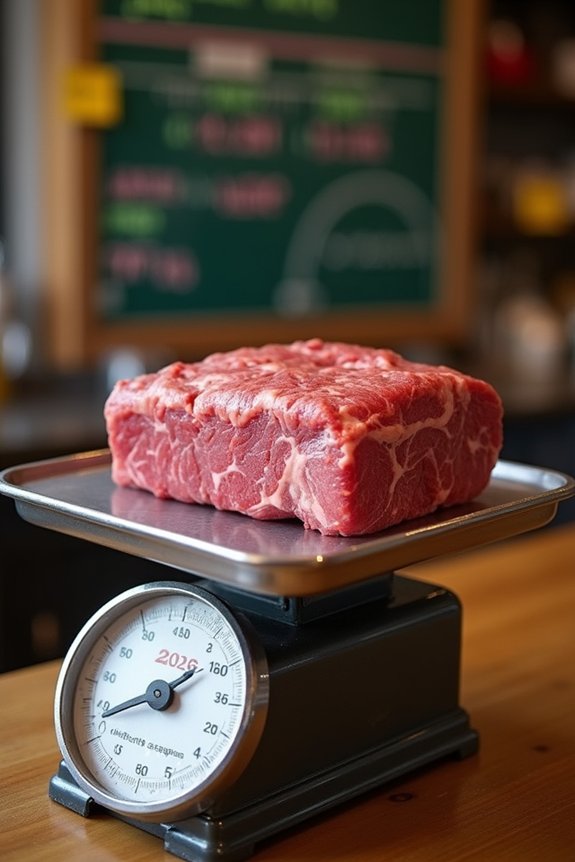
While the shrinking cattle herd explains part of the price puzzle, there’s another force working behind the scenes: tariffs that’ve basically locked out cheaper beef from other countries. In 2025, tariffs hit Brazilian beef with a whopping 76% tax, blocking lean beef imports that typically feed into ground beef production. When those affordable imports disappear, processors rely more heavily on domestic production to fill the gap. This supply disruption forces ground beef prices higher because there’s simply less cheap material flowing in. Mexico’s halted cattle shipments added another wrench to the equation, further tightening lean beef availability. The result? You’re paying more because tariff policies have essentially removed affordable competition from the market, leaving domestic production as your only option.
Ground Beef Prices: Why Ranchers Aren’t Expanding
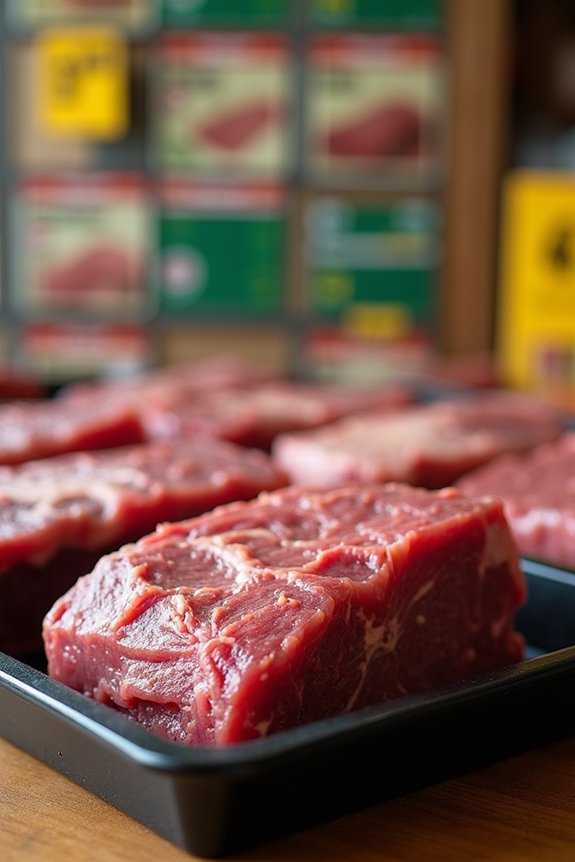
You’ve probably noticed that ranchers aren’t rushing to rebuild their herds, and here’s why: their costs have skyrocketed more than 50% over the past five years for everything from feed and fuel to equipment and veterinary care, while interest rates have made borrowing even more painful. When you’re already squeezing every penny from your operation and facing 18 months before a new calf becomes sellable beef, the risk of expanding feels like betting the farm on uncertain profits. So instead of taking that gamble, most ranchers are playing it safe and holding steady—which means less supply, tighter ground beef inventories, and ultimately higher prices at your grocery store.
Input Costs Squeeze Margins
Why aren’t ranchers expanding their herds despite strong beef demand? The answer lies in squeezed margins. Over the past five years, input costs—feed, fuel, equipment, and veterinary care—have skyrocketed more than 50%. When cattle production costs climb that steeply, profitability takes a hit, even with solid ground beef prices.
Higher interest rates compound the problem. Ranchers financing operations face elevated borrowing costs, making expansion financially risky. They’re essentially stuck: strong demand doesn’t guarantee profits when expenses keep rising faster than prices.
These tightened margins force ranchers into survival mode rather than growth mode. Instead of betting on herd expansion, they’re using risk management tools to protect what they’ve got. It’s a prudent strategy when profitability remains uncertain despite market demand.
Uncertainty Deters Herd Investment
Beyond squeezed margins sits a bigger problem: uncertainty itself. You see, ranchers aren’t just worried about today’s input costs—they’re anxious about tomorrow’s market conditions. This hesitation directly impacts herd investment decisions that shape ground beef prices.
When facing unpredictable conditions, producers choose to hold onto heifers rather than expand herds. They’d rather keep capital on hand than risk it on expansion. This cautious approach, though financially smart, restricts cattle tight supply heading into 2026.
The ripple effect matters for your wallet. Slower herd rebuilding means tighter cattle supplies persist, sustaining elevated ground beef prices through 2026 projections. Expert forecasts suggest meaningful growth won’t happen soon, locking in higher prices at grocery store counters. Uncertainty, ultimately, keeps beef expensive.
Ground Beef Prices: Four Processors’ Grip on the Market
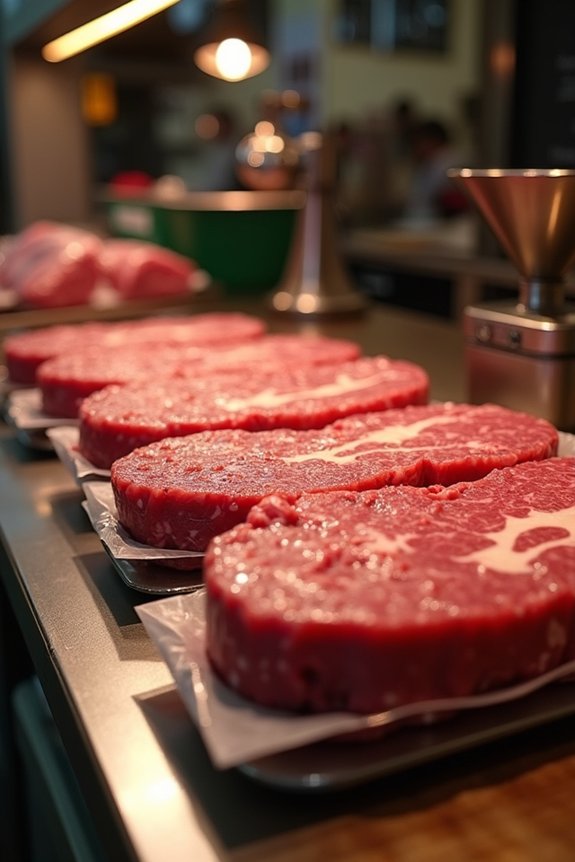
When you buy ground beef, you’re actually buying from one of four companies—JBS, Tyson, Cargill, and National Beef—who control 81–85% of the entire fed-cattle market, which gives them serious power over what you pay at checkout. I want you to understand that this concentration means these processors can influence prices in ways that smaller competitors can’t match, and they’ve got leverage over ranchers who have fewer places to sell their cattle. You’ll see why this matters for your wallet: when a handful of companies control most of the supply chain, they’re essentially setting the rules for ground beef costs across the country.
Market Concentration And Control
Just four massive companies—JBS, Tyson, Cargill, and National Beef—control roughly 81–85% of the entire fed-cattle market, which means they’ve got a stranglehold on how much ranchers earn and what you’ll pay at the grocery store. This processor control directly shapes price dynamics across the cattle industry structure. When a few players dominate market concentration this heavily, competition basically disappears. They decide cattle prices, control lean beef supply chains, and even restrict production capacity to maximize profits. A 2025 settlement saw JBS pay $83.5 million for allegedly sharing data and manipulating contracts—practices that kept prices artificially high. You’re feeling the effects at checkout. With limited competition among processors, expect ground beef costs to stay elevated through 2026.
Processor Leverage Over Ranchers
The market concentration we’ve just explored doesn’t stop at controlling supply—it goes deeper into how these four giants actually squeeze ranchers’ wallets. When JBS, Tyson, Cargill, and National Beef control 81–85% of fed-cattle sales, they’re calling the shots on what ranchers get paid. Here’s the reality: processor influence means ranchers can’t shop around effectively. The recent $83.5 million JBS settlement highlighted collusion practices that artificially manipulated prices. Meanwhile, non-fed slaughter declines tighten lean beef supply, giving processors even more bargaining power. This rancher-vs-processor dynamic directly affects ground beef pricing at your grocery store. When processors control both sides—what they buy from ranchers and what they sell to consumers—market concentration becomes a one-way street favoring their profits, not yours or your local farmer’s.
Antitrust Settlements And Collusion
How’d we end up with ground beef prices that won’t budge downward? A 2025 class-action settlement against JBS USA—requiring $83.5 million in payments—reveals why. The settlement addressed collusion allegations involving data sharing, capacity restriction, and captive-supply contracts among processors.
Here’s what this means for your wallet:
| Issue | Impact | Your Concern |
|---|---|---|
| Market concentration | Four processors control 81–85% of fed-cattle market | Limited competition |
| JBS settlement | $83.5 million penalty for collusion | Prices stay high |
| Data sharing | Processors coordinated supply decisions | Reduced competition |
This antitrust settlement exposes how collusion kept ground beef prices elevated. When four companies dominate the market, they control pricing. Even penalties don’t immediately lower costs. Understanding this market concentration helps you see why your grocery bill stays stubbornly expensive.
Ground Beef Prices: Why Demand Stays Strong
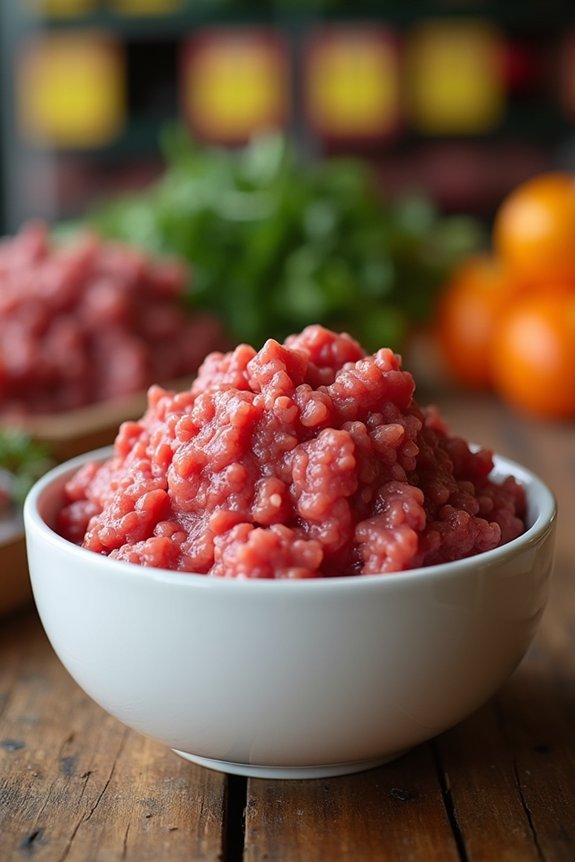
Why does ground beef keep climbing in price when so many people complain about the cost? The answer lies in strong ground beef demand that refuses to quit. Despite March-April 2026 prices hovering around $6.70 to $6.90 per pound, consumers keep buying. USDA beef forecasts predict a 10.1% price increase for 2026, yet domestic consumer demand for beef has risen for two consecutive years straight.
Here’s what’s really happening: you’re not alone in wanting beef. The vegan and vegetarian share dropped from 14% in 2020 to just 7% in 2025. People want their burgers and steaks, period. Retailers and restaurants know this. They’re promoting cheaper cuts and burger-focused menus because price strength continues despite tight lean beef supply. This demand tells us Americans still crave beef, no matter what the price tag says.
Why Price Relief Won’t Come Before 2028
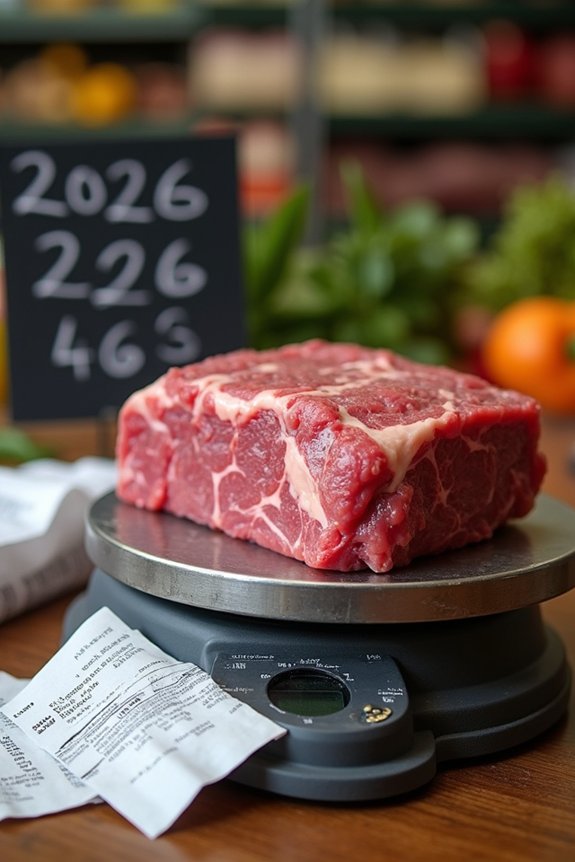
So here’s the tough truth: even though demand’s pushing prices sky-high, you won’t see relief at the grocery store checkout anytime soon. Cattle inventories sit at a 75-year low, and here’s the kicker—herd rebuilding moves at a snail’s pace. We’re looking at depressed herd sizes persisting into 2028, which means beef prices will stay elevated through 2027 and beyond. Even experts like Glynn Tonsor acknowledge that meaningful price relief won’t arrive before late 2028. Supply constraints from tight cattle inventories are the real culprit here. Import adjustments and tariffs won’t fix the fundamental problem: we simply don’t have enough cattle to meet demand. That’s why 2026 beef prices remain stubbornly high, and honest forecasters aren’t predicting dramatic changes anytime soon.
How to Navigate High Ground Beef Prices Until 2028
What’s a budget-conscious shopper supposed to do when ground beef costs $6.70 to $6.90 per pound? You’ve got options. First, stretch your ground beef further by mixing it with ground turkey or plant-based alternatives in recipes like tacos and meatballs. Second, buy in bulk when prices dip slightly, then freeze portions for later. Third, explore cheaper cuts like chuck roast that you can grind yourself. Since cattle inventories won’t recover meaningfully until 2028, these supply constraints won’t ease soon. Meanwhile, demand remains strong, keeping prices elevated. Consider meatless Mondays to reduce your weekly expenses. Finally, track sales at different stores—prices vary. These strategies help you navigate 2026’s pricey ground beef market without breaking the bank.