
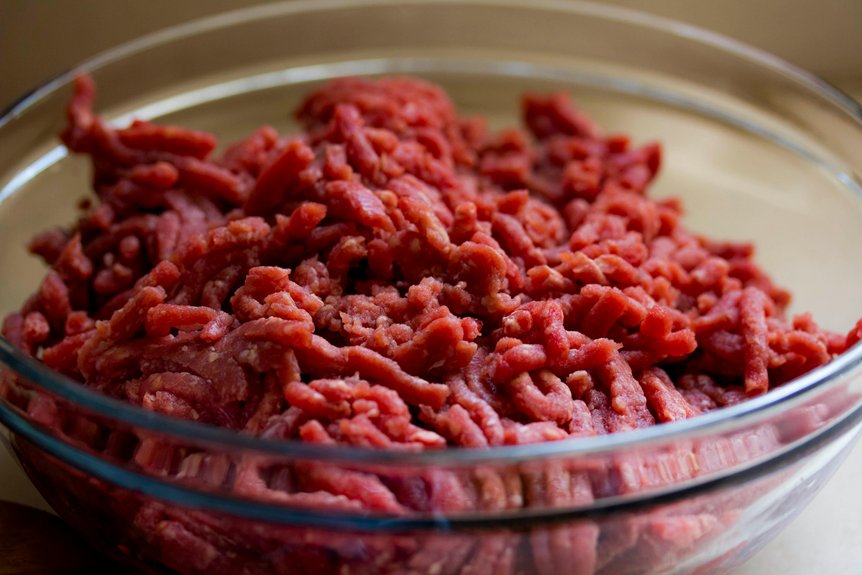
Ground chuck and ground beef aren’t identical—ground chuck comes specifically from the shoulder region, while ground beef is a generic blend from various cuts. This matters because ground chuck offers consistent texture and flavor, typically at an 80/20 fat ratio that keeps things juicy. Regular ground beef might mix trimmings from steaks and roasts with leaner ratios like 85/15 or 90/10, affecting how your dishes turn out. Understanding these differences helps you pick the right meat for your recipe’s needs.
Ground Chuck vs. Ground Beef: Key Differences
Ever wondered why your burger recipe calls for ground chuck instead of just any ground beef? Here’s the thing—they’re not the same. Ground chuck comes specifically from the shoulder area and typically contains 80% lean meat and 20% fat. Regular ground beef is a generic label that can come from multiple cuts with varying fat ratios like 85/15 or 90/10.
That extra fat content in ground chuck makes a real difference. You’ll get juicier, more flavorful burgers and meatloaf because the fat keeps everything moist and holds together better. Leaner ground beef tends to crumble more easily in dishes like tacos or chili, which honestly works fine for those applications.
Understanding these differences helps you pick the right option for whatever you’re cooking. It’s that simple.
Where Each Cut Comes From and Why It Matters
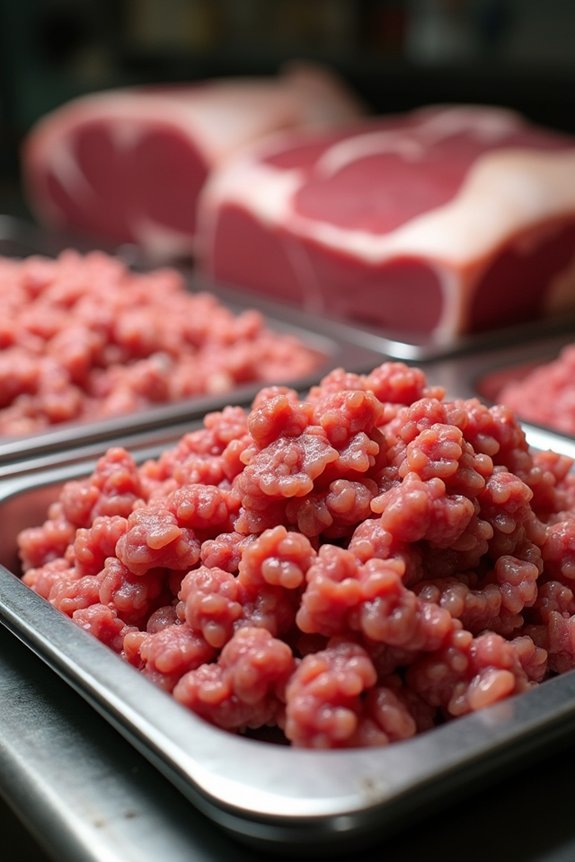
Why does it matter where your ground beef comes from? The source cut directly affects what you’re bringing home. Ground chuck comes from the shoulder region, while generic ground beef might blend trimmings from steaks, roasts, and loins. This difference matters because it determines your fat content and cooking results.
When you choose ground chuck, you’re getting meat from a single source, which creates consistent texture and flavor. Ground beef’s variability means you never quite know what you’re getting—it’s like the mystery meat of the meat world. Understanding your source cut helps you select the right option for your recipe. Ground chuck’s typical 80/20 ratio delivers juiciness that generic blends can’t always guarantee, making your choice genuinely influential.
Fat Content Drives Everything Else
The fat percentage in ground meat is the real catalyst here—it’s what actually determines how your burger tastes, how fast it cooks, and whether you’ll end up with a dry disappointment or a juicy success. Ground chuck’s 80/20 ratio means you’re getting more fat than leaner options like 85/15 ground round, and that extra fat keeps moisture locked in during cooking while boosting flavor. When you’re deciding between ground chuck and regular ground beef, you’re essentially choosing how much fat you want working in your favor, and that choice ripples through every step from pan to plate.
Fat Percentage Determines Flavor
How much fat’s actually in your ground beef? That’s the million-dollar question that separates ground chuck from leaner varieties. I’ll be straight with you—fat percentage determines flavor intensity, and understanding this difference changes everything about your cooking.
| Beef Type | Fat Content | Flavor Profile |
|---|---|---|
| Ground Chuck | 80/20 | Rich, juicy, bold |
| Lean Ground Beef | 85/15 | Moderate, balanced |
| Extra Lean | 90/10 | Mild, denser |
The 80/20 ratio in ground chuck delivers that satisfying richness you’re craving in burgers and meatloaf. That fat carries flavor compounds throughout the meat. With lean ground beef varieties, you’re getting less fat content, which means less flavor punch. Here’s what matters: those extra percentage points aren’t trivial. They’re the difference between a memorable meal and something forgettable.
Cooking Speed and Moisture
Fat doesn’t just sit in your ground beef—it actively transforms how the meat cooks from the moment it hits the pan. When you use ground chuck (80/20), the fat content renders quickly, speeding up your cooking time compared to leaner blends like 90/10. This happens because fat conducts heat efficiently, letting the meat brown faster.
Here’s the trade-off: while higher fat cooks quicker initially, it also shrinks more as that fat escapes. However, you’ll notice improved moisture retention. That rendered fat keeps each bite juicier, preventing the dry, crumbly texture you’d get from leaner options. Understanding your ground beef’s fat ratio helps you predict exactly how long your cooking time will take and how moist your final dish becomes.
How Fat Affects Flavor and Juiciness
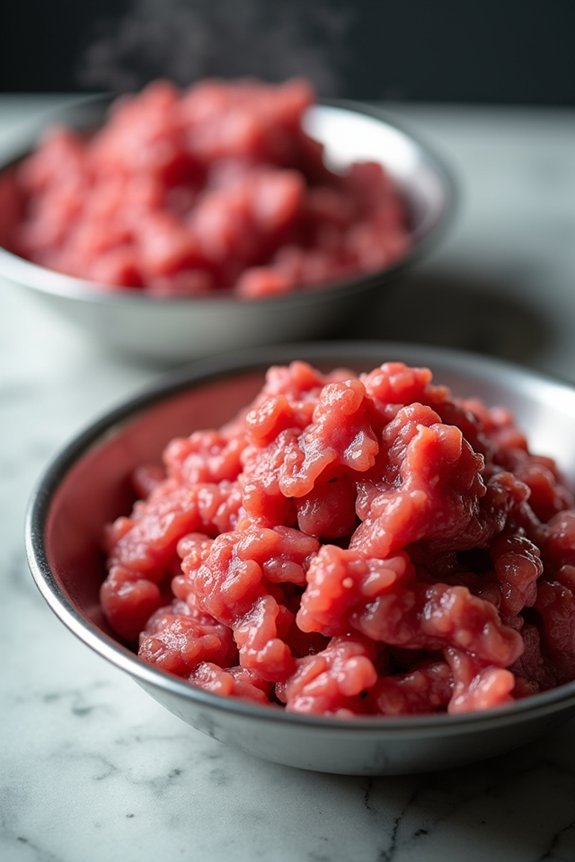
Ever wonder why some ground beef stays juicy and tender while other batches turn out dry and crumbly? The answer lies in fat content. Ground chuck, with its 80/20 lean-to-fat ratio, delivers superior juiciness because fat acts like a moisture sponge during cooking. That fat carries the beefy flavor you’re craving—it’s where taste lives.
Leaner options like 85/15 or 90/10 ground beef lose moisture more readily, resulting in a drier, less flavorful final product. When you cook ground chuck, the fat renders slowly, keeping your burgers, meatballs, and meatloaf tender and succulent. The fat doesn’t just improve texture; it’s genuinely essential for authentic beef flavor. If you’ve ever wondered why restaurant burgers taste better, now you know—they’re using fattier blends like ground chuck.
Why Ground Chuck Holds Together Better Than Ground Beef
I’ll explain why ground chuck stays together better than other ground beef varieties, and it really comes down to one thing: fat content and how it works during cooking. Ground chuck’s 80/20 ratio means you’ve got enough intramuscular fat distributed throughout the meat to act as a binder—when you heat it, that fat renders just enough to create cohesion in your meatballs or meatloaf, while leaner cuts like 90/10 ground beef lack that same binding power and tend to crumble apart. The chuck primal’s uniform fat distribution is basically your secret weapon for holding shapes intact, which is why I’d reach for ground chuck whenever I’m forming meat into a specific shape rather than crumbling it for tacos.
Fat Content’s Binding Role
Why does ground chuck squeeze into a meatball that stays put, while leaner ground beef crumbles like it’s got commitment issues? The answer lies in fat’s powerful binding role.
Ground chuck’s 80/20 lean-to-fat ratio creates stronger cohesion than leaner blends. Here’s how:
- Fat renders during cooking, creating a binding medium that holds the meat matrix together
- Fat-soluble connections form, allowing juices to cling within your meatball or meatloaf instead of escaping
- The 20% fat acts as glue, reducing crumbling compared to 85/15 or 90/10 ground beef
- Moisture stays locked in, keeping your shaped dishes tender and structurally sound
When you mix ground chuck, that fat coats the meat fibers. During cooking, the fat melts and binds everything together. Leaner cuts lack this advantage, so your burgers and meatballs hold their shape better with chuck’s superior fat content.
Texture Consistency During Cooking
Have you noticed how ground chuck holds together like it’s got a plan, while leaner ground beef seems to fall apart at the slightest provocation? That’s because ground chuck’s 80/20 ratio gives it serious advantages. The fat content acts as a natural binding agent, melting during cooking to create moisture that keeps your patty cohesive. When you’re browning ground chuck, the fat literally glues the muscle fibers together, preventing crumbling.
Leaner varieties like 85/15 or 90/10 lack this protective fat layer. Without adequate binding properties, they break apart easily unless you add extra binders or moisture. Ground chuck’s shoulder and neck origin also contributes to more consistent texture throughout. You’ll notice your burgers and meatballs maintain their formed shape beautifully, staying intact from skillet to plate every time.
Price Differences and What Drives Them
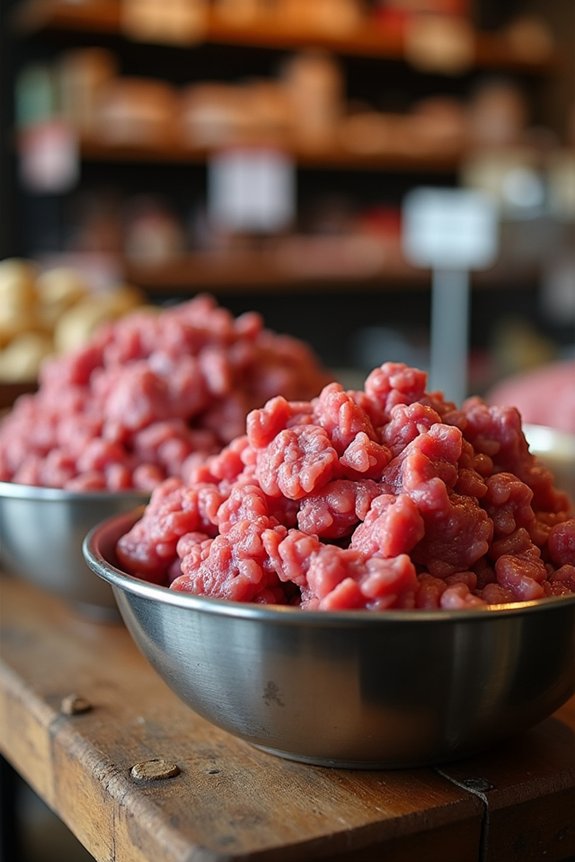
When you’re standing at the meat counter comparing prices, you’ll notice that ground chuck usually costs a bit more than standard ground beef—and there’s actually a good reason for that difference.
Here’s what drives those price variations:
- Fat content matters – Ground chuck typically features an 80/20 ratio, meaning more marbling that creates juiciness and flavor
- Cut specificity – Chuck comes from the shoulder region, a premium source with natural tenderness
- Quality perception – Labeled cuts signal better quality than generic blends from multiple sources
- Special lineage – Grass-fed, heritage, or Wagyu varieties command higher prices than standard options
You’re essentially paying for superior taste and texture when you choose ground chuck. Standard ground beef might combine trimmings from various cuts and leaner ratios like 85/15 or 90/10, which explains the lower price tag.
The 80/20, 85/15, 90/10 Ratio Guide: When to Use Each
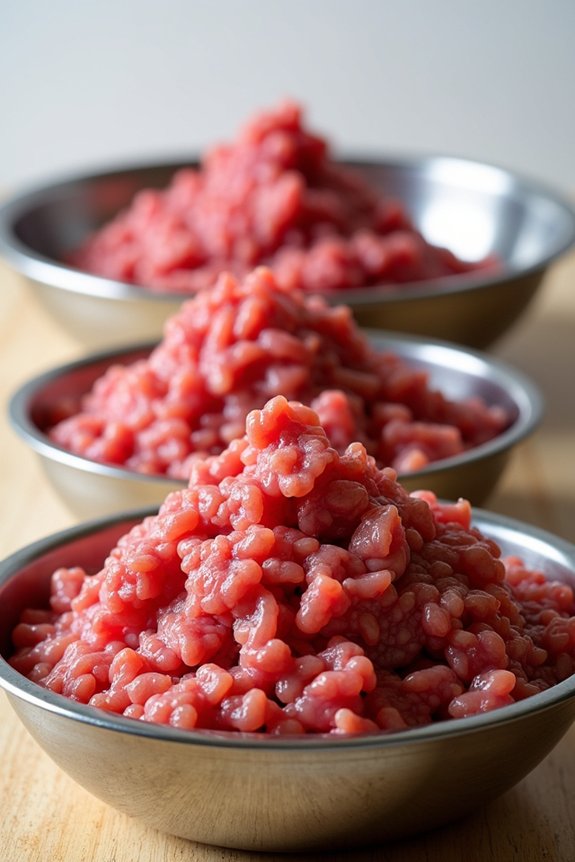
Ever wonder what those numbers on the ground beef package actually mean for your cooking?
Those ratios represent lean meat versus fat, and they’re game-changer for your recipes. Ground chuck at 80/20 strikes the sweet spot—you get moisture and flavor without excess grease. I’d reach for it when making burgers or meatloaf since the fat keeps everything juicy and helps ingredients bind together.
Lean ground beef at 90/10 is your go-to when you want fewer calories and faster cooking. It works beautifully for tacos topped with rich sauces where extra fat isn’t needed. The 85/15 fat ratio offers a nice middle ground for most dishes.
Here’s the thing: leaner blends cook quicker and shrink less, while fattier options take longer but deliver more flavor. Match your fat ratio to your recipe, adjust your heat accordingly, and you’ll nail consistent results every time.
Ground Chuck 80/20: The Goldilocks Ratio for Most Cooks
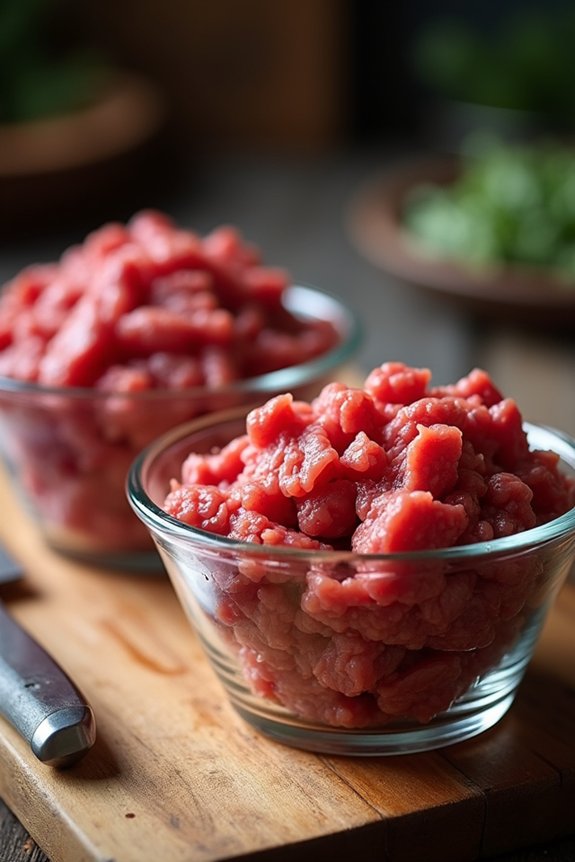
Why does 80/20 ground chuck work so well for nearly everything you cook? It’s the sweet spot that balances flavor with practicality. The 20% fat content keeps your burgers juicy and your meatballs tender without making them greasy. Here’s what makes this ratio your new kitchen best friend:
- Browning ability – The fat renders beautifully, creating those delicious browned bits
- Moisture retention – Your cooked meat stays juicy, not dry
- Flavor enhancement – Fat carries taste, making each bite satisfying
- Cohesion – Ground chuck holds together perfectly for meatloaf and patties
Most cooks default to 80/20 because it delivers results consistently. You’ll get flavorful, slightly moist meat that works whether you’re grilling burgers or simmering sauce. The fat content won’t overwhelm you, making this ratio genuinely versatile.
Ground Round 85/15: When You Need Leaner Meat
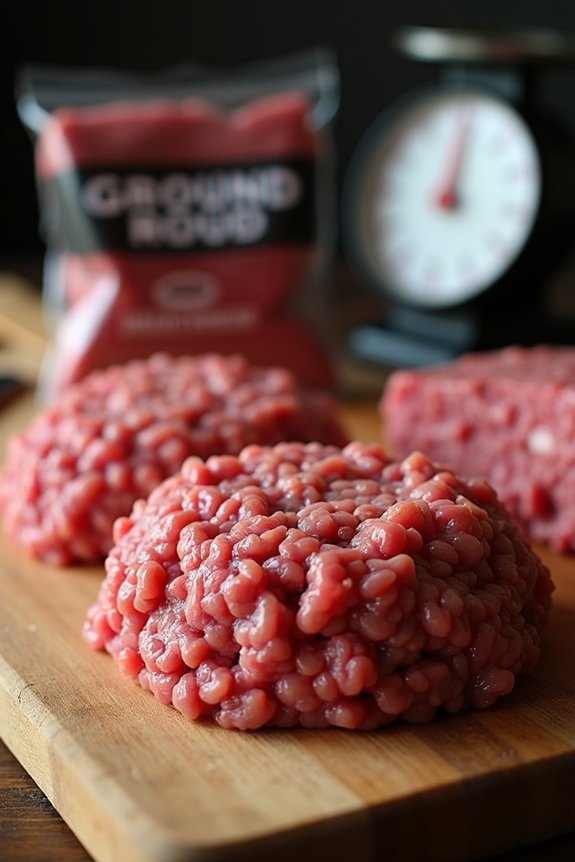
When you’re working with ground round’s 85/15 ratio, you’re trading some juiciness for a leaner, denser texture that won’t leave you with a puddle of grease in your pan—which I find pretty handy when I’m making casseroles or dishes swimming in rich sauces. This leaner cut works best in applications where you want the meat to hold its shape and absorb flavors rather than contribute its own fatty richness, so think hearty bolognese, stuffed peppers, or meatloaf rather than burgers that need that juicy factor. The reduced fat means you’ll get more protein per serving, but you might need to boost flavor with extra seasonings or a touch of added oil to keep things from tasting too bland.
Leaner Texture And Density
If you’re hunting for ground beef that’s noticeably leaner than standard ground chuck, ground round at an 85/15 lean-to-fat ratio is your answer. This grind delivers a distinctly different eating experience:
- Denser texture – You’ll notice the meat feels more compact and substantial in your mouth
- Less juiciness – The reduced fat means fewer flavorful juices during cooking
- Firmer bite – Ground round won’t crumble quite like fattier ground chuck does
- Reduced shrinkage – You’re losing less moisture weight, which sounds like a win until you’re actually cooking it
The leanness comes from round cuts sourced from the rump, hips, and hind legs. That low fat content creates a texture that’s less forgiving during cooking. You’ll want to add sauces, broth, or extra ingredients to prevent drying out.
Ideal Dish Applications
Where does ground round 85/15 actually shine in your kitchen? You’ll want to reach for this leaner ground beef when you’re making dishes that don’t rely on fat for flavor. Unlike ground chuck, which carries more marbling, ground round works beautifully in casseroles and rich sauces where other ingredients provide moisture. I’d use it for chili, spaghetti bolognese, or taco filling—recipes that benefit from its dense texture and reduced grease. Ground round also excels in lighter burger patties when you’re watching fat intake. The trick? Pair it with added fats like cheese or butter to compensate for its leanness. This ideal dish applications strategy keeps your meals flavorful without feeling heavy, proving ground beef varieties each have their purpose in your cooking arsenal.
Ground Beef 70/30: Higher Fat for Maximum Flavor
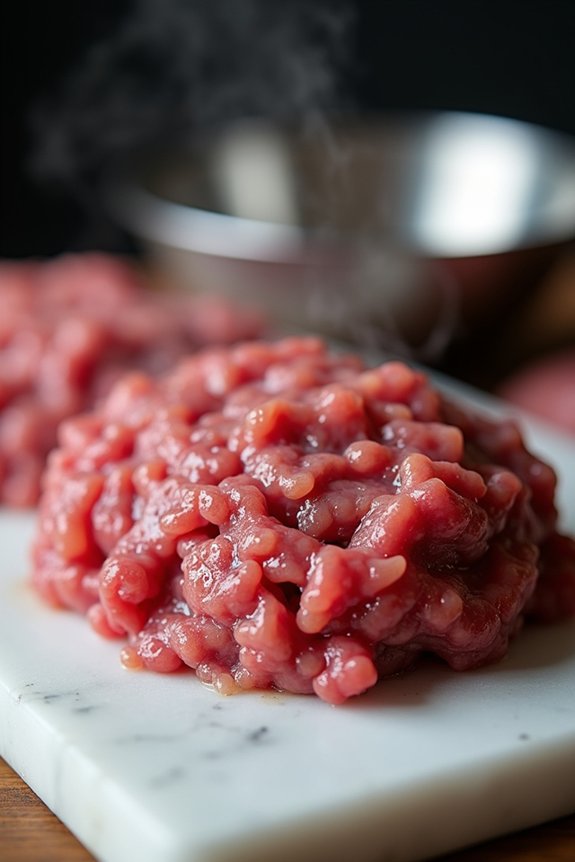
Why does 70/30 ground beef taste so much better than leaner options? The answer lies in its fat content. That 30% fat delivers richness and moisture you’ll notice in every bite. Here’s what makes 70/30 your best choice for certain dishes:
- Enhanced flavor — Fat carries taste, making your burgers and meatballs genuinely delicious
- Superior juiciness — The moisture keeps everything tender, even if you slightly overcook it
- Better texture — Meatloaf and meatballs hold together beautifully with this ratio
- Affordable quality — You’re getting restaurant-level results without breaking the bank
I won’t sugarcoat it: you’ll experience higher shrinkage during cooking as fat renders out, affecting your yield. That’s why I recommend adding binders like breadcrumbs and avoiding overcooking. When you respect 70/30 beef’s properties, you’re joining cooks who prioritize genuine flavor.
Choosing Ground Chuck for Meatloaf and Shaped Dishes
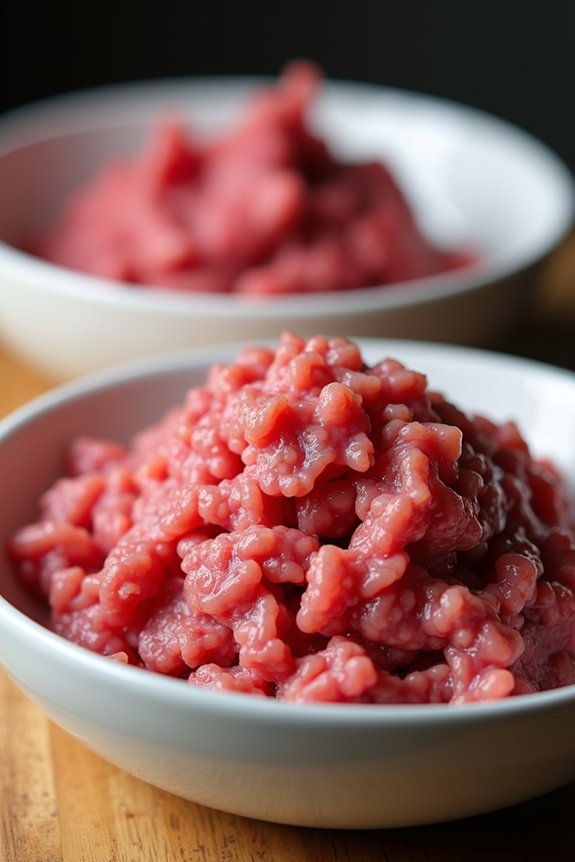
Ground chuck takes the spotlight when you’re making meatloaf, meatballs, or burger patties because it’s specifically cut from the shoulder and neck area of the cow—a naturally fattier section that gives you around 80/20 meat-to-fat ratio. That fat content isn’t the enemy; it’s your essentially weapon. The marbling helps your shaped dishes hold together during cooking without falling apart like they’ve had a rough day. You’ll find your meatloaf stays moist and flavorful even after baking. The fat also improves cohesion when you’re mixing ingredients, making everything bind better. When shopping, look for labels confirming the grind comes from chuck and check that 80/20 ratio. You’re secret weapon getting tenderness and structure in one package.
Why Leaner Ground Beef Works Better in Chilis and Soups
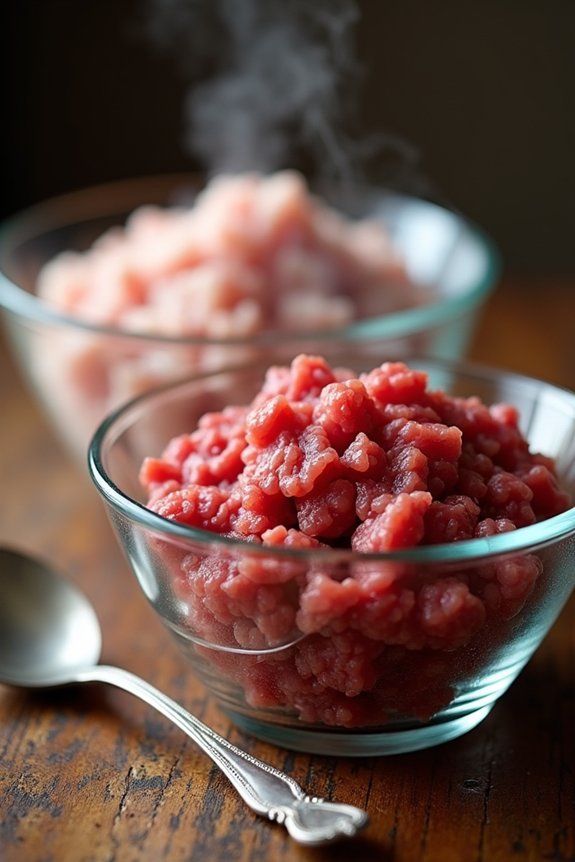
How’d you like your soup to taste rich and flavorful instead of sitting under a slick layer of grease?
When I’m making chilis and soups, I reach for leaner ground beef like 85/15 or 90/10 blends. Here’s why they’re game-changers:
- Less rendered fat – Higher fat blends separate during simmering, creating that unwelcome greasy finish
- Cleaner sauces – Leaner beef helps broths and sauces thicken properly without excess oil
- Better texture – Your soup maintains consistency instead of becoming slick
- Flavor retention – Aromatics, spices, and flavorful additives keep everything tasty without needing extra fat
I’ve found that leaner ground beef still delivers satisfying flavor when I build depth through garlic, onions, and quality seasonings. Check labels for those lean-to-fat ratios before cooking. Your future bowls of chili will thank you.
Cracking the Lean-to-Fat Ratio Code
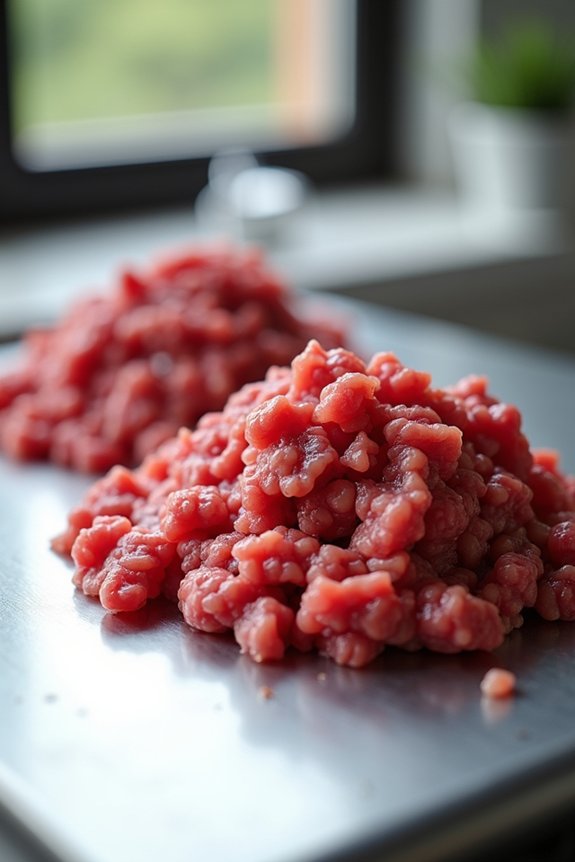
Ever wondered what those numbers on ground beef packages actually mean? They’re your roadmap to understanding fat content. That “80/20” label you’ll see on ground chuck? It means 80% lean meat and 20% fat. Ground round carries different ratios since it comes from a different cut. The chuck vs round distinction matters because their fat distributions affect how your meat behaves in recipes. Higher fat content—like 70/30—keeps burgers juicy but adds calories. Leaner options, say 90/10, work better for health-conscious cooks. Grass-fed varieties shake things up with unexpected leanness around 7-10% fat. Reading labels carefully helps you pick exactly what you need for your cooking goals.
Ground Chuck Storage: Freezing, Handling, and Shelf Life
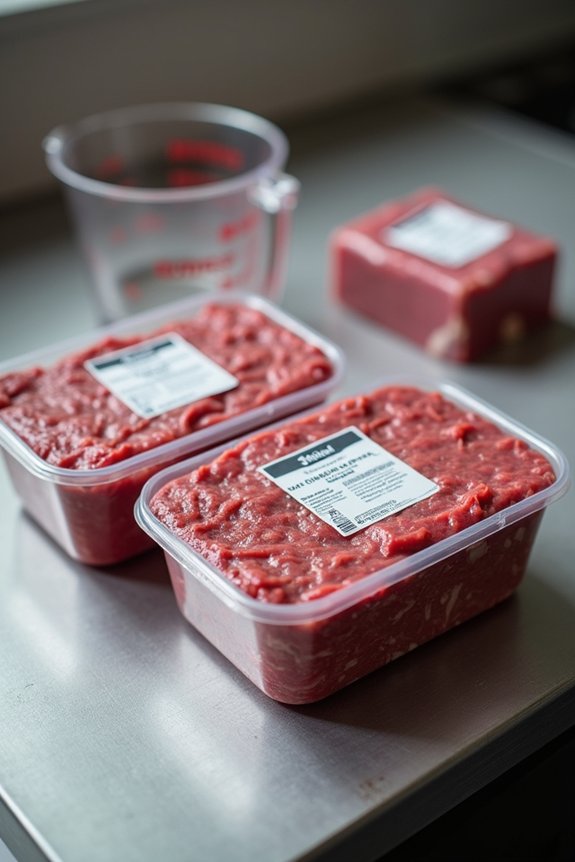
Now that you’ve picked the right fat ratio for your recipe, keeping that ground chuck fresh becomes your next job. I’ll walk you through storage basics that’ll keep your meat in top shape.
Here’s what you need to know:
- Refrigerate promptly — Store ground chuck at 40°F (4°C) or below, using it within 1–2 days
- Freeze smart — Place meat in airtight, moisture-vapor–tight containers or heavy-duty freezer bags to prevent freezer burn
- Label everything — Mark your freezer packages with dates; ground chuck stays quality for 3–4 months frozen
- Thaw safely — Defrost overnight in the refrigerator, then cook immediately (no refreezing allowed)
Pro tip: Portion ground chuck into usable sizes before freezing. This way, you’ll only thaw what you actually need, saving time and preventing waste.