
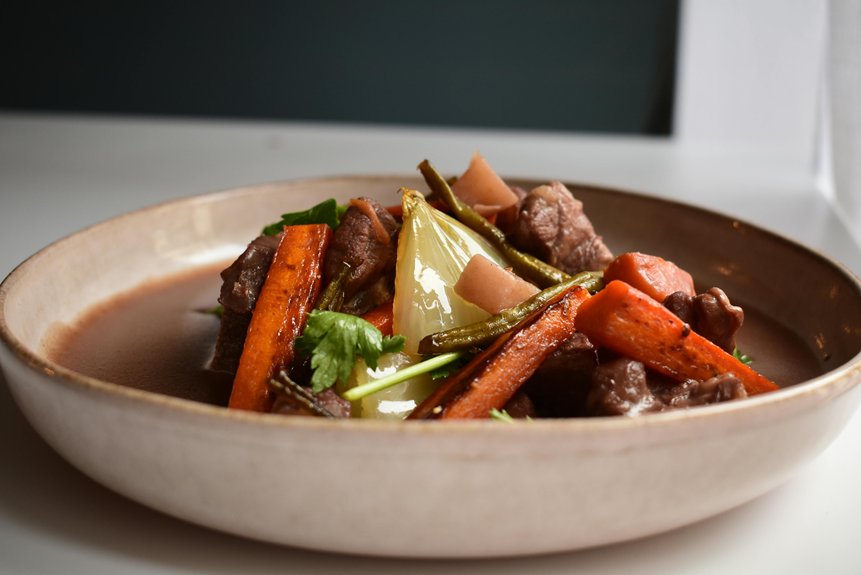
Beef stew’s health factor hinges on your choices. I’d say lean cuts like chuck roast deliver serious protein—about 28 grams per serving—while low-sodium broth and careful fat-skimming keep calories in check. Swap heavy potatoes for carrots and cauliflower to boost fiber without excess carbs. Slow simmering naturally tenderizes the meat and lets fat rise for easy removal. A balanced 1.5-cup serving lands around 368 calories with solid nutrition. The real magic happens when you understand which ingredient swaps transform this comfort classic into something genuinely nourishing.
What Makes Beef Stew Healthy or Unhealthy
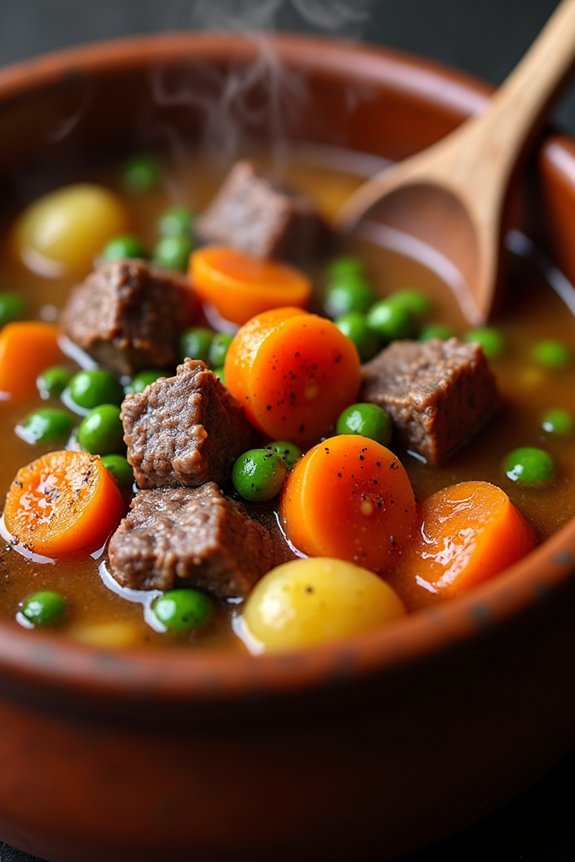
What transforms beef stew from a comforting classic into either a nutritional powerhouse or a calorie trap? I’ll tell you: it’s all about your choices. When you select lean beef like chuck roast, you’re getting about 28 grams of protein per 3-ounce serving—that’s muscle-supporting fuel. Swap regular broth for low-sodium versions, trim visible fat, and skip heavy cream sauces. Instead, use tomato paste or cornstarch to thicken. Here’s where it gets interesting: potatoes add starch and calories. Reduce them and boost non-starchy vegetables instead. Your slow-simmering Dutch oven does the heavy lifting, rendering fat naturally without excess oil. By making these tweaks—lean meat, better broth, strategic vegetables, and smart cooking methods—you’re controlling nutrition density and creating a stew that truly works for your health goals.
5 Ingredient Swaps to Cut Calories and Boost Nutrition
How’d you like to transform your beef stew without sacrificing that rich, satisfying taste?
I’ve found five swaps that’ll revolutionize your recipe while keeping you on track with your health goals:
- Lean beef cuts: Choose bottom round or trimmed chuck roast to slash fat while keeping protein high
- Lower-sodium broth: Switch to low-sodium beef broth and reduce quantity to cut sodium and liquid calories
- Vegetable substitutions: Replace potatoes with radishes or cauliflower, or use fewer potatoes to lower carbs
- Tomato paste and cornstarch slurry: Skip flour-heavy thickeners; use tomato paste or cornstarch slurry instead for gluten-free options
- Nutrient-dense sides: Ditch bread rolls for cauliflower rice or roasted vegetables to boost fiber and micronutrients
These ingredient swaps don’t compromise flavor—they enhance your stew’s nutritional profile while keeping calories in check.
Why Slow Cooking Reduces Fat in Beef Stew
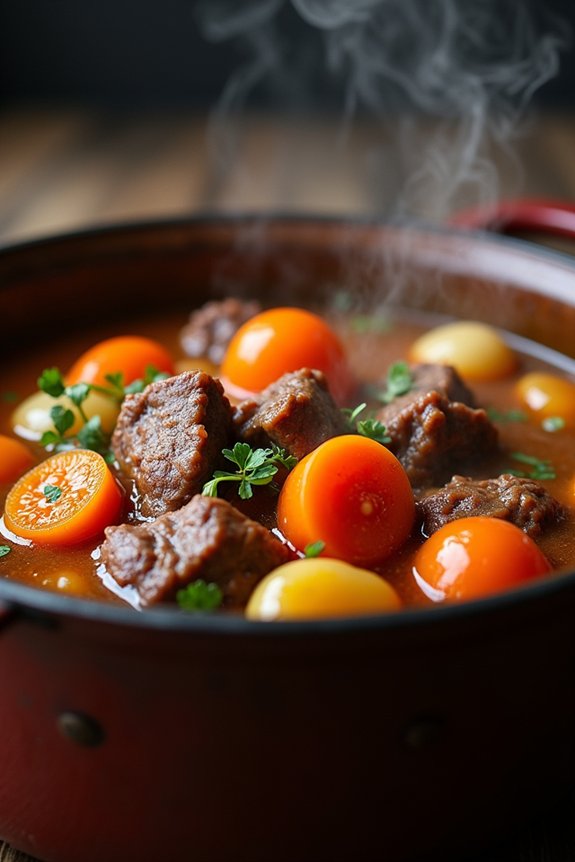
it’s actually one of the best-kept secrets for making your beef stew leaner without losing that deep, satisfying flavor. When you simmer beef in a Dutch oven at medium-low heat, fat naturally rises to the surface. Once cooled, you’ll skim it right off—it’s like magic, honestly. A chuck roast breaks down beautifully during simmering, creating richness through connective tissue rather than added fat. You’ll need minimal oil for browning. Using a thickening slurry with cornstarch or potatoes eliminates heavy cream or fatty roux. Pair this with lean meat, low-sodium broth, and patient simmering, and you’ve got tenderness plus nutrition.
| Technique | Benefit | Result |
|---|---|---|
| Fat skimming | Removes surface fat | Lower total fat |
| Slow simmering | Breaks collagen | Rich texture naturally |
| Slurry thickening | Avoids cream | Maintains leanness |
Protein, Fiber, and Vitamins: The Nutritional Breakdown
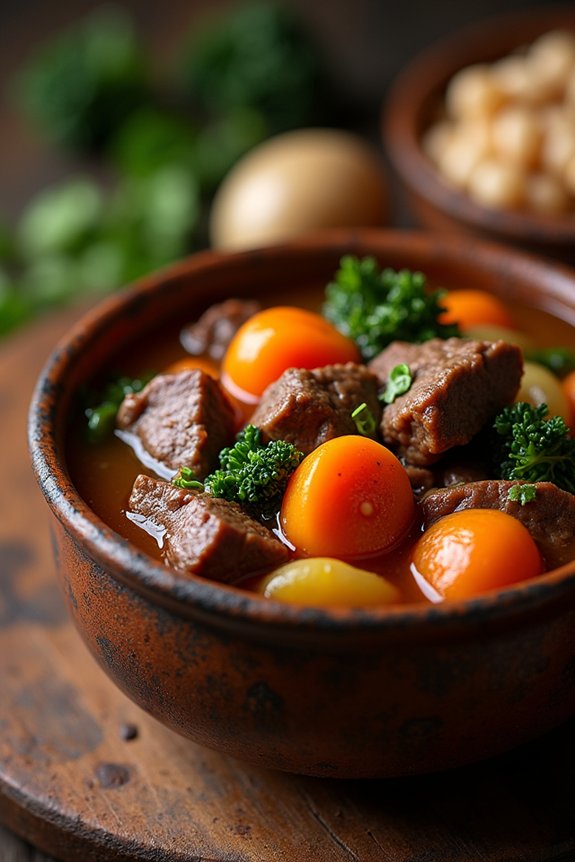
Why should you care what’s actually inside your bowl of beef stew? Because this comfort food delivers serious nutritional benefits when you make smart choices. A single 3-ounce serving provides about 28 grams of protein, supporting muscle health and recovery. That’s genuinely impressive for a home-cooked meal.
Here’s what makes beef stew nutritionally balanced:
- Lean cuts like bottom round minimize fat while maximizing protein content
- Carrots and potatoes supply dietary fiber and essential vitamins your body needs
- Iron and zinc from beef boost blood health and immunity
- Balanced serving size (roughly 1.5 cups) yields approximately 368 kcal
- Controlled portions help you stay satisfied without excess calories
The vegetables contribute fiber that aids digestion, while the beef delivers minerals supporting overall wellness. You’re looking at genuine, whole-food nutrition here.
How Much to Eat: Serving Sizes and Calorie Content
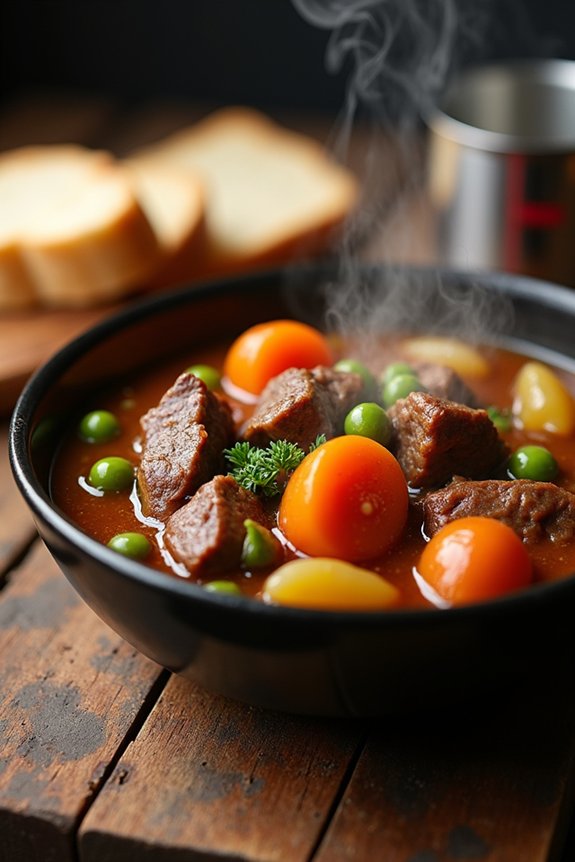
When you’re ladling beef stew into a bowl, portion size matters more than you might think. A typical beef stew serving size is about 1.5 cups—one complete meal for most people. You’ll consume roughly 368–440 calories per serving, depending on your recipe variant. Each serving delivers 28–39 grams of protein, which keeps you satisfied longer.
To manage calories per serving, I’d suggest reducing potato amount while boosting vegetable quantity instead. Swap regular broth for low-sodium broth, and choose lean beef cuts to trim unnecessary fat. If you track nutrition variation through weight watcher points, expect around 7 points per serving. Small tweaks in portion control and ingredient choices help you enjoy hearty beef stew without derailing your health goals.