
USDA forecasts beef prices climbing 11.6% through 2025 into 2026, with brisket heading toward $7 per pound as cattle supplies tighten and drought impacts persist. Select grades run $2–$3.50/lb, Choice $3–$5/lb, and Prime $4–$10.50/lb depending on your retailer. Whole packers cost more upfront than trimmed flats, but warehouse clubs like Costco offer solid bulk savings. Regional variation matters—Texas enjoys lower prices while major metros pay premiums. Timing purchases before holidays and understanding grade differences helps you stretch your budget considerably.
Brisket Prices Will Rise 11.6% Through 2026: Here’s What That Means for Your Budget
Why should you care about an 11.6% price increase on beef brisket? Because it’ll hit your wallet harder than you’d expect. The USDA forecasts beef prices to climb through 2026, and brisket’s already showing pressure from tight cattle supplies and steady demand.
I’ll be straight with you: this matters whether you’re grilling at home or running a restaurant. Ground beef’s creeping toward $7 per pound, and brisket follows similar trends. Tight herd inventories, drought impacts, and processing bottlenecks are squeezing supply nationwide.
Here’s what you’re facing—higher beef prices mean tougher budget decisions. You’re joining millions adjusting meal plans and portion sizes. Understanding these beef prices helps you plan smarter purchases and anticipate menu changes at your favorite spots.
Grade First: Select, Choice, and Prime Brisket Prices Compared
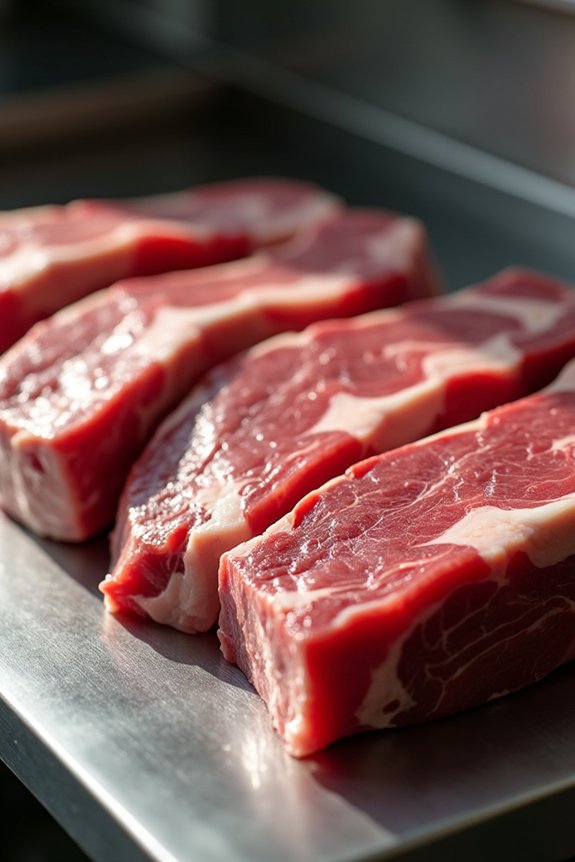
Ever notice how a brisket’s price tag can swing by $3 or $4 per pound depending on where you shop? The grade you choose makes a huge difference in what you’ll pay. Let me break down what you’re looking at:
Brisket prices swing $3-$4 per pound by grade and retailer. Your choice of Select, Choice, or Prime determines your final cost.
- Select Grade runs $2 to $3.50 per pound—the budget-friendly option that still delivers solid flavor
- Choice Grade costs $3 to $5 per pound—the sweet spot most of us go for when balancing quality and price
- Prime Grade ranges $4 to $5 per pound at mainstream stores, jumping to $10.50 at specialty shops like Snake River Farms
Understanding the brisket price per pound by grade helps you make smart choices. Walmart and Costco offer competitive Select and Choice pricing, while premium butchers justify higher costs through superior marbling and tenderness. Your budget determines which grade works best for your next cookout.
Where to Buy: Costco, Walmart, and H-E-B Pricing Breakdowns
You’ve got plenty of options when you’re hunting for brisket deals, and honestly, where you shop can save you serious money. Costco keeps brisket prices competitive at $4–$5 per pound for Choice and Prime grades. Walmart undercuts most retailers with full packers around $2.18–$2.69 per pound—basically the warehouse special without the membership fee. H-E-B splits the difference, pricing whole brisket near $3.60 per pound, though trimmed cuts climb to $5. Sam’s Club members find Choice around $4 and Prime just under $5 per pound. Publix runs higher at $6.30 for Choice whole brisket. The takeaway? Warehouse clubs and Walmart offer the lowest brisket price per pound, while regional grocers charge premium rates. Pick your spot based on quality needs and location convenience.
Whole Packers vs. Trimmed Flats: Which Costs Less per Pound
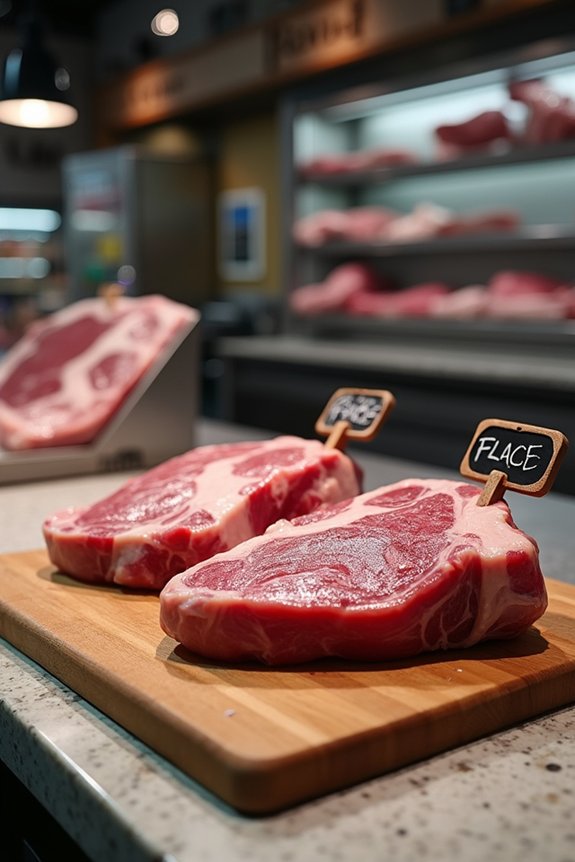
When you’re shopping for brisket, you’ll notice that whole packers typically cost more per pound—around $12.50/lb for premium options like Porter Road’s pasture-raised beef—while trimmed flats range from $7–$12.50/lb depending on the retailer and quality grade. The price difference comes down to trimming and cooking shrinkage; a whole packer includes more fat that’ll render out during smoking, which means you’re paying for weight that won’t end up on your plate. If you crunch the numbers on actual edible pounds after cooking, that cheaper flat sometimes costs you more overall, making the packer’s higher sticker price less painful than it first appears.
Whole Packer Price Advantage
Why do whole packers sometimes cost more per pound than trimmed flats, and when does buying the whole cut actually save you money? The price per pound difference depends on where you shop and what grade you’re buying.
Here’s what I’ve found:
- Whole packers run $4–$12.50 per pound depending on grade and retailer (Costco Prime sits around $4–$5, while pasture-raised options hit $12.50).
- Trimmed flats often cost less per pound—Costco Select flats go for $2–$2.50 per pound versus whole packers.
- Premium grades flip the script—Prime and Wagyu whole packers can exceed $8–$12 per pound, making flats the better deal.
The takeaway? You’ll save money buying whole packers at warehouse clubs, but specialty sources might make trimmed flats smarter economically.
Trimmed Flat Cost Comparison
Now that I’ve covered why whole packers sometimes cost more upfront, let’s get specific about actual dollar amounts. When you’re comparing beef price per pound, trimmed flats generally win the affordability game. You’ll find USDA Choice flats around $12.50/lb at grocery stores like Publix, while whole packers at warehouse clubs run $4–$5/lb for Choice grade. Here’s where it gets interesting though—Walmart sometimes undercuts everyone with options under $3.50–$4.00/lb. The catch? Grade matters. Prime cuts cost significantly more than Choice or Select. Your beef price ultimately depends on where you shop and what grade you choose. Warehouse clubs offer better whole packer deals, but grocery store trimmed flats often deliver lower per-pound costs when comparing similar grades.
Premium Beef Prices: Wagyu, Pasture-Raised, and Specialty Sources
If you’ve ever noticed the price jump between regular grocery store brisket and premium cuts, you’re onto something real—specialty beef comes with a serious cost difference.
When you’re shopping for premium beef prices, you’ll encounter several tiers that reflect quality and sourcing methods:
- Wagyu and specialty sources run $9–$12.41 per pound, offering curated quality labels that justify their higher cost
- Pasture-raised, hormone-free options like Porter Road charge around $12.50 per pound for ethical production standards
- Restaurant-grade cuts exceed $14.50–$40+ per pound, reflecting the premium market’s substantial price dispersion
These aren’t just numbers—they represent different farming practices, animal welfare standards, and flavor profiles. Snake River Farms’ USDA Prime brisket at $10.50 per pound shows how specialty sourcing elevates your meat quality considerably. You’re investing in traceable, higher-quality beef when you choose these options.
Seasonal Price Swings: When Brisket Peaks and Drops
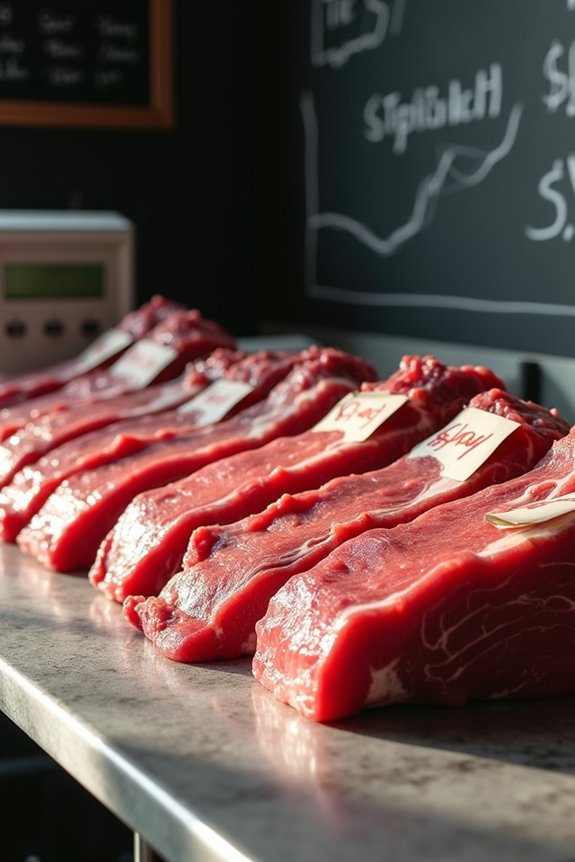
If you’re watching brisket prices for 2026, you’ll notice they swing pretty dramatically depending on the season—and understanding these patterns can save you real money. Summer grilling season and the holidays (especially Memorial Day, Fourth of July, and Christmas) drive demand through the roof, pushing brisket prices to their yearly peaks, while winter months typically offer your best bargains when fewer people are firing up their grills. I’d recommend planning your barbecues and bulk purchases around these predictable dips and spikes rather than assuming prices stay flat year-round.
Holiday Demand Spikes Prices
When do brisket prices climb fastest? You’ll notice holiday demand spikes prices noticeably higher during peak gathering seasons. I’ve watched this pattern repeat year after year, and here’s what drives it:
- Thanksgiving and Christmas rushes push wholesale costs upward as cooks nationwide prepare signature briskets simultaneously
- Limited supply meets surging orders, creating competition among retailers and consumers for the best cuts
- Premium grades disappear quickly, forcing buyers toward higher-priced options or settling for Select instead of Choice
During these windows, you’re looking at noticeable increases above baseline prices. What once cost $2.18–$2.69 per pound at Walmart can jump considerably. I’d recommend planning ahead and purchasing 2–3 weeks before major holidays. Buying early helps you avoid these peak-season markups and ensures better selection for your gathering.
Summer Grilling Season Premiums
Why does summer turn brisket into a hot commodity? It’s simple supply and demand. When warm weather hits, backyard barbecues and family gatherings spike dramatically. Everyone wants brisket, but the supply doesn’t magically increase. That gap between what people want and what’s available pushes prices higher—sometimes well above the typical $4–$5 per-pound range you’d see during slower months.
I’ve noticed retailers struggle to keep briskets stocked during June, July, and August. Costco, Sam’s Club, and Walmart all experience pressure on their inventory. You might find yourself paying closer to $6 per pound or higher when summer peaks. The smart move? Buy brisket during off-season months when demand drops and prices soften. Your wallet’ll thank you.
Winter Lows And Bargains
during the colder months from November through February, demand plummets and retailers slash prices to move inventory before it spoils. You’ll find serious bargains if you know where to look.
- Walmart’s winter brisket price drops to $2.18–$2.69 per pound, making bulk buying realistic for your budget
- Whole packers (12–16 pounds) show steeper discounts than individual cuts, perfect for feeding a crowd
- Store-level promotions vary by location, so checking your local grocery ads pays off
Costco Prime still runs $4–$5 per pound, but that’s quality you’re paying for. Regional supply chain factors mean your neighborhood store might offer deals others don’t. Stock your freezer now—winter’s your golden window for smart brisket shopping.
Regional Pricing Differences: Texas, Major Markets, and Where You Live
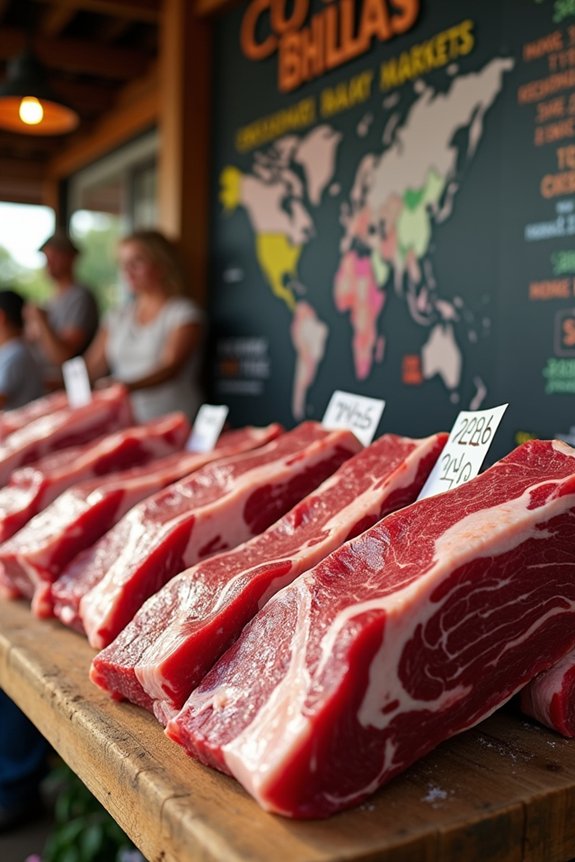
How much you’ll actually pay for brisket in 2026 depends heavily on where you live—and that’s not just a minor difference.
| Market | Select Grade | Choice Grade | Prime Grade |
|---|---|---|---|
| Costco | $2–$2.50/lb | $3–$3.50/lb | $4–$5/lb |
| H-E-B (Texas) | $3.60/lb | — | $4.70/lb |
| Premium Sources | — | — | $12.50/lb |
Texas typically enjoys lower prices than national averages thanks to stronger local beef supply. Major metropolitan areas face higher costs due to limited inventory and increased demand. Your regional pricing depends on store mix, local competition, and supply chain efficiency. Chain stores like Costco compete aggressively on price, while specialty butchers command premium rates. Before 2026, check your area’s specific retailers. What costs $3/lb in Texas might run $5/lb elsewhere—making regional pricing your biggest budget variable.
Buying in Bulk: Wholesale Clubs and Event Pricing Strategies
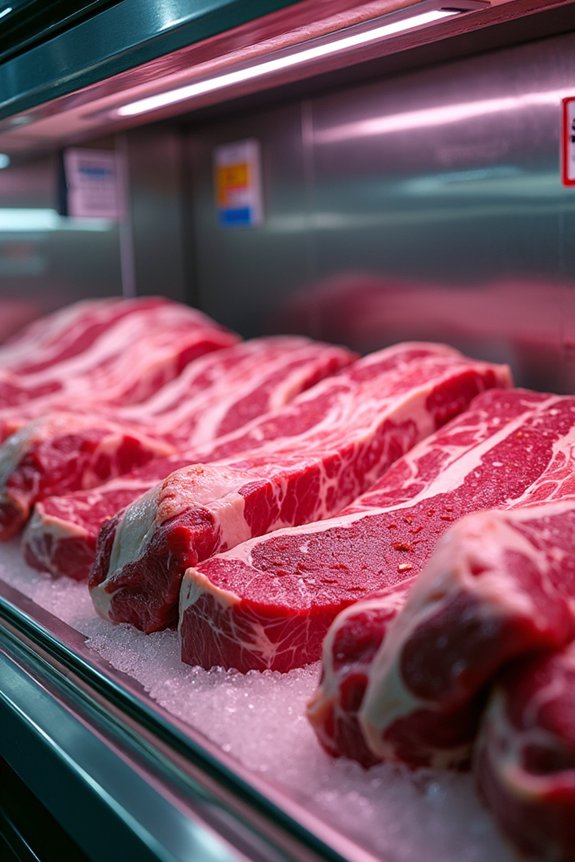
When you’re planning a big cookout or feeding a crowd in 2026, buying brisket in bulk through wholesale clubs can seriously shrink your per-pound costs.
Here’s how to maximize your bulk pricing strategy:
- Shop at Costco or Sam’s Club – Select grades run $2–$3.50 per pound, while Prime sits around $4–$5, giving you substantial savings compared to grocery stores.
- Consider two-pack purchases – Buying multiple briskets spreads your effort across several events, locking in lower bulk pricing per pound.
- Mix protein options – Pairing briskets with multiple butts lets you optimize total event cost without breaking the bank.
These wholesale clubs deliver real value for large gatherings. You’ll notice the difference when you compare club pricing against restaurant rates, which hit $14.50–$40 per pound.
Supply Chain Delays and Cattle Herd Recovery: What’s Driving 2026 Costs
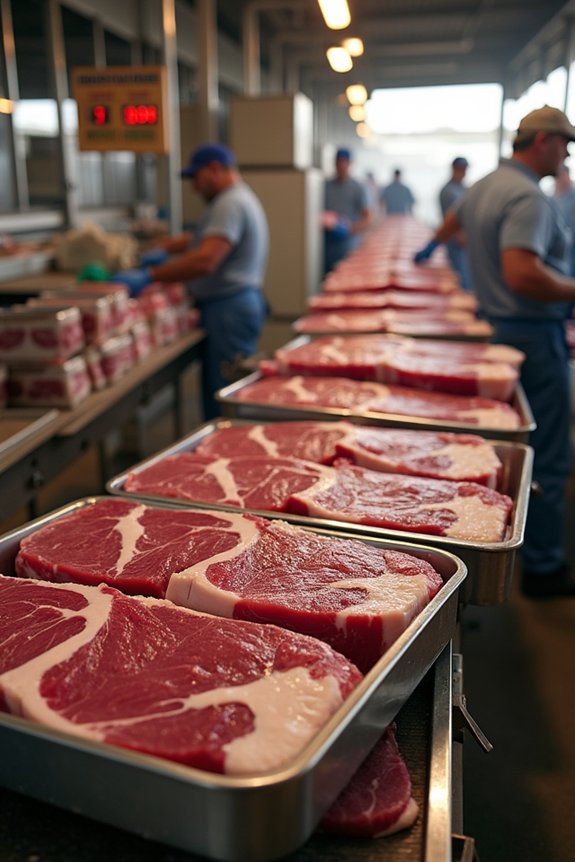
While wholesale clubs can lock in solid savings on bulk brisket purchases, the real story behind 2026 prices lies upstream in the cattle industry itself. I’m talking about the tight cattle supplies and processing bottlenecks that’re squeezing our wallets at checkout.
Here’s what’s happening: drought in grazing regions has shrunk herds to historically low levels, meaning fewer cattle reach processing plants. Those plants can’t move product fast enough anyway—supply chain constraints create a traffic jam of sorts. Beef price forecasts from USDA project an 11.6% increase through 2025, with volatility continuing into 2026.
The cattle cycle recovery moves slowly. We’re looking at years before herds bounce back, keeping wholesale and retail costs elevated. That’s the upstream pressure affecting what you’ll pay for brisket.
What Restaurant Brisket Prices Reveal About Retail Trends Ahead
Why do restaurants serve as a bellwether for what we’ll pay at the grocery store? When restaurants raise menu prices, it signals incoming retail pressures we’ll soon face ourselves.
Restaurants signal coming grocery store prices. When they raise menu costs, retail pressures follow for consumers.
I’ve noticed restaurants absorb brisket price increases through strategic changes:
- Smaller portions – They’re serving less meat per plate to maintain profits
- Menu engineering – Premium cuts disappear, replaced by cheaper alternatives
- Sourcing shifts – They’re switching suppliers and cuts to dodge elevated costs
These moves tell us something important: brisket price pressure isn’t temporary. The 40% cost increases restaurants have weathered over recent years foreshadow what grocery shoppers will encounter in 2026. When establishments can’t absorb costs anymore, those expenses reach your dinner table. Understanding restaurant adaptations helps us prepare for similar retail adjustments ahead.