

About 4 slices of deli turkey equal 2 ounces, though this varies by brand and thickness. Thinner slices might give you 5–6 per serving, while thicker cuts yield closer to 3. Your best bet? Check the nutrition label—Oscar Mayer, for example, lists 2 slices as a standard serving. If you want foolproof accuracy, weigh a single slice on a kitchen scale and divide 2 ounces by that weight. Understanding your specific brand’s thickness opens up consistent portions.
The Quick Answer: About 4 Slices Equals 2 Ounces
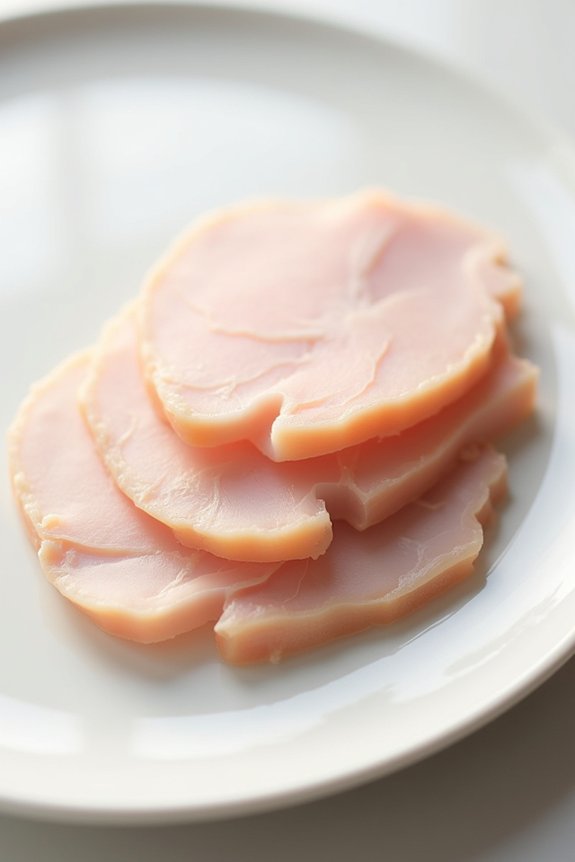
Ever wondered how many slices of deli turkey actually make up a 2-ounce serving? I’ll give you the straightforward answer: about 4 slices of deli turkey equal 2 ounces. Pretty simple, right?
Here’s the thing, though. Turkey slices vary in thickness depending on the brand and how the deli cuts them. Some places slice paper-thin, while others go thicker. That’s why 4 slices might look different at your local deli versus the grocery store.
The general rule I’ve found is roughly 2 slices per ounce, which gets you to that 4-slice estimate for a 2-ounce portion. For the most accurate measurement, I’d recommend checking the nutrition facts on your turkey packaging. That’ll tell you exactly how much each slice weighs, making your portions spot-on every time.
Slice Count Varies by Brand and Thickness
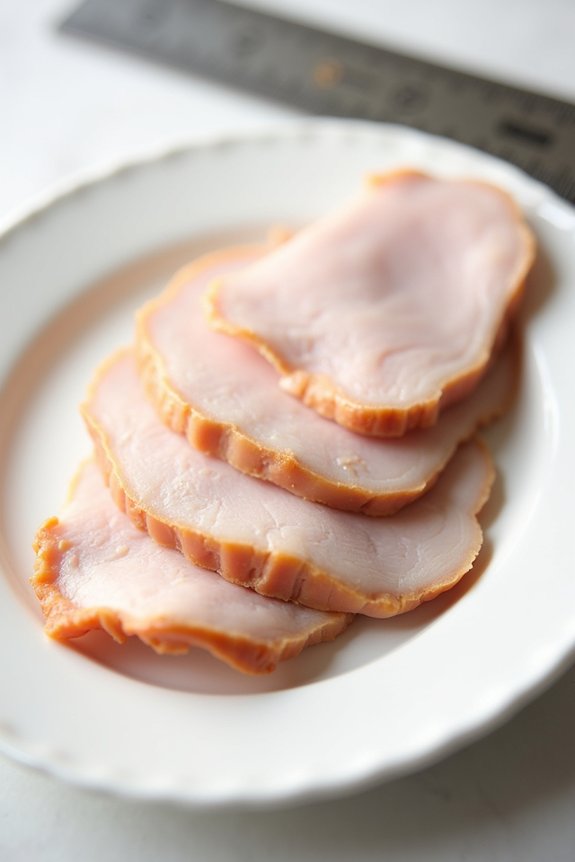
While that 4-slice estimate gives you a solid baseline, the reality is that different brands and cutting styles throw a wrench into the math. When I’m shopping for deli turkey, I’ve noticed that slices per ounce varies considerably depending on how thick the butcher cuts them.
| Brand | Slice Thickness | Slices per 2 oz | Notes |
|---|---|---|---|
| Boar’s Head | Medium | 4 slices | Industry standard |
| Hillshire Farms | Thin | 5-6 slices | Lighter portions |
| Store Brand | Thick | 3 slices | Hearty cuts |
| Premium Brands | Variable | 4-5 slices | Depends on style |
| Hand-Sliced | Custom | Varies | Most unpredictable |
Thin slices stack up faster, giving you more count per ounce. Thick cuts yield fewer slices but feel more substantial. I’d recommend weighing your turkey on a kitchen scale for accuracy rather than counting slices alone.
What Oscar Mayer’s Label Actually Says
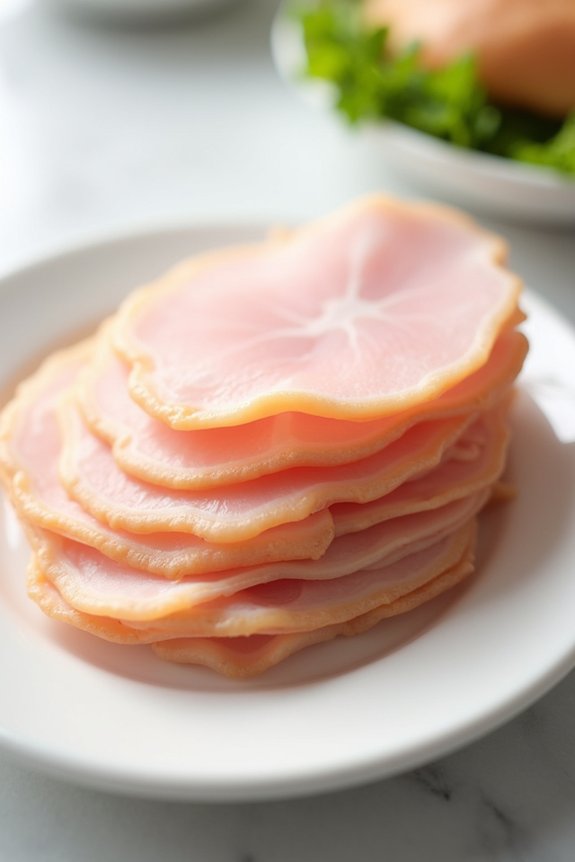
What does the package actually tell you? When I check Oscar Mayer’s Oven Roasted Turkey Breast label, I find clear serving size information that takes the guesswork out of portion control.
Here’s what I discover on the package:
- Serving size is 2 slices weighing approximately 56 grams (2 ounces), making it your standardized reference point
- Package contains roughly 8 ounces total, which works out to about four servings if you follow the label’s serving size definition
- Nutrition facts align with this serving, showing 9 grams protein and 470 milligrams sodium per 2-slice portion
I appreciate how Oscar Mayer standardizes their serving size across products. This consistency helps me compare nutritional values accurately and plan meals without confusion. The label’s precision removes ambiguity that slice thickness variations might otherwise create.
Weigh a Single Slice for Accuracy
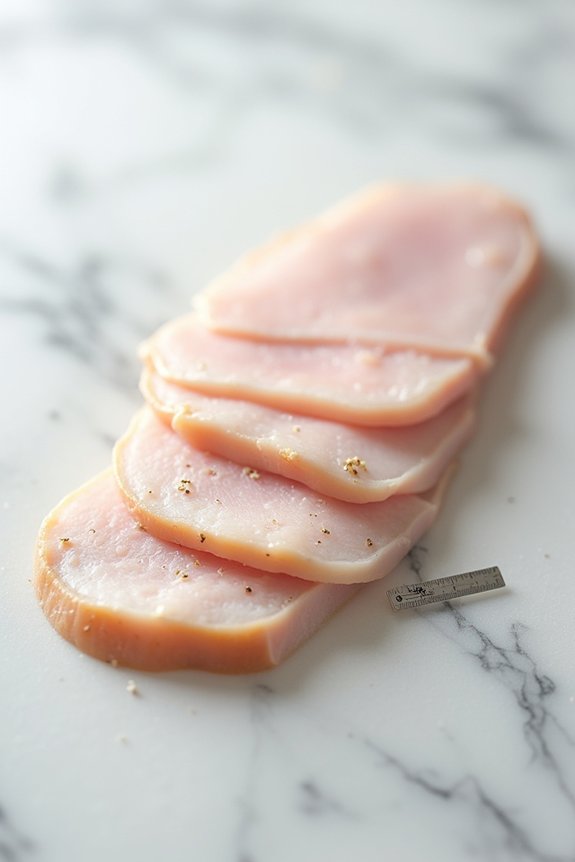
The most reliable way to figure out exactly how many slices make up a 2-ounce serving is to grab a kitchen scale and weigh one slice on your own. Here’s why this matters: deli turkey thickness varies wildly between brands and cuts, so a one-size-fits-all answer doesn’t exist.
Once you weigh a single slice, the math becomes simple. Divide 2 ounces by that individual slice’s weight, and you’ll get your precise slice count. Most turkey slices hover around 0.5 ounces each, which would mean about four slices per serving—but yours might differ slightly.
This method eliminates guesswork. You’re not relying on package labels or hoping for consistency. You’ve got the actual numbers, which means you’ll nail your portion control every single time.
Use a Food Scale for Reliable Measurements
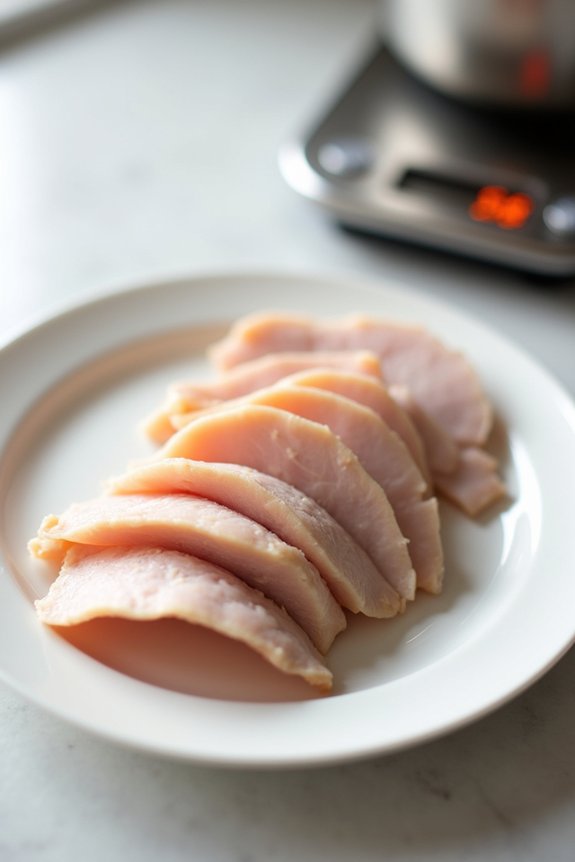
How accurate do you want your portion sizes to be? I’ll tell you—a food scale makes all the difference. You don’t need expensive equipment; affordable options exist everywhere:
- Digital scales at Walmart or dollar stores cost just $5–$20
- Non-digital scales offer reliable accuracy without batteries
- Budget-friendly alternatives at Ross and Bed Bath & Beyond fit any wallet
When you use a food scale, you’re joining the community of people who take their nutrition seriously. Weigh your turkey directly on the scale, and you’ll nail that 2 oz serving every single time. No guessing. No frustration. Package weight and total servings confuse things, but your scale won’t. It’s honestly the smartest investment you’ll make for consistent portioning. You’ve got this.
Estimate Without a Scale: Visual References
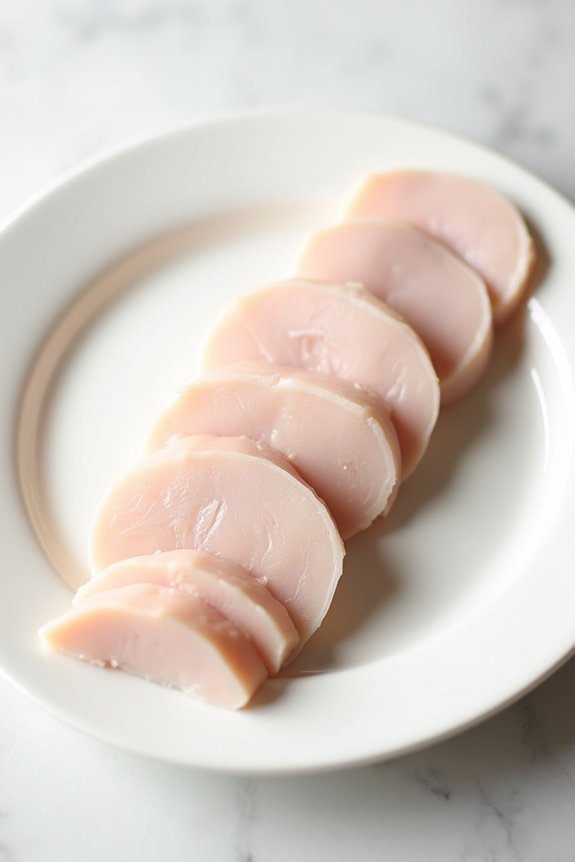
When you don’t have a scale handy, I find that picturing a deck of cards—roughly the size of 3–4 ounces of deli meat—gives you a solid ballpark for portion sizing, though it’s a bit generous for exactly 2 ounces. The tricky part is that thickness varies wildly depending on the brand and whether your slices come from the deli counter or a prepackaged package, so 4 slices might be spot-on one day and way off the next. If you’re willing to do a quick weigh-in of just one slice, you’ll crack the code: divide 2 by that single slice’s weight, and you’ve got your answer without any guesswork.
Common Visual Comparisons
Most deli turkey slices stack up to about 4 slices per 2-ounce serving, though I’ll be honest—this estimate can shift depending on how thick your slices are and which brand you’re grabbing. When you’re eyeballing portions without a scale, visual references become your best friend.
Here’s what helps:
- The 2 slices per ounce rule — This means roughly 4 slices for your 2-ounce target, assuming typical deli thickness
- The paperback test — Your stack should resemble a thin paperback book in height when stacked
- The 16-slice-per-pound guide — This breaks down nicely to your 4-slice portion if slices are standard thickness
Brand variability matters too. Some turkey comes paper-thin while others are noticeably thicker. Once you nail down your preferred brand, you’ll recognize the visual quickly.
Thickness Variation Impact
The thickness of your turkey slices is honestly the biggest wild card in this whole equation. When you’re trying to figure out slices per ounce, thickness matters way more than you’d think. Thin deli slices give you roughly 4 slices per 2 ounces, while thicker cuts dramatically reduce that number. Here’s what you’re working with:
| Slice Type | Thickness | Slices per 2 oz | Consistency |
|---|---|---|---|
| Thin deli | Paper-thin | ~4 slices | Reliable |
| Standard | Medium | ~2-3 slices | Variable |
| Thick-cut | Chunky | ~1-2 slices | Inconsistent |
| Hand-carved | Uneven | Unpredictable | Unreliable |
That’s why eyeballing portions isn’t your friend here. You’ll get wildly different counts depending on how the butcher or manufacturer slices it. A scale beats guesswork every time.
Ounces or Grams: What Your Label Uses
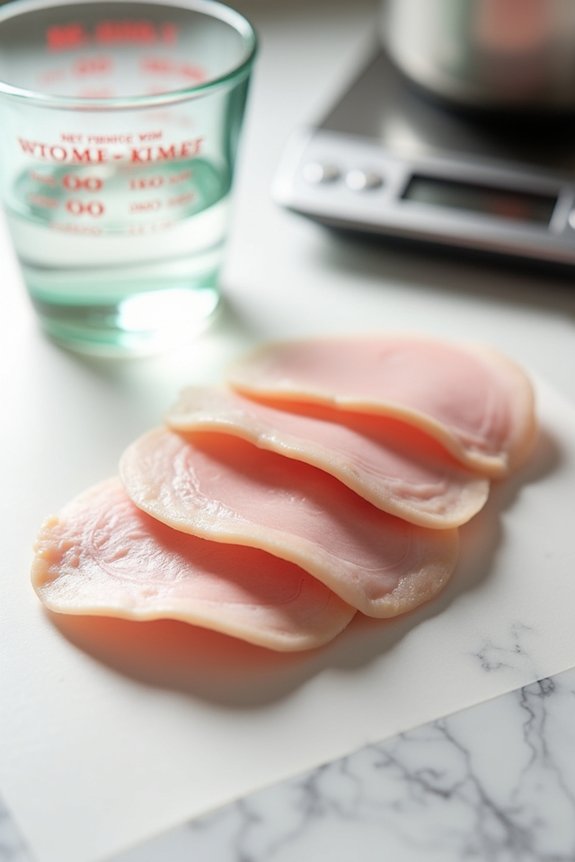
Have you ever looked at a nutrition label and wondered why it lists serving sizes in grams instead of slice counts? You’re not alone. Here’s why grams matter when you’re measuring your turkey.
Labels use grams because they’re precise and consistent across brands. One ounce equals approximately 28 grams, making conversions straightforward. When you see “2 slices = 56 g,” that’s telling you exactly what a serving weighs.
Grams provide precise, consistent measurements across brands, making nutrition comparisons and portion tracking straightforward and reliable.
Understanding this system helps you nail your portions:
- Grams eliminate guesswork—slices vary in thickness, so weight is more reliable
- You can use a kitchen scale to verify your actual serving size
- Comparing brands becomes easier when you focus on weight rather than slice count
Using grams empowers you to make accurate choices, whether you’re tracking nutrition or simply wanting consistency in your meals.
Deli Counter Meat vs. Prepackaged Slices
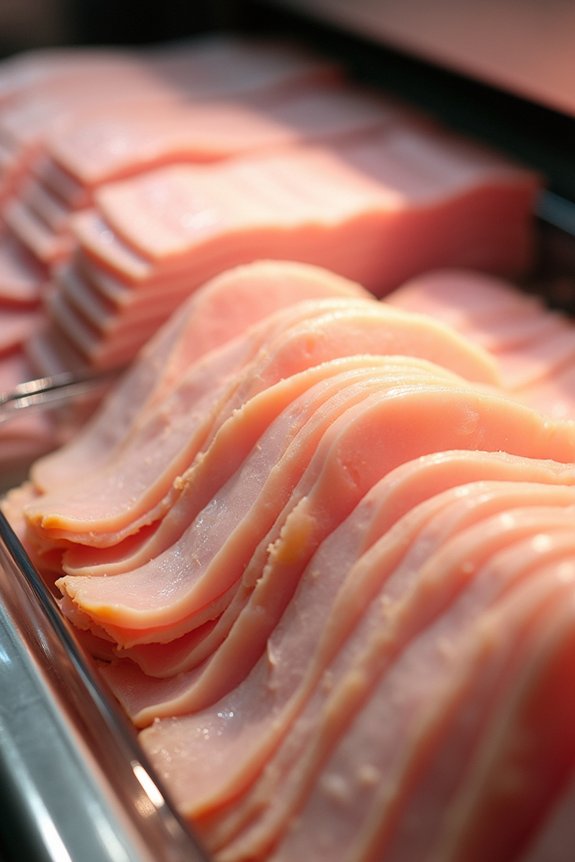
Now that you understand why grams matter, you’re probably wondering where your turkey actually comes from—and it turns out that makes a real difference in slice count. Deli-counter and prepackaged turkey aren’t created equal when it comes to slices per ounce. The thickness varies significantly between them, affecting how many slices you’ll actually get in your 2-ounce serving.
| Source | Slices per 2 oz | Slice Thickness |
|---|---|---|
| Deli Counter | 3–4 slices | Varies widely |
| Prepackaged | 4 slices | Standard |
| Premium Deli | 3 slices | Thicker cuts |
Deli-counter meat gives you flexibility. You can ask the person behind the counter to slice it however you prefer. Prepackaged turkey? It’s consistent but less customizable. That’s why using a scale beats guessing—it guarantees accuracy regardless of where you buy your turkey.
How Thickness Changes Your Slice Count
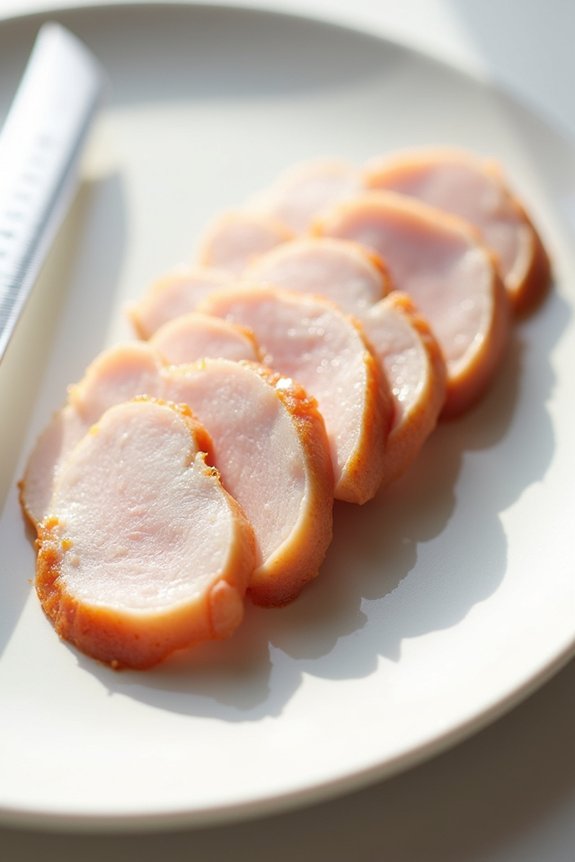
Why does one package of deli turkey give you 3 slices for 2 ounces while another gives you 5? The answer lies in thickness, which dramatically impacts your slice count.
Here’s what happens:
- Thin slices (like paper-thin deli cuts) stack up quickly—you’ll get around 5-6 slices per 2 ounces
- Medium slices provide the sweet spot of roughly 4 slices per 2 ounces, making them easier to manage
- Thick slices (think substantial sandwich portions) give you only 2-3 slices for the same weight
I’ve found that weighing individual slices yourself beats guessing. Most deli counters’ll slice meat to your preference, so don’t hesitate asking for your ideal thickness. Thicker slices won’t stretch as far, while ultra-thin ones might tear during handling. Understanding this relationship helps you plan portions accurately.
The Quick Slice-to-Ounce Rule
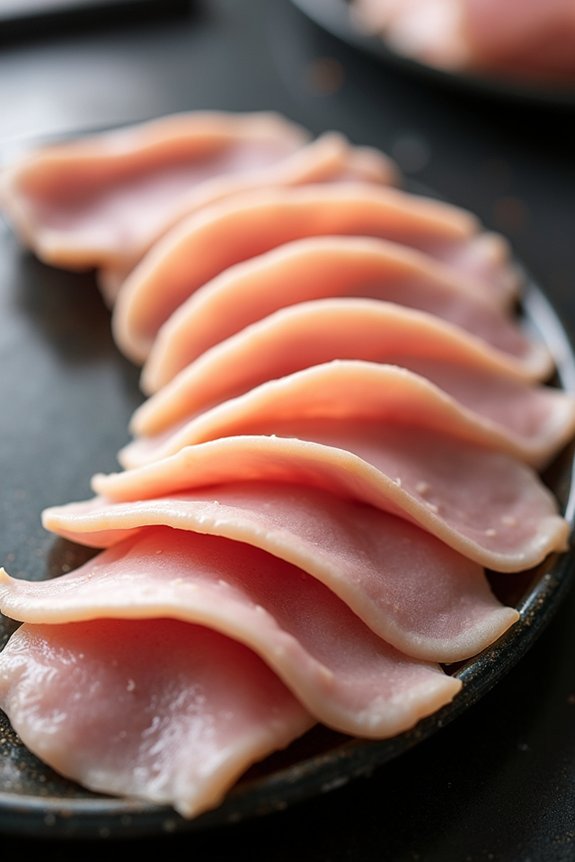
Understanding the quick rule for slicing turkey makes portion planning a lot simpler than trying to eyeball it every time. Here’s the standard: roughly 2 slices per ounce, which means about 4 slices equal 2 ounces. This slices per ounce ratio gives you a straightforward starting point for meal prep.
Now, I’ll be honest—this rule works best as a baseline. Your actual count depends entirely on how thick the deli counter cuts your turkey. Thinner slices? You’ll get closer to 4–5 per 2 ounces. Thicker cuts might land you at just 3 slices. That’s why checking your package label helps verify the serving information for your specific brand.
When precision matters most, grab a kitchen scale instead of relying on counting.
3 Estimation Errors That Derail Tracking
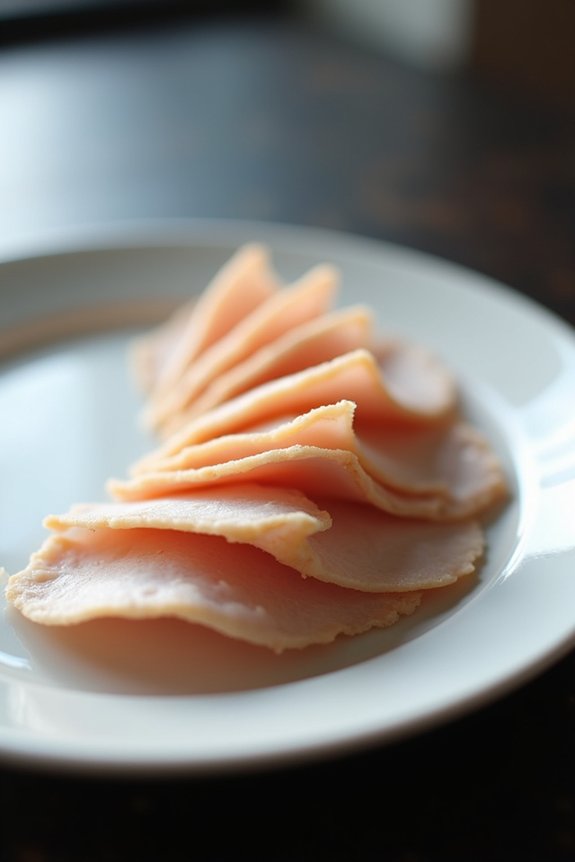
When you’re counting slices instead of weighing them, you’re basically playing a guessing game—and that’s where your tracking falls apart. I’ve seen it happen to plenty of people trying to stay consistent with their nutrition goals.
Here are the three mistakes that’ll derail your efforts:
- Assuming all slices weigh the same—deli-sliced turkey varies wildly depending on thickness and brand, so visual counting won’t cut it.
- Ignoring packaging information—you’ve got the serving size right there, but skipping it means you’re just winging your portions.
- Trusting your eyes over numbers—our brains are surprisingly bad at estimating weight, especially with thin slices.
A kitchen scale takes thirty seconds and eliminates all this uncertainty. You’re not overthinking it; you’re being accurate.
How to Keep Portions Consistent
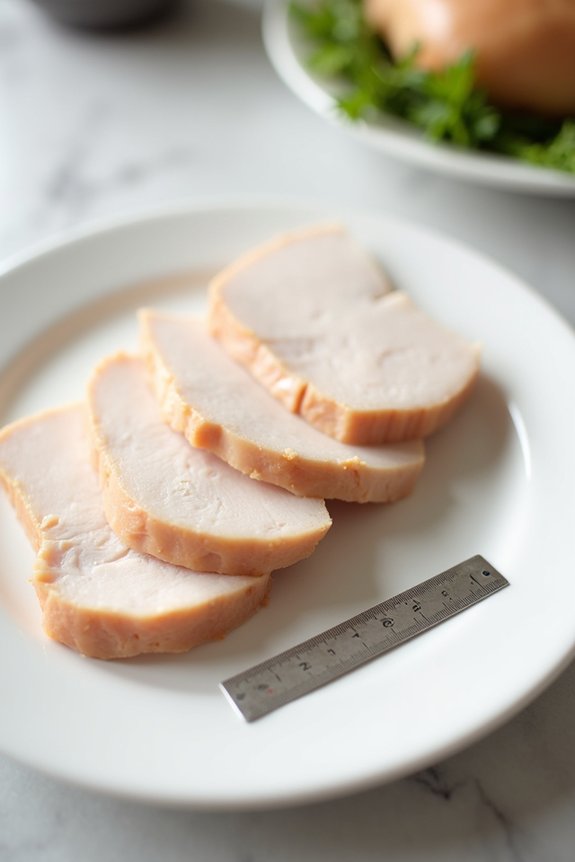
I’ve found that investing in a basic food scale—they’re cheap and surprisingly game-changing—makes keeping your turkey portions consistent way easier than guessing. Weigh a single slice to find its weight, then divide 2 ounces by that number to know exactly how many slices you need every time, which removes all the guesswork. Pre-portioning your turkey before you store it in containers or bags means you’re not eyeballing portions when you’re hungry and more likely to stick with your actual goals.
Invest In A Food Scale
The most reliable way to nail a consistent 2-ounce serving of turkey deli meat is investing in a simple food scale. You’ll find affordable options ($5–$20) at Walmart, Bed Bath & Beyond, Ross, and dollar stores that won’t break the bank.
Here’s why a food scale works so well:
- Accounts for thickness variability – Deli turkey slices differ between brands and cuts, so counting slices alone doesn’t guarantee accuracy
- Eliminates guesswork – You’ll weigh individual slices or stack them together until you hit exactly 2 ounces
- Builds confidence – Once you’ve weighed a few portions, you’ll develop an eye for what 2 ounces actually looks like
Around four thin slices typically equal 2 ounces, but your scale confirms this. You’re joining countless people who’ve ditched portion confusion by making this smart, simple investment.
Weigh Individual Slices Consistently
Now that you’ve got your food scale ready, it’s time to put it to work by weighing each slice of turkey you grab. Here’s why this matters: slice thickness varies wildly, and that directly affects your slices per ounce count. A thin slice might weigh just 0.5 ounces, while a thicker cut could hit 1 ounce or more. I recommend placing one slice on your scale, noting its weight, then repeating with several slices to identify your typical range. This consistency helps you nail that 2-ounce serving every time. You’ll quickly discover your personal slices per ounce ratio—maybe it’s four thin slices or two thick ones. Once you know your baseline, portion control becomes second nature, and you’re confidently hitting your nutritional goals without constant measuring.
Pre-Portion Before Storage
Why spend time weighing turkey every single time you eat? Pre-portioning before storage transforms your routine into something manageable and consistent. I divide my turkey into exact 2-ounce portions ahead of time, which saves me effort throughout the week.
Here’s how I stay organized:
- Use a kitchen scale to weigh each portion to exactly 2 ounces, ensuring every serving matches perfectly
- Slice or chunk the turkey into portions, accounting for thickness variations that naturally occur
- Label each container with the weight (2 oz) and today’s date so I track freshness easily
I store pre-portioned turkey in the refrigerator for short-term use or freeze portions for longer storage. This approach minimizes repeated handling and measurement stress. You’ll join countless others who’ve simplified their meal prep this way.
Building Consistent Portions for Weight Tracking Success
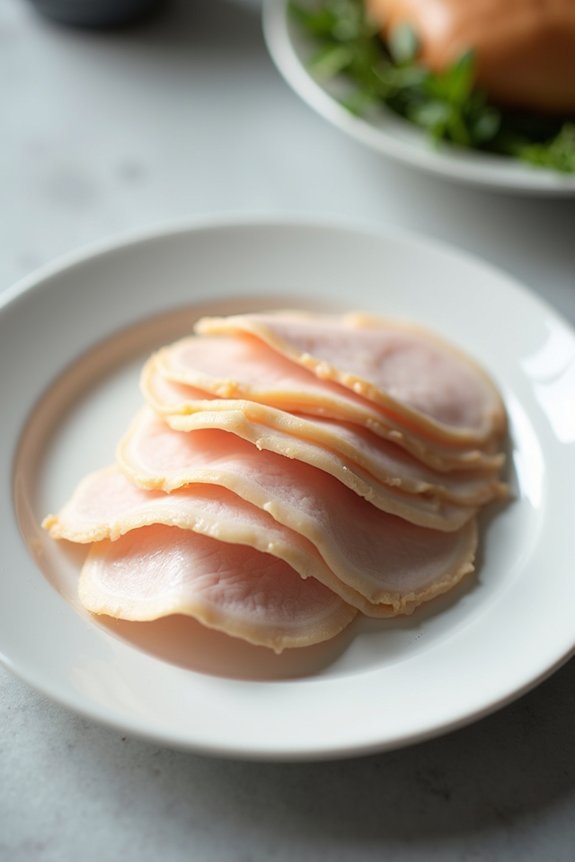
How’d you like to stop guessing whether you’re actually eating 2 ounces of turkey or just eyeballing it?
I’ll tell you the secret: grab a kitchen scale. Seriously, it’s your weight tracking _game-changer_ replacement: pivot in context. Here’s how I do it. First, I weigh a single slice of my deli turkey—most brands range from 0.5 to 1 ounce per slice. Then I divide 2 ounces by that single-slice weight. If one slice weighs 0.5 ounces, I need four slices. If it’s 1 ounce, I need two slices.
The real magic happens when I pre-portion before storage. I weigh out my 2-ounce servings, bag them, and label each one. No more mental math at lunch. You’re building a repeatable system that keeps your tracking accurate and honest. _That’s how_ you join the people actually hitting their goals.