
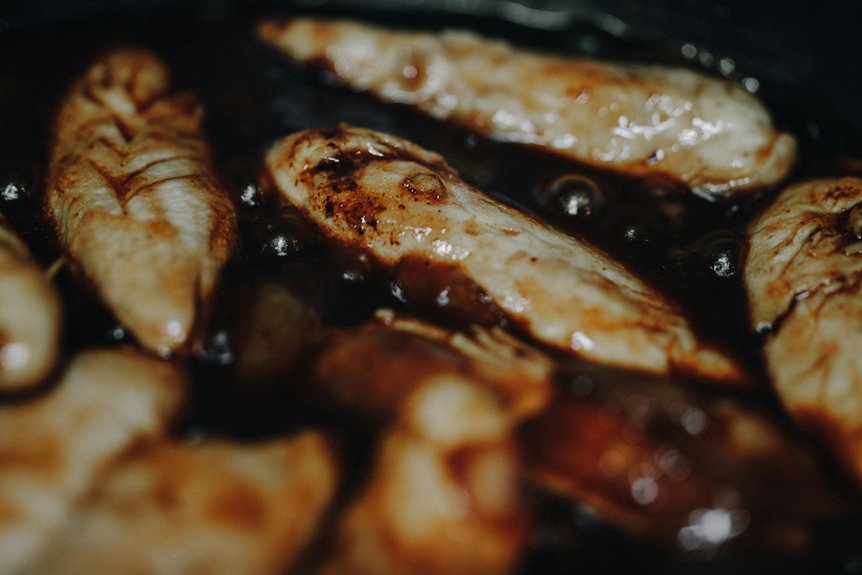
Chicken tenders are small, tender fillets from under a chicken breast—each bird gives you two. To make them at home, I coat boneless breasts in buttermilk, then dredge them in seasoned flour mixed with cornstarch. I fry them at 325°F until golden, about 5-7 minutes per batch, turning once for even browning. The buttermilk keeps the meat juicy while the coating gets crispy. You’ll want to drain them on a wire rack and serve with ranch or your favorite sauce. The real magic happens when you discover the double-fry technique and pro tips that follow.
What Are Chicken Tenders and Where Do They Come From?
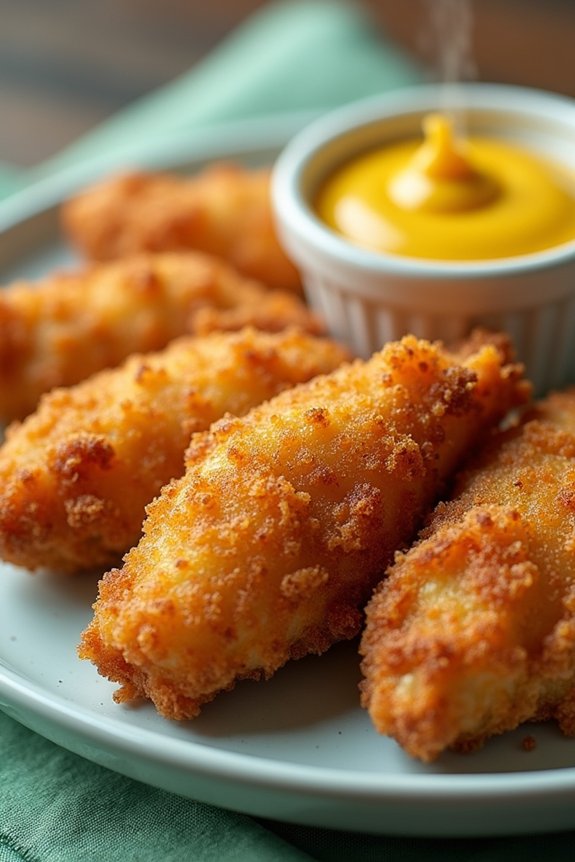
Ever wonder what makes chicken tenders so quick to cook and satisfying to eat? I’ll tell you—they’re the small, tender under-breast fillets from a chicken, with each bird giving you just two. You might hear them called chicken mini fillets in the UK, and they’re totally different from thin breast slices.
You can buy them as boneless skinless tenderloins or cut them yourself from whole chicken breast. I find that removing any attached tendons is optional but worth doing. Here’s the real magic: these cuts are perfect for moisture retention when you marinate or brine them. Then breading and frying creates that crunchy, golden exterior everyone loves. That’s why they’re such a kitchen favorite.
Why Homemade Chicken Tenders Beat Store-Bought
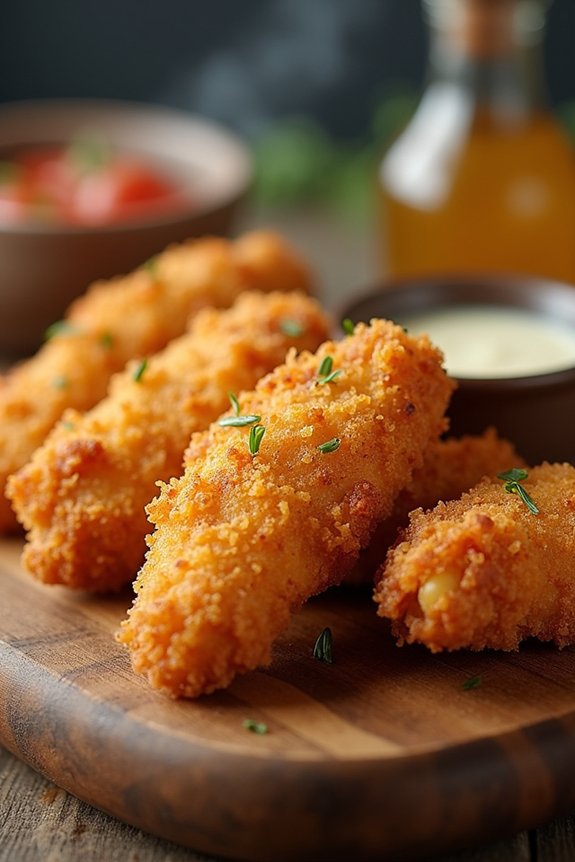
Now that you know what chicken tenders are and why they cook so fast, you’re probably wondering if making them at home is really worth the effort. Spoiler alert: it absolutely is. Homemade tenders beat store-bought in almost every way. First, buttermilk in your wet mix keeps the meat juicy inside while you fry or oven-fry them to golden perfection. Your streamlined dredging method takes just minutes, making weeknight dinner totally doable. You control the crust flavor and texture, creating that restaurant-style crunch store versions can’t match. Plus, you’ll customize spices and pair them with dipping sauces tailored exactly how you like them. Freshly made tenders taste noticeably better. Once you try homemade, you’ll never look back at the freezer aisle the same way again.
Ingredients for Crispy Homemade Chicken Tenders
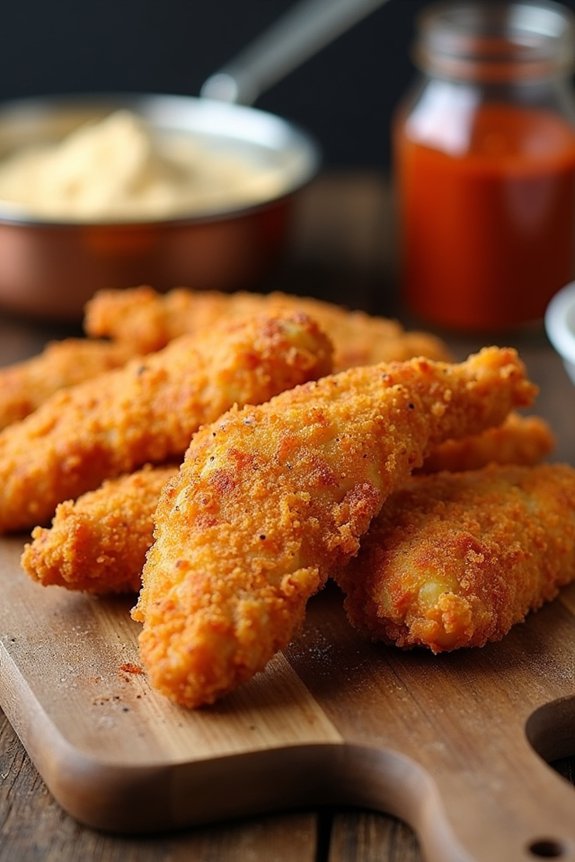
What’s the secret to that irresistible crunch that makes restaurant chicken tenders so satisfying? It’s all about your ingredients and technique. You’ll need boneless chicken breasts, buttermilk for your wet mixture, and a carefully crafted dredge. Mix all-purpose flour with cornstarch—this combination creates that golden, crispy coating you’re after. Add salt, pepper, paprika, garlic powder, and onion powder to your dry mix. The buttermilk tenderizes the meat while helping your coating stick. When frying, maintain a consistent frying temperature between 325–375°F for perfectly cooked, crunchy results. Don’t skip letting excess batter drip off before coating—it prevents soggy spots. These simple ingredients transform ordinary chicken into something truly special that’ll make your friends ask for your recipe.
How to Bread and Fry Chicken Tenders
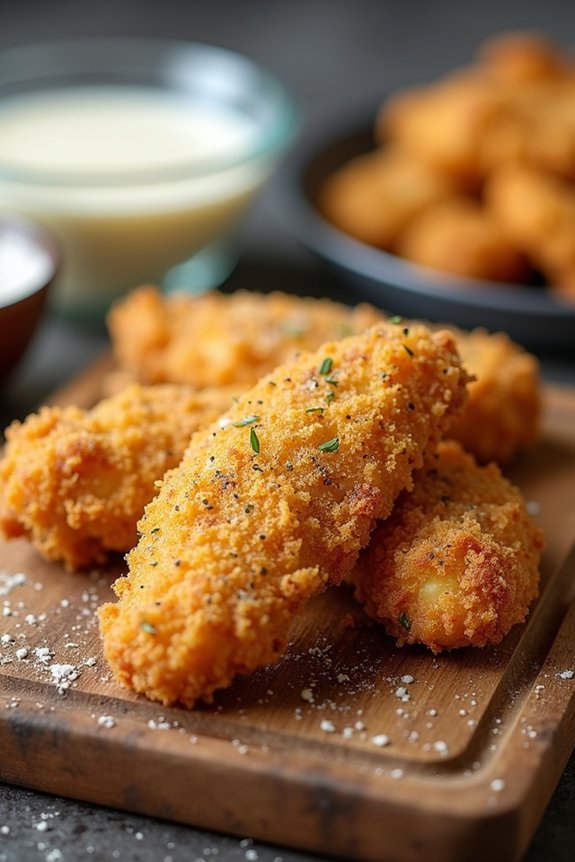
With your ingredients prepped and ready, it’s time to transform those chicken breasts into crispy, golden tenders. I’ll dredge each tender first in seasoned flour, then dip it in buttermilk, and coat it again in flour—this triple-layer method creates that restaurant-quality crust we’re after. Let the coated tenders rest for a couple minutes; this helps everything stick together beautifully.
Now for the frying magic. I heat my oil to 325°F and carefully place the tenders in batches—no crowding allowed. I turn them occasionally until they’re evenly browned, then drain them on a wire rack so they don’t get soggy. Want extra crispness? I perform a quick second fry at 375°F for about two minutes. The result? Perfectly crispy chicken tenders you’ll feel proud serving.
The Double-Fry Method for Maximum Crispiness
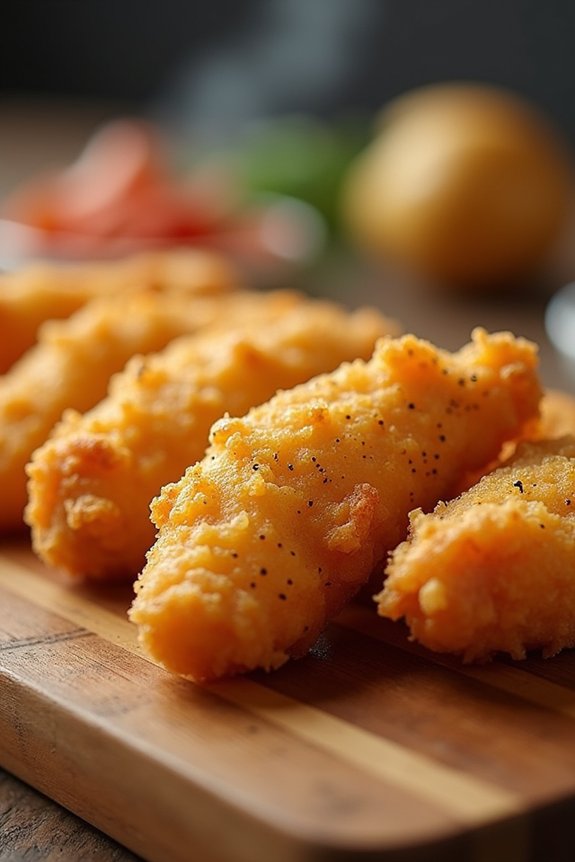
To get that shatteringly crispy exterior that’ll make you feel like a professional chef, I use a technique that might seem like extra work but absolutely delivers: the double-fry method.
Here’s how I nail it:
- First fry at 325°F cooks your tenders through without burning the outside
- Second fry at 375°F creates that golden, craggy crust you’re after
- Rest on a wire rack between fries so excess oil drains away
- Monitor oil temperature with a thermometer to keep it above 300°F
I start with a wet batter, then dredge in seasoned flour mixed with a touch of water—this creates those irresistible craggly bits. The first fry takes several minutes per batch, while the finish fry needs just two minutes. Keeping your oil temperature steady prevents greasy results and ensures that crispy crust holds strong.
Common Mistakes That Ruin the Crust
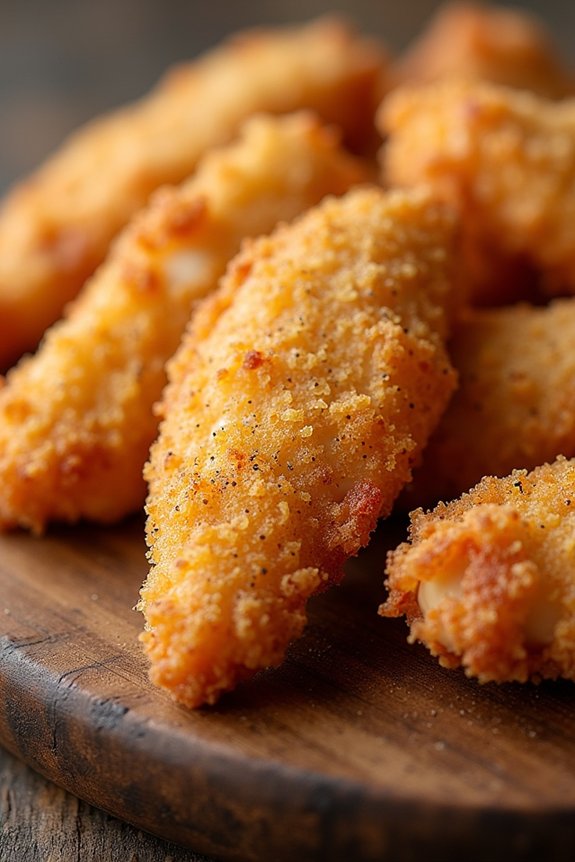
I’ve made plenty of crispy chicken tenders, and I’ve also ruined plenty by making three critical mistakes—so let me save you the headache. First, cramming too many pieces into your pan drops the oil temperature and creates steam instead of that golden, crunchy crust you’re after. Second, rushing past the drying step after breading means your coating’ll shed right off into the oil, and third, if your oil sits below 325°F on that first fry, you’re basically making greasy disappointment instead of crispy perfection.
Overcrowding The Pan
Why does your pan seem to sabotage your chicken tenders the moment you add too many at once? When you overcrowd the pan, you’re actually working against yourself in multiple ways.
Here’s what happens when you fry too many tenders simultaneously:
- Oil temperature drops dramatically — from the ideal 365-375°F down to well below safe frying temperatures
- Steam concentrates in the pan — this moisture causes your crispy crust to separate and steam right off the chicken
- Browning becomes impossible — cooler oil can’t properly brown the coating, leaving you with pale, soggy results
- The crust won’t adhere — without adequate space, breading fails to set correctly
I’ve learned the hard way: frying batches properly matters. Give your tenders breathing room. Space them on the rack beforehand so the coating sets. If needed, split into two fry sessions and drain finished tenders on a rack. Your fried chicken deserves better than a crowded pan’s sabotage.
Skipping The Drying Step
Just when you’ve nailed the spacing in your pan, another saboteur emerges: moisture clinging to your chicken’s surface. I can’t stress this enough—skipping the drying step is a recipe for breading disaster. When you pat your chicken dry before dredging, you’re creating the ideal foundation for adhesion. Moisture causes your breading to slide right off, leaving you with a patchy, disappointing crust instead of that golden exterior we’re after.
Here’s what I do: after seasoning, I use paper towels to thoroughly dry each tender. Then I dredge carefully and rest the breaded chicken for a couple minutes. This resting period lets the coating bond properly to the surface. When you fry, the breading stays put, creating that crackly crust that makes homemade tenders absolutely worth the effort.
Oil Temperature Too Low
How many times have you pulled chicken tenders from the oil only to find them soggy and greasy instead of crispy and golden? I’ve been there, and I discovered the culprit: oil temperature too low. Here’s what happens when your frying temperature drops below 300°F:
- The breading absorbs excess oil, creating a soggy crust
- Browning happens incompletely, leaving pale, unappetizing tenders
- Cooking time stretches out unnecessarily
- Your batch tastes disappointingly greasy
I always maintain temperature between 325–375°F using a thermometer—either candy or infrared works great. When batch frying, the oil temperature naturally dips. That’s why I let it recover to my target range before adding the next batch. This simple habit transforms your results. You’ll get that satisfying crunch and golden color that makes homemade chicken tenders worth the effort.
Best Sides to Serve With Chicken Tenders
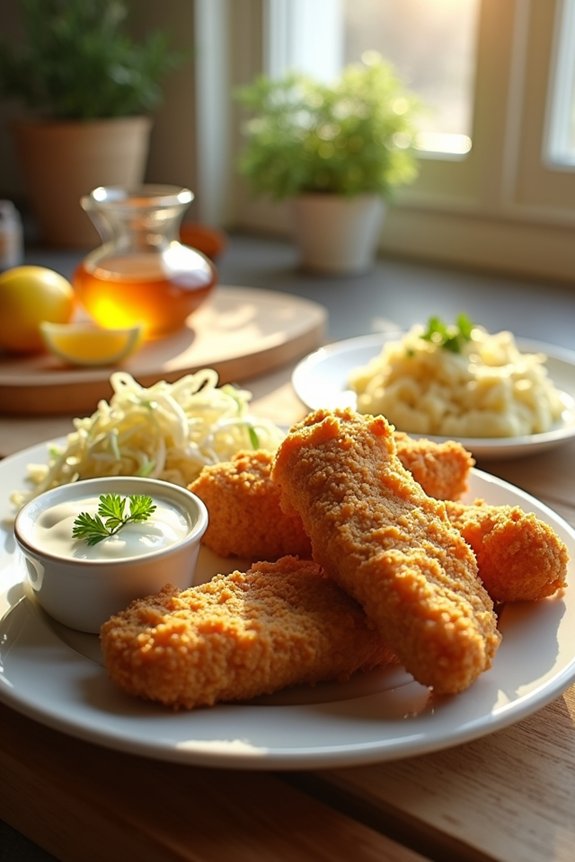
Now that you’ve mastered the perfect crispy crust, let me show you how to round out your meal with sides that’ll make those tenders shine. I’ll walk you through classic comfort pairings like mac and cheese or crispy fries, nutritious veggie options that even picky eaters will enjoy, and the dipping sauces that’ll take your chicken tenders from good to unforgettable.
Classic Comfort Food Pairings
What makes chicken tenders truly satisfying isn’t just the tender itself—it’s what you serve alongside it. I’ve found that pairing your homemade fried chicken with the right sides transforms a simple meal into comfort food that everyone craves.
Consider these classic combinations:
- Crispy baked oven fries and coleslaw – The hot, crunchy fries contrast beautifully with cool, refreshing slaw
- Macaroni and cheese – This creamy pairing makes your tenders taste restaurant-quality
- Dipping sauces – Easy Ranch Dressing or BBQ Sauce lets you customize every bite
- Simple salad – A refreshing option that cuts through the rich crispy coating
These sides don’t just fill your plate—they create a complete meal that brings people together. The variety of textures and flavors keeps things interesting, whether you’re cooking for family or friends.
Healthy Vegetable Accompaniments
While creamy sides and dipping sauces definitely satisfy cravings, I’ve discovered that adding fresh vegetables to your chicken tender plate actually makes the meal better—not boring. Roasted vegetables like broccoli, Brussels sprouts, and green beans pack fiber and micronutrients without heavy sauces. I love air frying zucchini, bell peppers, and carrots for vibrant color and vitamins. A simple garden salad with leafy greens, cherry tomatoes, and cucumbers provides crunch and magnesium-rich greens that balance your protein accompaniments beautifully. Steamed asparagus or cauliflower offers soft texture with potassium and folate. For something heartier, roasted sweet potato wedges introduce complex carbs and vitamin A. These side dishes transform your tenders into a well-rounded, nutritious meal that actually fuels your body.
Sauce And Dipping Options
The magic of chicken tenders really comes alive when you pair them with the right dipping sauce. I’ve found that choosing the perfect complement transforms your meal from good to unforgettable. You’ve got options that work for every taste:
- Classic ranch or blue cheese – creamy bases built from mayonnaise and yogurt create that tangy richness
- Honey mustard – Dijon mustard mixed with honey and vinegar gives brightness and versatility
- Yogurt-based herb sauce – dill, garlic, and Worcestershire provide cool contrast to crispy tenders
- Spicy twists – horseradish or buffalo-style dips add kick for those who crave heat
For a lighter option, I mix Greek yogurt with lemon juice, garlic, and chives. This fresh, tangy sauce keeps things interesting without heaviness. Finding your go-to dipping sauce makes every bite satisfying.
How to Store, Freeze, and Reheat Leftover Tenders
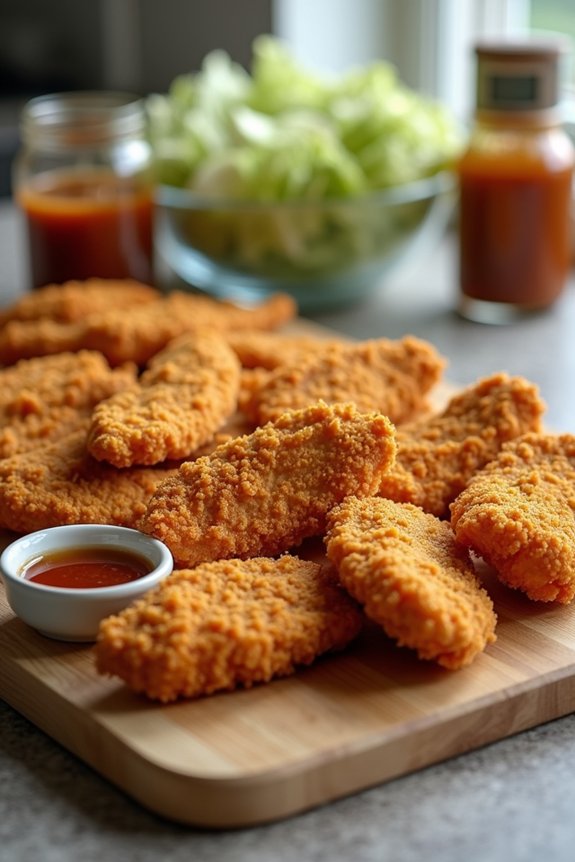
You’ll want to store your chicken tenders properly so they stay fresh and delicious for your next meal. After cooking, let them rest on a wire rack—this keeps that crispiness we all crave intact. Refrigerate leftovers in an airtight container for one to two days, or freeze them in labeled freezer bags for longer storage. Here’s the trick: cool your tenders completely before bagging them up and always write the date on your freezer bags. When you’re ready to eat them again, reheat in a 375°F oven for about ten minutes, or use an air fryer at 350°F for six to eight minutes. Skip the microwave if you want that crispy texture back. Your future self will thank you for this effort.
Air Fryer and Oven-Baked Alternatives
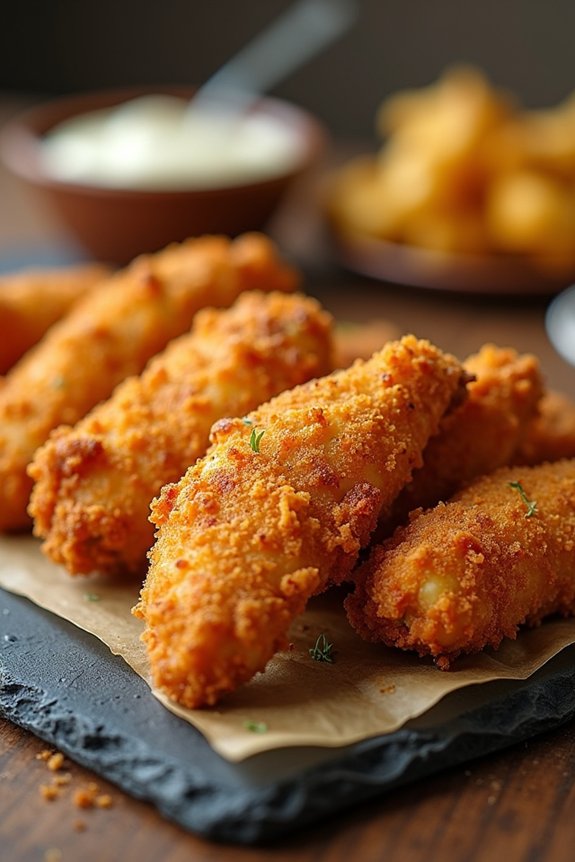
If deep frying isn’t your thing, I’ve got good news—air fryers and ovens produce equally crispy, delicious chicken tenders without all that oil.
Both methods deliver that juicy interior with a crunchy crust you’re craving:
- Air fryer magic: Coat your chicken tenders in wet batter, then seasoned flour. Air fry at 400°F for 12-15 minutes until golden. Smaller batches cook faster and crispier.
- Oven-baked coating: Use a dry or lightly battered coating. Bake at 425°F for 15-20 minutes for that fried-texture crunch without the grease.
- Prep trick: Refrigerate or freeze your tenders before cooking. This helps the coating stick better and creates extra crispiness.
- Restoration tip: Reheat leftovers in your air fryer to restore that satisfying texture.
Either method gives you restaurant-quality chicken tenders at home. You’ll nail the crispy exterior every time.