
Chicken and rice form a powerhouse duo because they deliver complete protein—about 31 grams per serving from skinless chicken—paired with steady carbs that fuel your body without the crash. Brown rice adds fiber and minerals that keep you fuller longer, while the combo creates a blank canvas for colorful vegetables packed with vitamins. You’re getting balanced nutrition that supports muscle maintenance, steady energy, and weight management without breaking your budget. The real magic happens when you master the cooking techniques and portion strategies that transform this simple foundation into your healthiest meals.
The Protein-Carb Foundation: Why This Combination Works
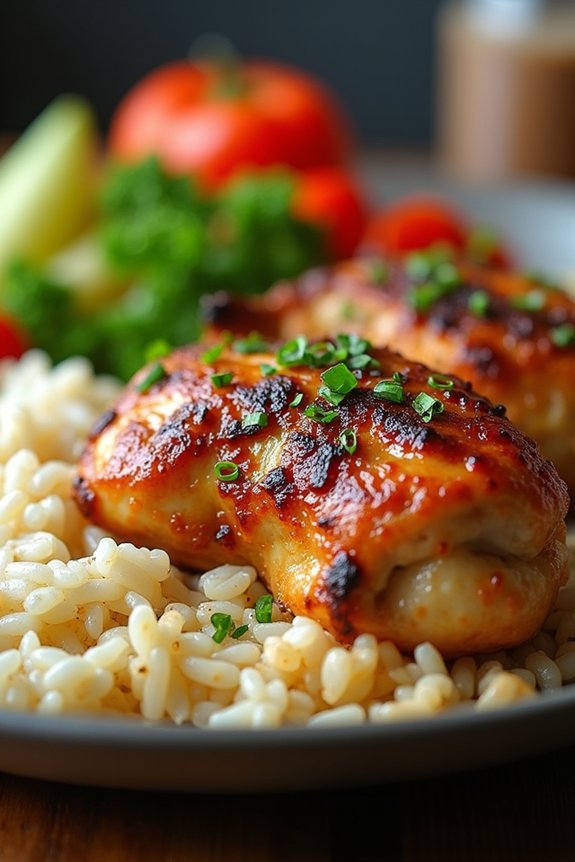
Why do athletes and fitness enthusiasts keep coming back to chicken and rice? I’ll tell you—it’s because this pairing nails the fundamentals.
Chicken delivers high-quality protein, roughly 25–35 grams per 3–4 ounce serving. That’s what your muscles need to repair and grow after workouts. Rice brings carbohydrates to the table, and I mean the good kind. These slow-release carbs replenish your muscle glycogen, keeping your energy steady during exercise and recovery.
Chicken and rice deliver the protein and slow-release carbs your muscles need to repair, grow, and stay energized.
Here’s the real magic: together, they work. The protein-carbohydrate combination supports satiety, meaning you’ll feel fuller longer. That’s huge when you’re managing your weight. You’re not fighting constant hunger pangs.
This foundation isn’t fancy. It’s reliable, balanced, and doesn’t overload you with fat. Whether you’re building muscle or staying lean, this combination supports your goals.
Chicken as a Lean Protein Powerhouse
Now let’s zoom in on what makes chicken itself so special for your health goals. Skinless chicken breast is basically a lean protein superstar. I’m talking about a high protein-to-calorie ratio that supports muscle maintenance while keeping you satisfied longer. You’re getting around 31 grams of protein per 3.5-ounce serving with minimal fat—perfect when you’re managing your weight.
Beyond protein, chicken delivers crucial micronutrients you need. Niacin boosts your metabolism, while selenium and vitamin B6 strengthen your immune system. You’ll also get vitamin B12, which many of us rely on for steady energy.
Sure, chicken has less iron and zinc than red meat, but here’s the thing: rotating protein sources weekly—mixing in fish and legumes—optimizes your overall nutrition. Chicken keeps you in the game.
Brown Rice vs. White Rice: Which Is Better?
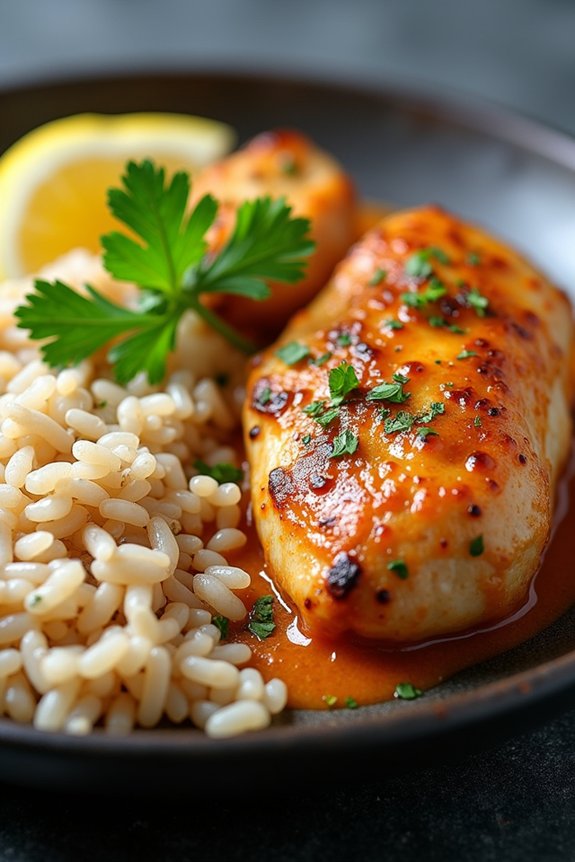
which rice actually deserves a spot on your plate?
I’ll be honest—brown rice wins for long-term nutrition. It contains about 3.5–4.0 grams of fiber per cooked cup, plus magnesium and selenium your body craves. That fiber keeps you fuller longer, which helps with weight management. White rice, though more processed, gets fortified with iron and B vitamins to prevent deficiencies.
The real difference? Brown rice digests slowly, preventing blood sugar spikes. White rice, higher on the glycemic index, replenishes energy faster—great if you’re an athlete needing quick fuel. Both fit your chicken and rice meal; it just depends on your goals. Want sustained fullness? Choose brown rice. Need rapid recovery? White rice’s got your back.
Why Brown Rice Nutrients and Fiber Matter
Brown rice’s nutritional edge comes down to one key factor: it keeps more of what makes grains genuinely good for you. When you choose brown rice, you’re getting about 3.5–4.0 grams of fiber per cooked cup—roughly four times what white rice offers. That fiber isn’t just filler; it’s your secret weapon for feeling fuller longer and supporting digestion. But here’s where it gets really interesting: brown rice also delivers higher amounts of magnesium, phosphorus, and B vitamins that fuel your energy and keep your nervous system running smoothly. The extra fiber slows how fast your body absorbs carbs, which means steadier blood sugar levels and no dramatic energy crashes. You’re basically getting more of the nutrients that actually matter.
Chicken and Rice for Weight Loss
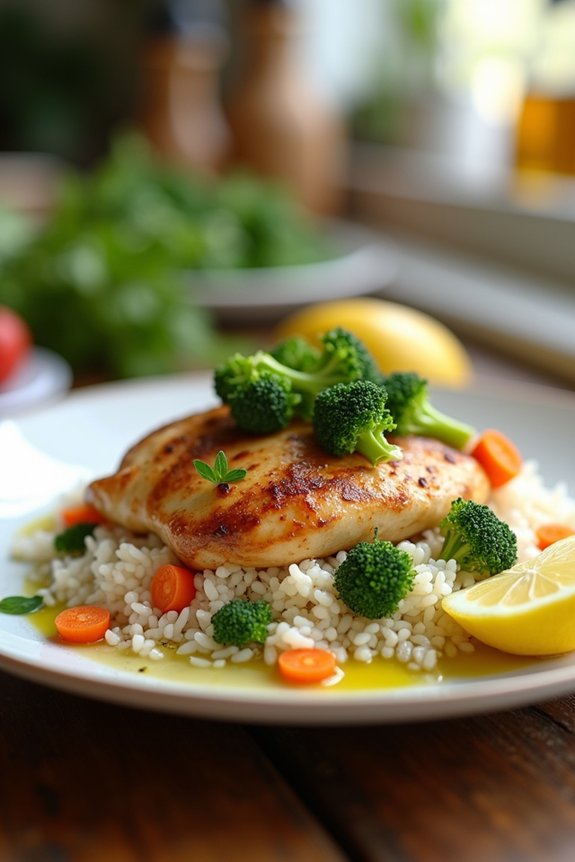
Why does chicken and rice show up on so many weight-loss meal plans? I’ll tell you: this combo delivers protein and controlled calories that keep you satisfied longer. When I swap white rice for brown rice, I get extra fiber that makes me feel fuller without loading up on calories.
Here’s what I focus on:
| Component | Portion | Benefit |
|---|---|---|
| Lean chicken | 3.5 oz | High protein, low calorie |
| Brown rice | ¼ plate | Fiber for fullness |
| Non-starchy vegetables | ½ plate | Volume, minimal calories |
I’ve found that baking or grilling my chicken and skipping sugary sauces keeps calories in check. Adding broccoli or spinach boosts my meal’s volume without derailing my goals. This approach works because I’m eating real food that actually satisfies me.
Why Bodybuilders Rely on Chicken and Rice
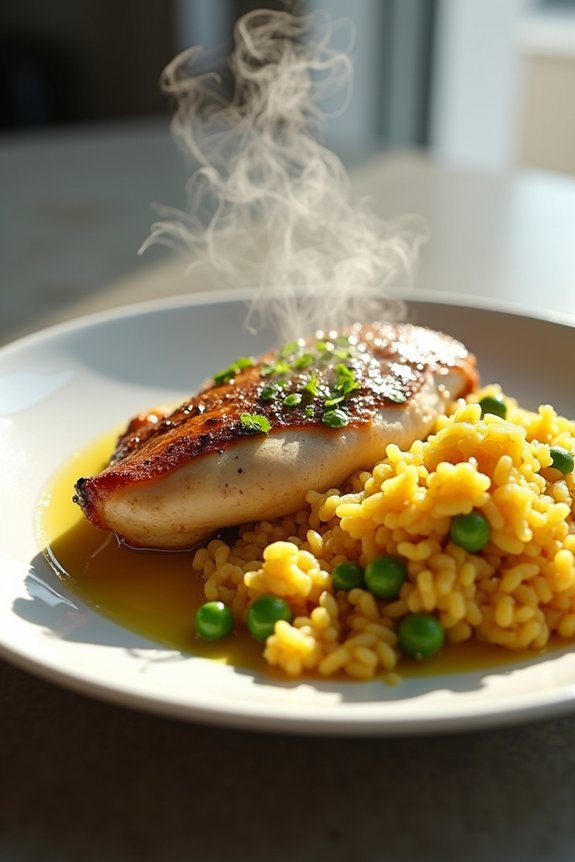
While weight loss focuses on eating less, bodybuilders need something different—they’re after muscle growth, and that requires serious protein and smart carbs. That’s where chicken and rice become your powerhouse synergy. A 3–4 oz serving of cooked chicken delivers 25–35 g of protein, fueling muscle repair and growth after intense training sessions. Rice replenishes glycogen stores rapidly, giving your body the energy it needs to recover faster. What makes this combo genuinely brilliant for meal prep? It’s affordable, straightforward, and customizable. You control everything—portion sizes, sauces, spices, vegetables. You’re not dragging around heavy, fatty fillers. Brown rice adds fiber and micronutrients for sustained energy, while white rice offers quick carbs. That’s why bodybuilders have relied on this pairing for decades.
How Chicken and Rice Control Blood Sugar
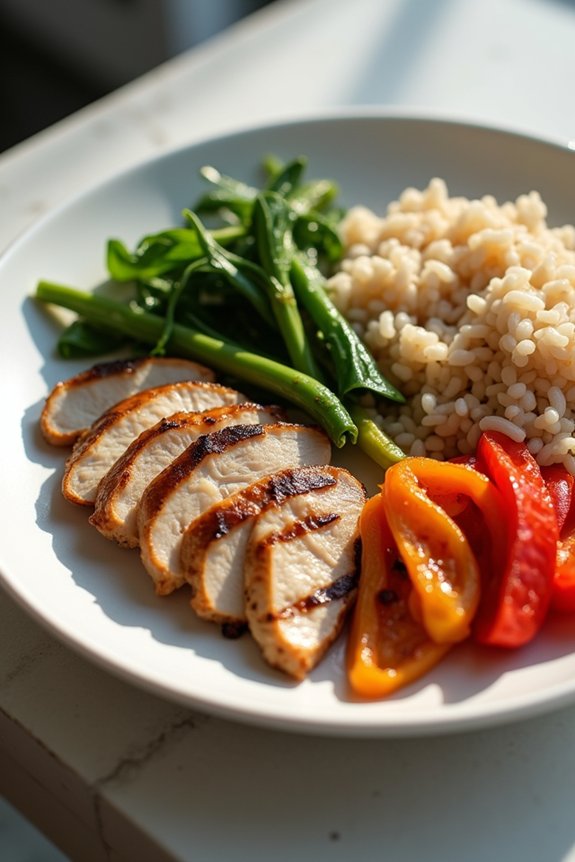
How does pairing chicken with the right type of rice actually help keep your blood sugar stable? I’ll tell you—it’s all about balance. When you choose brown rice over white rice, you’re getting extra fiber that slows glucose absorption. That means your blood sugar doesn’t spike dramatically after eating. Add lean protein from chicken, and you’ve got a one-two punch: protein keeps you fuller longer while rice replenishes your glycogen stores post-workout.
Here’s the thing—portion control matters. Smaller rice servings mean steadier glucose levels than heaping plates. Throw in vegetables and skip sugary sauces in favor of herbs and spices, and you’re basically creating your own blood-sugar-friendly meal. You’re not just eating; you’re fueling smart.
Cooking Methods That Preserve Chicken and Rice Nutrition
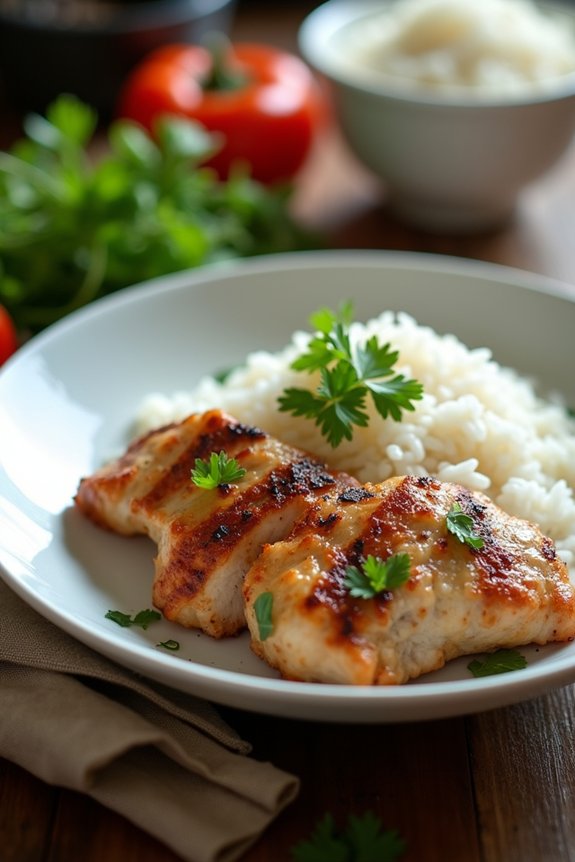
I’ve found that how you cook chicken and rice matters just as much as what you cook, since the right methods lock in nutrients without adding unnecessary fats or sugars. Baking chicken at 375°F for 20–25 minutes or roasting it alongside rice on a sheet pan keeps the protein intact while you skip the oil-heavy frying that can derail your health goals. Stir-frying with minimal oil over medium-high heat is another solid option—it’s basically the healthy cousin of deep-frying, and it takes only 10–15 minutes to get tender chicken and fluffy rice without the guilt.
Baking and Roasting Methods
Why settle for fried chicken when you can get the same delicious protein with way fewer calories? I find that baking and roasting transform chicken and rice into a genuinely healthy meal without sacrificing flavor.
When I roast chicken at 375–425°F, the dry heat cooks everything evenly while keeping moisture locked inside. Skinless chicken works best here, cutting calories substantially. I pair it with rice that stays light and fluffy—no heavy sauces needed.
Here’s what makes this approach work:
- Preserves lean protein without added frying oils
- Retains natural moisture in both chicken and rice
- Adds roasted vegetables for fiber and micronutrients alongside your protein
I’ve discovered that roasting vegetables—carrots, broccoli, bell peppers—increases nutrition without compromising balance. This method delivers genuine results with minimal effort.
Stir-Frying for Nutrient Retention
When you’re cooking chicken and rice on high heat for just a few minutes, you’re actually locking in nutrients instead of cooking them away. Stir-frying is a game-changer for nutrient retention because the quick cooking process preserves proteins, vitamins, and minerals that longer cooking methods destroy.
I’ve found that using a wok or skillet with minimal oil—just a tablespoon or two—keeps your meal lean while maintaining that satisfying texture. The speed matters: you’re cooking everything in 5-10 minutes, which means folate and vitamin C stay intact rather than leaching into water.
Plus, your vegetables keep their vibrant colors and crisp texture, signaling that nutrients are still there. You’re joining countless home cooks who’ve discovered that stir-frying transforms chicken and rice into a genuinely nutritious, delicious meal.
Avoiding Fried and Preserved Options
Deep-fried chicken? Skip it. Frying loads your protein with unnecessary trans fats and calories without adding nutrition. Processed lunch meats deserve the same treatment. Instead, I’d recommend embracing whole grains and lean cooking methods that actually work for you.
Why avoid fried and preserved options:
- Deep-frying increases calorie density while trans fats harm heart health and blood pressure
- Preserved chicken products contain excess sodium and preservatives that undermine meal healthfulness
- These methods destroy the nutrient quality your whole grains and protein deserve
Choose baking, roasting, or air-frying instead. Your body—and your taste buds—will thank you.
Portion Sizes for Your Specific Goals
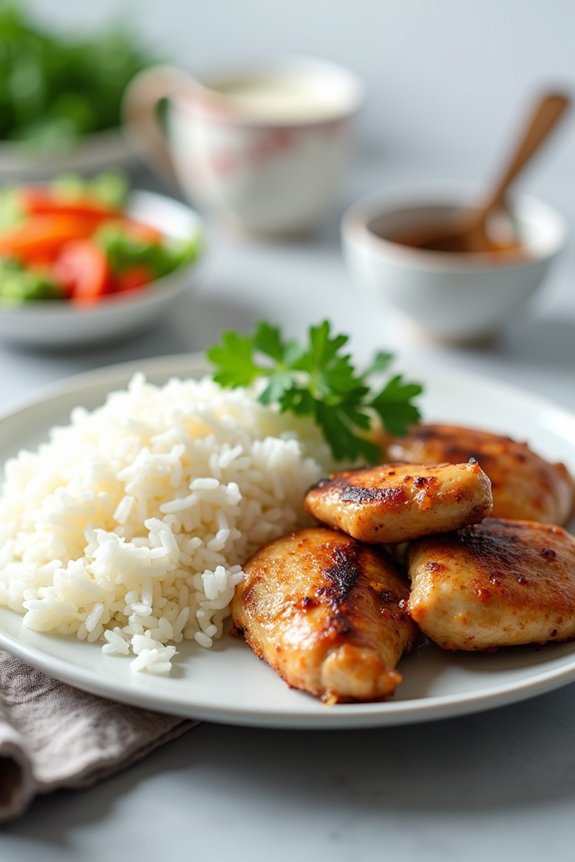
How much chicken and rice should you actually eat? Your portions depend on what you’re working toward. If you’re losing weight, I’d recommend filling about a quarter of your plate with brown rice—it’s got more fiber than white rice—plus at least 3.5 ounces of lean chicken per meal. Building muscle? You’ll need bigger portions to meet higher protein and calorie needs based on your age, height, weight, and activity level.
Here’s what matters: use your personal calorie targets and protein goals to guide your portions. You don’t need six chicken breasts daily—that’s overkill for most people. Instead, balance your meal with vegetables. They add volume, fiber, and nutrients without blowing up your calories. This approach keeps you fueled without overdoing it.
Why Vegetables Complete Your Chicken and Rice Bowl
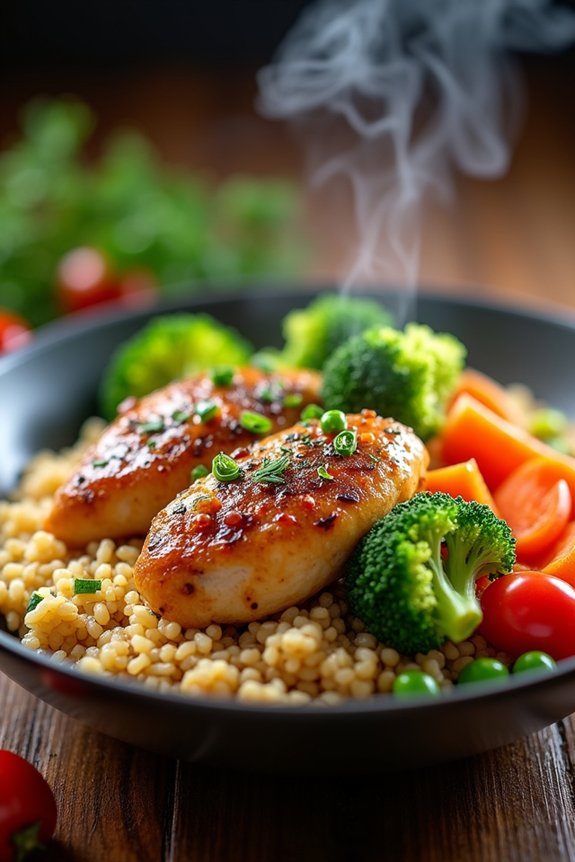
You’ve nailed your portions of chicken and rice, but here’s where most people leave money on the table: vegetables are what actually turn those basics into a complete, satisfying meal. I’m talking about the micronutrients and fiber that make your body feel genuinely full.
When you add colorful veggies—peppers, carrots, broccoli, spinach—you’re boosting antioxidants that support your immune system. You’re also adding volume without loading up calories, which keeps you satisfied longer.
Here’s what transforms your bowl:
- Multiple colors deliver different micronutrients (vitamin C, beta-carotene, folate)
- Greens like broccoli and spinach pack calcium and iron into minimal calories
- Non-starchy volume helps with portion control and lasting fullness
That’s the meal that sticks with you—literally and nutritionally.
Is Chicken Better Than Other Proteins?
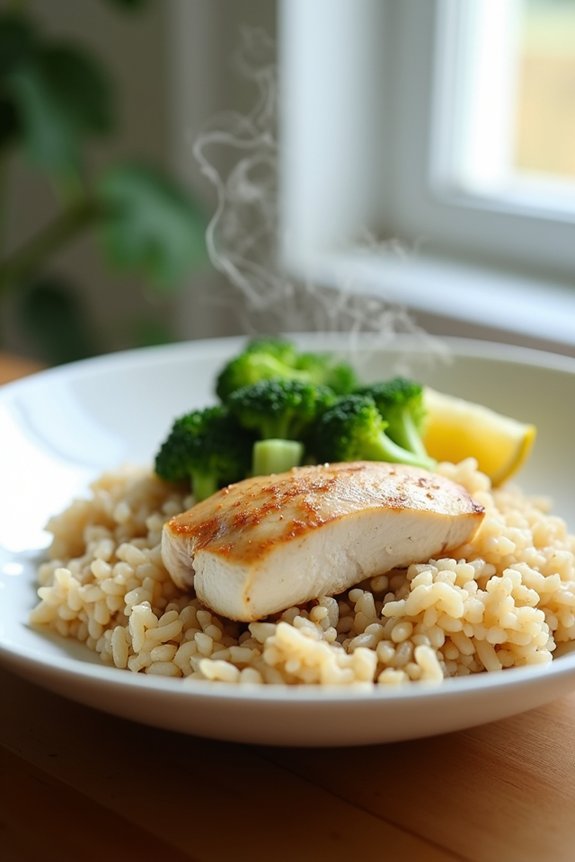
Chicken’s often the go-to protein for healthy eating, and there’s solid reasoning behind that choice—but it’s not automatically the best option for every meal or every body. I’d say chicken shines as a lean protein that supports muscle maintenance without excess calories. However, red meat delivers more zinc and iron, while salmon offers omega-3 fatty acids that chicken can’t match. Here’s the thing: your best strategy isn’t picking one winner. Instead, rotate proteins throughout your week—chicken, beans, fish, and lean beef together create a micronutrient powerhouse. Even within chicken, your choices matter. Skinless breast is leanest, while thighs pack more flavor and fat. By mixing proteins strategically, you’re not settling for “good enough”—you’re building something genuinely optimal.
The Budget-Friendly Path to Consistent Nutrition
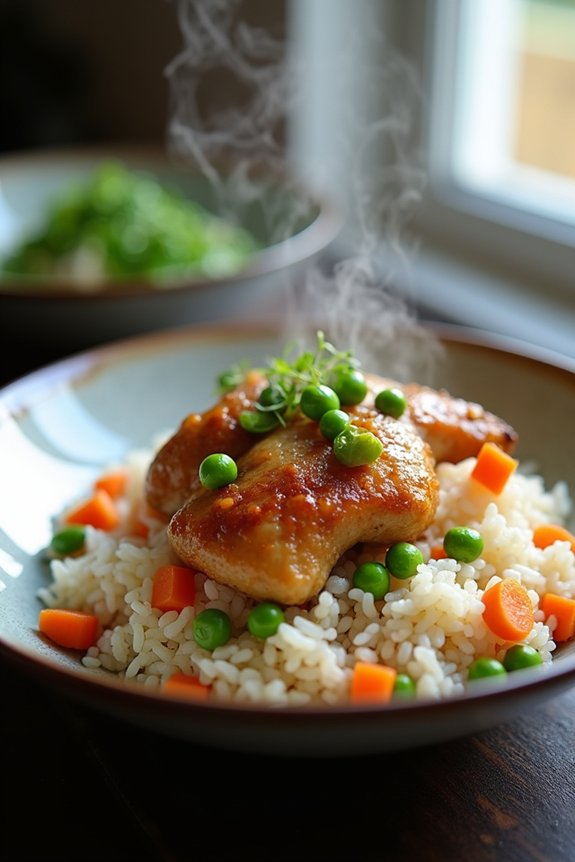
Rotating proteins sounds great in theory, but it gets expensive fast—which is why chicken and rice deserves real attention as an affordable nutritional foundation. I’ve found that buying whole chickens or family packs dramatically cuts my per-pound costs compared to single purchases. Pairing lean chicken with brown rice creates a budget-friendly duo that keeps my protein intake consistent without breaking the bank.
Whole chickens and brown rice keep protein intake consistent and affordable—the real foundation of budget-conscious nutrition.
Here’s how I make it work:
- Batch cook on weekends using one-pot or sheet-pan methods to maximize efficiency and minimize waste
- Buy frozen vegetables like carrots and greens alongside rice to maintain nutrition while staying budget-conscious
- Prep multiple portions at once, transforming affordable ingredients into week-long meals
This approach isn’t just smart financially—it’s genuinely sustainable nutrition that keeps me satisfied and part of a budget-conscious community.
Meal Prep Advantages for Long-Term Health
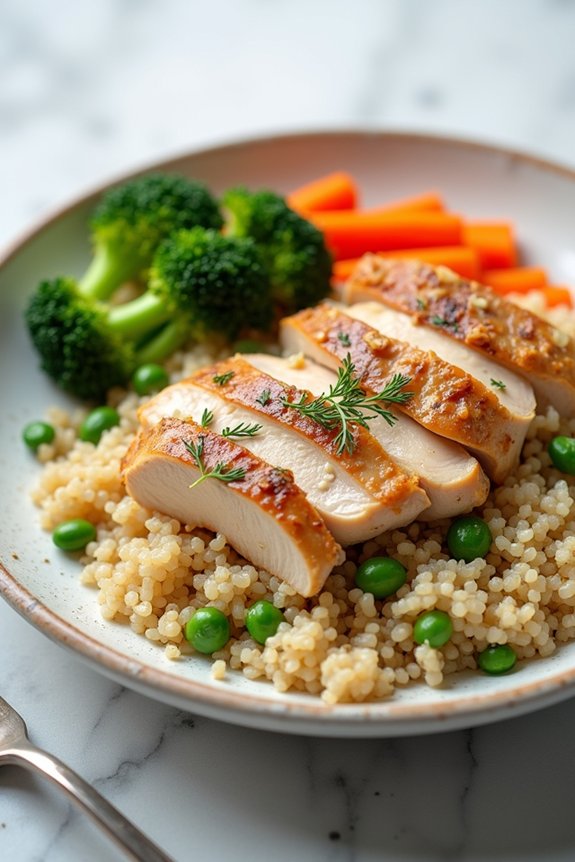
Why does meal prepping chicken and rice work so well for sustained health? When you batch-cook these staples, you’re locking in consistent protein per meal—typically 25–35 grams—which keeps your muscles strong between workouts. The meal prep advantages are real: you’ll spend less time cooking during hectic weeks and avoid grabbing unhealthy impulse foods.
Here’s what makes this approach stick. Brown rice boosts fiber and micronutrients, promoting fullness and steadier blood sugar levels. Add vegetables like broccoli or bell peppers to increase nutrient density further. Pre-planned batches let you vary flavors with different spices and sauces, preventing the monotony that derails most plans. Proper storage and reheating preserve protein quality, sustaining your energy throughout the week.
Mistakes That Ruin Your Healthy Chicken and Rice Meal
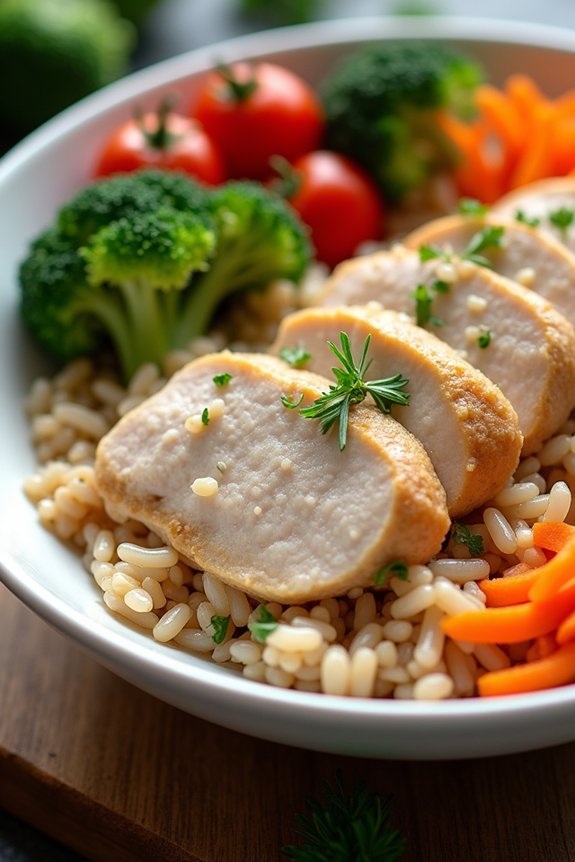
Despite chicken and rice appearing to be a straightforward healthy option, I can easily derail the meal with three common mistakes: drowning it in sugary sauces like teriyaki or sweet-and-sour glazes that pack 10–15 grams of added sugar per serving, skipping vegetables altogether or treating them as an afterthought instead of filling half my plate with them, and piling on oversized chicken portions (like 8–10 ounces instead of 3–4 ounces) that blow past my protein targets. When I make these slip-ups, I’m basically trading a nutrient-dense meal for something that spikes my blood sugar and leaves me hungry an hour later. The good news is that catching these mistakes now means I can build a chicken and rice meal that actually delivers the health benefits I’m after.
Using Sugary Sauce Additions
How often do you reach for that bottle of barbecue sauce or teriyaki glaze to make your chicken and rice taste better? I get it—those sugary sauces seem harmless, but they’re quietly sabotaging your meal’s health benefits.
Even small amounts of high-sugar condiments markedly boost your carbohydrate intake without adding protein or satiety. You’re essentially drinking empty calories that spike your blood sugar and make weight management harder.
Here’s what happens when you regularly use sugary sauces:
- Blood sugar spikes undermine your fullness signals, leaving you hungry sooner
- Insulin resistance develops over time, especially with refined white rice pairings
- Natural flavors disappear, making portion control feel impossible
Instead, I’d encourage you to try herbs, citrus, vinegar, or low-sugar marinades. You’ll preserve your meal’s nutritional power while keeping everything delicious.
Skipping Vegetable Variety
What if I told you that your chicken and rice meal’s real superpower isn’t the protein—it’s the vegetables you’re probably skipping?
Here’s the thing: when you skip colorful vegetables, you’re missing out on fiber that keeps you satisfied longer. That fiber? It’s your secret weapon against blood sugar spikes after eating. Without broccoli, peppers, or leafy greens, your body processes carbs faster, leaving you hungry sooner.
I’ve seen people wonder why their “healthy” chicken and rice doesn’t keep them full. The answer’s sitting right there on their empty plate. Those vibrant vegetables pack vitamins, minerals, and antioxidants that fuel your energy and support your immune system. A monotone plate of just chicken and rice is like showing up to a party in grayscale—technically there, but missing all the color that makes it memorable.
Overcooking Protein Portions
Dry, rubbery chicken is the silent killer of an otherwise healthy meal. When you’re overcooking protein, you’re literally cooking away the juiciness that makes chicken enjoyable and nutritious. I’ve learned that prolonged heat breaks down moisture, creating a tough texture that makes you want smaller portions—and that’s a problem for your protein goals.
Here’s what happens when you nail it instead:
- Using a meat thermometer to hit exactly 165°F (74°C) preserves moisture and texture
- Resting chicken for 3–5 minutes after cooking redistributes juices throughout the meat
- Proper timing prevents nutrient loss, especially water-soluble vitamins your body needs
You don’t need fancy techniques. Just monitor your cooking time closely and use that thermometer. Your chicken and rice bowl will taste better, feel more satisfying, and actually deliver the protein punch you’re after.
Eating Chicken and Rice Every Day
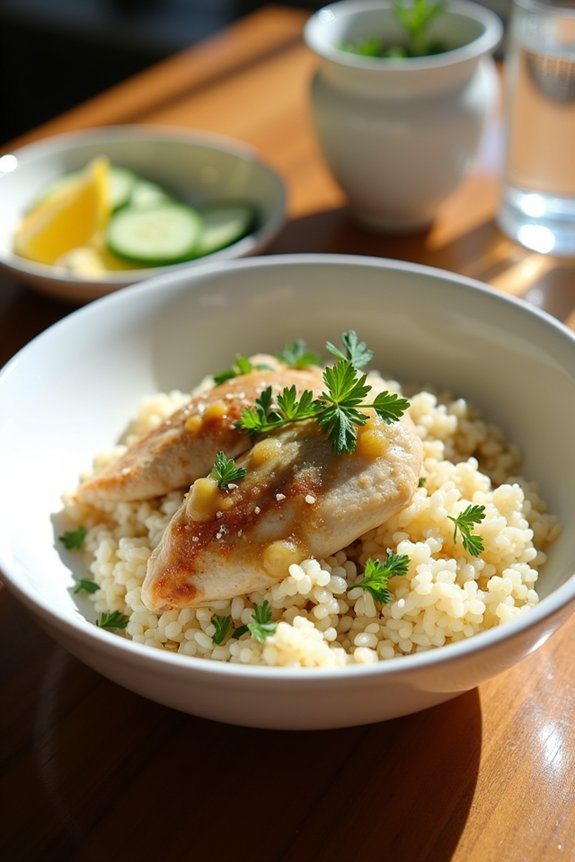
Many people ask whether they can eat chicken and rice every single day, and the short answer is yes—you can make it work. I’ve found that this combo supports protein intake and muscle maintenance when you’re meal-prepping for the week. Here’s what matters: you’ll need to add vegetables, fruits, and healthy fats to fill nutritional gaps. Think of chicken and rice as your foundation, not your entire meal. I rotate cooking methods—baking, stir-frying, roasting—to keep things interesting and prevent boredom. Varying spices and seasonings helps too. Pair your protein with several servings of colorful, non-starchy vegetables like broccoli or spinach. Brown rice offers more nutrients than white rice. When you’re strategic about portions and what surrounds that chicken-and-rice base, you’ll create sustainable, balanced eating without feeling stuck in a rut.