
Wrap your pork butt when it hits 160–170°F internally—that’s your sweet spot to beat the stall. I’d place your thermometer in the thickest part, away from bone. Use two 3-foot foil sheets in a plus sign and seal it snugly, then return it to the smoker until probe-tender at 200°F. Rest it wrapped for an hour so juices reabsorb. Your choice between foil, butcher paper, or no wrap determines bark crispness versus juiciness—and there’s a strategy for each.
Why Wrapping Matters: The Temperature Stall Explained
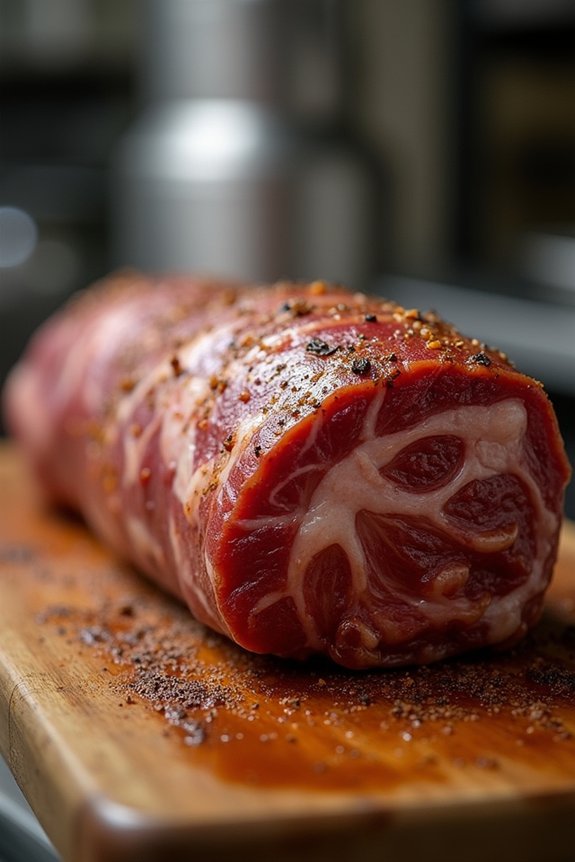
When you’re smoking a pork butt, you’ll hit a frustrating point where the internal temperature seems stuck—and that’s exactly what the temperature stall is. This happens around 160–170°F, when the meat’s evaporative cooling slows your progress considerably. It’s like the meat’s taking a stubborn coffee break.
That’s where wrapping saves the day. By wrapping your pork butt in foil or butcher paper, you speed up the remaining cook significantly while preserving moisture that’d otherwise escape. Wrapping also protects your bark’s color during this crucial phase. Most pitmasters wrap around the 5-hour mark at 225°F, though you can time it by appearance instead. After wrapping, you’ll push toward your final target of 200°F, emerging with a noticeably juicier product that justifies the effort.
Know Your Target: When to Wrap (160–170°F Internal Temp)
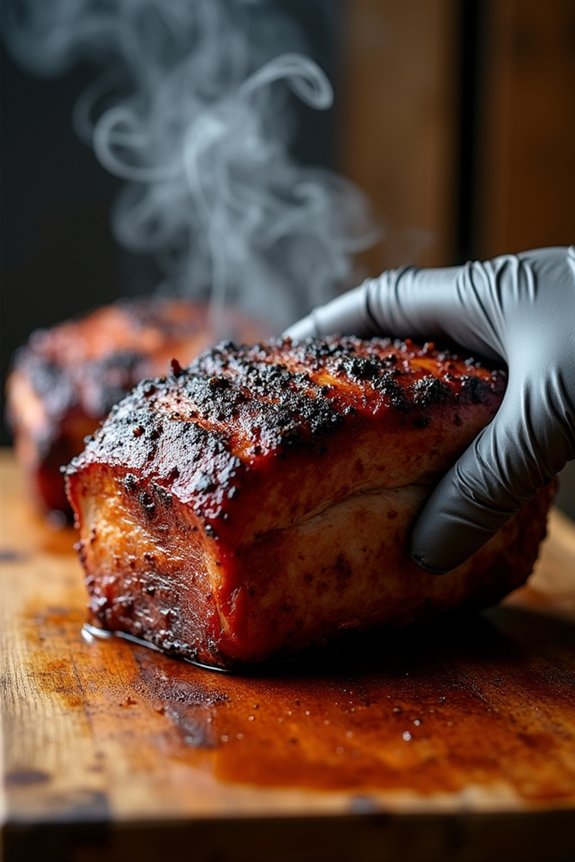
I watch my thermometer hit 160–170°F, and that’s your signal—the stall’s about to slow things down, so it’s time to wrap. You can stick with this temperature rule, or if you’re the type who likes going by feel, check out your bark instead; some pitmasters swear by how the surface looks rather than a strict number. Either way, wrapping at this sweet spot speeds up the final stretch while locking in that moisture, which makes all the difference in your finished butt.
Temperature As Your Guide
How’d you know it’s time to wrap your pork butt? Your thermometer’s your best friend here. I rely on internal temperature as my primary guide—it’s way more reliable than guessing or watching the clock.
Here’s what I watch for:
- Internal temperature hits 160–170°F – this signals the stall’s arriving and bark’s set nicely
- Bark appearance looks good – you’ve built that smoke ring and color you wanted
- Thermometer placement matters – insert it into the thickest part, avoiding bone
Once I hit that 160–170°F sweet spot, I wrap with either foil or butcher paper. From there, I keep cooking until the internal temperature reaches around 200°F. Temperature-guided wrapping removes the guesswork and helps me nail tenderness while protecting that bark I’ve worked hard to develop.
Bark Development Indicators
Your thermometer tells you when the stall’s hitting, but your eyes tell you something equally important—whether that bark’s ready for wrapping.
Bark development is your visual cue. You’re looking for a dark, crusty exterior that’s formed a solid layer around the meat. This typically happens around the 160–170°F internal temp mark, though timing varies. Don’t rush wrapping based solely on the clock—wait until that bark looks legitimately good.
| Stage | Appearance | Touch | Temperature | Action |
|---|---|---|---|---|
| Early | Light brown | Soft | 140–150°F | Keep smoking |
| Developing | Medium brown | Slightly firm | 150–160°F | Monitor closely |
| Ready | Dark mahogany | Crusted | 160–170°F | Consider wrapping |
| Peak | Nearly black | Hard crust | 170°F+ | Wrap now |
| Overdone | Charred spots | Too hard | 175°F+ | Wrapped already |
When that bark looks right, you’ve nailed your wrapping timing.
Foil Wrapping: Speed, Moisture, and Juicy Results
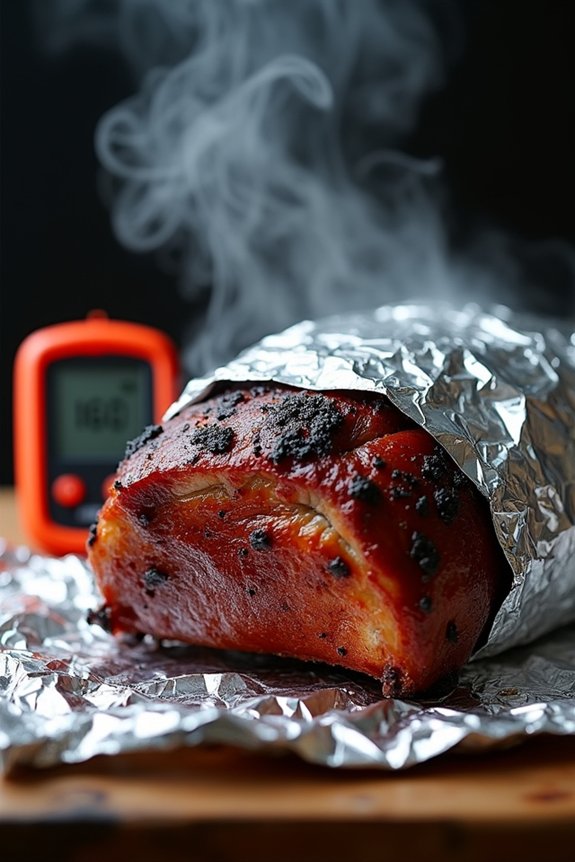
When you wrap your pork butt in foil at around 160–170°F, you’re essentially creating a moisture-trapping steam chamber that’ll have your meat hitting that target 200°F finish in noticeably less time. I’d say you’re looking at a faster cook overall because foil seals in the heat and humidity, which speeds through the stall phase and keeps every bit of those precious juices locked in for tender, juicy results. Just know that this speed and moisture come with a trade-off: your bark won’t develop quite as dramatically as it would without wrapping, so some pitmasters treat foil as the reliable shortcut rather than the showstopper route.
Moisture Retention Benefits
Why does wrapping your pork butt in foil make such a difference in the final result? It’s simple: foil wrapping traps moisture inside the meat, creating juicier results you’ll actually want to brag about.
Here’s what happens when you wrap:
- Juices stay put – Instead of evaporating into thin air, the meat’s natural liquids remain trapped inside, making every bite tender and flavorful
- Cook time speeds up – Your pork finishes faster while retaining all that precious moisture
- Juices get reabsorbed – The trapped moisture seeps back into the meat, enhancing tenderness throughout
Start wrapping around 160–170°F internal temperature. This timing lets your pork develop flavor first, then locks in moisture for the final push to 200°F. You’ll achieve that perfect balance between texture and juiciness that separates good pulled pork from great pulled pork.
Cooking Time Acceleration
How much faster does foil wrapping actually cook your pork butt? When you wrap with foil around the five-hour mark—typically when your meat hits 160–170°F—you’re essentially placing your brisket’s annoying cousin, the stall, in a headlock. That tight seal traps steam and moisture, pushing your cook along considerably faster. Without wrapping, you’re looking at eight to ten hours total. With foil, you’ll usually finish in about seven to eight hours, sometimes less. The wrapped stage accelerates things because retained heat and moisture work together, so your internal temperature climbs steadily toward that 200°F target instead of plateauing frustratingly. You’re joining the smart crowd by understanding that wrapping isn’t just about juiciness—it’s about finishing dinner before everyone gets hangry.
Bark Protection Techniques
There’s a trade-off you’ll face once your pork butt’s bark looks just right around the 160–170°F mark: wrap it in foil and you’ll speed through the stall and lock in juices, but you’ll also soften that crispy exterior you’ve worked to build.
Here’s what foil wrapping actually does for your meat:
- Traps moisture and juices that recirculate back into the pork, creating incredibly tender, juicy results
- Softens bark texture compared to unwrapped cooking, trading crispiness for tenderness
- Accelerates cook time by sealing in heat and steam around your butt
You’ve got options though. A double-wrap approach—foil plus a second layer or pan—enhances that juiciness even more. If you’re after maximum bark texture preservation, consider butcher paper instead, which sits between foil and no-wrap methods. Pick your priority: speed and moisture, or that prized crispy exterior.
Butcher Paper Wrapping: Balancing Bark and Tenderness
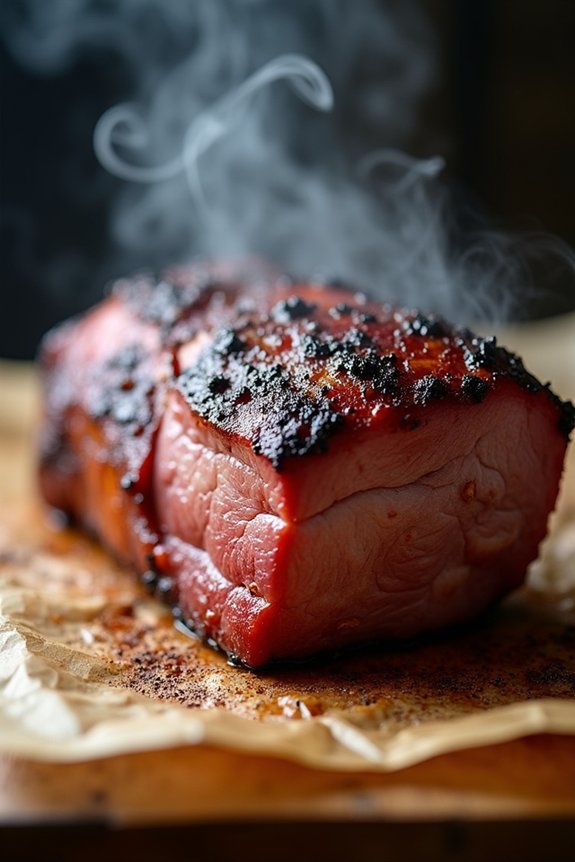
If you’re looking for the goldilocks approach to wrapping pork butt, butcher paper is your answer. I find it hits that sweet spot between protecting your meat and maintaining that coveted bark.
Here’s the timing: wrap when your internal temperature reaches 160–170°F, right around the stall. Butcher paper breathes better than foil, so your bark stays intact while moisture gets trapped inside. This means you get tenderness without sacrificing that flavorful, caramelized exterior you’ve worked hard to develop.
Continue cooking until you hit 200°F, then rest before pulling. You’ll finish faster than unwrapped, but slower than foil—the middle ground that works. The paper allows smoke to keep penetrating, enhancing both texture and flavor. That’s the balance that makes butcher paper the reliable choice.
No Wrap Method: Maximizing Bark at the Cost of Moisture
If you’re willing to skip the wrapping entirely, you’ll develop a seriously impressive bark—but you’re accepting that your pork butt’s exterior might lose some moisture along the way. I recommend spritzing your meat every 45 minutes or so with a mix of apple juice and water to keep the surface from drying out too much while still letting that bark get dark and crusty. You’re trading some tenderness and juiciness for maximum smoke penetration and that coveted crunchy exterior, so plan on a longer cook time and aim for an internal temp around 200°F before you rest it.
Bark Priority Over Moisture
When you’re chasing that coveted, crunchy bark instead of a tender, juicy surface, the no-wrap method is your ticket. You’ll skip the foil entirely and let your pork butt develop character from start to finish.
Here’s what you’re trading:
- Maximum smoke exposure that builds deep, complex flavors throughout the cook
- Firm, crispy bark that develops over several hours without moisture interference
- Longer cook times due to extended stalls, but the payoff is worth it
The tradeoff? Your meat’s outer layers lose moisture faster. You’ll need to monitor temperature carefully and possibly spritz occasionally to prevent over-drying. If you’re willing to invest the time and attention, you’ll achieve bark that’ll make your guests jealous—even if the interior takes longer reaching tenderness.
Spritzing To Combat Dryness
Going bark-first means I’ve got to think strategically about moisture, and that’s where spritzing comes in. During the first three hours of smoking, I’ll spritz lightly with apple juice every hour or so. This keeps the surface from drying out while the bark’s still forming—think of it as moisture insurance. I’m careful not to oversaturate though, since that’ll wash away my rub and delay bark development. Once that beautiful crust sets and the meat approaches the stall, I stop spritzing entirely. This protects the hard-won crust I’ve built. The no-wrap method prioritizes bark over moisture, but strategic spritzing early on strikes that balance. Light, infrequent sprays during those critical initial hours give me the best of both worlds without compromising that prized exterior.
Trade-Offs And Expected Results
you’re largely opting for bark supremacy over moisture protection, and that choice comes with clear consequences you’ll notice throughout your cook.
When you skip the wrap, you’re committing to:
- Firmer, crunchier bark that develops beautifully but requires unwavering attention
- Longer cook times—sometimes stretching an extra hour or two compared to wrapped methods
- Lower moisture retention inside the meat, demanding careful monitoring to prevent over-drying
The trade-off is straightforward: maximum bark means accepting a tougher internal texture without wrapping’s protective benefits. You’ll rely heavily on that gorgeous crust for texture since the meat loses moisture steadily. Resting becomes even more critical afterward. If you’re chasing that championship-quality exterior, the no-wrap approach delivers—just expect to earn it through patience and close attention.
How to Wrap Tightly Without Trapping Steam Unevenly
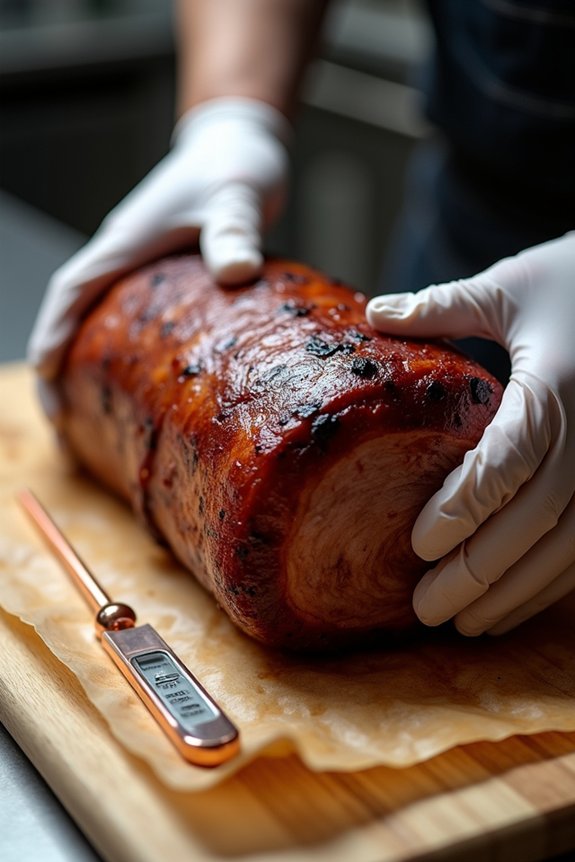
How do I wrap my pork butt without accidentally steaming away all that beautiful bark I’ve worked to develop?
The trick is sealing your foil wrap firmly while avoiding uneven steam traps. I arrange two 3-foot sheets in a plus sign (+) pattern, positioning the meat fat-cap up for optimal protection. I seal the foil deliberately—snug enough to contain juices, but not so crimped that steam pockets form underneath.
| Wrapping Technique | Pressure Level | Steam Risk | Bark Result |
|---|---|---|---|
| Loose foil | Light | High | Softer |
| Properly sealed | Medium | Low | Preserved |
| Over-crimped | Heavy | Medium | Damaged |
| Butcher paper | Light | Very low | Best |
| No wrap | None | N/A | Excellent |
I avoid crushing the bark by keeping tension even. This balance lets juices pool without creating steam pockets that ruin texture.
Step 1: Monitor Your Meat Thermometer as Temperature Climbs
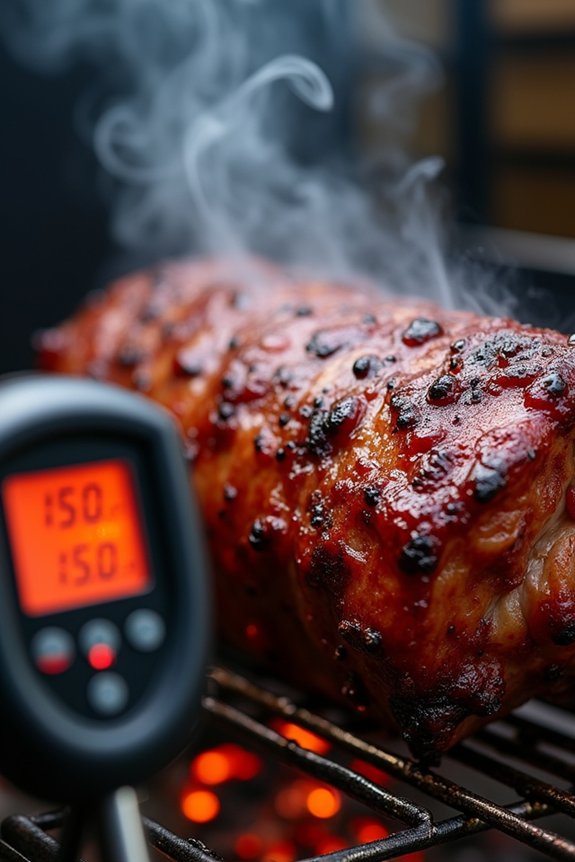
As your pork butt smokes, I’ll be honest—the thermometer becomes your best friend. You’re watching for that pivotal moment when the internal temperature hits 160–170°F, which signals the start of the stall and tells you it’s wrap time.
The thermometer becomes your best friend—watch for that 160–170°F signal to wrap and keep momentum toward pull-apart tenderness.
Here’s what you’ll want to track:
- Insert your probe into the thickest part of the meat, away from bone
- Check temperature every 30 minutes once you’re approaching 160°F
- Note the time when you hit that magic range
This temperature monitoring prevents guessing games. You’re not just cooking blindly—you’re following science. When that thermometer reads 160–170°F, you’ve got your signal to wrap and keep momentum toward that final 200°F target for pull-apart tenderness.
Step 2: Decide Your Wrapping Strategy Before You Start
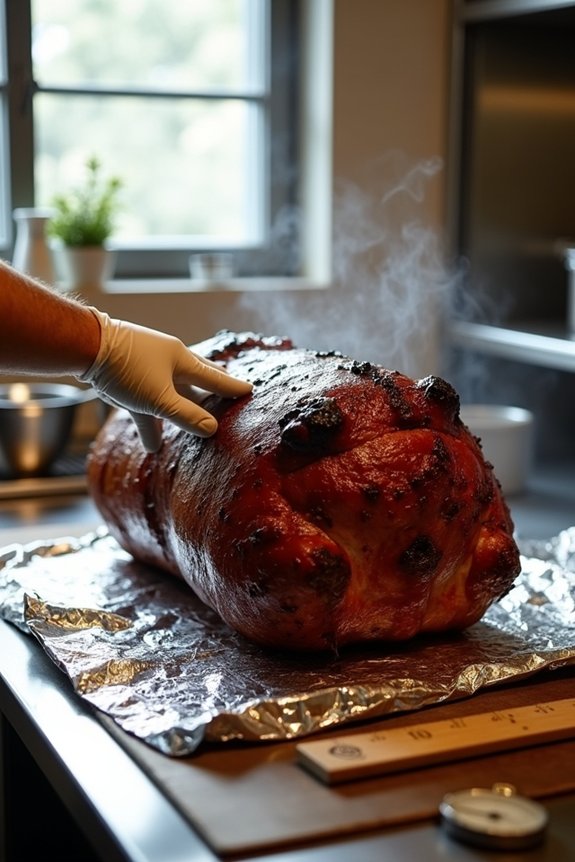
Now that your thermometer’s hitting that 160–170°F sweet spot, it’s time to pick your wrapping game plan—and honestly, this choice matters more than you’d think. You’ve got two solid options here.
Foil wrap speeds things up and locks in moisture, but your bark gets softer. Butcher paper, on the other hand, breathes better and keeps that bark you’ve worked hard to develop looking crispy. It takes a bit longer, but you’re trading time for texture.
Before wrap timing even comes into play, decide which appeals to you. Some folks swear by bark appearance as their signal to wrap. Others hit that five-hour mark at 225–250°F and commit to foil.
Either way, you’re heading toward that perfect 200°F finish line.
Step 3: Wrap Tightly and Reseal for Even Cooking
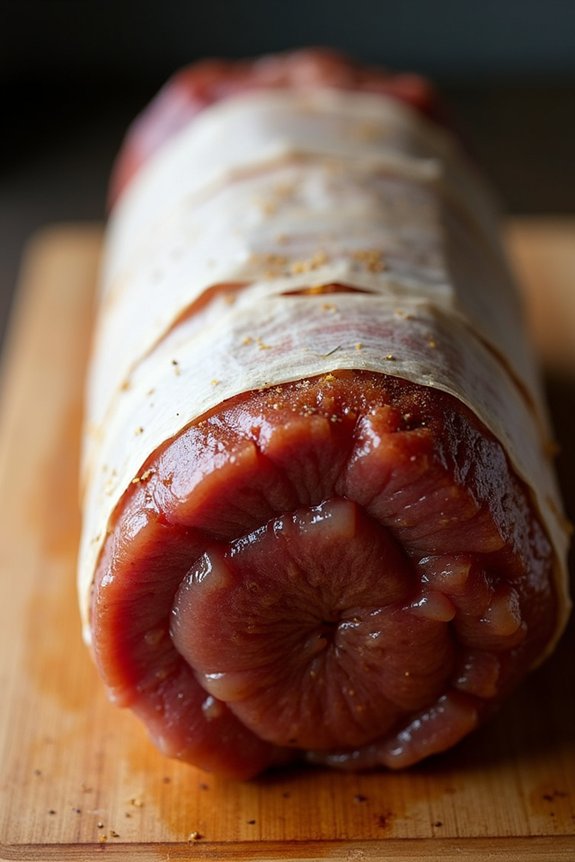
– The wrapping itself—that’s where precision counts. I grab two 3-foot sheets of foil and arrange them in a plus sign pattern. This overlap guarantees I can seal everything tightly without gaps where steam escapes.
Here’s my wrapping approach:
- Center the meat on the foil intersection and fold edges up snugly around all sides
- Fold corners diagonally to create tight seals, pressing out excess air as I go
- Double-check seams by pressing foil together firmly, then reseal any weak spots
Once wrapped, I return the pork to the smoker. The foil traps moisture and heat, pushing through that stubborn stall phase faster. You’re basically creating a mini-oven that accelerates your cook toward that 200°F target. Tight wrapping means even heat distribution and better results.
Step 4: Return to the Smoker Until Probe Tender
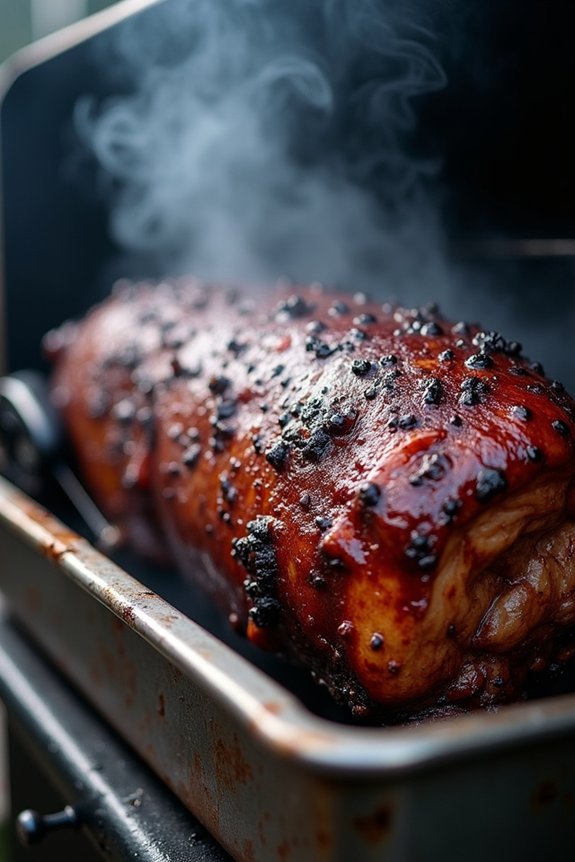
What happens next is where patience meets precision—you’re taking that wrapped pork butt straight back into the smoker to finish the job. I return it to the same temperature and let it cook until the internal temperature climbs from around 170°F toward your 200°F target. This is where the wrap truly shines—it powers through that stall period faster than you’d expect.
I monitor the temperature every thirty minutes or so. The wrapping accelerates the final cooking stage considerably. Once you hit 200°F, you’re essentially done. The pork becomes probe-tender, meaning a toothpick slides through effortlessly like butter.
| Temperature | Time Frame | What’s Happening | Wrap Type | Next Step |
|---|---|---|---|---|
| 170°F | Initial | Just wrapped | Foil or Paper | Monitor closely |
| 180°F | 1-2 hours | Stall breaking | Your choice | Keep checking |
| 190°F | 2-3 hours | Nearly there | Still wrapped | Almost ready |
| 200°F | Final | Probe-tender | Remove wrap | Rest period |
| 203°F | Done | Perfect | Unwrap | Pull and serve |
Step 5: Optional Final Bark Touch if Using Foil
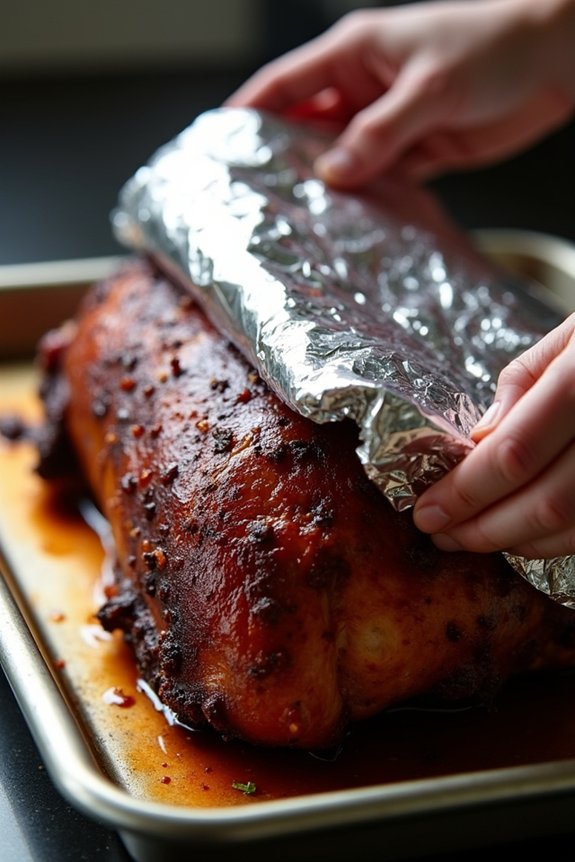
If you’ve wrapped your pork butt in foil to power through those final hours, you’ve made a trade-off—speed and moisture for that beautiful, crispy bark you started developing.
Here’s how to reclaim some of that bark magic:
- Unwrap strategically: Once your pork reaches 200°F internal temperature, carefully remove the foil (watch out for steam—it’s hot stuff).
- Expose the surface: Let that exterior air-dry for 10-15 minutes so it can firm up and re-crisp slightly.
- Inspect your work: Check if the bark meets your standards before proceeding to rest.
You won’t completely restore the bark you’d get with butcher paper, but this final touch gives you the best of both worlds. It’s a small step that makes a real difference in your finished product.
Step 6: Rest Before Shredding to Reabsorb Juices
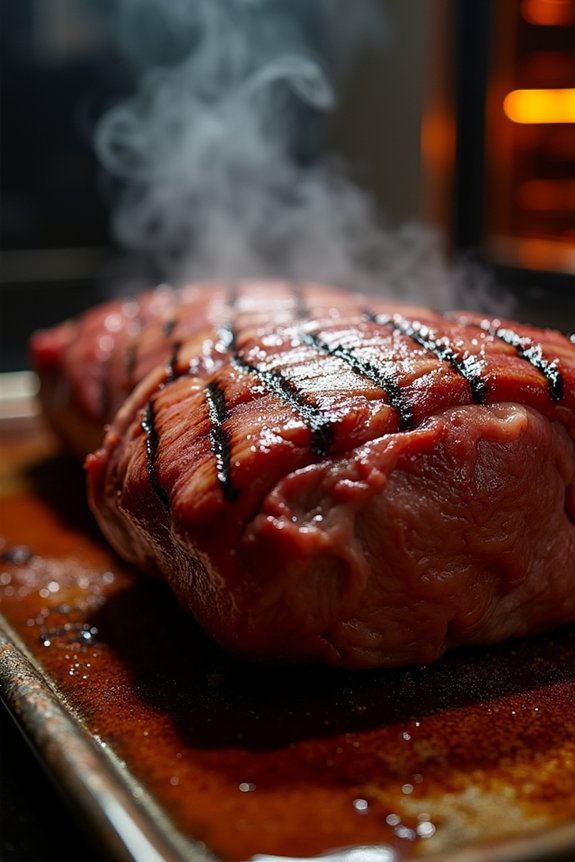
After you pull your pork butt from the heat, don’t rush straight to shredding—let it rest wrapped in foil or a towel for at least an hour so the juices can reabsorb back into the meat instead of running all over your cutting board. During this resting period, the internal temperature stabilizes and the muscle fibers relax, which makes your pulled pork juicier and way easier to shred by hand. You can even capture those flavorful drippings from the foil and use them as a finishing glaze or to moisten the shredded meat before serving.
Moisture Retention During Rest
Why does resting matter so much? I’ve found that letting your pork butt sit for about an hour makes a real difference in how juicy and tender it turns out. During this resting period, the juices that escaped during cooking actually reabsorb back into the meat, transforming your final result.
Here’s how I keep moisture locked in:
- Wrap it tight in foil to trap steam and heat around the meat
- Use a cooler with towels for insulation that maintains even temperature throughout resting
- Save those drippings from your container to baste the meat when you’re ready to shred
This simple step ensures your pulled pork stays moist and tender, not dry. You’re essentially letting the meat finish cooking from the inside out, making shredding easier and every bite more satisfying.
Resting Timeline and Methods
How long should you actually let that pork butt sit before pulling it apart? I’d recommend resting it for about an hour—this is where the magic happens. During resting, the meat’s fibers relax and reabsorb those flavorful juices you worked hard to develop. Wrap your pork butt in foil or a towel immediately after it hits your target temperature. Place the wrapped meat in a cooler or warm oven to maintain both moisture and heat. The longer you rest it, the easier it’ll pull apart and the juicier it becomes. After resting, remove the bone if you’d like, then use those leftover juices from your wrapping as added flavor when you shred. You’ve earned this moment—don’t rush it.
Common Wrapping Mistakes That Dry Out Your Pork Butt
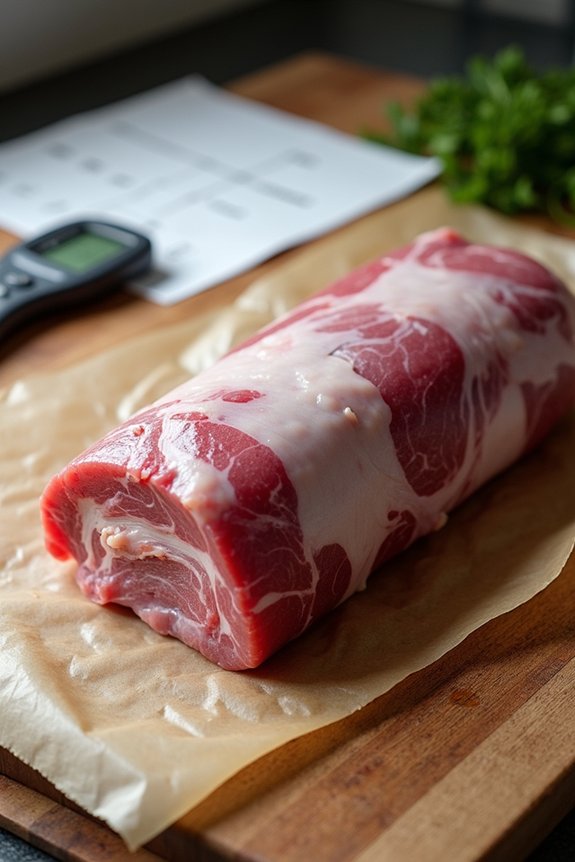
Even though you’ve got the basics of wrapping down, it’s easy to sabotage your pork butt with a few careless moves that’ll leave you with dry, disappointing meat.
Even the basics of wrapping won’t save your pork butt from careless moves that leave you with dry, disappointing meat.
I’ve learned these mistakes the hard way, and I want you to avoid them:
- Wrapping too early before bark forms. If you wrap before achieving that 160–170°F internal temp, you’re sacrificing bark preservation for speed. Your meat won’t have that desirable crust.
- Using foil without wrap tolerance considerations. Foil traps moisture too tightly, steaming your bark away. Butcher paper breathes better while still retaining juices.
- Removing wraps too soon. Taking off your wrap before finishing accelerates moisture loss. The surface dries out fast—don’t rush it.
Timing matters more than the clock.
Does Wrapping Change the Final Texture and Flavor?
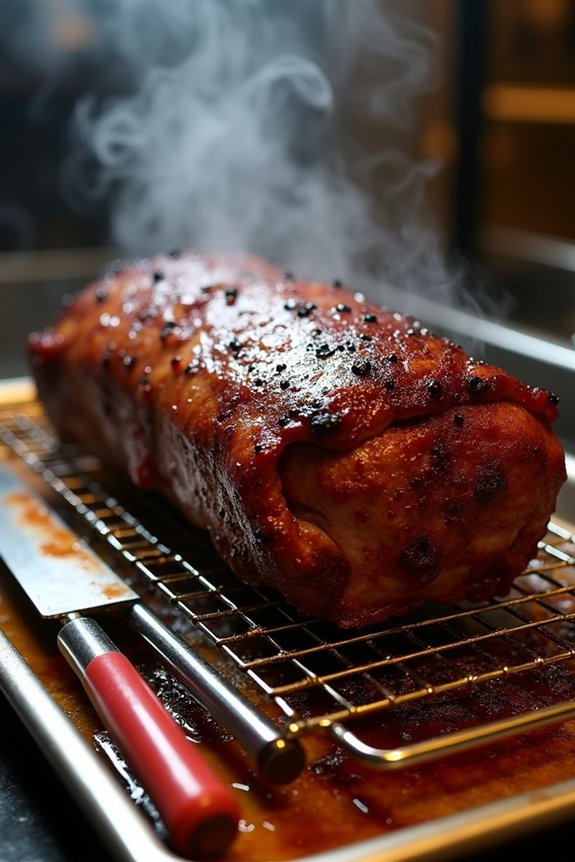
Now that you’ve mastered the timing and avoided the pitfalls that sabotage your meat, it’s worth understanding how your wrapping choice actually shapes what ends up on your plate.
Your wrap method directly influences texture. No wrap gives you the firmest, crispiest bark—that desirable brown crust. Foil wrapping produces softer bark because it traps steam, though you’ll get juicier meat. Butcher paper splits the difference, offering faster cooking than unwrapped pork while maintaining better bark texture than foil.
Flavor-wise, the wrap itself doesn’t add taste. Instead, your choice affects how juices redistribute during cooking. Wrapped meat retains more moisture, which gets reabsorbed during resting, creating tenderness. This moisture retention is what makes wrapped pork taste more succulent, not the wrap material itself. Choose based on whether you prioritize bark crispiness or juiciness.
Which Wrap Method Is Right for You?
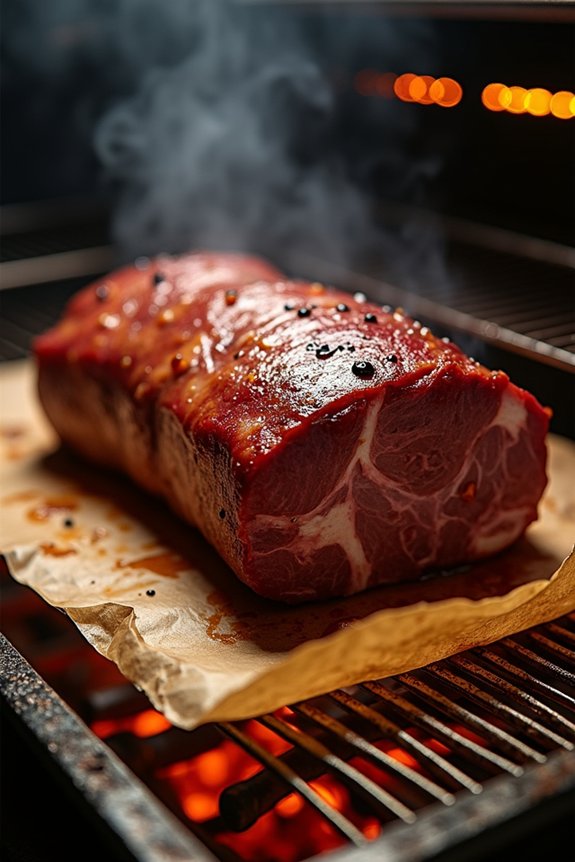
So what’s the best wrap for your pork butt? The answer depends on what you’re after in your final bark texture and cook time. Let me break down your wrap method options:
- Foil wrap: Choose this if you want faster cooking and juicier meat. You’ll sacrifice some bark crispness, but you’ll shorten total time substantially.
- Butcher paper: This middle-ground option lets you keep decent bark texture while still trapping moisture. It’s my go-to when I want balance.
- No wrap: Go unwrapped if you’re chasing the firmest, crispiest bark and don’t mind longer cooking. Just watch for surface drying.
Pick based on whether you prioritize speed, texture, or that coveted bark. Each method delivers different results, so there’s no wrong choice—just different delicious outcomes.