

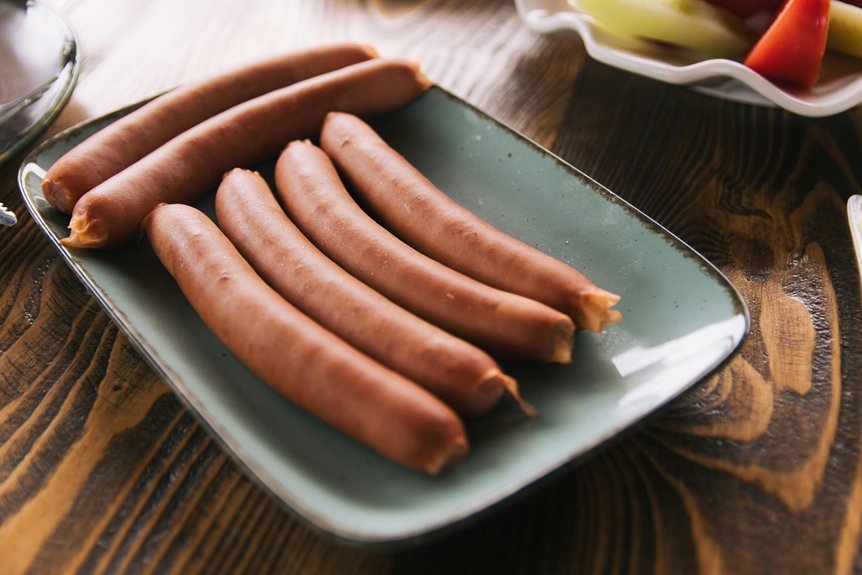
Sausage casings come from three sources: animal intestines (natural), processed animal byproducts like collagen, or synthetic materials like cellulose and plastic. Natural hog casings give you that authentic snap and texture, while collagen casings offer uniform sizing and faster stuffing without prep work. Synthetic options work best for mass production but need peeling after cooking. Your choice depends on whether you want traditional bite, processing speed, or shelf stability—and we’ll break down exactly which fits your needs.
What Casings Are Made From: Natural, Collagen, and Synthetic
When you bite into a sausage, that snappy casing doesn’t just appear by magic—it’s made from one of several carefully chosen materials, each with its own strengths and quirks. Natural casings come from the submucosa layer of animal intestines, delivering traditional texture and that satisfying snap we all crave. Collagen casings, made from cow and pig hides and bones, are edible and offer uniform diameter—perfect for consistent sausage stuffing. Synthetic casings like polyamide provide strong barriers ideal for mass production. Each casing material serves different purposes in meat processing. Natural casings require rinsing and soaking before use, while collagen casings need minimal prep. Your choice depends on whether you’re after authentic flavor or efficiency in the kitchen.
Natural Casings: Hog, Sheep, Beef, and How They’re Prepared
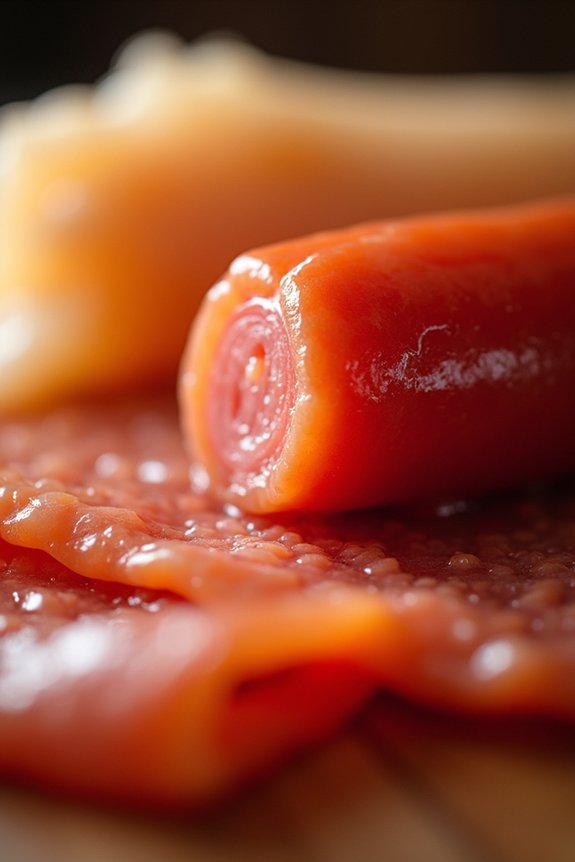
Ever wonder why your breakfast sausage link looks different from a summer sausage? The answer lies in natural casings—the submucosa layer from animal intestines. I’ll show you how to pick the right one for your sausage stuffing projects.
| Casing Type | Diameter Sizes | Best For |
|---|---|---|
| Hog casings | 29–42 mm | Bratwurst, Italian sausage, kielbasa |
| Sheep casings | 20–28 mm | Breakfast links, snack sticks |
| Beef casings | Large diameter | Salami, summer sausage |
Hog casings offer versatility for medium sausages. Sheep casings work best for smaller links. Beef casings provide strength for larger products.
Salt-packed casings need preparation—no shortcuts here. I soak them to restore flexibility, then rinse thoroughly before sausage stuffing. This simple soaking and rinsing process ensures quality results every time you stuff.
Hog vs. Sheep vs. Beef: Which Size and Type for Your Sausage
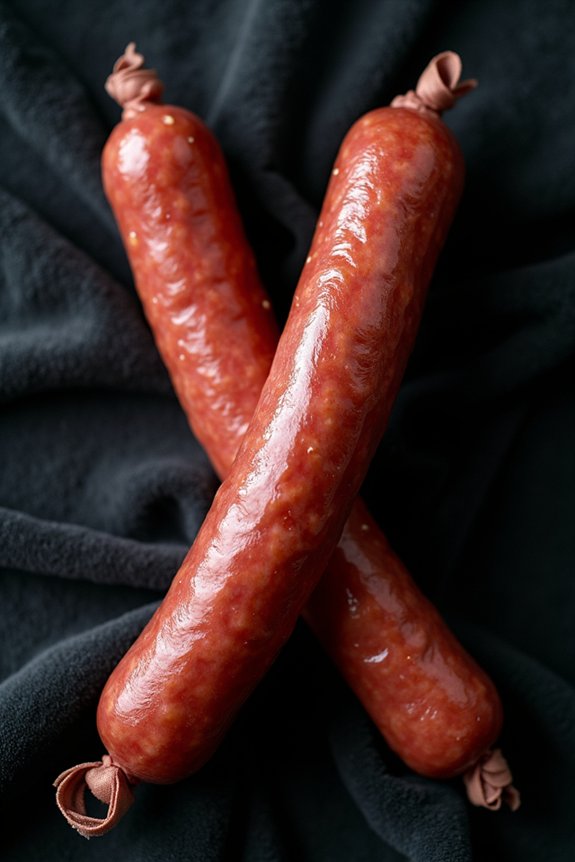
When you’re ready to stuff your sausages, I’ll help you pick the right casing by matching it to your sausage’s size and style. Hog casings work great for medium to large links like bratwurst and Italian sausage (29–42 mm diameter), while sheep casings fit smaller breakfast links and snack sticks (20–28 mm) perfectly. If you’re making big, sturdy sausages like salami or summer sausage, beef casings—with their thicker walls—are your best bet for that no-fuss, professional result.
Diameter and Application Guide
How do you know which casing to grab for your sausage project? I’ll walk you through matching casing sizes to your sausage goals.
Natural casings vary significantly in diameter, and this directly affects both how much pressure they’ll handle and your final bite texture. Here’s what I recommend:
- Sheep casings (20–28 mm) – Perfect for breakfast links and snack sticks with delicate snaps
- Hog casings (29–42 mm) – Ideal for mid-sized sausages like Italian, bratwurst, and kielbasa with balanced strength
- Beef casings – Best for large-diameter sausages such as salami and summer sausage requiring durability
- Hog casings’ sweet spot – They offer you the best balance between strength and snap for most stuffed sausage projects
Choose based on your target product’s desired diameter and bite texture.
Selecting by Sausage Type
The casing you choose determines whether you’ll get those satisfying snaps and the right texture in every bite—and it all comes down to matching the animal source to your sausage style. I find that hog casings work beautifully for medium sausages like bratwurst, ranging from 29–42 mm depending on your preference. Sheep casings, the smallest option at 20–28 mm, are perfect for small links like breakfast sausages and hot dogs. If you’re making large diameter sausages such as salami or summer sausage, beef casings deliver the thickness you need.
Natural casings from each animal source impart distinctive texture and snap that really matters. When casing selection feels tricky, remember this: match your sausage diameter to the animal source, and you’re golden. Collagen alternatives work too when uniform size matters more than that traditional bite.
Collagen Casings: Uniform, Edible, and Faster Than Natural
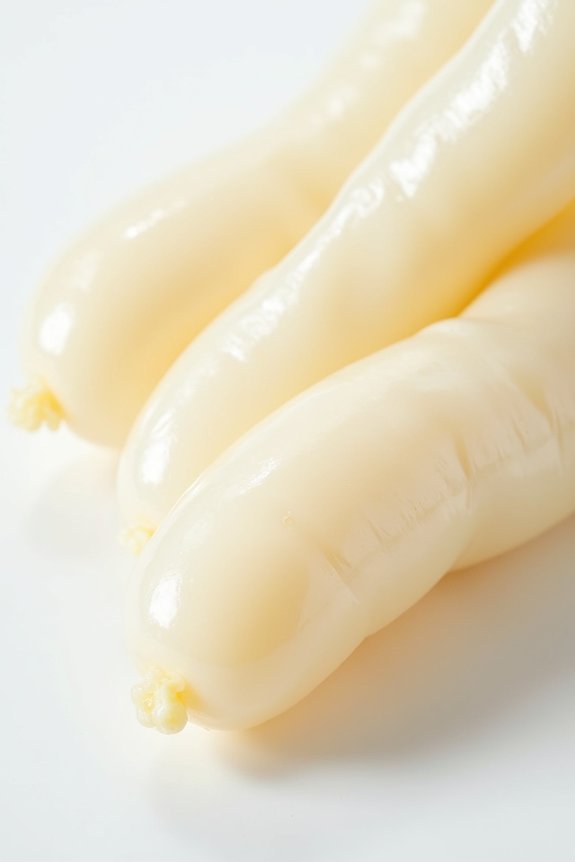
If you’ve ever wondered why some sausages feel uniform and slip onto a stuffer with ease, collagen casings might be your answer. I find these engineered casings impressive because they’re made from beef hides, bones, or tendons extruded into consistent tubes. You’ll appreciate their practicality:
- Fresh collagen casings work best for delicate sausages needing tender skin
- Smoked collagen casings handle hanging and heat processing without splitting
- Edible construction means you’re not peeling anything away before eating
- Superior stuffing efficiency lets machines work faster than with natural casings
What makes collagen casings stand out is their shelf stability and production speed. They’re less permeable than natural casings, so they won’t absorb as much smoke flavor—but you gain predictability. They’re ideal for bratwurst, Italian sausage, and hot dogs where uniform diameter matters.
Synthetic Casings: When and Why Cellulose, Fibrous, or Plastic Makes Sense
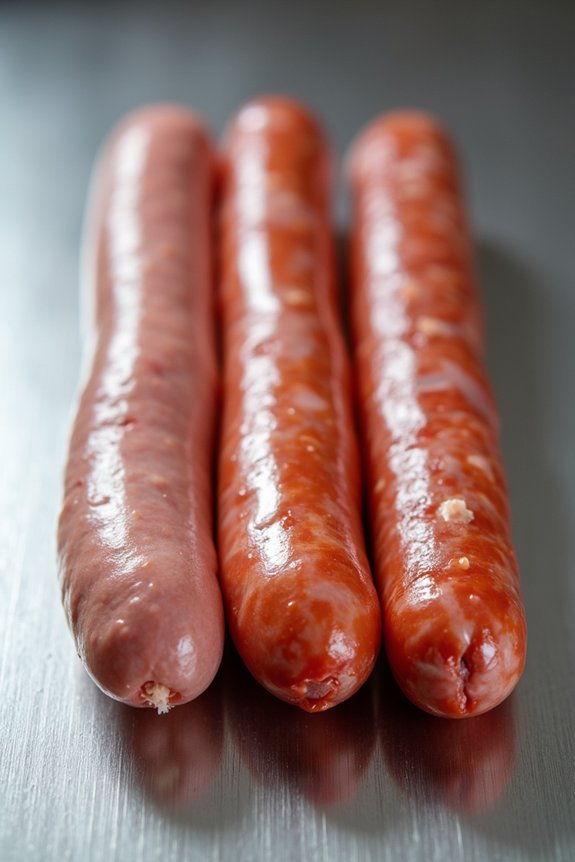
When you’re ready to move beyond natural casings, I’ll show you how synthetic options tackle different sausage-making challenges. Cellulose casings, made from wood pulp, work perfectly for hot dogs and skinless sausages since you’ll peel them away after cooking, while fibrous casings reinforced with paper fibers handle larger sausages that need serious strength. Plastic casings—whether polyamide or multilayer—give you impressive barrier properties that keep smoke out during processing, though you won’t eat them, and they’re your best bet when you need uniform sizing and shelf life that outlasts what natural casings can offer.
Cellulose Casing Applications
Synthetic casings like cellulose, fibrous, and plastic varieties solve specific production challenges that natural casings simply can’t handle. I’ll walk you through why cellulose casings matter in modern sausage making.
Cellulose casings excel in these applications:
- Hot dogs and skinless sausages – their removable surface creates that characteristic peel after cooking
- High-volume production – they deliver uniform diameter consistently across thousands of units
- Cost-effective manufacturing – synthetic casings reduce waste compared to natural alternatives
- Controlled texture – you get predictable results without natural casing variables
Here’s the catch: cellulose casings aren’t edible as-formed, so peeling’s non-negotiable. They’re also less permeable to smoke than natural casings, limiting your smoking options. If you’re making frank-style sausages or need skinless varieties at scale, cellulose delivers reliability. Just remember—they’re a tool for specific jobs, not a universal solution.
Fibrous Casing Strength Benefits
Why do commercial producers reach for fibrous casings when they’re stuffing large-diameter sausages under serious pressure? The answer lies in their reinforced Abaca fiber construction. I’ve found that these casings deliver outstanding strength for high-pressure stuffing without compromising on performance. What makes them particularly valuable is their permeability—smoke and moisture pass right through, enabling superior flavor development during curing of summer sausage, salami, and pepperoni. Their tearing resistance is predictable and reliable, which processors genuinely appreciate during production. You’ll notice fibrous casings hold their shape beautifully during cooking, resisting bursts that’d ruin your batch. They’re non-edible, requiring removal after cooking, but that’s a minor trade-off for processing ease and consistent results. For commercial operations, they’re genuinely the workhorse of synthetic casings.
Plastic Barrier Properties
You’ve seen how fibrous casings excel at handling pressure and smoke penetration, but there’s another synthetic option that takes a completely different approach: plastic casings made from polyamide materials.
Plastic barrier properties offer something special for industrial sausage processing. Here’s why manufacturers choose them:
- Impermeability to smoke – they block smoke and oxygen, extending shelf life significantly
- High barrier protection – they’re practically Fort Knox for your sausage’s freshness
- Consistent mass production – uniform thickness ensures predictable results across batches
- Extended storage – products stay fresh longer without quality degradation
Unlike cellulose casings you peel away, plastic synthetic casings remain durable throughout handling. They don’t absorb flavors like natural or fibrous casings do, but they excel at protecting your product. For high-volume sausage operations, plastic delivers reliability and efficiency that competitive processors can’t ignore.
What Changes When You Switch Casing Types: Snap, Speed, and Handling
When I’m stuffing sausages, the type of casing I choose dramatically shifts how the whole process feels—from the moment I start prepping to the instant someone bites into the finished link.
Natural casings deliver that satisfying snap and elasticity, thanks to their semi-permeable nature. They’re moisture-retention champions and let smoke penetrate beautifully, but they demand careful handling and rinsing beforehand.
Collagen casings? They’re the forgiving friend. I can stuff around 30 lbs per hour—no joke—because their uniform diameter makes stuffing faster and easier. The trade-off: they give a firmer bite without that classic snap. For smoking, I choose thicker smoked collagen casings that hang sturdy in the smokehouse, while fresh collagen works better for skillet cooking.
Less prep, more speed, different texture. That’s the real difference.
How to Prepare and Use Casings (Natural, Collagen, and Synthetic)
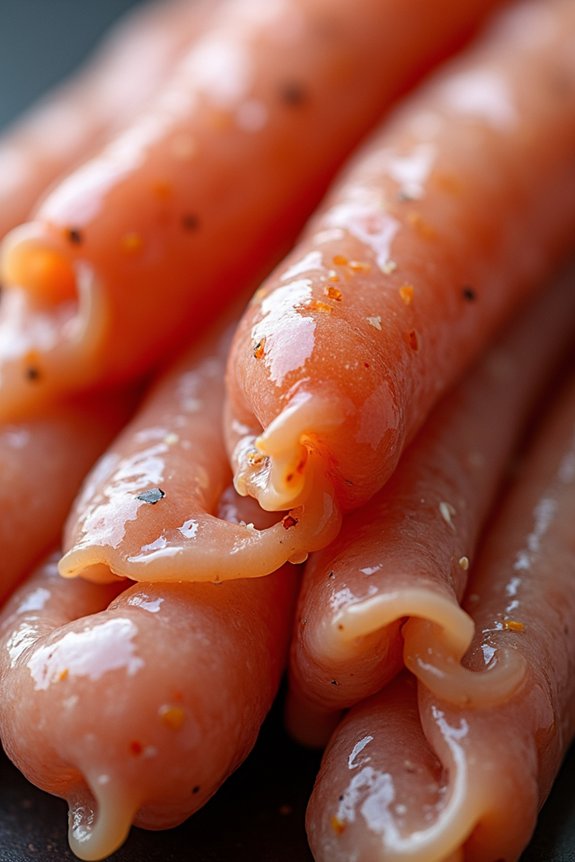
Each casing type demands its own prep routine, and getting this step right makes the difference between smooth stuffing and frustrating disasters. I’ve learned that natural casings require the most work—no shortcuts here.
- Natural casings: Flush thoroughly, scrape away mucosa, soak in water to restore flexibility, then rinse before stuffing
- Collagen casings: Skip the soaking entirely; load fresh or smoked varieties directly onto stuffing equipment for faster production
- Synthetic casings: Cellulose types go straight to work without preparation, though you’ll peel them after cooking
- Key difference: Natural casings deliver traditional snap and superior moisture handling, while collagen casings offer convenience and speed
The prep work you invest upfront determines whether your sausage stuffing runs smoothly or becomes a headache. Natural casings reward patience with authentic results; collagen casings reward you with efficiency.
Where to Buy Quality Casings: Local Butchers and Online Sources
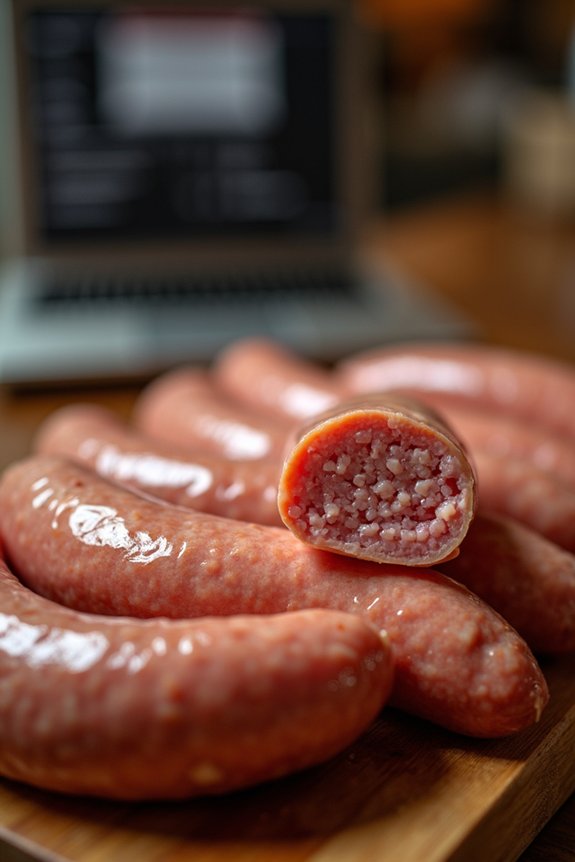
Where do you find the best casings for your sausage project? I’d recommend starting at your local butchers or sausage suppliers. They stock fresh hog casings and natural casings like sheep or beef middles, and the staff can guide you through soaking and rinsing techniques for your specific recipe. Call ahead to check availability, since inventory varies. If local options don’t work, online sources offer extensive selections including collagen casings and synthetic options with different salt-pack preparations. Online retailers provide convenience and variety, though you’ll miss out on personalized stuffing guidance. The real advantage of shopping locally? You’re supporting your community while getting expert advice and casings ready to use. Either way, you’ll find quality options that’ll make your sausage-making experience successful.
Which Casing Should You Choose for Your Sausages?
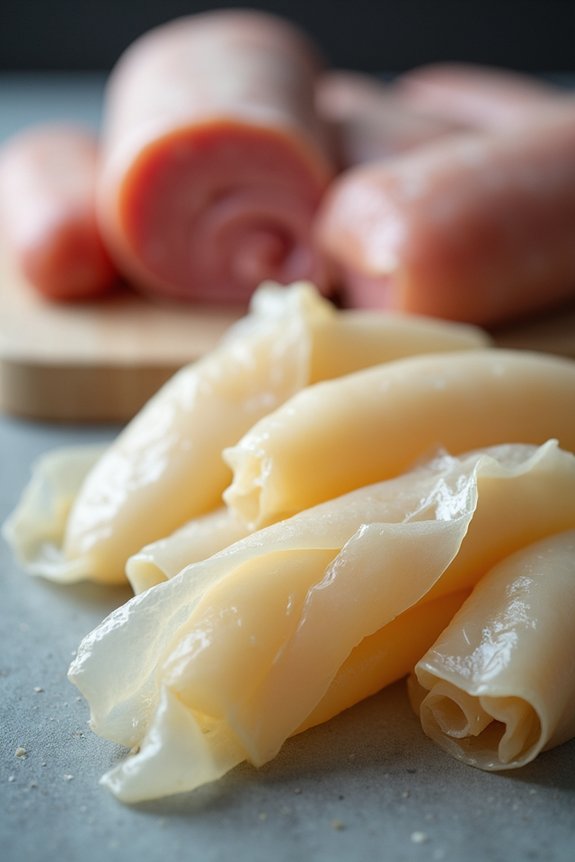
Now that you’ve found where to buy quality casings, the real decision comes down to which type’ll work best for your sausage project.
Consider these factors:
- Natural hog or sheep casings – Choose these if you want that traditional bite and authentic snap your sausages deserve
- Collagen casings – Pick these for easier handling and faster stuffing speed without sacrificing quality
- Fibrous or plastic casings – Select these only if you’re doing mass production since you’ll need to peel them after cooking
- Shelf-stable options – Collagen casings win here; natural casings require salt or brine storage
For traditional texture and that satisfying casing texture you’re craving, natural casings deliver consistency. But if stuffing ease matters more and you want shelf-stable casings ready whenever inspiration strikes, collagen’s your answer. Think about your cooking method too—fresh collagen works beautifully for smoking projects.