
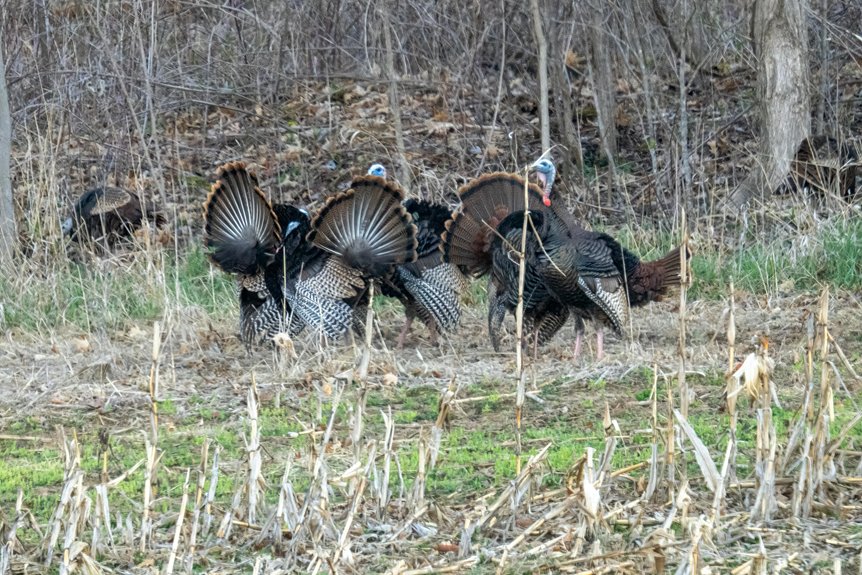
A male turkey’s called a tom or gobbler—the latter comes from their distinctive gobbling sound. You’ll spot one by its impressive size, weighing 16–24 pounds with a stocky, muscular frame compared to a hen’s slender 8–12 pound build. Toms sport vibrant iridescent feathers in bronze and copper that shimmer beautifully, while hens wear dull brown or gray plumage. Their heads turn bright red during displays, and they’ve got pronounced snoods, wattles, and beards stretching 7–9 inches. Keep watching to discover exactly what those spurs reveal about a tom’s age.
What Is a Male Turkey Called?
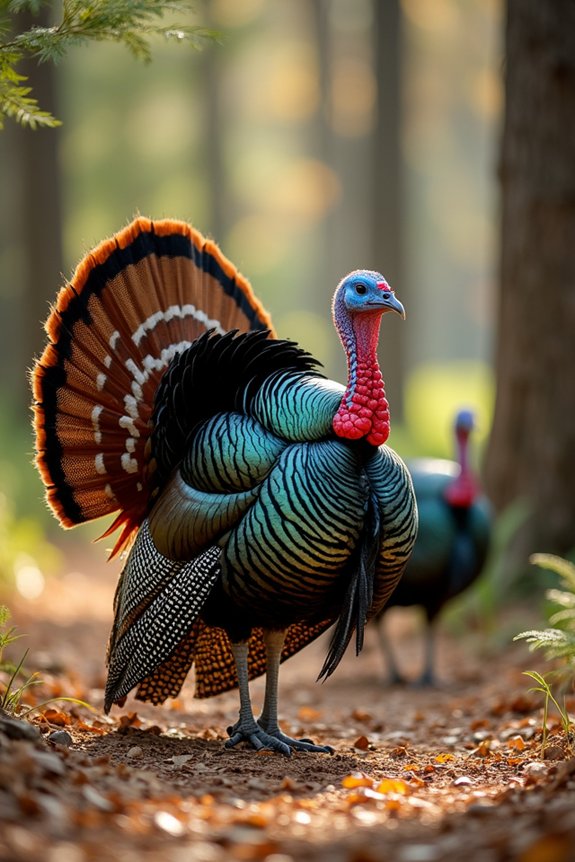
Nomenclature matters when you’re learning about turkeys. A male turkey has two main names depending on his age. An adult male is called a tom or gobbler—terms we birders use interchangeably. The name “gobbler” comes from the distinctive sound toms make, while “tom” is simply the standard term for any mature male turkey.
Now here’s where it gets interesting: younger males have their own name. We call them jakes, and they’re noticeably smaller than full-grown toms. Jakes haven’t yet developed the impressive features adult males sport.
Understanding these distinctions helps you communicate accurately with other turkey enthusiasts. When someone mentions seeing a tom versus a jake, you’ll know exactly what bird they encountered. This shared vocabulary connects us as part of the turkey-watching community.
Size and Plumage: How Toms Differ From Hens
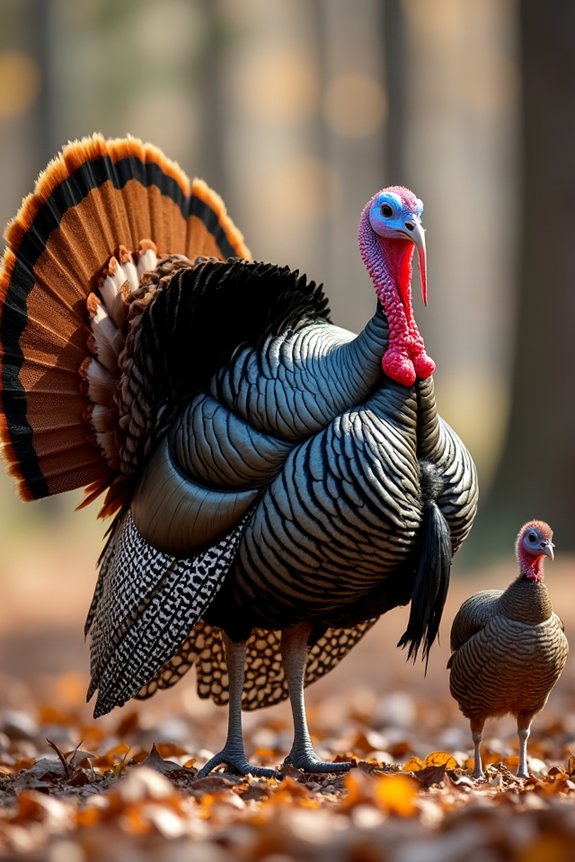
When you’re spotting a male turkey in the wild, I’d say the easiest giveaway is their bulk—toms tip the scales at 16–24 pounds with stocky, muscular frames, while hens weigh just 8–12 pounds and look considerably more compact. You’ll also notice that toms sport vibrant, iridescent plumage with bronze, green, or copper sheens that practically glow in sunlight, whereas hens wear duller brown or gray feathers that blend into their surroundings. These physical differences—the weight advantage and the flashy coloring—make toms unmistakable once you know what to look for.
Weight And Body Structure
The difference between male and female turkeys is pretty striking when you know what to look for. Adult male turkeys, called toms, typically weigh between 16–24 pounds, making them substantially larger than females. Hens usually weigh only 8–12 pounds—that’s roughly half the mass of a tom. This weight difference reflects their body structure. Toms are noticeably stockier and more robust overall. They’ve got thicker necks, broader chests, and more muscular builds designed for their competitive displays. Hens, by contrast, have slimmer, more streamlined frames suited to nesting and raising poults. When you’re observing turkeys in the field, a tom’s heavier, more imposing silhouette becomes your first clue to identifying males. That substantial size difference really does make identification straightforward once you’ve seen both sexes side-by-side.
Feather Color And Iridescence
Once you’ve spotted a tom’s hefty frame, his plumage tells you even more about his identity. You’ll notice his feathers display vibrant iridescence—bronze, green, or copper tones that shimmer metallically when light hits them just right. This iridescence distinguishes toms dramatically from hens, whose feathers appear duller brown or gray. The contrast is striking and unmistakable once you know what to look for.
What creates this eye-catching effect? The structural makeup of tom feathers reflects light differently than hen feathers do. This iridescence isn’t just beautiful—it’s functional for turkeys. During courtship displays, toms fan their tail feathers to showcase this metallic sheen, impressing potential mates with nature’s light show. You’re essentially witnessing evolutionary brilliance designed to catch attention.
Head, Neck, and Skin Features
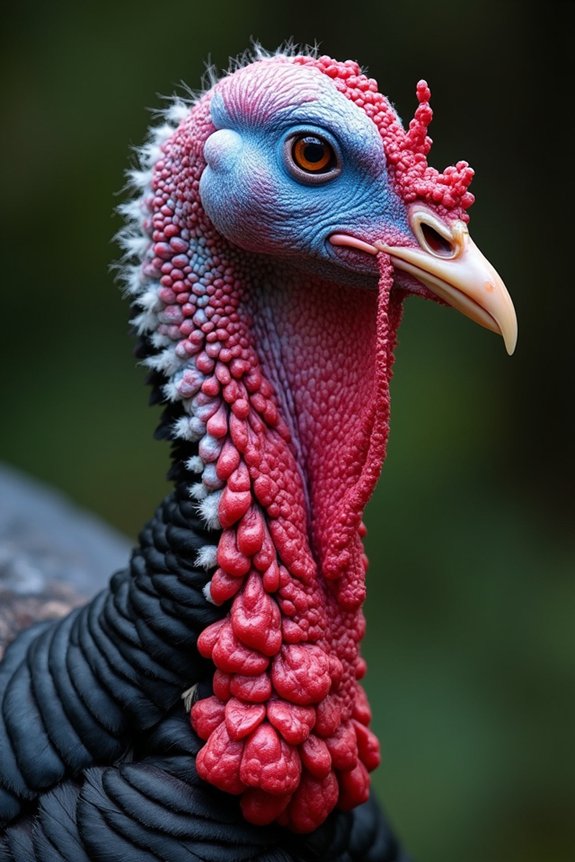
How can you spot a male turkey from across a field? Look at the head and neck first. A tom’s head appears blue-gray when calm, but transforms into vivid red during displays—pretty dramatic stuff. You’ll notice his bare skin studded with fleshy features called caruncles, a prominent snood hanging from his head, and a wattle dangling beneath his chin. These skin structures are significantly more pronounced on males than females. The intensity of these colors and sizes tells you you’re observing a tom. Hens have smaller, less colorful heads with more feathers covering their necks, making their snood and wattle almost inconspicuous by comparison. When you see that bold, bare-skinned head blazing with color, you’ve identified a male turkey.
How to Identify Toms by Beards and Spurs
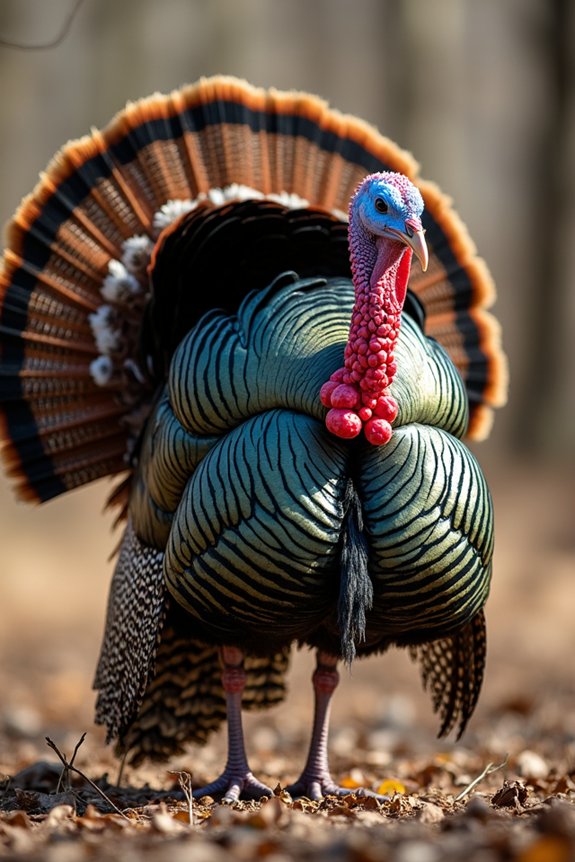
Want to tell a mature gobbler from a young jake at a glance? Look at two key features: beards and spurs.
Want to tell a mature gobbler from a young jake? Look for beards and spurs—your real giveaway.
A mature tom’s beard is hard to miss. I’m talking about those dark, hair-like feathers hanging from his chest that typically measure 7–9 inches or longer. Jakes, on the other hand, sport shorter beards that don’t quite match their older cousins’ impressive displays.
Now check the spurs. These sharp, pointed structures grow on the back of a tom’s legs and can reach 1–2 inches with age. That’s your real giveaway—hens barely develop spurs at all, so spotting them tells you you’re looking at a male.
Together, these features make identifying toms pretty straightforward.
Identifying Toms by Gobbles and Display Behavior
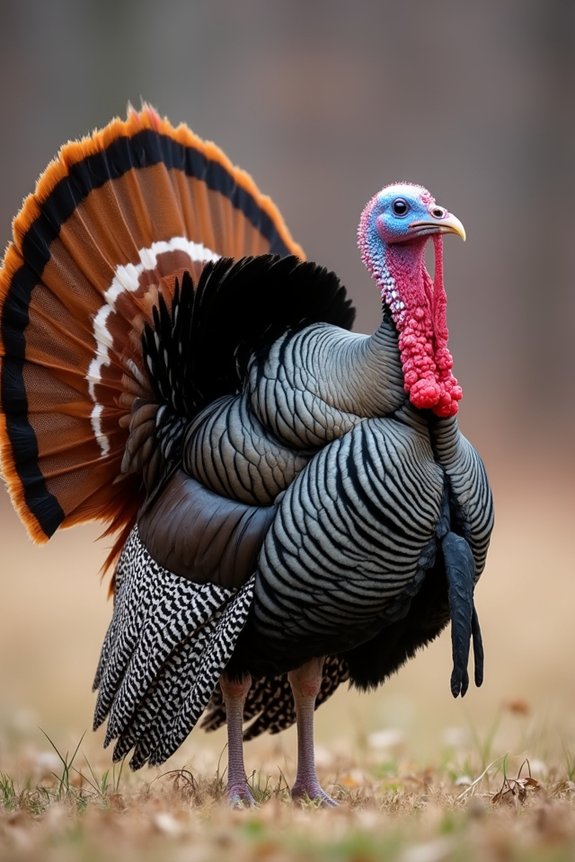
While a tom’s beard and spurs tell you you’re looking at a male, his vocalizations and behavior are the real showstoppers—and they’re honestly your most reliable way to spot a mature gobbler from a distance. When a tom gobbles, you’ll hear a loud, distinctive sound that carries across fields and forests. This vocal display serves a clear purpose: attracting hens and establishing dominance. Beyond gobbles, toms perform dramatic displays that are impossible to miss. They strut with their tail fanned, puff their chest, drag their wings, and lower their body in an exaggerated stance. These behaviors don’t happen by accident—they’re calculated moves designed to impress.
| Display Behavior | Purpose | When It Occurs | What You’ll See |
|---|---|---|---|
| Gobbling | Attract mates | Spring mating season | Head extends, body shakes |
| Strutting | Establish dominance | Throughout display | Stiff-legged walking posture |
| Tail fanning | Intimidate rivals | During conflicts | Full tail spread wide |
| Wing dragging | Dominance signal | Frequent displays | Wing tips touch ground |
Spot the Difference: Toms vs. Hens in One Look
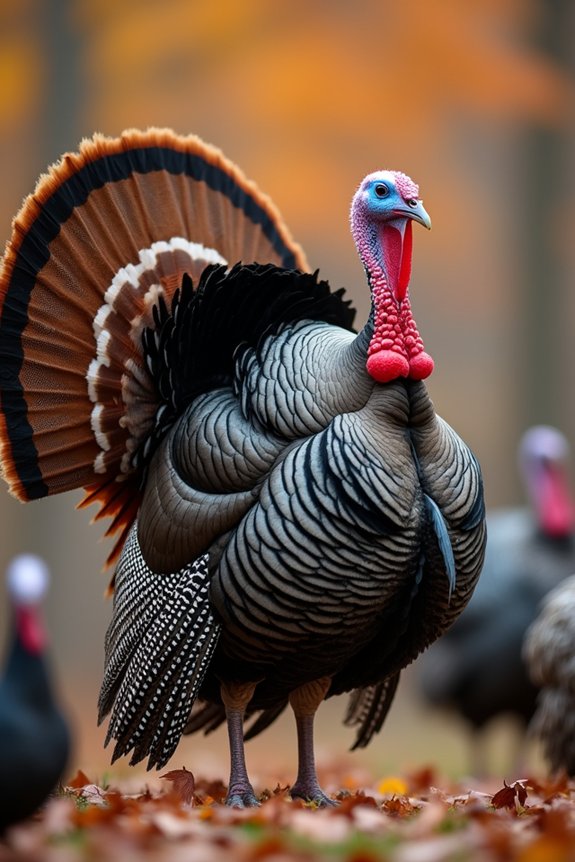
The moment you lay eyes on a turkey in the field, you can tell whether it’s a tom or a hen if you know what to look for. Turkey toms are noticeably larger and stockier than hens, with bold iridescent plumage that catches the light beautifully. You’ll spot a bright red, blue, or white facial area and a bare, colorful head—quite the attention-grabber, honestly.
Hens, by contrast, wear duller brown and gray feathers with a blue-gray head. Here’s the real giveaway: check for spurs on the legs. Toms sport prominent 1–2 inch spurs, while hens typically have none or barely visible ones. Toms also usually display beards, though hens occasionally have shorter ones. Those spurs make identification crystal clear.