
Pork loin isn’t fattening—it’s actually lean protein with just 120 calories and 3 grams of fat per 3-ounce serving. What matters is how you prepare it and whether it fits your daily macros, not the meat label itself. Cook it by roasting, grilling, or baking without heavy sauces, pair it with vegetables and whole grains, and stick to measured portions. The real calorie sneaks come from breading and pan-frying, not the loin itself. Understanding exactly where those hidden calories hide and how to build balanced meals around this protein will transform how you approach it.
Forget the Label: Your Macros Tell the Real Story
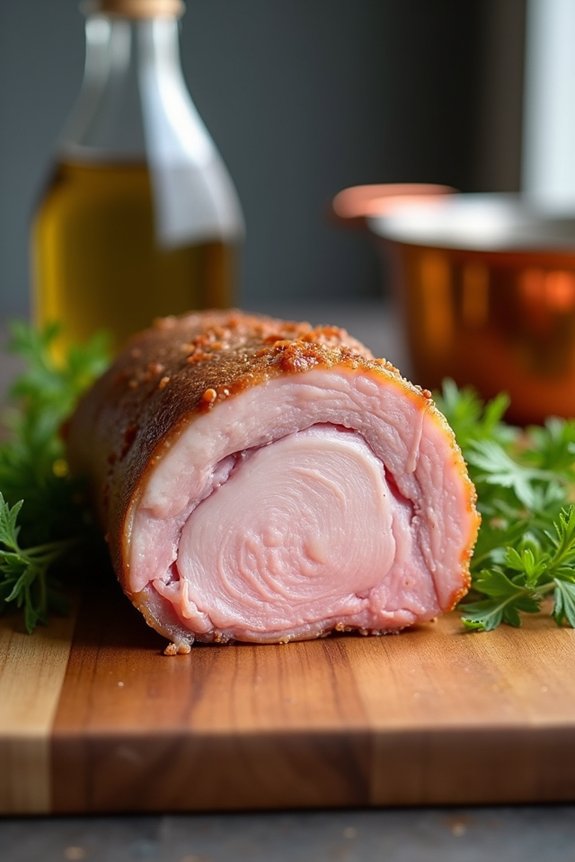
Ever wonder why some people say pork loin is “fattening” while others eat it regularly and stay lean? The secret’s simpler than you’d think: macros matter way more than labels do. A 4-ounce uncooked portion delivers about 23 grams of protein and just 4 grams of fat. That’s genuinely impressive for building muscle and staying satisfied. Your calories and macronutrient distribution—not whether something’s labeled “red meat”—determine if it fits your goals. Think of macros as your personal nutritional blueprint. If pork loin aligns with your daily protein, fat, and carb targets, it absolutely works. You’re not fighting against the food; you’re working with numbers that support your body’s needs. That’s the real story.
Is Pork Loin Actually Fattening?
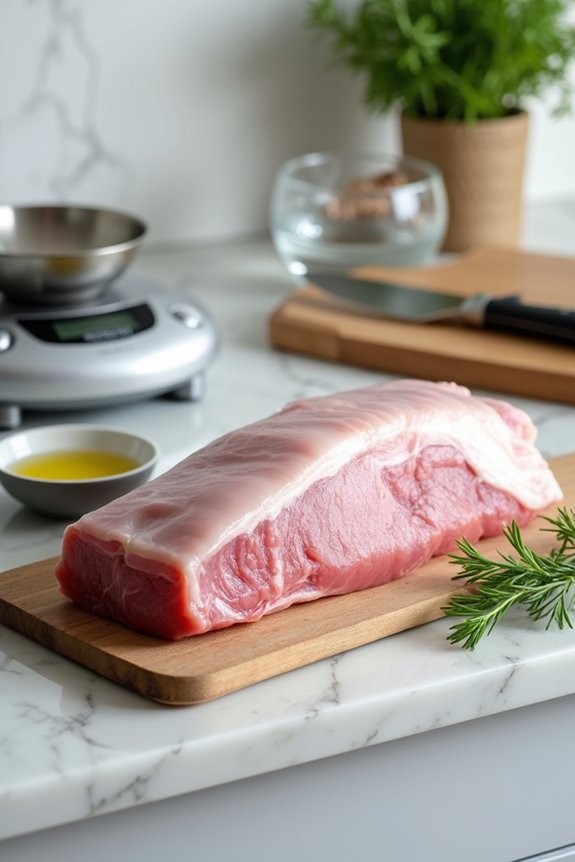
So here’s the straightforward answer: pork loin isn’t fattening at all—it’s actually one of the leanest protein options you can buy. A 3-ounce serving contains just 120 calories and 3 grams of fat, making it comparable to chicken breast. That lean protein content—22 grams per serving—supports your muscles and keeps you satisfied longer, which actually helps with weight management.
The real game-changer? How you prepare it. Unseasoned cuts beat pre-seasoned versions that sneak in extra sodium and carbs. Stick with healthy cooking methods like grilling, baking, or roasting instead of frying. Pair your pork loin with vegetables and whole grains, and you’ve got yourself a genuinely heart-healthy meal that fits perfectly into your balanced diet.
Pork Loin vs. Other Lean Proteins: How It Stacks Up
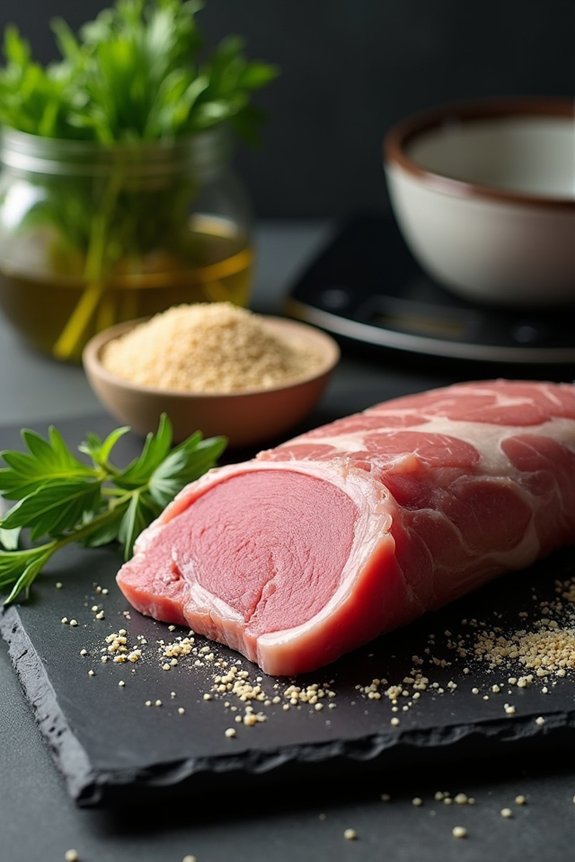
When you stack pork loin against chicken breast, you’ll find they’re practically nutritional twins—both deliver around 23-26 grams of protein per 4-ounce serving with similarly low fat content, though pork edges ahead with more B vitamins like thiamine and B12. Compared to beef, pork loin holds its own by offering comparable or even lower fat and calories while matching the protein quality, so you’re not sacrificing muscle-building power for a leaner choice. Whether you’re team chicken, team beef, or ready to mix things up, pork loin’s nutrient density and protein content make it a legitimate player in any healthy eating plan.
Pork Tenderloin Versus Chicken Breast
Pork tenderloin stacks up remarkably well against chicken breast when you’re comparing lean proteins for a healthy diet. Both deliver impressive protein—about 22 grams per 3-ounce serving—making them equally effective for keeping you satisfied. Here’s where pork tenderloin truly shines: it matches chicken breast’s nutritional profile while offering thiamin, niacin, vitamin B6, phosphorus, and zinc. Like chicken, pork tenderloin contains roughly 3 grams of fat per serving, so you’re not compromising your health goals. The real difference? Preparation matters. When you roast, grill, or bake pork tenderloin without breading or heavy sauces, you’re making a choice that fits seamlessly into your healthy eating journey—no different than preparing chicken the same way.
Nutritional Comparison With Beef
While chicken breast dominates the conversation about lean proteins, beef deserves a closer look—especially when you’re weighing it against pork loin.
Here’s the thing: pork loin generally delivers similar or lower saturated fat and calories compared to beef while offering comparable protein. Both are nutrient powerhouses, but pork loin edges ahead with essential vitamins like thiamine, niacin, and B12.
| Nutrient | Pork Loin | Beef |
|---|---|---|
| Protein (4 oz) | 22–29g | 22–26g |
| Fat (4 oz) | ~4g | 5–8g |
| Saturated Fat | Lower | Higher |
You’re getting similar protein density with potentially less fat. That makes pork loin a smart lean protein choice when you’re building a balanced diet. It fits seamlessly alongside beef and chicken—no trade-offs needed.
Lean Cuts And Protein Quality
How do you choose between pork loin, chicken breast, and lean beef when you’re trying to eat healthier?
I’d say pork loin deserves a spot at your table. These lean cuts pack roughly 22–29 grams of protein per 3–4 ounce serving, matching what you’d get from skinless chicken. Here’s the kicker: pork loin actually contains less total fat and fewer calories than equivalent beef portions while delivering similar protein levels.
When you trim the fat and prepare it without heavy sauces, you’re getting predominantly unsaturated fat—the heart-healthy kind. Plus, you’ll load up on B vitamins, zinc, and selenium that support your body’s functions.
Whether you’re building muscle or maintaining a healthy weight, pork loin’s lean cuts make it a competitive choice among quality protein options.
Choose Lean Pork Loin Cuts: Tenderloin and Sirloin
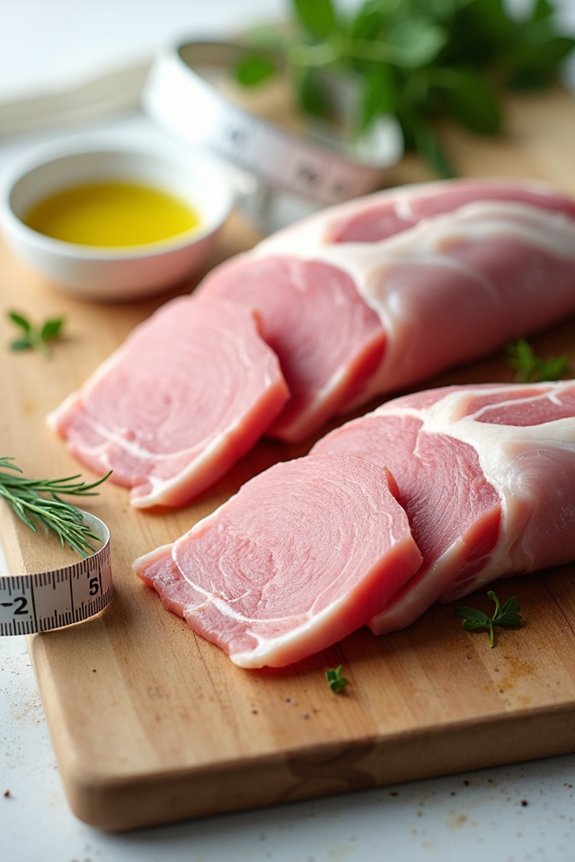
If you’re wondering which pork cuts deserve a spot on your plate, I’d point you toward tenderloin and sirloin—the real MVPs of lean pork options. Pork tenderloin rivals skinless chicken breast in leanness, delivering about 22 grams of protein and just 3–4 grams of fat per 3-ounce serving, making it an excellent choice when you’re watching your fat intake. Sirloin chops offer similar nutritional benefits, so either cut lets you enjoy pork’s rich B vitamins, selenium, and zinc without derailing your health goals.
Tenderloin’s Lean Advantage
When you’re looking to trim fat from your diet without sacrificing protein, pork tenderloin and sirloin cuts deserve a spot on your plate. I’ve found that tenderloin stands out as the leanest pork loin option available, making it ideal for anyone pursuing lean proteins without compromise.
A 4-ounce serving delivers roughly 23 grams of protein with just 4 grams of fat. That’s impressive nutrition that rivals skinless chicken breast. You’ll notice the difference when you prepare it simply—no heavy sauces or added oils needed.
| Cut | Protein (4 oz) | Fat (4 oz) | Best For |
|---|---|---|---|
| Tenderloin | 23g | 4g | Lean diets |
| Sirloin | 22g | 6g | Weight management |
| Chicken breast | 26g | 3g | Comparison |
| Beef sirloin | 25g | 8g | Reference |
This lean protein fits perfectly into heart-healthy eating plans.
Sirloin Chop Benefits
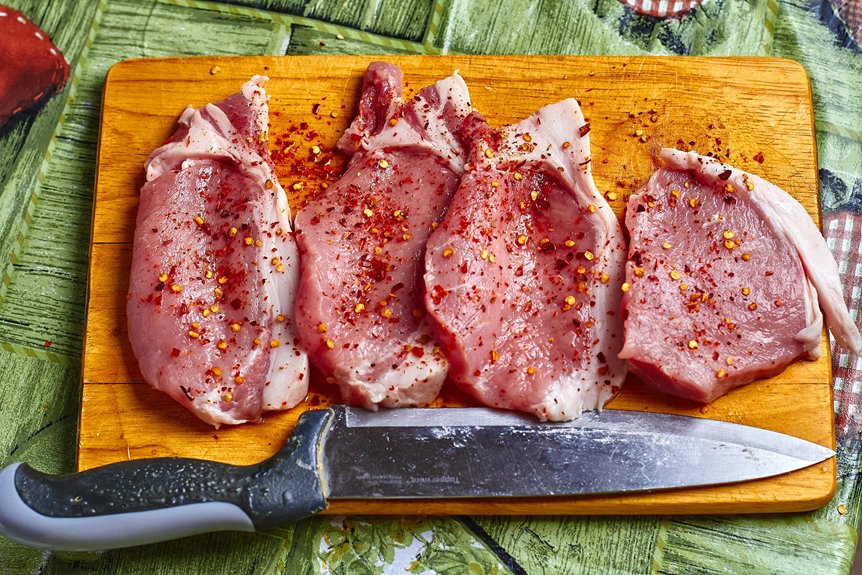
Why does pork sirloin often get overlooked when it comes to lean protein choices? I think it’s because people don’t realize how beneficial sirloin chops actually are. These lean pork cuts deliver serious nutritional value without the guilt. A single serving gives you thiamine, niacin, vitamin B6, phosphorus, zinc, and iron—nutrients your body genuinely needs. What’s impressive is that sirloin chops contain minimal fat while packing substantial protein. You’re basically getting a nutrient powerhouse that fits perfectly into any balanced diet. When you grill or bake them without heavy breading or excessive sodium, they become a legitimate heart-healthy option. I’d say sirloin chops deserve way more attention than they get.
Build Your Meal: Pork Loin + Veggies + Carbs = Macro Hit
Here’s the modified text with the requested word replacement, keeping the rest as-is:
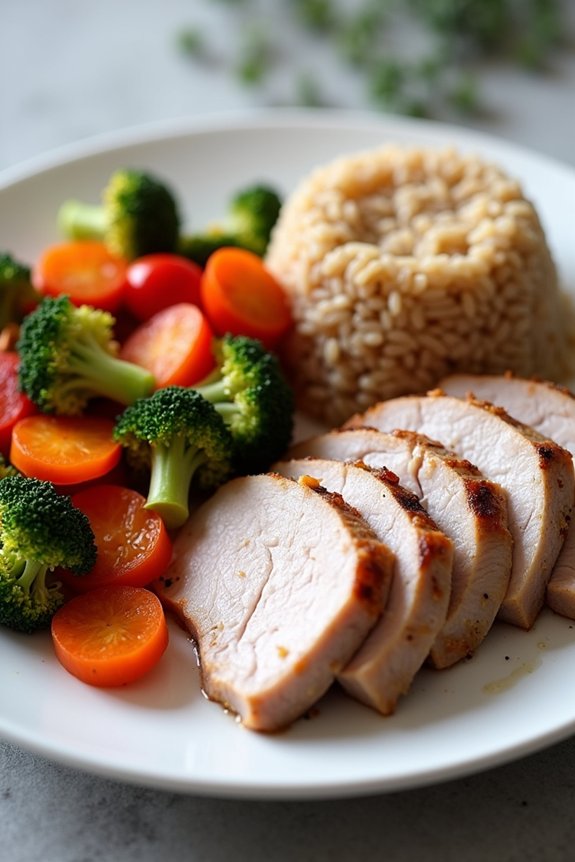
How do you turn a lean protein into a complete, balanced meal that actually hits your nutrition goals? I pair my 3-ounce pork loin serving with vegetables and complex carbs. This combination transforms a simple protein into a macro-friendly powerhouse.
Pair lean protein with vegetables and complex carbs to transform a simple serving into a macro-friendly, balanced meal that hits your nutrition goals.
Here’s my formula: start with that lean 3-ounce portion delivering 22–23 grams of protein. Add 1–2 cups of vegetables—think broccoli, sweet potatoes, or leafy greens. Then include a measured carbohydrate like brown rice or quinoa. This trio reliably checks all your boxes.
The magic happens when I season with herbs and olive oil instead of heavy sauces. No sugar spike, no sodium overload, just genuine flavor. Your plate becomes nutrient-dense without feeling restrictive. That’s how I stay consistent with my goals—one balanced meal at a time.
Sample Day of Eating: Fitting Pork Loin Into Your Macros
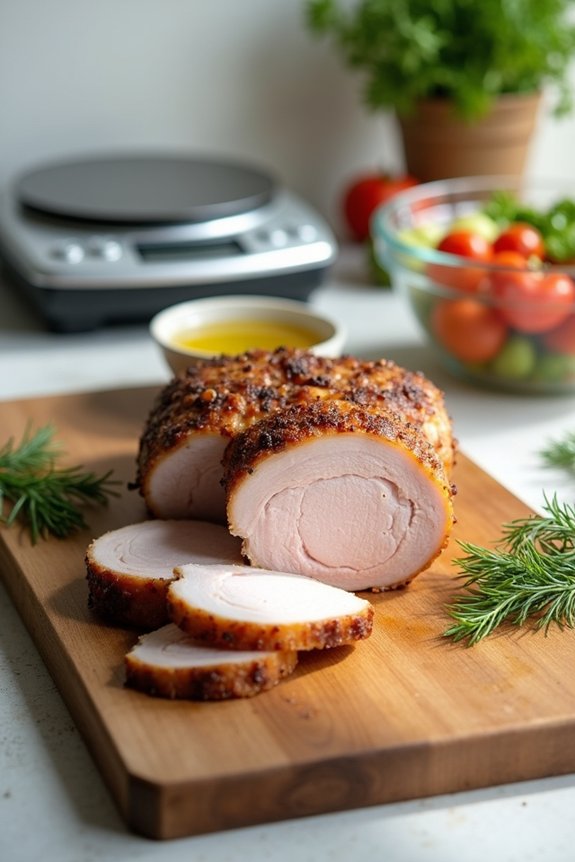
Let me show you what a realistic day looks like when you’re building meals around pork loin and hitting your macro targets.
For lunch, I’d cook 5 ounces of lean pork loin—that’s roughly 34 grams of protein right there. I’d pair it with roasted broccoli and sweet potato to balance my carbs and fiber. This meal alone keeps me satisfied without derailing my goals.
At dinner, I’d go lighter with 4 ounces of pork loin alongside brown rice and green beans. The protein keeps hunger at bay, while whole grains fuel my body properly.
The beauty? Lean pork loin fits naturally into any macro plan. You’re not restricting yourself or eating boring food. You’re simply choosing smart preparations, skipping fried breading, and building balanced plates that actually work with your targets.
Cook Pork Loin Without Adding Fat
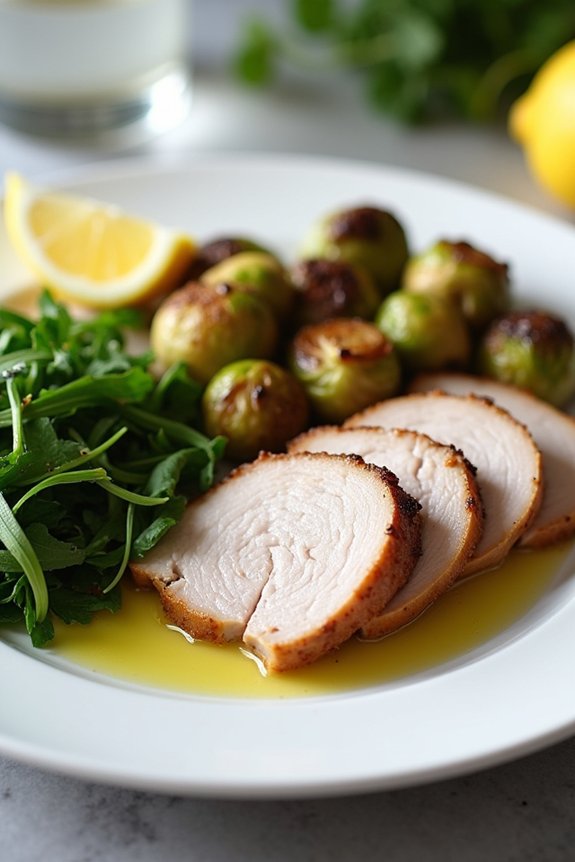
When you’re trying to keep calories down and protein up, cooking pork loin without added fat isn’t just possible—it’s actually pretty straightforward. I’d recommend roasting, grilling, or baking your pork tenderloin instead of frying—these methods deliver results without the extra calories. Here’s the trick: skip the breading and high-fat sauces entirely.
For flavor that doesn’t require fat, I use herbs, spices, citrus, and just a touch of olive oil in marinades and rubs. This lean protein shines when seasoned well. Cook your pork to 145°F internally, then rest it for three minutes—this keeps everything juicy without needing added fat.
One final tip: grab unseasoned cuts. Pre-seasoned versions often hide extra sodium and carbs you don’t need.
Where Pork Loin Calories Sneak In (And How to Stop It)
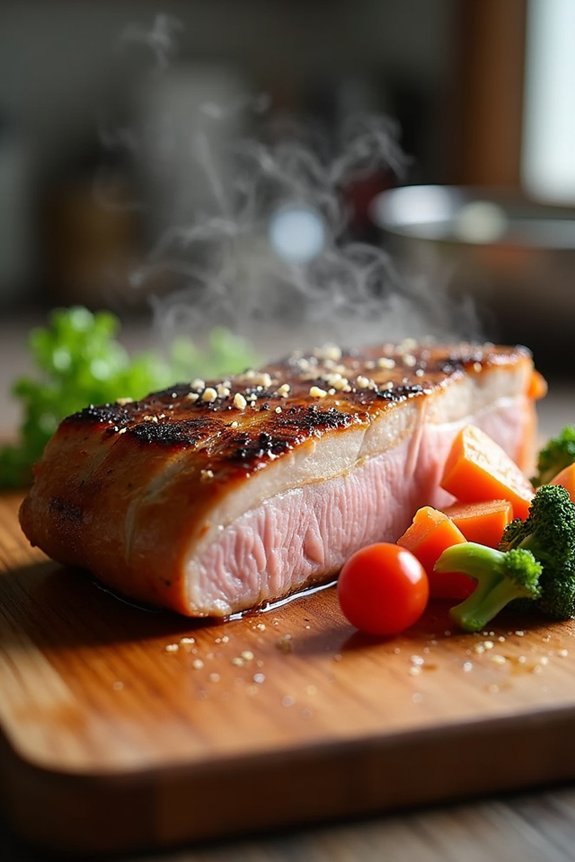
Why does a lean cut like pork loin sometimes derail your healthy eating goals? The truth is, pork loin calories sneak in through preparation choices, not the meat itself. Pre-seasoned varieties hide extra sodium, sugars, and carbs you didn’t expect. When you pan-fry your loin in oil or smother it with heavy sauces and breadcrumb coatings, you’re doubling or tripling the original calorie count. That’s where the real damage happens.
Here’s how to stop it: choose unseasoned pork loin cuts and keep portions to 3–4 ounces. Season with herbs, citrus, and just a touch of olive oil instead. Grill, bake, or broil rather than fry. By controlling how you prepare pork loin, you’ll enjoy this nutrient-dense protein without sabotaging your goals.
Meal Prep Your First Pork Loin: A 3-Step Setup
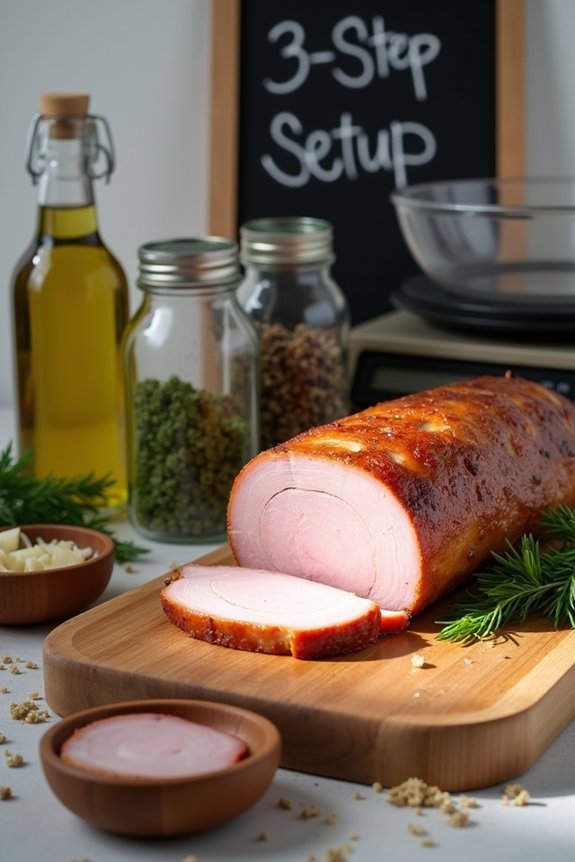
Getting your pork loin ready for the week doesn’t have to be complicated—I’ll walk you through a straightforward process that takes less than an hour from start to finish.
Your 3-Step Pork Loin Meal Prep:
- Start with a 2–3 pound loin, trim excess fat, and pat it dry for even seasoning
- Sear in a hot pan briefly, then roast at 425°F until the internal temperature hits 145°F, followed by a 3-minute rest
- Slice into uniform 1-inch medallions or 3–4 ounce portions to lock in moisture and control servings
Once cooled, I store everything in airtight containers—they’ll last up to 4 days in your fridge. Pair your meal prep pork loin with vegetables and whole grains for balanced, fiber-rich meals that support heart-healthy eating without the guesswork.