

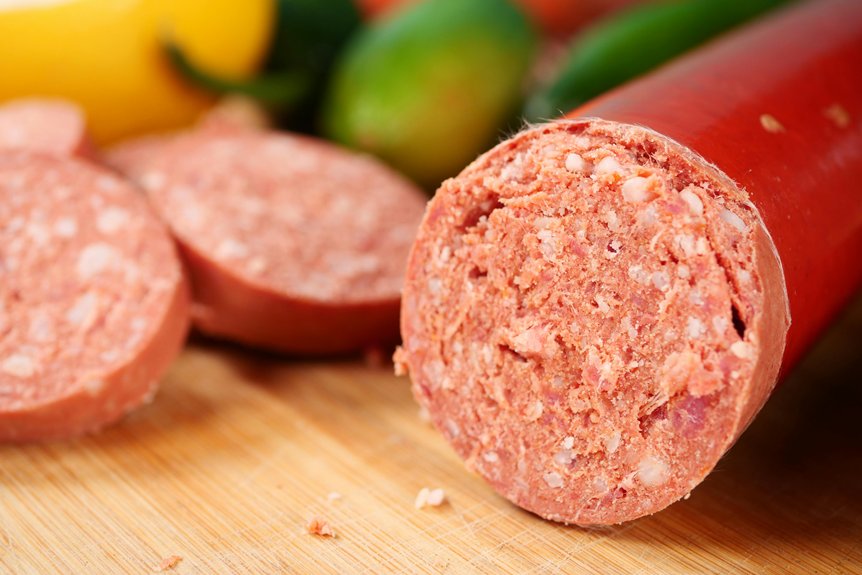
Chicken sausage won’t fatten you up like pork varieties—it’s got about 7 grams of fat per serving versus 19 grams in traditional options. The real question is what’s actually in your package. I’d grab brands listing real chicken first, skip the nitrates and added sugars, and pair your sausage with veggies, whole grains, or beans for balanced nutrition. It’s a solid processed-meat choice when you’re thoughtful about ingredients and meal construction. Want to know which red flags to watch for?
Chicken Sausage vs. Pork: Calories and Fat Breakdown

Ever wonder why chicken sausage gets so much hype as the “healthier” option? Here’s the honest breakdown: chicken sausage delivers significantly less fat content than pork or beef varieties. Premium chicken sausages contain around 7 grams of fat per serving, while traditional pork sausage packs roughly 19 grams. That’s a substantial difference you’ll actually notice.
What makes chicken sausage stand out as lean protein is its impressive nutritional profile. Many brands boast 60% less fat than USDA-standard pork regulations, which genuinely matters for your health goals. Despite being leaner, chicken sausages maintain similar protein levels—about 13 grams per serving—so you’re not sacrificing muscle-building nutrients.
When you’re choosing between options, look for real chicken as the first ingredient and minimal artificial additives. That’s how you’ll find sausages supporting your healthier eating journey.
Choose the Right Brand: Ingredients That Matter
What’s actually in your chicken sausage? I’ve learned that reading ingredient labels is your secret weapon for finding truly healthy options. Look for real chicken listed first—not fillers or mechanically separated chicken that sneaks into lower-quality brands. You want lean meat as your primary component.
I always scan for artificial colors, flavors, and high sodium levels that pack on unnecessary calories. Choosing brands emphasizing all-natural, preservative-free chicken sausage ingredients makes a real difference. Check that nutrition label: quality chicken sausage typically delivers around 13 grams of protein per serving with significantly less fat than pork alternatives.
When you pick sausages with minimal, recognizable ingredients, you’re not just being smart—you’re joining folks who actually know what they’re eating. That’s the winning approach.
Build Balanced Meals: Chicken Sausage + Protein + Fiber
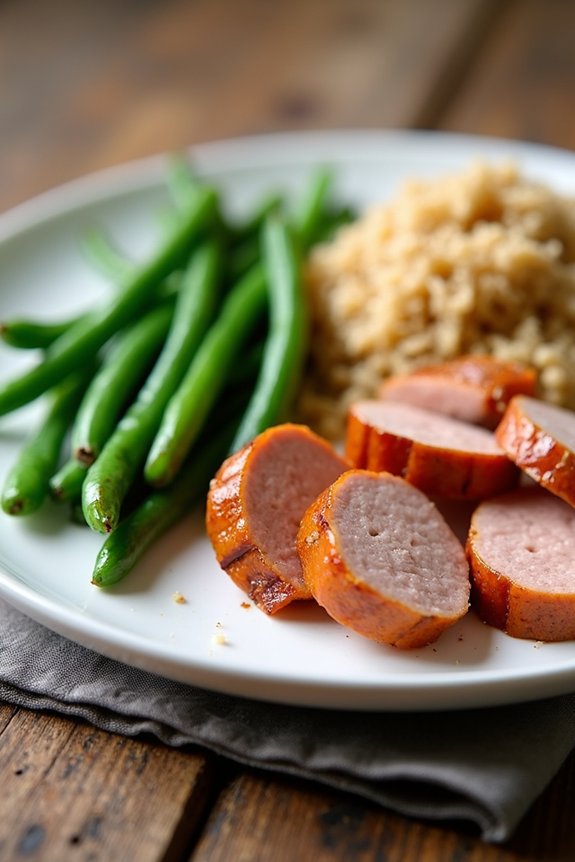
Since chicken sausage alone won’t keep you full or give your body everything it needs, I’m going to show you how to build meals that actually stick with you.
Start by pairing one serving (3–4 oz) of chicken sausages with high-fiber sides like vegetables, beans, or whole grains. This combination creates meals that genuinely satisfy your hunger. Add beans or eggs as your extra protein source—they’ll amplify the 13 g of protein you’re already getting from the sausage itself.
Then load your plate with a high-fiber vegetable or fruit. Think roasted broccoli, sweet potatoes, or a side salad. This trio—sausage, protein, and fiber—promotes fullness and keeps your energy steady throughout the day. You’re not just eating; you’re fueling your body smartly.
Red-Flag Ingredients to Avoid

How do you know if you’re actually buying quality chicken sausage or just processed mystery meat? I check the ingredient list carefully. You’ll want to dodge sodium nitrate and nitrite preservatives—these additives link to processed-meat health concerns. I also skip MSG, which triggers headaches for many people. Corn syrup and added sugars? They’re sneaky calorie bombs I avoid entirely.
| Red-Flag Ingredient | Why Skip It | What to Look For |
|---|---|---|
| Sodium nitrate/nitrite | Processed-meat preservatives with health risks | No nitrates listed |
| MSG | Can cause headaches and sensitivity | “No added MSG” label |
| Corn syrup | Unnecessary sugar adding empty calories | Natural sweeteners or none |
Artificial smoke flavor adds synthetic additives without benefit. Mechanically separated chicken signals poor quality and texture issues. Reading labels protects your health investment.
Is Chicken Sausage Right for You?

So you’re wondering whether chicken sausage actually belongs in your regular meal rotation? Here’s the truth: it can be right for you if you’re intentional about it. The fat content matters considerably—chicken sausage contains roughly 7 grams of fat per serving compared to 19 grams in beef or pork varieties. That’s a meaningful difference for your daily intake.
I’d recommend checking labels carefully. Look for real chicken listed first and skip those loaded with mystery ingredients. Pair your chicken sausage with vegetables, whole grains, and healthy fats to maximize nutrition. This approach gives you about 13 grams of protein without overdoing processed meat consumption.
Ultimately, chicken sausage fits your diet when you choose quality brands and balance meals thoughtfully. It’s not a magic food, but it’s definitely a smarter processed-meat option.