

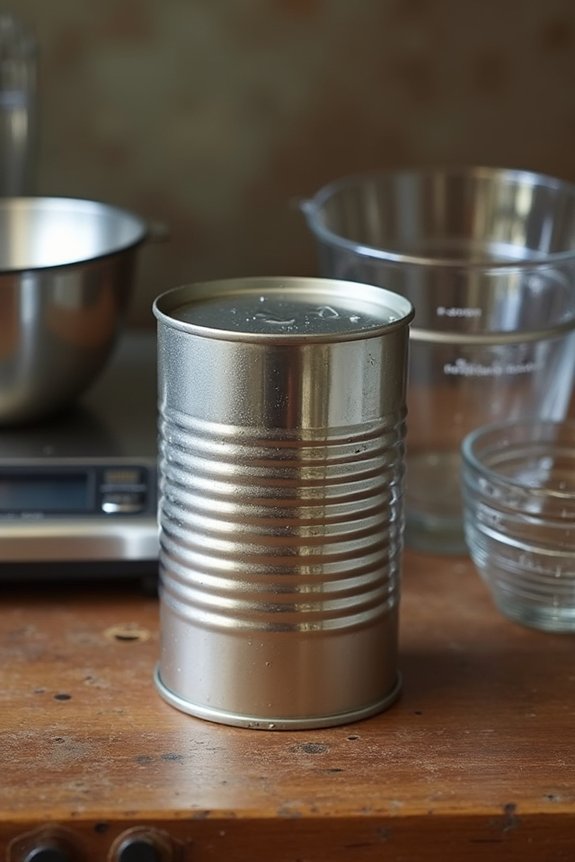
A standard can of chicken broth holds 14.5 fluid ounces—that’s your go-to baseline for most recipes. To convert to cups, divide by 8, which gives you roughly 1.8 cups per can. I’d say most cooks round that up to 2 cups for convenience, though technically you’re just under. If your recipe calls for “1 can,” you’re looking at about 1.5 to 2 cups of broth. Knowing this conversion makes scaling recipes easier, and there’s plenty more container options worth understanding.
The Standard Can Size: 14.5 Fluid Ounces
Ever wonder why chicken broth cans always seem to be the same size? You’re not imagining it. The standard can size for chicken broth is 14.5 fluid ounces—and that’s the measurement you’ll find on virtually every label you pick up.
Here’s what makes this important: that 14.5 fluid ounces refers specifically to liquid volume, not weight. When you’re converting your can size to cups for recipes, this distinction matters. Since one cup equals 8 fluid ounces, a standard can conversion gives you approximately 1.8 cups of broth.
Most recipes assume this 14.5 oz can measurement when listing ingredients. Some regional packaging variations exist, but this standard can remains the reliable baseline for your kitchen calculations and meal planning.
Quick Conversion: Cans to Cups for Recipes
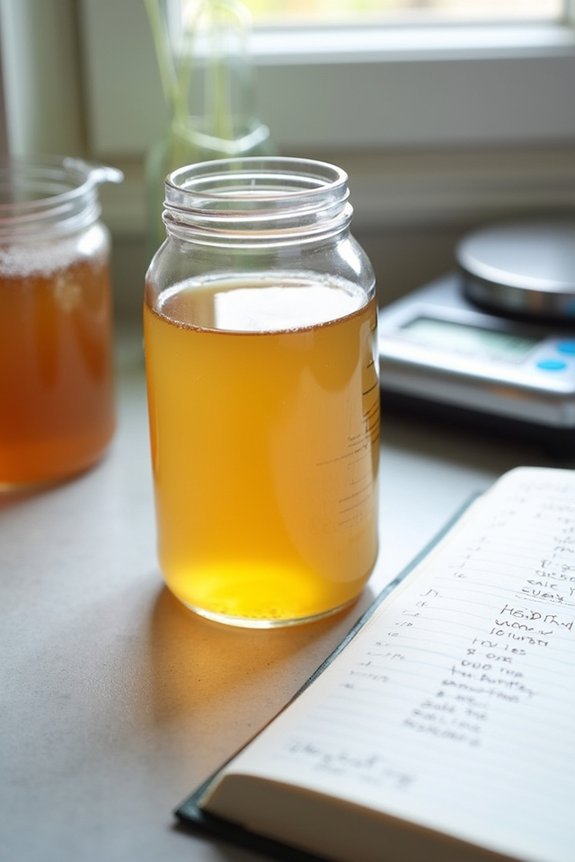
When I’m cooking and a recipe calls for cups instead of ounces, I use a simple math trick: I divide the can’s fluid ounces by 8, since one cup equals 8 ounces. A standard 14.5 oz can gives me about 1.8 cups (often rounded to 2 cups for convenience), while a 32 oz carton provides a full 4 cups, making larger quantities easier to measure without cracking open multiple cans. Knowing these conversions saves you time in the kitchen and helps you scale recipes up or down without second-guessing yourself.
Standard Can Measurements
So how do you convert that 14.5 oz can sitting in your pantry into the cups your recipe’s calling for? Let me break down the standard can measurements that’ll save you from guessing games. A standard can of chicken broth contains 14.5 fluid ounces. Since one cup equals 8 fluid ounces, your can yields approximately 1.8 cups of broth. For practical purposes, I’d estimate it as 1¾ to 1⅞ cups. Here’s a handy trick: remember that 16 ounces roughly equals 2 cups, so your 14.5 oz can falls just under that mark. These measurements work consistently across brands, making conversions straightforward. You’ll nail your recipes every time when you’ve got these standard can measurements locked in.
Carton Volume Comparisons
What’s the difference between grabbing a can versus a carton of chicken broth from your pantry? Understanding volume conversions makes recipe scaling super easy. A standard can contains 14.5 fluid ounces, which converts to approximately 1.8 cups—perfect for most recipes calling for “one can” of broth. However, a carton typically holds 32 fluid ounces, equaling exactly 4 cups. This larger volume gives you flexibility when preparing bigger batches. I find cartons more convenient for frequent cooking since they offer better value and less packaging waste. When converting between these containers, remember that fluid ounces measurement remains consistent. Whether you’re using cans or cartons, knowing these ounces-to-cups relationships ensures your recipes turn out perfectly every time without guesswork.
Other Broth Containers: Cartons, Boxes, and Sizes
While cans are convenient, I should mention that you’ll find chicken broth in other containers too, and knowing their sizes helps you swap them in recipes without guessing games. Cartons typically come in 32 fluid ounces (4 cups) or 48 fluid ounces (6 cups), which are larger than standard cans but give you more flexibility for bigger batches. Understanding these container variations means you can confidently substitute whatever broth format your grocery store has in stock.
Standard Carton Size Variations
Beyond the traditional can, you’ll find chicken broth sold in cartons and boxes at your local grocery store, and these containers come in different sizes that might surprise you. Understanding these variations helps you master recipe scaling and measurement conversions.
| Container Type | Fluid Ounces | Cups |
|---|---|---|
| Standard Can | 14.5 oz | 1.8 cups |
| Standard Carton | 32 oz | 4 cups |
| Carton to Can Ratio | 2.2 cans | 1 carton |
| Regional Variations | May differ | By retailer |
I’ve discovered that carton vs. can choices matter when cooking. A standard carton size holds 32 fluid ounces—roughly 2.2 cans worth of chicken broth. You’ll notice regional retailers stock different measurements, so checking labels prevents kitchen mix-ups. These conversions ensure your recipes turn out consistently delicious, whether you’re using cans or cartons.
Comparing Container Types
Now that you’ve got the carton-to-can ratio down, let’s explore the full range of broth containers you’ll encounter at the grocery store. You’ll find the standard 14.5 oz can sits at the center of most recipes, but 32 oz cartons offer double the volume at roughly four cups. Some brands even stock smaller 5 oz cans, perfect for modest portions. Understanding these container types matters for recipe conversions. When you’re scaling dishes, remember that cups to ounces follows simple math: eight fluid ounces equals one cup. A 14.5 oz can yields approximately 1.8 cups, while 32 oz cartons provide four cups. This volume comparison ensures you’ll nail your cooking every time, whether you’re using compact cans or larger cartons for meal prep.
Substituting Different Can Sizes in Recipes
What happens when you’re ready to cook but your pantry doesn’t have the exact can size your recipe calls for? Don’t worry—I’ve got you covered with simple substitutions using fluid ounces and cups.
A standard 14.5 fl oz can equals about 2 cups of chicken broth. If your recipe calls for “1 can,” use 1.5 to 2 cups depending on desired intensity. A 32 oz carton yields roughly 4 cups, making it perfect when you need double the amount.
For precise recipe equivalents, always measure using fluid ounces rather than relying on can sizes, since packaging varies. This approach ensures consistent nutrition facts and flavor across your cooking. You’ll find these substitutions incredibly helpful—no more recipe roadblocks.
Making the Math Work: Scaling Broth Up or Down
How do you adjust a recipe when you’ve got a different canning size than what’s called for? I’ll walk you through it. Start by converting everything to fluid ounces first—it’s your base unit for accuracy. Then convert to cups using the 1 cup = 8 fl oz formula.
| Canning Size | Fluid Ounces | Cups Conversion | Best For |
|---|---|---|---|
| Standard Can | 14.5 fl oz | ~1.8 cups | Most recipes |
| Small Can | 5 fl oz | ~0.6 cups | Light soups |
| Carton | 32 fl oz | 4 cups | Large batches |
When scaling recipes, I use this straightforward approach: multiply your ounces by one-eighth to get cups. It’s not rocket science, just basic math that ensures your soup turns out perfectly every time.
When You’re Short on Broth: Creative Fixes
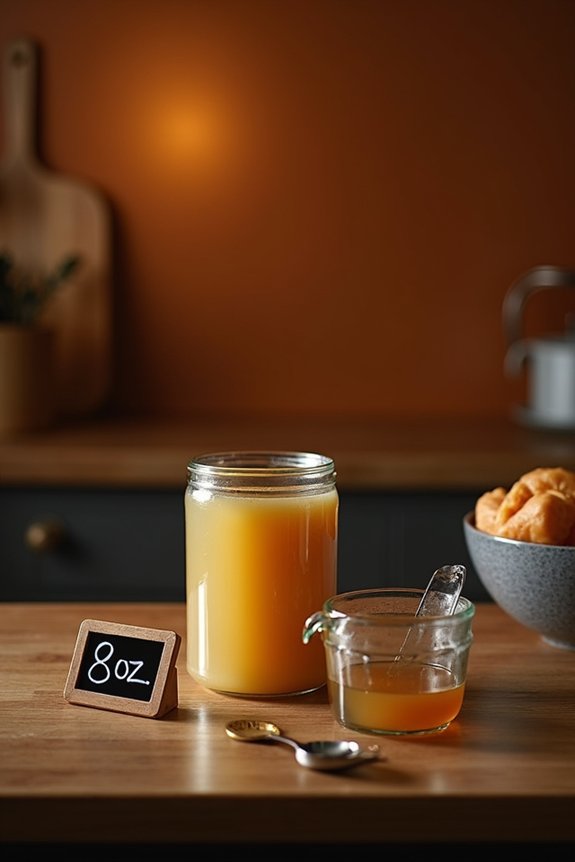
Sometimes you’ll open your cupboard only to find you’re one can short of what your recipe demands—and that’s totally fixable. I’ve discovered that mixing different can sizes works beautifully. If you need extra chicken broth, grab a carton alongside your standard 14.5 fluid ounces can. Since a 32 fluid ounces carton equals roughly 2.2 cans, you can combine them strategically to hit your exact measurement. Don’t have a full carton? No problem. I blend a smaller can with carton broth to reach my targeted cup amount. The key’s remembering that fluid ounces matter for liquid measurement, not weight ounces. This pantry staple deserves smart substitution strategies. With creative recipe adjustments and flexible thinking, you’ll nail your cooking every time—shortage solved.
Storing Leftover Broth After Opening
Once you’ve cracked open a can of chicken broth, you’ll want to store it properly to keep it fresh and safe to use. Here’s how I handle my leftover storage after opening:
- Pour opened can contents into an airtight container and refrigerate for up to 4 days
- Freeze leftovers in ice cube trays for convenient portioning (each cube holds about 2 tablespoons)
- Label all refrigerated or frozen chicken broth containers with the date for tracking freshness
- Store unopened cans in your pantry’s cool, dark spot until the best-by date
I’ve found that freezing in ice cube trays saves me serious time during meal prep. You’ll thaw exactly what you need without waste. This leftover storage method keeps your chicken broth ready whenever recipes call for it, making cooking easier and smarter.