
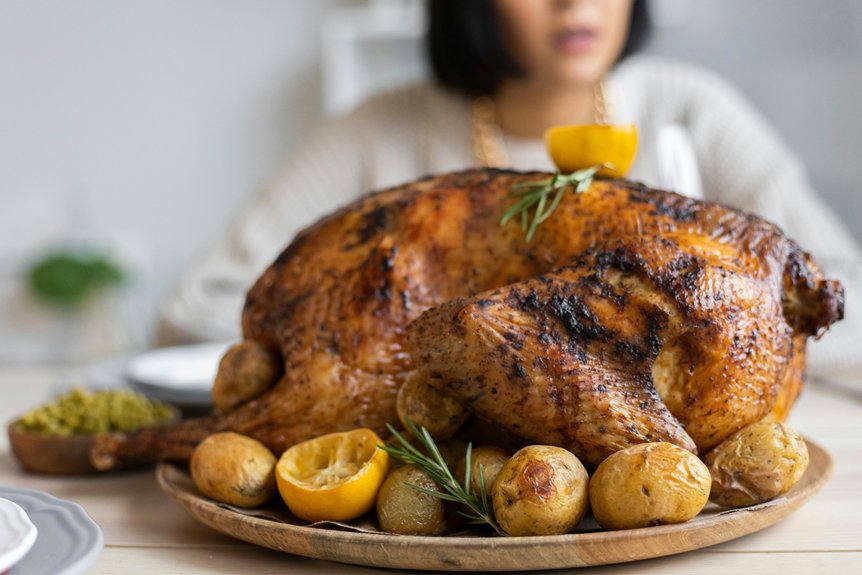
A 12-pound turkey comfortably feeds about 8 adults using the standard 1-to-1.5 pounds per person rule. Here’s the math: your bird loses roughly 20–30% weight during cooking, leaving you with about 8–9.5 pounds of actual meat. That breaks down to roughly 1–1.2 pounds of cooked meat per person—enough for a generous serving plus leftovers. If your guests love dark meat or you’re worried about hungry eaters, consider adding extra thighs or drumsticks to stretch portions further. The right carving technique and hearty sides can definitely stretch things, but stick around for strategies that’ll maximize every bite.
The Basic Math: 12 Pounds Feeds About 8 Adults
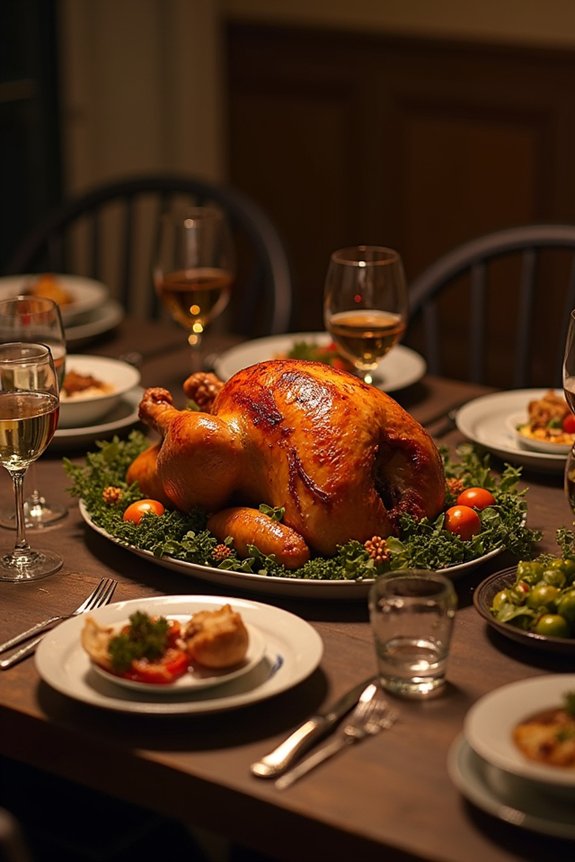
When you’re planning a holiday meal, you’ve probably wondered whether your turkey will be big enough. Here’s the straightforward answer: a 12-pound turkey feeds about 8 adults comfortably. That breaks down to roughly 1.5 pounds per person, which accounts for bone weight and cooking loss.
I’ve found this calculation works because it assumes standard serving sizes—about 3 to 4 ounces of actual meat per person. Since turkey is bone-in when you buy it, you’re not getting 12 pounds of pure meat. The bones take up significant weight.
However, if your guests have hearty appetites or you’re planning seconds, you’ll want more turkey. Plus, if you’re hoping for leftovers, a 12-pound bird might leave you with only modest portions for sandwiches later.
Account for 20–30% Weight Loss When Cooking
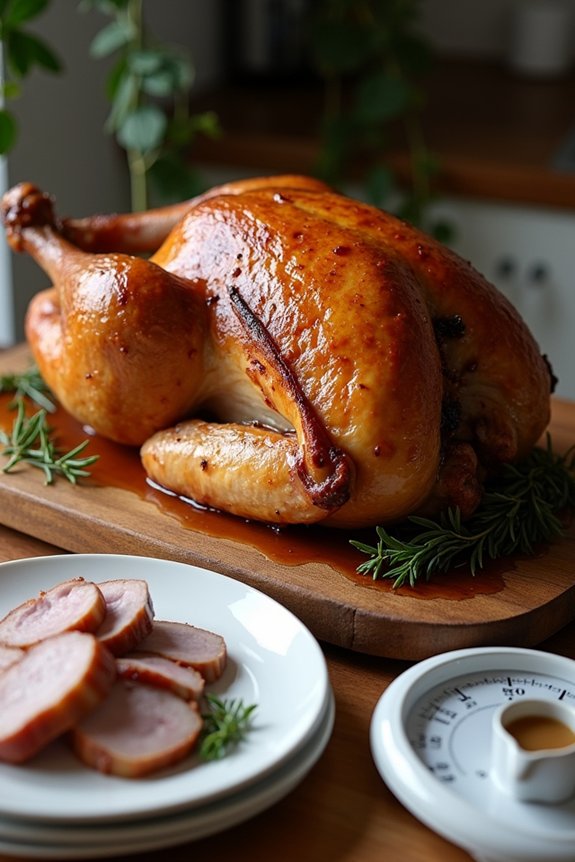
Now here’s something that might surprise you: that 12-pound turkey you’re planning to cook will actually shrink. When heat hits the bird, moisture escapes and trimmings get removed. You’re looking at a 20–30% weight loss from raw to cooked turkey. So your 12-pound raw turkey becomes roughly 8–9.5 pounds of actual cooked meat. That’s a significant difference when you’re calculating how much food lands on your guests’ plates. Understanding this weight loss helps you plan better. You won’t feel caught off guard when the finished bird seems smaller than expected. If you want to minimize shrinkage, try brining your turkey beforehand or using a roasting bag. These methods help retain moisture during cooking. Knowing these facts means you’ll confidently serve your crowd without running short on turkey.
The 1-to-1.5 Pound Rule per Person
How do you actually know if you’re buying enough turkey? I use the 1-to-1.5 pounds per person rule—it’s the standard that takes guesswork out of planning. Here’s how it works: multiply your guest count by 1 pound minimum. For a 12-pound turkey, that feeds about 8-12 adults comfortably. If you want leftovers (and honestly, who doesn’t?), I bump it up to 1.5 pounds per person instead. That shrinks your guest count to 8 adults, but you’ll have turkey sandwiches for days afterward. The difference matters because cooked turkey loses weight during cooking. This rule accounts for that loss, ensuring everyone gets enough meat on their plate without running short.
Adjust for Dark-Meat Eaters and Mixed Preferences
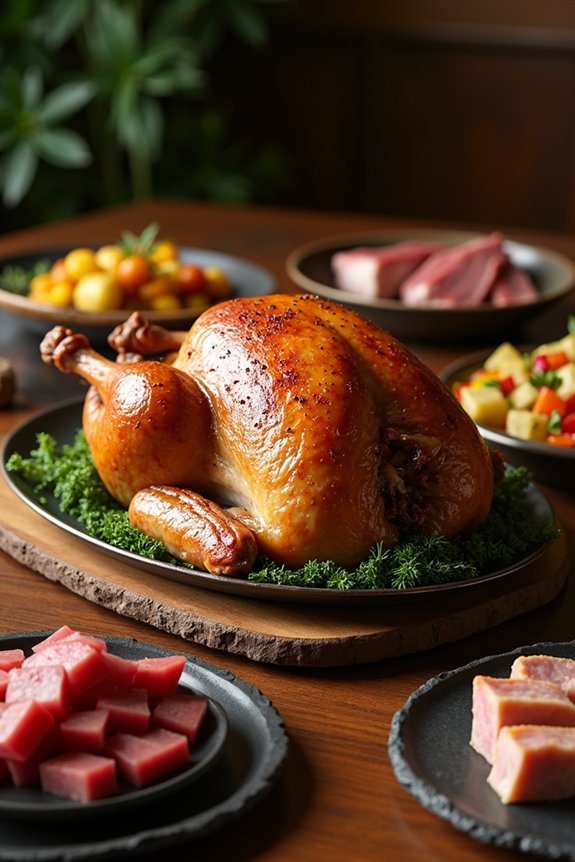
I’ve noticed that not everyone at your table has the same turkey preferences, so you’ll want to adjust your planning accordingly. If your crowd gravitates toward dark meat—thighs, drumsticks, and wings—I’d recommend either choosing a larger bird or adding extra dark-meat portions to your 12-pound turkey to keep everyone satisfied. For mixed preferences, bump up your raw turkey allowance to 1.5–2 pounds per person, which gives you enough meat variety and leftovers to please both the white-meat lovers and the dark-meat devotees.
Dark Meat Preference Considerations
What if your guests are dark meat devotees? You’ll want to reconsider whether a 12 lb turkey gives you enough servings to satisfy everyone. Dark meat actually yields more edible protein per pound after cooking than white meat, which sounds great—but here’s the catch: a standard turkey has limited dark meat portions.
I’d recommend allocating roughly 2.5–3 oz of cooked dark meat per person as your baseline. For larger appetites, bump that up. If dark meat’s the star of your table, consider roasting extra legs and thighs on the side or preparing a second bird. You could also prep dark meat-focused leftovers—like shredded dark meat dishes—to extend your servings beyond what the turkey alone provides.
Adjusting Portions For Preferences
So here’s the reality: a 12-pound turkey works great for standard eaters, but your guest list probably isn’t standard. If your crowd leans dark meat, you’ve got options. You can roast a smaller bird and supplement with an extra turkey breast—this gives dark-meat lovers their thighs and drumsticks while satisfying white-meat folks too. Plan 1.5–2 raw pounds per person if you want solid leftovers. A 12-pound turkey size might stretch thin when half your guests want only drumsticks. Consider roasting a second bird if most people prefer dark meat. Mixed preferences actually work in your favor because you’re not stuck buying one enormous turkey. You’ll nail both preferences and walk away with enough leftovers to justify the effort.
Mixed Appetite Planning Strategies
How do you handle a dinner table where half your guests are dark-meat devotees and the other half won’t touch anything but white meat? I’ve found that a 12-pound turkey alone might leave you scrambling. Here’s my strategy: plan for 1.5 pounds per person to cover mixed preferences and leftovers. A standard 12-pounder serves eight people comfortably, but when preferences split, I supplement with extra thighs and drumsticks—those dark-meat goldmines that disappear fast. This approach ensures everyone leaves satisfied and you’ve got plenty for sandwiches tomorrow. By accounting for varied tastes upfront, you’re not stressing mid-meal about running short. It’s less about one bird doing everything and more about smart planning that respects what your guests actually want to eat.
Add Extra Thighs or Drumsticks for More Protein
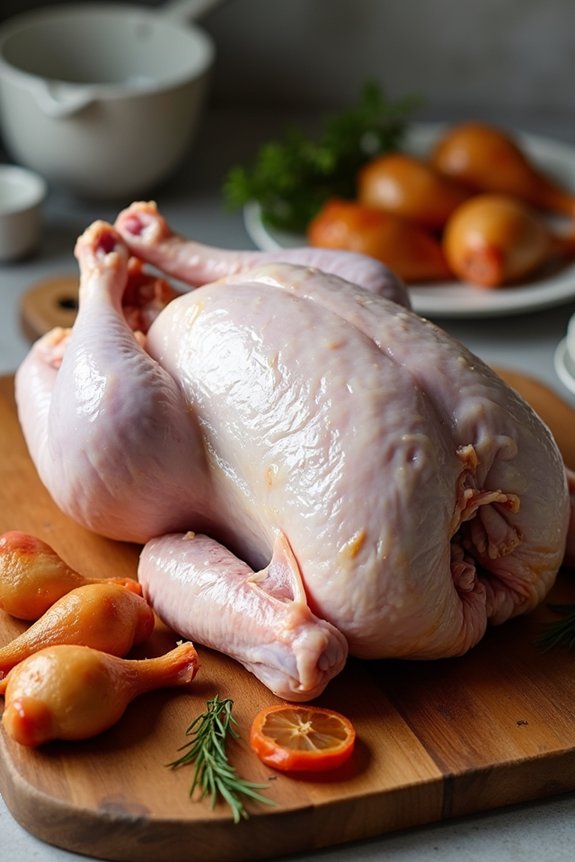
I’ll boost your 12-pound turkey’s protein output by adding extra thighs and drumsticks, which gives you more dark meat that folks genuinely enjoy. Since dark meat is denser and more flavorful than white meat, supplementing with 3-4 additional thighs or drumsticks (about 2-3 pounds total) stretches your servings and guarantees everyone leaves satisfied rather than hunting for seconds. This strategic pairing transforms your turkey from a decent main dish into a protein powerhouse that’ll actually feed your crowd generously.
Supplementing Protein Portions
Want everyone at your table to leave satisfied with hearty portions? I’d recommend supplementing your 12-pound turkey with extra thighs or drumsticks to boost your protein portions notably. Here’s why this strategy works: a standard turkey gives you roughly one pound of edible meat per person, but adding supplemental pieces brings you closer to 1.5–2 pounds per guest—perfect for hearty eaters and leftovers.
I suggest picking a mix of light and dark meat to match your crowd’s preferences. Dark meat from thighs and drumsticks tends to be juicier and more flavorful, while white meat appeals to traditionalists. This balanced approach ensures nobody feels shortchanged at dinner.
Plan on roasting these extras alongside your main bird, or prep them separately. You’ll gain flexibility in serving portions while guaranteeing everyone feels genuinely welcomed at your table.
Strategic Meat Pairing Options
Why settle for just one turkey when you can boost your protein lineup with extra thighs and drumsticks? I’ve found that adding these darker meat portions solves the protein puzzle beautifully. You’ll want roughly 1.5–2 pounds per person if you’re planning leftovers, and supplementing with extra parts helps you hit that target without oversizing your main bird.
| Meat Type | Pounds Per Person | Best For |
|---|---|---|
| Turkey thighs | 0.5–0.75 | Dark meat lovers |
| Drumsticks | 0.5–0.75 | Casual eaters |
| Combination | 1–1.5 | Balanced groups |
This strategy keeps everyone satisfied while ensuring you’ve got enough leftovers for sandwiches later. You’re not just feeding people—you’re creating a complete meal experience that works for your crowd.
Maximizing Guest Servings
How do you stretch a 12-pound turkey to satisfy a larger crowd or hungry guests?
Add extra thighs or drumsticks to your main bird. This strategy boosts total edible meat without requiring a massive turkey that’s frankly overkill. Dark meat yields more actual meat per bone than white meat, so you’re getting serious protein gains here.
I recommend roasting an additional dark-meat package alongside your 12-pound turkey. You’ll feed more people while keeping portions generous. This approach also gives you leftovers for sandwiches and soups—basically free meals later.
For a large crowd expecting substantial servings, plan roughly 1.5 to 2 pounds of raw turkey per person. Extra thighs and drumsticks let you hit that target without stressing about finding a massive bird. Your guests get satisfied, and you get leftovers.
When You Need a Second Bird
Sometimes one 12-pound turkey just won’t cut it. If you’re planning leftovers or expect hungry guests, I’d recommend adding a second bird. Here’s the reality: when you want 1.5–2 pounds of raw turkey per person for leftovers, a single 12-pounder falls short quickly.
When planning for leftovers, aim for 1.5–2 pounds of raw turkey per person—a single 12-pounder won’t stretch far enough.
I typically pair a 12–14 pound turkey with a smaller bird or different protein to cover extra guests comfortably. This approach gives you flexibility without overdoing it.
Before committing to that second bird, consider your guests’ appetites, how many sides you’re serving, and whether people prefer dark or white meat. These factors genuinely matter.
One important note: cooking multiple birds requires planning. You’ll need oven space and adjusted timing to ensure everything cooks evenly and finishes together.
Extend Portions With Hearty Side Dishes
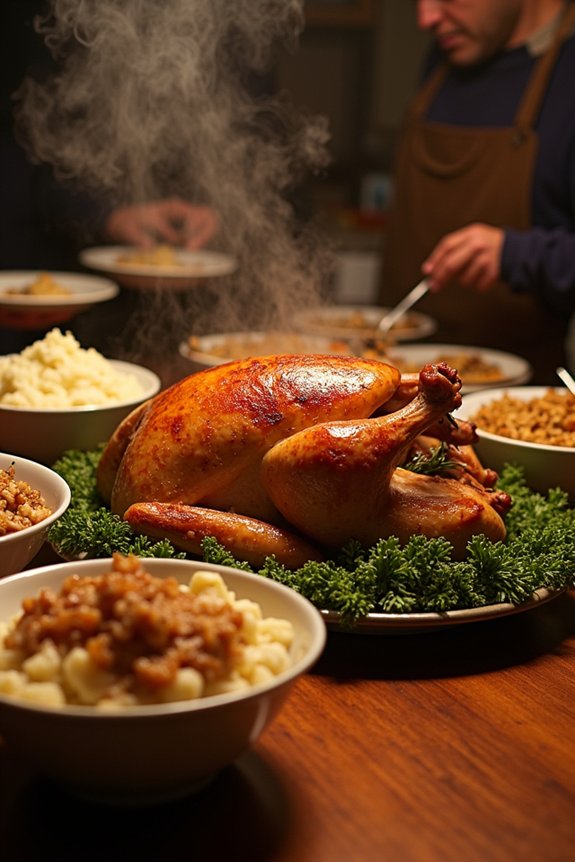
Instead of scrambling to find oven space for a second turkey, you can stretch that 12-pounder further by building a menu around filling side dishes. I’ve found that hearty casseroles and vegetables help you serve more people comfortably without needing extra turkey per person.
Consider adding these crowd-pleasers to your table:
- Creamy potato casserole – fills stomachs and reduces meat dependency
- Stuffing or dressing – a traditional heavy hitter that stretches portions naturally
- Roasted root vegetables – carrots, parsnips, and Brussels sprouts add volume
- Dinner rolls with gravy – bread soaks up sauce and keeps guests satisfied
When you load plates with these substantial sides, your 12-pound bird feeds eight adults easily. You’ll still have quality leftovers without the stress of roasting another bird. This strategy lets everyone feel genuinely satisfied.
When to Choose Turkey Breast if You Prefer White Meat
Do you find yourself pushing dark meat to the side of your plate? You’re not alone. If white meat’s your thing, a turkey breast is your answer. Instead of wrestling with a whole 12-pound bird, I’d grab a turkey breast portion that feeds about 4-6 people comfortably. This swap works great when you’re hosting folks with similar preferences.
Here’s the bonus: turkey breast leftovers are fantastic for sandwiches and salads. They stay fresher longer than dark meat too. For planning purposes, figure about 0.75 pounds of turkey breast per person—less waste than whole birds. You’ll skip the dark meat entirely while still getting that traditional turkey experience. It’s a smart move that keeps everyone satisfied without compromising your meal preferences.
Calculate Portions for Turkey Breasts
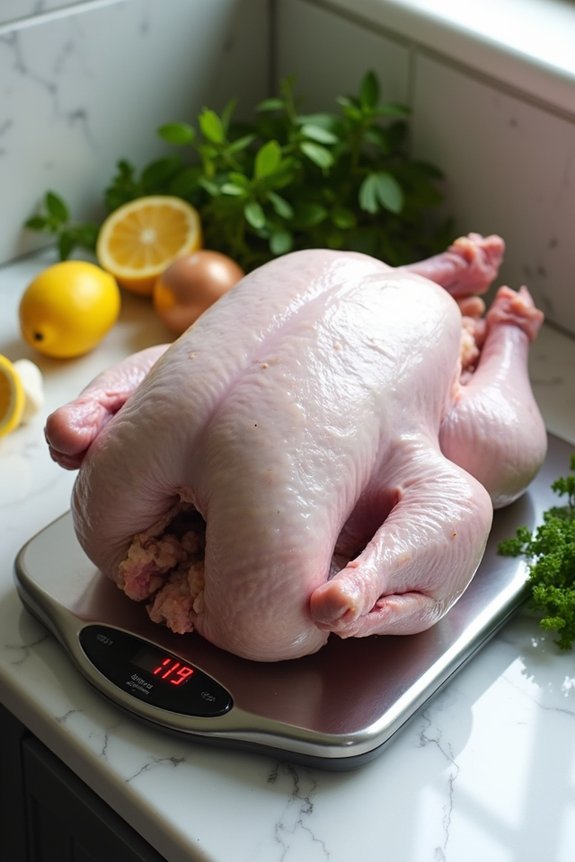
Now that you’ve decided a turkey breast suits your white-meat preference, let’s figure out exactly how much you’ll need. Calculating portions per person for turkey breasts is straightforward once you know the right measurements.
Here’s what I recommend:
- Plan 1–1.5 pounds of raw turkey breast per person for a standard meal
- Account for 20–30% weight loss during cooking, which reduces your final yield
- Expect roughly 5–6 ounces of cooked meat per person as your serving size
- Add extra if you want leftovers (no judgment here—turkey sandwiches are absolutely fantastic)
For a gathering of eight adults, you’d need a 12-pound turkey breast. This gives you enough meat without wasteful excess. The math works because turkey breasts cook efficiently and lose less proportion to bone compared to whole birds. You’ll feel confident knowing everyone at your table gets a satisfying portion.
Cooking Times Based on Turkey Size
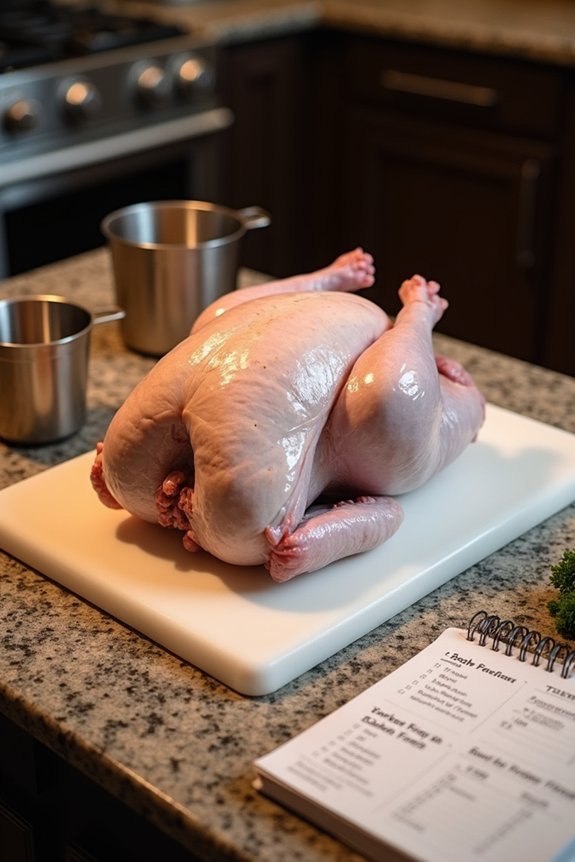
I’ll help you figure out how long your 12-pound turkey actually needs in the oven, since timing’s everything when you’re feeding a crowd. A 12 lb bird roasts for roughly 3 to 3.5 hours at 325°F, though stuffed turkeys take a bit longer than unstuffed ones—think of the stuffing as nature’s way of saying “slow down.” You’ll want to check the thickest part of the thigh with a meat thermometer, aiming for 165°F, rather than just watching the clock.
Weight-to-Time Conversion
How long you’ll actually need to roast a 12-pound turkey depends on your cooking method, but here’s what you can expect: a standard oven at 325°F will need roughly 3 to 3.5 hours, plus an additional 20–30 minutes for resting (which keeps the meat juicy).
Here’s your cook time breakdown:
- Conventional roasting: 3–3.5 hours at 325°F for that perfect golden bird
- Cooking bag method: 2.5–3 hours with better moisture retention
- Weight-to-time ratio: Plan about 15 minutes per pound as your baseline
- Resting period: Always budget 20–30 minutes after cooking finishes
Roasting Duration Guidelines
When you’re roasting a 12-pound turkey, timing’s everything—get it right, and you’ll have a juicy bird ready to carve; get it wrong, and you’re either serving undercooked poultry or dried-out disappointment.
I recommend setting your oven to 325°F and planning for approximately 3 to 3.5 hours of roasting duration. An unstuffed turkey cooks faster than a stuffed one, so adjust accordingly. Use a meat thermometer—your best friend here—checking that the thickest part of the thigh reaches 165°F.
After roasting finishes, resist the urge to carve immediately. Instead, rest your turkey for 20 to 30 minutes. This resting period redistributes juices throughout the meat, ensuring moistness.
If you’re hoping for leftovers to extend your meal, consider cooking an additional smaller turkey simultaneously or later.
Temperature Monitoring Methods
Why rely on a kitchen timer when your meat thermometer’s got your back? Temperature monitoring is your secret weapon for nailing that perfect turkey every time.
I’m here to help you skip the guesswork. Here’s what I recommend:
- Insert the thermometer into the thickest part of the breast without touching bone
- Check the thigh separately, as it takes longer to cook than breast meat
- Aim for 165°F (74°C) minimum in both locations before removing from heat
- Use a reliable digital thermometer for accurate, consistent readings
Don’t trust cooking time estimates alone—they vary based on your oven and turkey size. Your thermometer tells you exactly when your bird’s done. Once you hit that magic 165°F temperature, you’ve nailed food safety and juicy results. Rest your turkey for 20–30 minutes after cooking, then you’re ready to serve.
Thaw Your Turkey With the Right Timeline
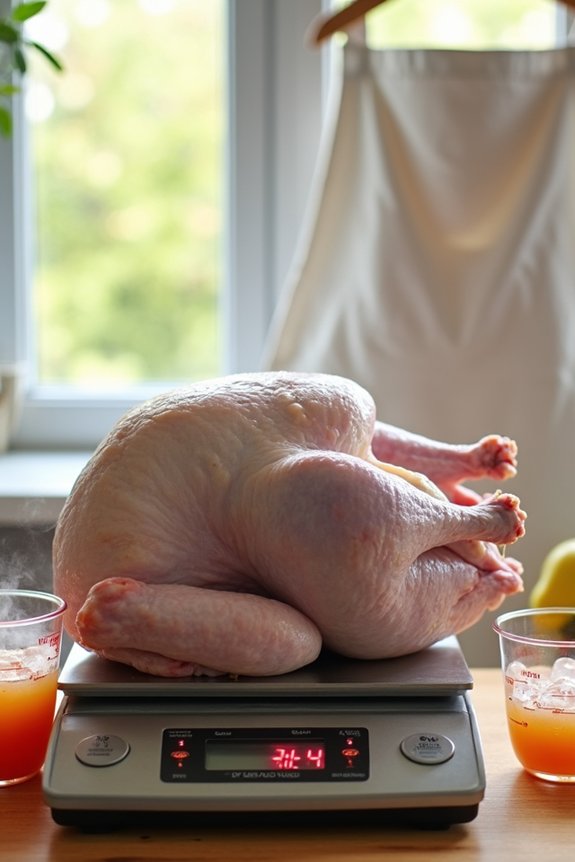
Got a 12-pound bird sitting in your freezer? Let me help you nail your thawing timeline so you’re ready to cook. I use the simple rule: plan about one day per five pounds of turkey. For your 12-pounder, that’s roughly 2-3 days in the refrigerator. This slow thaw keeps your bird safe and prevents bacterial growth.
| Turkey Weight | Thawing Days | Timeline Start |
|---|---|---|
| 12 pounds | 2-3 days | Tuesday for Friday |
| 16 pounds | 3-4 days | Monday for Friday |
| 20 pounds | 4-5 days | Sunday for Friday |
I never rush thawing on the counter—it’s risky. Your turkey weight planning directly affects your thawing timeline. Stick to the refrigerator method, and you’ll have a perfectly thawed bird ready for cooking.
Carve and Serve Your Turkey Correctly
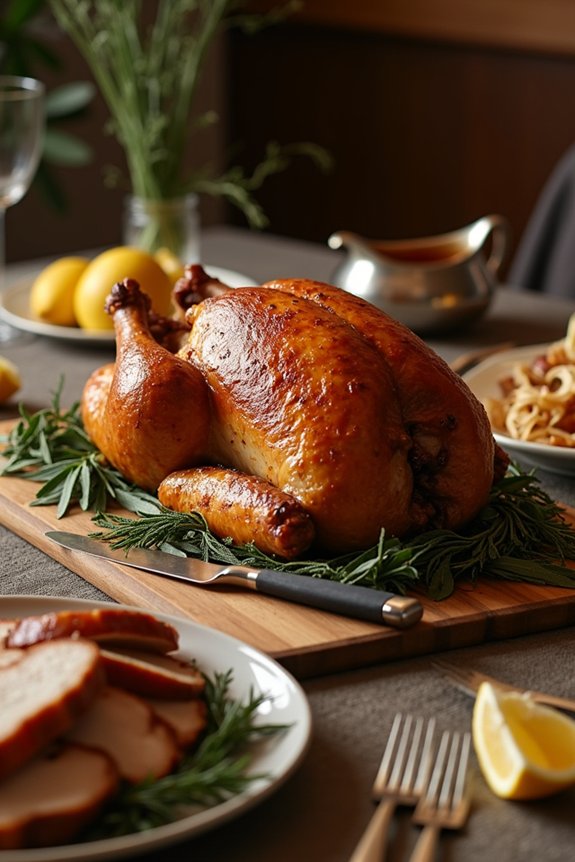
How you carve your turkey directly impacts how many people you’ll actually feed and how much meat ends up on the plate. I’ve found that strategic carving maximizes your yield from that 12-pound bird. Here’s what I do:
- Separate legs and thighs first for dark meat lovers
- Remove breasts in large pieces, then slice against the grain
- Don’t forget the wings—they’re basically free meat
- Save all bones and scraps for broth and leftovers
When you slice carefully, you’ll stretch 6–8 pounds of cooked meat further. I distribute white and dark meat evenly across plates, ensuring everyone gets variety. This approach feeds 8 adults comfortably while generating quality leftovers. Your carving technique genuinely matters—it’s not just about looking fancy at the table.