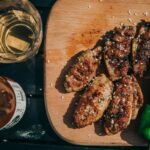

Preheat your grill to 375–400°F, then place sausages spaced apart to avoid crowding. Grill thin sausages for 6–8 minutes and thick ones for 10–12 minutes, turning every 2–3 minutes for even browning. Skip piercing them—use tongs instead to keep those precious juices locked in. The real test? Check the internal temperature; you’re done when it hits 160–165°F. Let them rest a few minutes before serving. Want the complete breakdown on timing, heat management, and preventing bursts?
Preheat the Grill to 375–400°F
Why does temperature matter so much when grilling sausages? Getting your grill temperature right is the difference between juicy, perfectly cooked sausages and rubbery disappointments.
I always preheat my grill to 375–400°F before anything touches the grates. This sweet spot cooks the sausage interior evenly while creating that appetizing brown exterior without charring the casing. For a gas grill, I set the burners to medium-high and let them stabilize for several minutes. If I’m using charcoal, I light it and wait until the grate reaches that target temperature range.
Maintaining steady heat prevents the casing from collapsing and ensures your sausages cook through in a reasonable timeframe. Checking your grill temperature with a thermometer takes just seconds but makes all the difference in results.
Grill Times: 6–8 Minutes for Thin Sausages, 10–12 for Thick
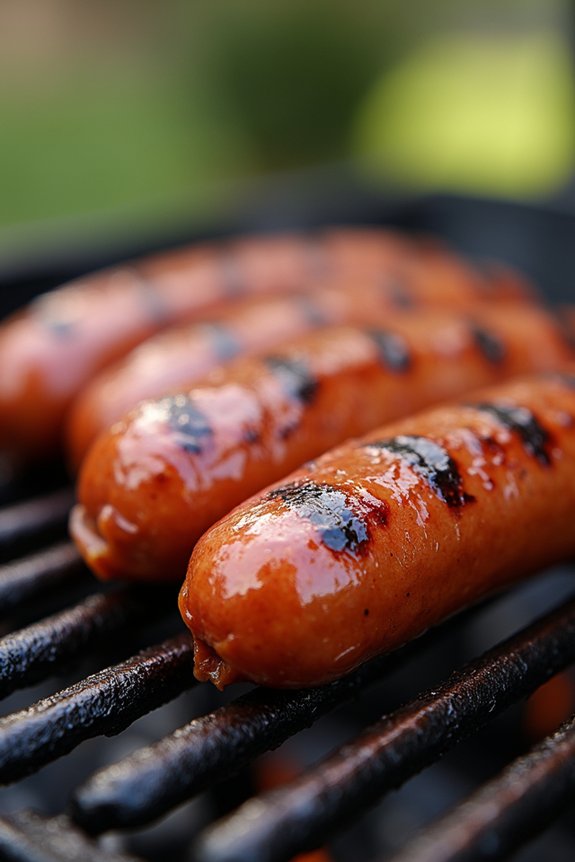
How long should your sausages actually spend on the grill? It depends on their size. For thin sausages, I aim for 6–8 minutes total, turning them occasionally to get that perfect golden-brown color all around. Thick sausages need more time—about 10–12 minutes—since they’re chunkier inside.
Here’s the real secret though: don’t just rely on time alone. I always grab my meat thermometer and check that internal temperature hits 160–165°F. That’s your golden ticket to knowing they’re safe and delicious. Turn your sausages every couple of minutes so they cook evenly without burning on one side.
After you pull them off, let them rest for a few minutes. This keeps all those tasty juices inside where they belong, not all over your plate.
Check Internal Temperature: You’re Done at 160–165°F
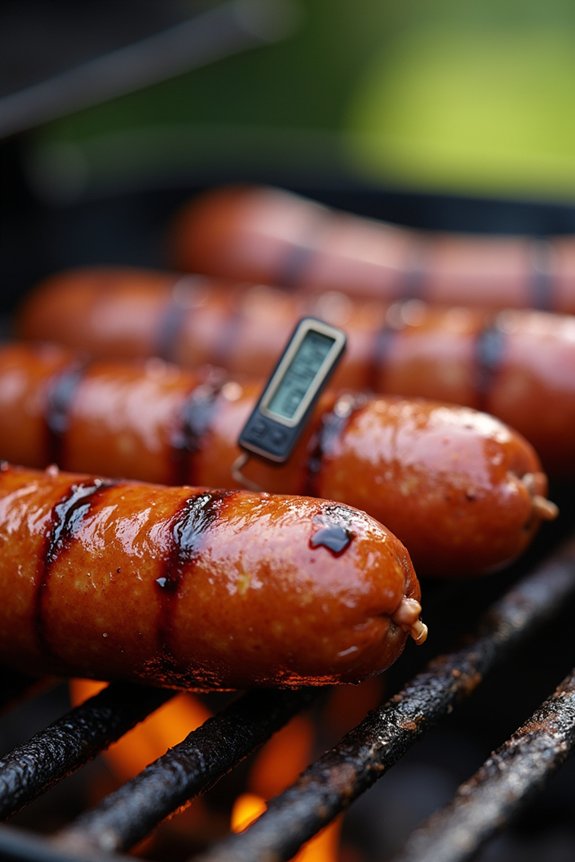
I’ve got the real secret to perfectly grilled sausages, and it’s not counting seconds on a timer—it’s using a meat thermometer to check that internal temperature sweet spot of 160–165°F. You’ll want to stick that thermometer right into the end of the sausage (not the side) to get an accurate read, since that’s where heat penetrates last. Once you hit that target temp, pull your sausages off the grill and let them rest for a minute so they can reabsorb all those delicious juices.
Thermometer Placement Matters
Since sausages cook unevenly depending on their thickness, you can’t trust the clock alone—that’s where your meat thermometer becomes your best friend on the grill.
I’ve learned that thermometer placement makes all the difference in getting accurate doneness guidance. Here’s what works:
- Insert the thermometer horizontally into the thickest part of the sausage (usually near the center).
- Avoid touching the casing or grill grates, which’ll throw off your reading.
- Check the internal temperature from the end of the sausage for the most reliable measurement.
Once your meat thermometer reads 160–165°F, you’re golden. Don’t rely on color or firmness—they’re misleading. This simple step guarantees you’ll nail perfect sausages every time, whether you’re grilling skinny links or fat bratwursts alongside your crew.
Safety Temperature Guidelines
The magic number you’re aiming for is 160–165°F, and that’s it—no guessing, no cutting into the sausage to peek at the color, no poking it to see if it feels firm. This internal temperature is where all the nasty bacteria get eliminated, keeping you and your crew safe. I use a meat thermometer inserted into the end of the sausage to verify doneness accurately. It’s honestly the only reliable way to know you’ve nailed it. Once that thermometer hits 160–165°F, you’re done. Remove the sausages immediately and let them rest for a few minutes. This redistributes the juices and keeps everything moist. Skip the knife cuts—they’re just letting precious flavors escape. Trust your thermometer. You’ve got this.
Turn Every Few Minutes for Even Browning
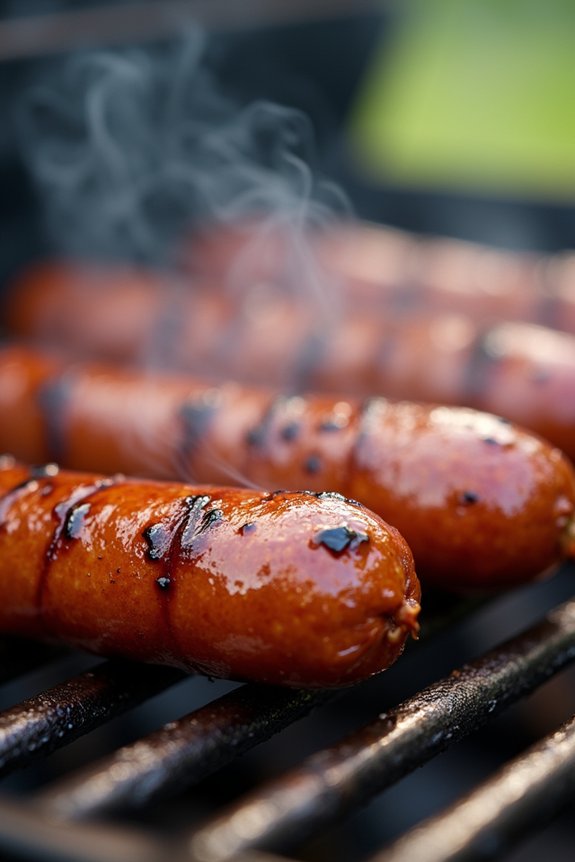
I’ll rotate my sausages every 2–3 minutes to keep them from cooking unevenly, since direct heat hits different spots at different times. Using tongs instead of a fork is my tactic here—forks puncture the casing and let all those delicious juices escape, which would be a shame. This frequent turning gives me that golden-brown color on all sides while the inside stays juicy, and I’ll know I’m nailing it when everything reaches that target 165°F internal temperature.
Rotation Prevents Uneven Cooking
Why do some grilled sausages end up with a burnt side and an undercooked side? The answer lies in grilling rotation. When you skip frequent turns, one side faces intense heat while the other stays cooler, creating an uneven mess.
Here’s why consistent rotation matters:
- Prevents burnt exteriors – Turning every 2–3 minutes keeps any single surface from scorching on your 450°F grill
- Maintains uniform internal temperature – Steady grilling rotation helps the inside reach 160–165°F without overcooking one side
- Locks in moisture – Avoiding prolonged direct heat on any surface preserves juices throughout cooking
I’ve found that even browning comes from treating all sides equally. Once you’re done rotating, grab your thermometer and confirm the internal temperature near the end of grilling. This simple habit transforms your sausages from hit-or-miss to reliably delicious every single time.
Tongs Protect Sausage Casings
Now that you’re rotating your sausages regularly, you’ll want to grab the right tool for the job—and that tool is tongs, not a fork. Here’s why: forks puncture the casing, releasing those precious juices that keep your sausage moist and flavorful. Tongs let you flip without damage.
When grilling at 375–450°F, use tongs to turn your sausages every 2–3 minutes. This frequent rotation promotes even browning across all sides while preventing one area from overcooking. The gentle grip protects your casing’s integrity throughout the 8–12 minute cook time.
Think of tongs as your sausage’s bodyguard. They distribute heat evenly, reduce splitting risks, and maintain that satisfying snap you’re after. Your grilling game just leveled up.
Golden Brown On All Sides
The secret to gorgeous, evenly browned sausages isn’t complicated—it’s all about turning them consistently. When you’re sausage grilling at medium-high heat (375–400°F), rotation is your best friend. Here’s what I do to nail even browning:
- Turn sausages every few minutes so each side gets quality grill time
- Watch for a golden crust developing while the internal temperature climbs toward 160–165°F
- Adjust timing based on thickness—thinner sausages need 6–8 minutes total, thicker ones 10–12 minutes
I’ve found that constant attention prevents hot spots from scorching the exterior. You’re basically babysitting them, but it’s worth it. Keep that lid closed when possible to trap heat, and don’t let any section sit too long in one spot. This approach guarantees you’ll join the ranks of grill masters who consistently nail that perfect, caramelized finish.
To Simmer or Not Before Grilling: Pros and Timing?
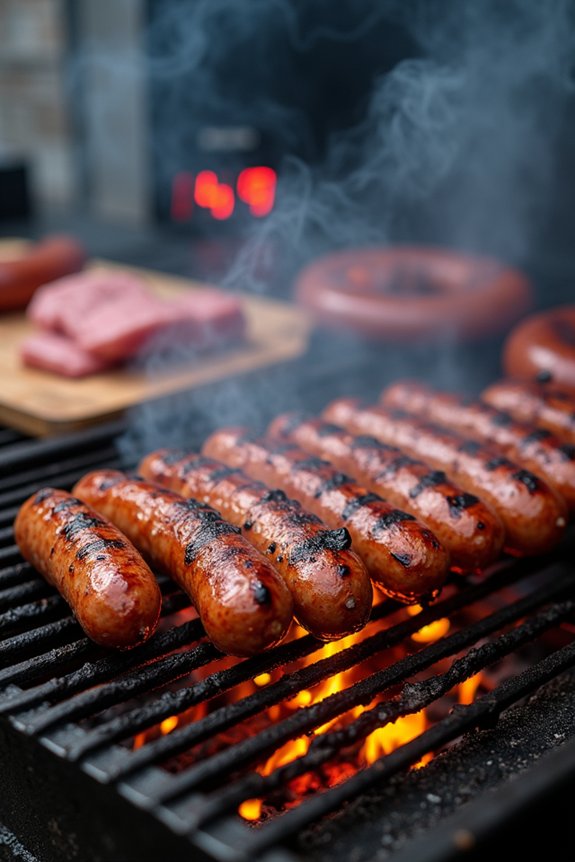
Should you parboil your sausages before they hit the grill? I’d say yes, and here’s why. Parboiling—simmering sausages for about 5 minutes—gives you a serious advantage. It reduces your total grilling time and helps cook the interior evenly, so you’re not stuck babysitting the grill forever.
After parboiling, I grill them about 4 minutes per side. This approach minimizes casing bursting during high-heat grilling since the interior’s already closer to doneness.
Skip parboiling? You’re looking at 8–12 minutes total with more monitoring required. Either way, use a thermometer to confirm doneness rather than guessing. You’ll want that internal temperature hitting 160–165°F. That’s your real indicator of success, not time alone.
Grill Sausages Without Bursts: Tongs and Direct Heat
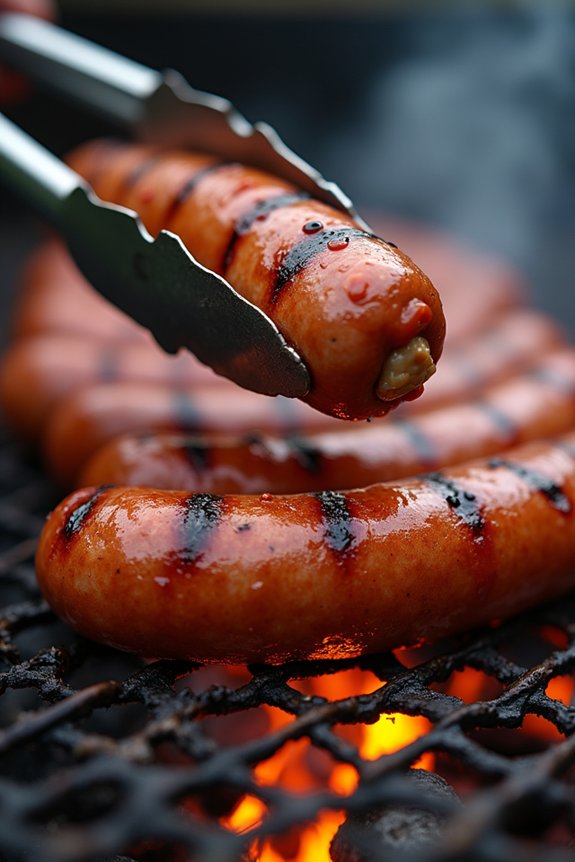
Why do sausages burst on the grill? When you pierce the casing with a fork or use too much pressure, you lose precious juices that keep them intact. Here’s how I get perfect results every time:
Sausages burst when pierced—lose precious juices that keep them intact. Use tongs exclusively to prevent puncturing and moisture loss.
- Use tongs exclusively—they grip without puncturing, so moisture stays locked inside
- Maintain a grilling temperature between 350–450°F—steady heat prevents sudden flare-ups that split casings
- Space sausages apart—crowding creates pressure buildup that causes bursting
I always grill over direct heat to brown the exterior evenly. Check doneness with an internal thermometer, aiming for 160–165°F. Once you hit that mark, remove them immediately and let them rest. This simple approach keeps your sausages juicy and intact—no explosions required.
Rest, Serve, and Store Leftovers
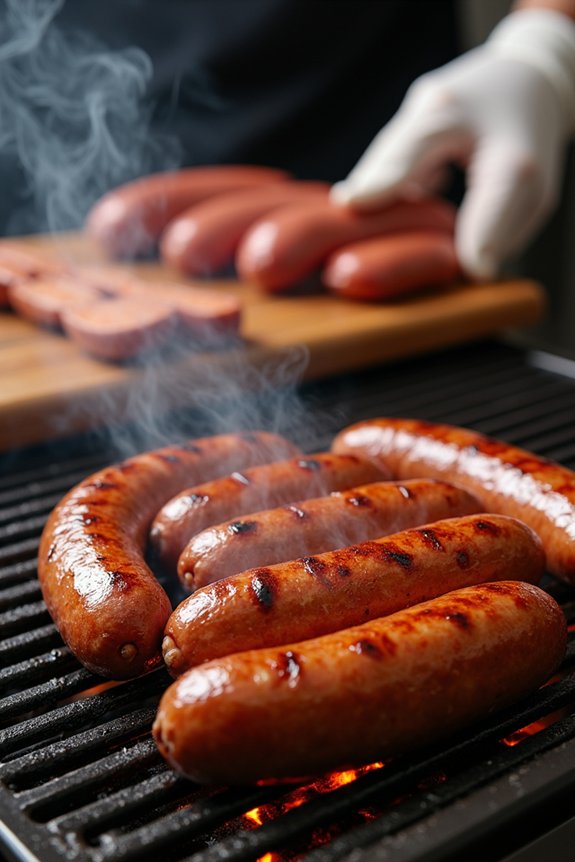
Once your sausages hit that perfect 160–165°F internal temperature, you’re not quite finished—resting them is just as important as cooking them. I let mine sit for a few minutes off the grill so the juices redistribute, keeping everything moist and delicious.
When you’re ready to serve, do it right away while they’re at their best. Your guests will appreciate the perfectly cooked texture.
Got leftovers? Refrigerate them in an airtight container within two hours. They’ll keep safely for later meals. When reheating, I use the grill or a pan to warm them through to 165°F without overdoing it. Never leave sausages sitting out longer than two hours—that’s when bacteria start throwing a party you don’t want.