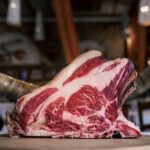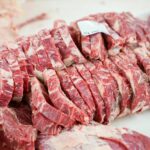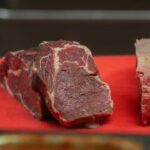

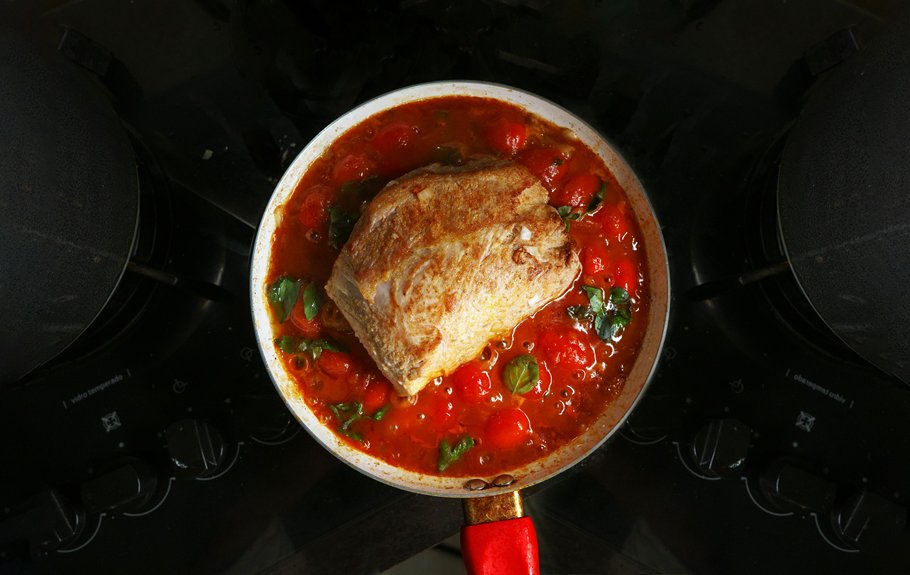
Pork cushion is a lean, boneless cut from your pig’s front shoulder that’s about two to three pounds. It’s got lots of connective tissue, so you’ll want low-and-slow cooking—think slow cooker for eight hours or smoking at 185–205°F until it hits 200–205°F internally. The payoff? Tender, shreddable meat perfect for pulled pork. You can also slice it thin for breaded cutlets or dice leftovers into stews. There’s plenty more technique to master this versatile cut.
What Is Pork Cushion and Where It Comes From
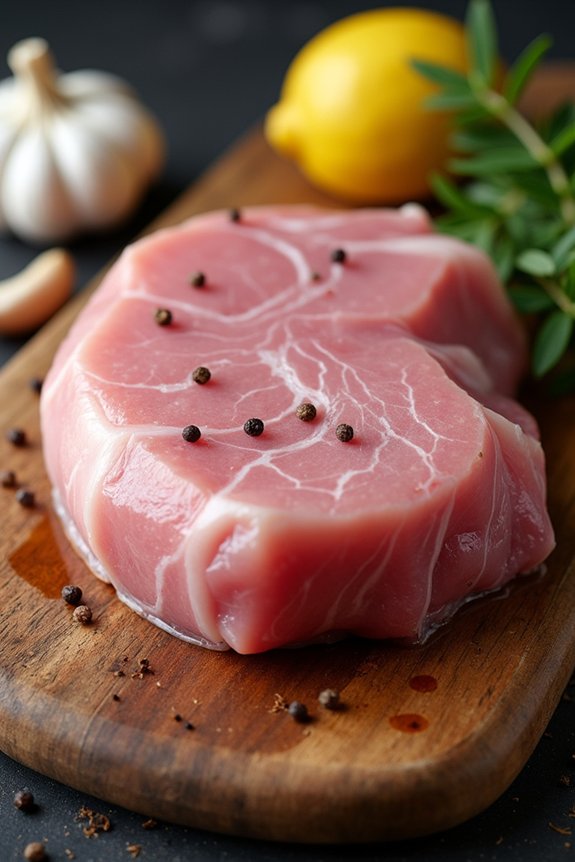
Ever wondered what that triangular cut of pork labeled “cushion” actually is? I’ll break it down for you. Pork cushion comes from the anterior side of the pig’s picnic shoulder, and it’s a boneless cut weighing about two to three pounds. This lean, well-worked muscle comes packed with flavor, though it does contain considerable connective tissue. What makes it special is that it’s already deboned—no need to wrestle with bones before serving. You’ll find it sits right next to the pork butt on the foreleg, but here’s the difference: cushion contains far less intramuscular fat, making it distinctly leaner. Its triangular shape and boneless nature make it perfect for slicing into cutlets or shredding after cooking.
Boston Butt vs. Pork Cushion: Fat and Texture
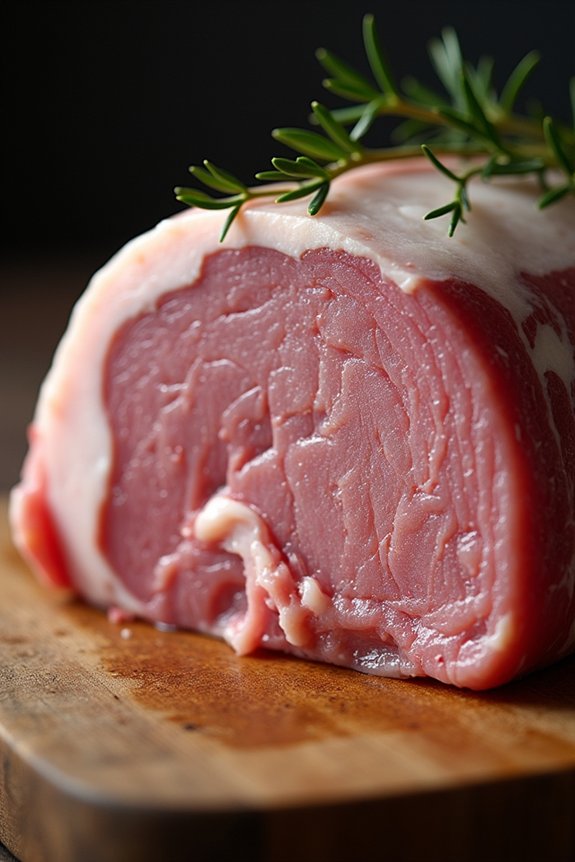
The difference between pork cushion and Boston butt comes down to one major factor: fat content. I’ll break it down for you. Pork cushion, which comes from the picnic shoulder, is the leaner option. It’s a heavily worked muscle packed with connective tissue that requires patient, low-and-slow cooking to break down properly. Boston butt sits higher on the foreleg and contains significantly more intramuscular fat. This extra fat makes it naturally juicier and softer when cooked—basically, it does some of the work for you.
Here’s the practical difference: pork cushion needs higher internal temperatures, around 200–205°F, to achieve that pull-apart texture. Boston butt typically gets tender earlier. Both work great for smoking and braising, but understanding their texture differences helps you choose the right cut for your cooking style.
Pork Shoulder vs. Pork Cushion: Which to Buy?
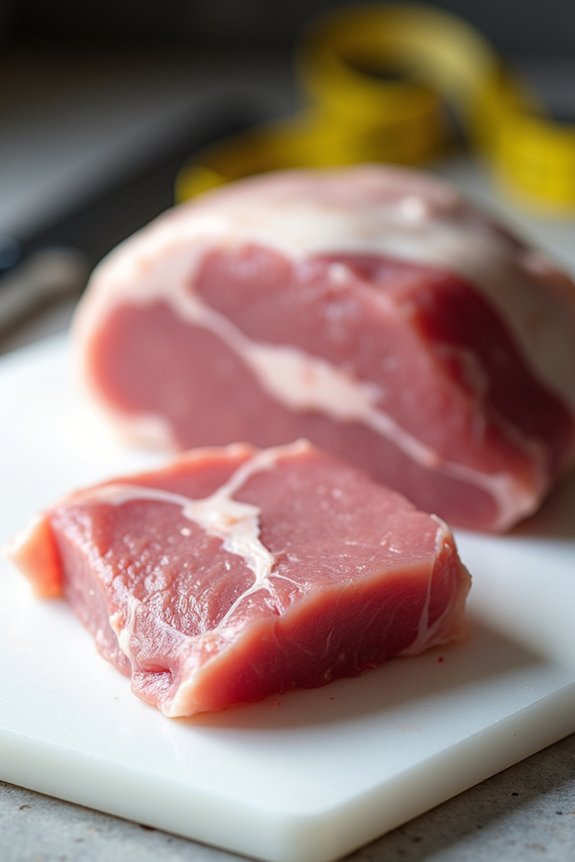
So which cut should you actually grab at the butcher counter? Here’s what I’ve learned: pork cushion and pork shoulder each have their place in your kitchen.
Consider these differences:
- Fat content – Pork shoulder has more intramuscular fat, while pork cushion is leaner with more connective tissue
- Cooking time – Pork cushion requires longer low-and-slow cooking to become tender
- Cost – Pork cushion typically costs less since it’s a smaller, less popular cut
I’d choose pork cushion when I want budget-friendly low-and-slow cooking and don’t mind the extra time. Pick pork shoulder if you prefer faster results with naturally juicier meat. Both work beautifully for braising or smoking. Honestly, grab whichever your butcher recommends—you’ll nail it either way with proper technique.
Low-and-Slow Cooking Methods
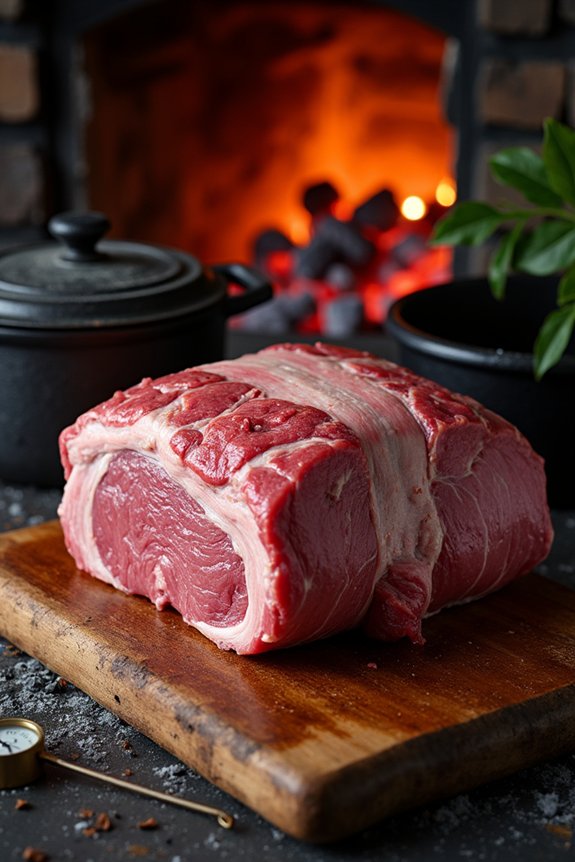
When I cook pork cushion, I’ve found that three methods—slow cooker, smoking, and oven roasting—deliver consistently tender, shreddable results because they all work low and slow to break down that tough connective tissue. With a slow cooker, I add liquid like broth or sauce and cook on low for 8 hours or longer, which basically does the heavy lifting while I go about my day. For oven roasting or smoking, I’m aiming for internal temperatures around 185–205°F over several hours (roughly 1 hour per pound at 300–325°F for roasting), which transforms this otherwise chewy cut into fork-tender perfection.
Slow Cooker Method
If you’ve got a slow cooker and about 8 hours to spare, you’re about to create some seriously tender pork cushion.
Here’s what you’ll do:
- Layer your slow cooker with the pork cushion, 4 cups of pho or beef broth, minced garlic, and fresh ginger
- Position the meat fattier side up so it bastes itself throughout cooking
- Set your slow cooker to low and let it work its magic for 8 hours
The low, steady heat breaks down the lean meat’s fibers, transforming it into pull-apart tenderness you’ll love. When it’s done, shred the pork and mix it back with those flavorful cooking juices—this keeps everything moist before serving over rice. Store leftovers in the fridge for 4 days or freeze for 2–3 months. You’ve just joined the slow cooker club, friend.
Smoking and Roasting Techniques
Why does pork cushion shine when you smoke it? Low-and-slow smoking breaks down connective tissue while keeping the meat juicy. I’d cook it at 185–195°F, which takes about 1.5 hours per pound. Here’s the trick: place it fat-side up so that rendered fat bastes everything naturally.
Before smoking, I rub the cushion thoroughly with salt, pepper, garlic, paprika, sage, oregano, dry mustard, and cayenne. This seasoning blend creates incredible flavor throughout. After smoking finishes, rest your pork cushion for over 30 minutes—this step locks in moisture and makes slicing easier.
You’ll shred or slice it, then serve with sauce or toss it into stews and ramen. Store leftovers refrigerated for four days or frozen for months. You’ve got this.
How to Make Pulled Pork With Pork Cushion Meat
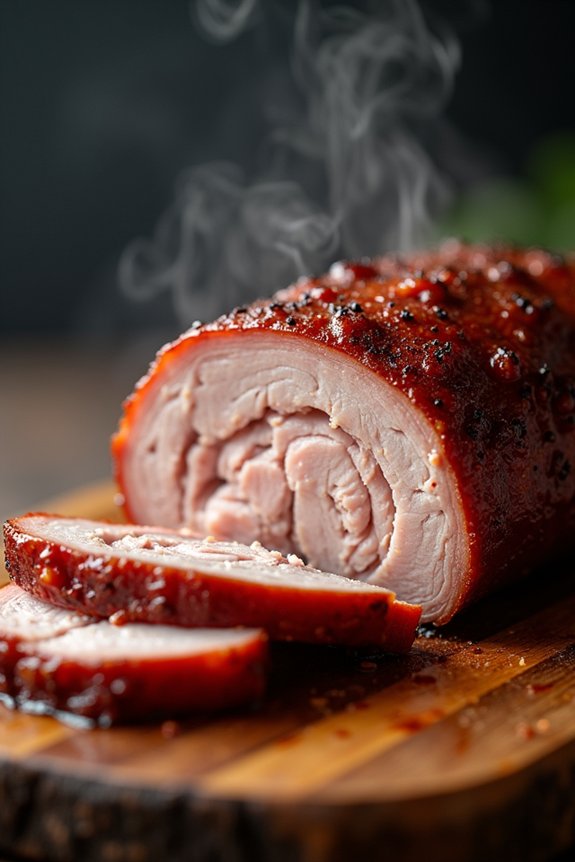
How’d you like to turn a lean, tough cut of meat into something so tender it practically falls apart?
I’ll show you how. Here’s what you need to know about making pulled pork with pork cushion:
- Season generously with salt, pepper, garlic, and paprika before cooking
- Cook low and slow in a slow cooker for 8 hours on low setting
- Add flavorful liquids like broth to prevent drying out
The magic happens during slow cooking when connective tissue breaks down completely. I combine my BBQ rub with moisture-rich broth, then let time do the heavy lifting. After eight hours, the pork shreds effortlessly. I sauce it generously and serve over rice or in sandwiches. This method transforms pork cushion into incredibly tender, pull-apart meat that’ll have everyone asking for your secret.
Smoking: Temperature and Timing
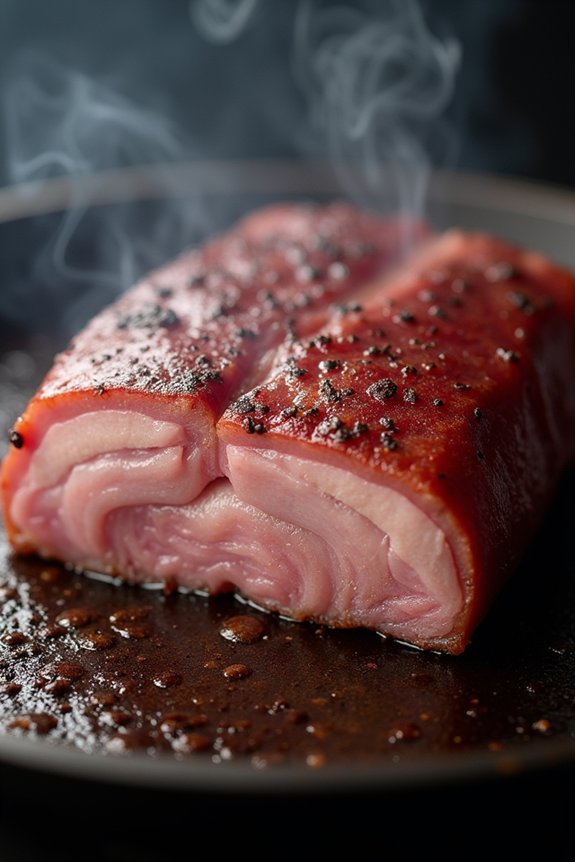
I’ll set my smoker to 185–195°F and plan for roughly 2–3 hours per pound, since pork cushion’s smaller size means it’ll cook faster than a Boston Butt. The key is hitting that 200–205°F internal temperature where the meat finally shreds apart like it should, so I’ll keep my thermometer handy and resist the urge to rush things. Temperature consistency matters more than speed here—too hot and the outside burns before the connective tissue breaks down inside.
Optimal Smoking Temperature Range
The sweet spot for smoking pork cushion sits right between 185°F and 195°F (85°C to 91°C)—think of it as the Goldilocks zone where magic happens. This pork cushion temperature range is essential because it’s hot enough to break down connective tissue rendering without drying out your meat.
Here’s why this smoking range matters:
- Connective tissue breaks down at these temperatures, making your meat fork-tender
- Moisture stays locked in instead of evaporating away
- Flavor develops deeply as the smoke penetrates the meat properly
I find that staying within this temperature window prevents the two biggest mistakes: undercooked tough meat or overcooked dry meat. Use a reliable meat thermometer to monitor your smoker consistently. You’ll nail this cooking method every time by respecting these numbers.
Cook Time Per Pound
Once you’ve got your smoker dialed in at that perfect 185–195°F sweet spot, it’s time to talk timing—and here’s where patience becomes your secret ingredient. For pork cushion cook time, plan roughly 1.5 hours per pound of meat. Since cushion cuts are smaller and fattier than larger pork shoulders, your smoking time might run a bit quicker than you’d expect.
I recommend checking your pork cushion’s internal temperature around the 1-hour mark per pound. You’re aiming for that pull-apart tenderness at 185–205°F. The beauty of this cut is its size works in your favor—you won’t be waiting all day. Monitor your smoker consistently, adjusting as needed. Remember, every cushion cooks slightly differently, so use temperature as your true guide, not just the clock.
Thin Chops and Cutlets
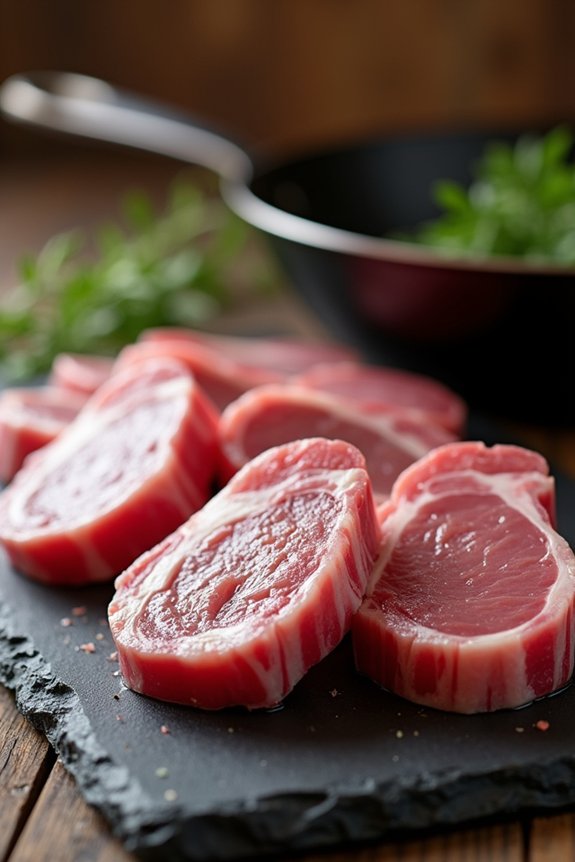
Slicing pork cushion into thin chops or cutlets opens up some delicious quick-cooking possibilities, though you’ll want to handle this lean cut with care. I’ve found that thinner slices cook more evenly and prevent those dry, chewy edges that can happen with untenderized meat.
Here are three tenderizing methods I recommend:
- Marinate your pork cushion cutlets for 2-4 hours in acidic mixtures
- Pound slices thin to break down muscle fibers naturally
- Brine beforehand to lock in moisture during cooking
Breaded and fried pork cushion cutlets work wonderfully, similar to schnitzel. The key is resting your cutlets briefly after cooking—just 3-5 minutes—so juices redistribute throughout the lean meat. This simple step makes a real difference in tenderness and flavor.
Transforming Leftovers Into Stews and Soups
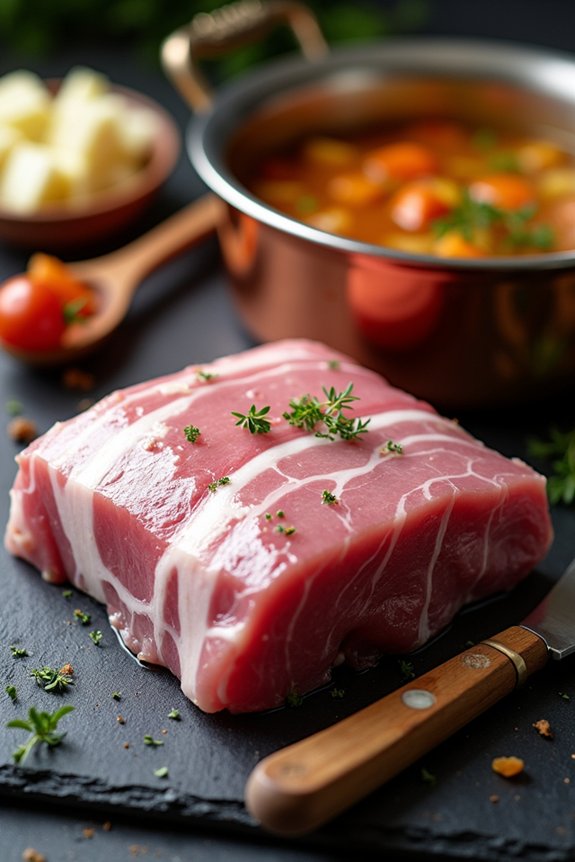
If you’ve got leftover pork cushion sitting in your fridge, you’re in luck—this is where that lean cut really shines. Repurposing pork into stews transforms those cushion leftovers into something completely new. Shred or dice your cooked meat and combine it with vegetables like carrots, potatoes, and onions. Add broth—beef or chicken works great—and simmer everything together for thirty to forty minutes until flavors meld beautifully. For pork stews, you’ll want roughly two cups broth per pound of meat.
Want ramen instead? Layer your shredded cushion over noodles in a flavorful broth with bok choy and soft-boiled eggs. Both options transform minimal effort into satisfying meals. You’re basically giving your leftover pork a second life without any real work.
Storage and Freezing: Keeping It Fresh
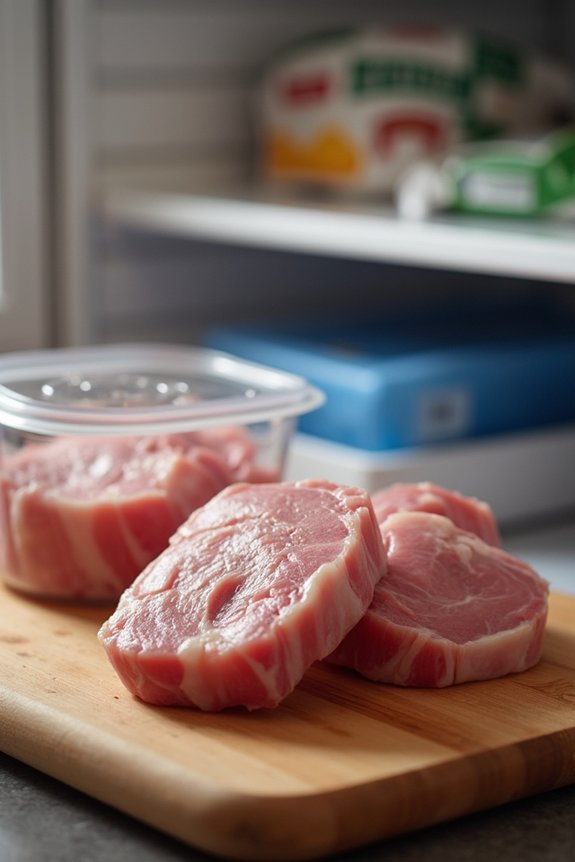
Proper storage is your undercover asset for getting the most mileage out of your pork cushion. Smart pork cushion storage keeps your investment fresh and ready when you need it.
Here’s how to nail fresh preservation:
- Refrigerate immediately – Store cooked pork cushion in airtight containers for up to four days at 40°F or below.
- Freeze for longevity – Wrap tightly in plastic wrap, then foil. Freezing pork cushion maintains quality for three to four months.
- Label everything – Write the date on containers so you’ll know exactly when you prepped it.
For thawing, move frozen pork cushion to your refrigerator overnight. Never leave it sitting on the counter. This approach to freezing pork cushion and fresh preservation means you’re always equipped with delicious, tender meat ready for quick meals throughout your month.