
Plan for ½ pound of cooked pulled pork per person when sides like coleslaw and beans are on the menu. Here’s the catch: raw pork shrinks about 50% during cooking, so you’ll need roughly one pound raw per person. If pulled pork’s your main star with minimal sides, bump that to ¾ pound cooked per person instead. Don’t calculate backward from raw weight—that’s where most people slip up. Start with your cooked target, work backward to raw amounts, and you’ll nail your portions every time.
Start With ½ Pound Per Person: Here’s Why That Math Works
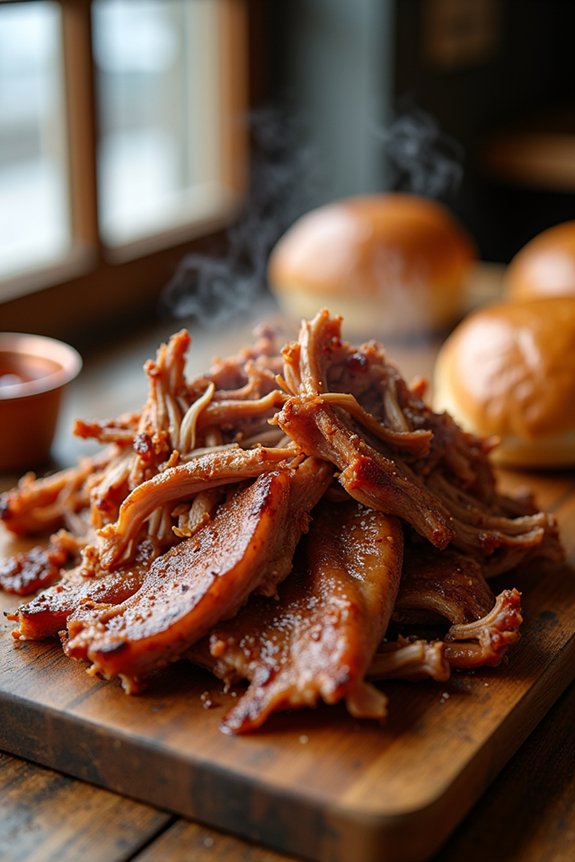
Why does half a pound of cooked pulled pork work so well as your starting point? I’ve found that this serving size hits the sweet spot between satisfying and practical. When you’re planning your event, working with a cooked portion—not raw weight—gives you the actual amount people eat. Half a pound per person creates a hearty appetite without excess waste, especially when sides join the meal. This baseline fits average groups perfectly. You’ll notice it works whether you’re feeding ten or fifty people. If your event leans casual or includes substantial sides like coleslaw and beans, this amount feels generous. For those prone to leftovers, you’re covered. Adjust upward to three-quarters pound if pulled pork is your solo star attraction. This flexible approach removes guesswork from event planning.
Cooked Weight vs. Raw Weight: Why the Package Number Lies
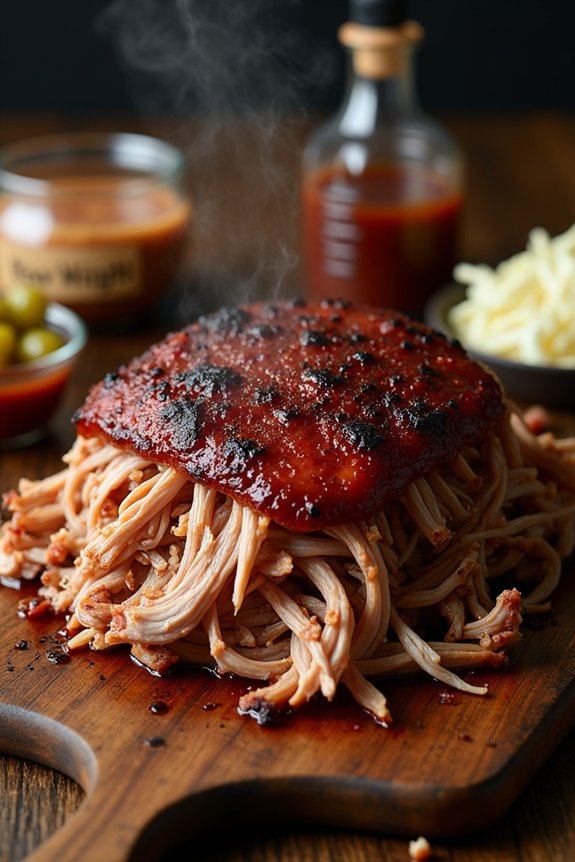
When you buy a 10-pound pork shoulder at the grocery store, you’re not actually getting 10 pounds of pulled pork—and that’s where most people’s math goes sideways. Fat renders out, moisture evaporates, and bones disappear during cooking, so that package typically yields only about 50% of its original weight, meaning your 10 pounds raw becomes roughly 5–6 pounds cooked. This gap between what’s on the label and what you’ll actually serve is exactly why planning backward from cooked servings (not raw pounds) keeps you from under-feeding your crowd.
The 50% Yield Reality
that 10-pound package of pork butt you’re buying won’t give you 10 pounds of pulled pork. When you cook it, fat renders out, moisture evaporates, and bones disappear. You’ll lose roughly 50% of the raw weight—that’s your pulled pork yield reality.
Start with 10 pounds raw? Expect 5 to 6 pounds cooked. This cooked yield percentage matters because it changes how much you need to purchase. For 60 guests at 6 ounces per person, you’d need 45 pounds cooked, meaning you’d buy around 90 pounds raw.
Don’t skip buffers for meat. Cooking method, cut size, and whether your pork butt’s bone-in or boneless all affect final yield. Plan accordingly, and you’ll serve everyone well.
Raw Versus Cooked Math
The package label shows 10 pounds, but here’s where the math gets real: you’re not actually getting 10 pounds of pulled pork to serve your guests. That raw weight shrinks dramatically during cooking. Understanding the conversion between raw weight and cooked weight is crucial for accurate serving portions.
Here’s the deal: expect roughly 50% pork yield from your raw purchase. A 10-pound raw butt produces about 5–6 pounds cooked. An 8-pounder yields roughly 4–5 pounds. Fat renders out, moisture evaporates, and bones disappear—hence the shrinkage.
When planning your menu, work backward from cooked weight targets. If you need 20 pounds of pulled pork, purchase 40 pounds raw. Bone-in versus boneless cuts matter too; bone-in yields slightly less usable meat after trimming. This conversion strategy ensures you’ll have enough without overshooting your budget.
When to Add Extra: Appetites, Side Dishes, and Competing Proteins
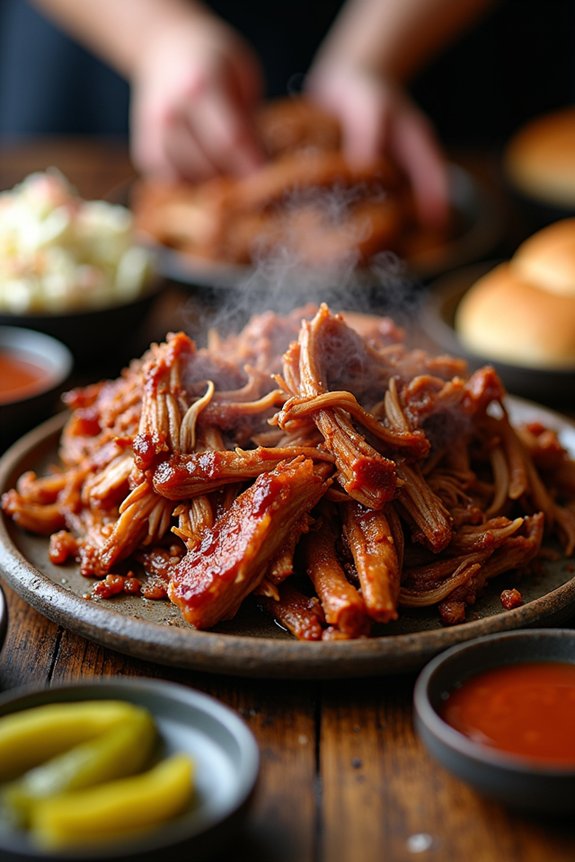
The amount you’ll need shifts dramatically based on three key factors: how hungry your guests are, what else you’re serving alongside the pork, and whether you’ve got competing proteins on the menu. If you’re dealing with heavy appetites and pork’s your star attraction with minimal sides, I’d bump up to that three-quarter pound per person—no skimping. But throw in substantial sides like mac and cheese or add another protein option, and you can comfortably dial it back to one-third or one-half pound per person without leaving anyone wanting.
Heavy Appetites And Portions
How much pulled pork should you actually buy when you’re feeding folks with serious appetites? I’d recommend planning for about 3/4 pound of cooked pulled pork per person when it’s your main event with minimal sides. That’s where heavy appetites shine without going overboard.
Here’s the math that matters: remember cooked yield typically drops to 50–60% of raw weight. So if you need 3/4 pound cooked, purchase roughly 1.25–1.5 pounds raw per person. This accounts for shrinkage during cooking.
Want insurance against hungry guests? Aim slightly higher than needed. Leftovers transform into sandwiches, tacos, or fried rice—nothing wasted. For your event’s servings per person calculation, this generous portion size keeps everyone satisfied and happy.
Side Dishes Reduce Meat Needs
Most folks don’t realize that what you serve alongside pulled pork actually changes how much meat you’ll need to buy. Here’s the thing: hearty side dishes absorb your attendees’ appetites, meaning you can reduce pork per person significantly.
Consider these filling options:
- Mac and cheese – this heavyweight reduces meat needs by 20-30%
- Potato salad – creamy and substantial, lowers portions per person
- Baked beans – filling and satisfying alongside your main protein
- Cornbread – adds bulk without competing with your pork
- Coleslaw – lighter but still helps stretch servings per person
When you’re planning servings per person, balance matters. Lighter sides mean guests eat more pork, while heavier sides distribute appetites across your menu. If you’re serving three robust side dishes, you’ll need less pork per person than if you’re offering just pickles and rolls.
Other Proteins Lower Requirements
When you’re serving multiple entrees alongside pulled pork, you’ll actually need less pork per person than if it’s flying solo as your main event. Here’s why: protein variety spreads the eating load around. If guests can choose between pulled pork, chicken, or brisket, they won’t all pile their plates with pork. Plan for about 1/2 pound per person when other proteins compete for attention. This approach helps with event planning because you’re not overcommitting resources. The sides impact matters too—hearty dishes like mac and cheese further reduce pork demands. Of course, appetite variation exists; some guests will skip alternatives entirely. That’s where leftovers come in handy as your safety net. You’ll feel confident knowing you’ve calculated properly without waste or shortage.
Size Your Portions: Sliders, Sandwiches, and Plated Meals
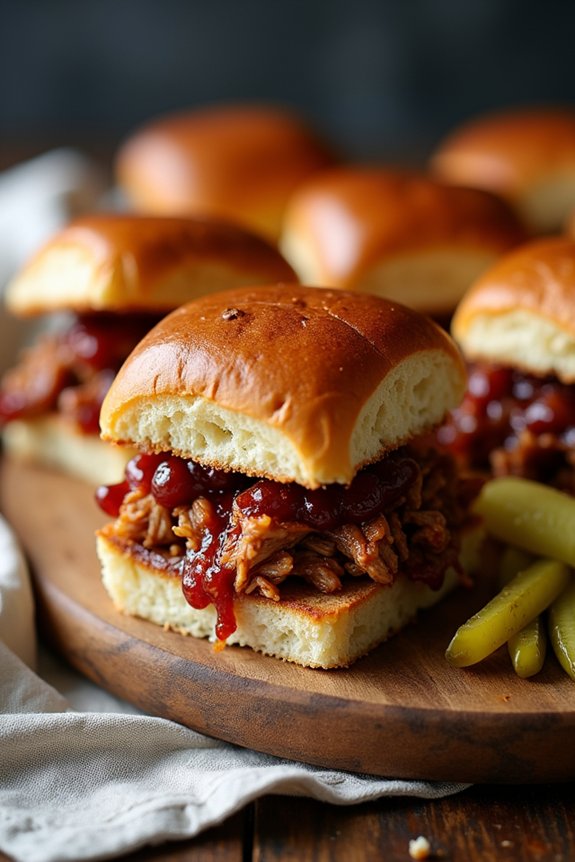
The amount of pulled pork you’ll need depends entirely on what you’re serving—and I’ve got you covered with the specifics. Let me break down pulled pork portions so you can nail your meal planning every time.
Here’s what works best for different dining situations:
- Sliders or appetizers: Plan 4 ounces cooked pork per person
- Sandwiches: Estimate 6 ounces cooked per person
- Plated meals with sides: Use 8 ounces cooked pork per person
- Generous portions: Go with 9.6 ounces cooked per person
- Serving guide: 1 pound cooked typically feeds 1.5 to 4 people
These measurements help you avoid running short or overbuying. When you’re sizing portions right, you’re setting yourself up for success. Your guests get satisfied, and you’re not stressed about quantities.
How Many Pulled Pork Sandwiches Per Pound
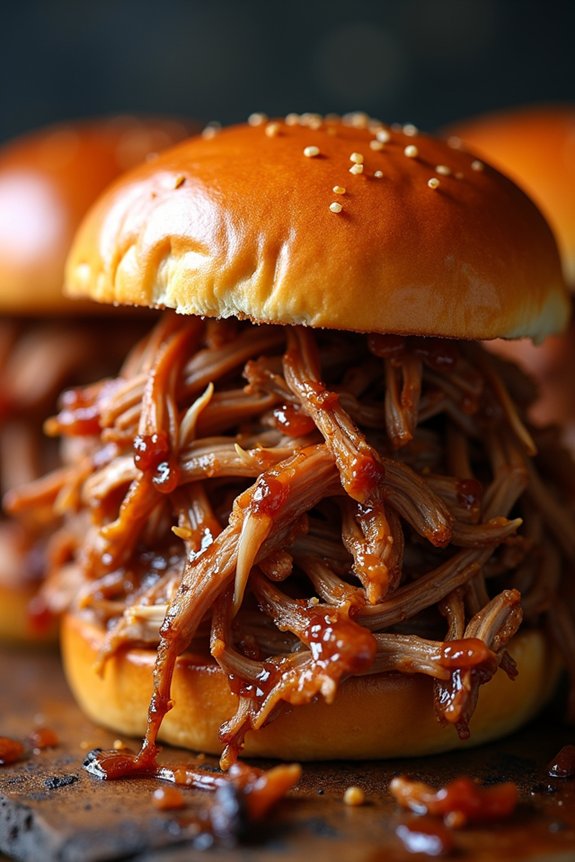
Now that you’ve figured out your portion sizes, let’s get specific about sandwiches—because knowing how many you can make from a given amount of cooked pork takes the guesswork right out of your planning.
I use a practical rule: you’ll get about 4 sandwiches per pound of cooked pulled pork. This assumes standard sandwich buns and reasonable portions that won’t leave your guests hungry. When you plan for guests, multiply your cooked pork yield by 4 to determine sandwich count.
| Cooked Pork (lbs) | Sandwiches | Guests (½ lb each) |
|---|---|---|
| 5 | 20 | 10 |
| 10 | 40 | 20 |
| 15 | 60 | 30 |
| 20 | 80 | 40 |
| 30 | 120 | 60 |
Where Most People Underestimate (and How to Fix It)
Why do so many hosts end up short on pulled pork? You’re probably underestimating how much your guests actually eat. Here’s where most people slip up:
- Forgetting that raw pork loses 40–50% weight during cooking, so a 10 lb butt yields only 5–6 lb cooked pork
- Treating pulled pork as a side when it’s truly your main dish, requiring 3/4 pound per person instead of 1/2
- Ignoring that teens and heavy eaters demolish larger portions than your average crowd
- Miscalculating cooked pork yield and portion planning together
- Failing to account for leftovers disappearing faster than expected
Fix this by calculating pounds per person based on your specific situation. If pulled pork’s your starring entree with minimal sides, bump up your serving size. Know your crowd’s appetite. You’ll nail the serving size and avoid that sinking feeling mid-event.
Cheat Sheet: Serving 20, 50, or 100 Guests
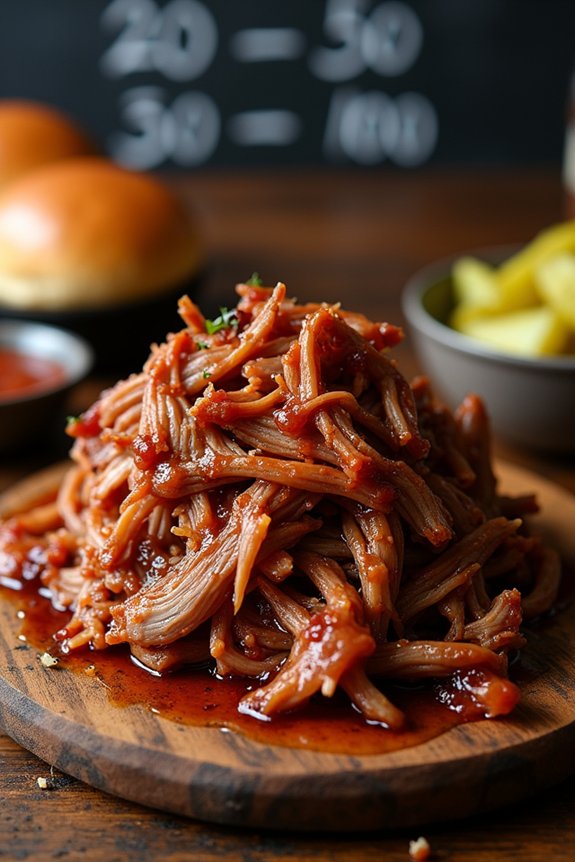
How do you scale pulled pork amounts for your actual guest list without panicking or wasting food? I’ve got you covered with straightforward numbers that account for raw-to-cooked yield and real appetites.
| Guest Count | Cooked Pulled Pork | Raw Pork Needed | Sandwiches Possible |
|---|---|---|---|
| 20 guests | 10–15 lbs | 20–25 lbs | 40–60 |
| 50 guests | 25–37 lbs | 50–62 lbs | 100–150 |
| 100 guests | 50–75 lbs | 100–125 lbs | 200–300 |
These estimates assume 1/2 pound per person with sides included. If pork’s your star with minimal sides, bump up to 3/4 pound per person instead.
Remember: pounds per person drives guest count planning. The raw-to-cooked yield typically drops 50–60%, so buy accordingly. Factor in leftovers and appetites—you’d rather have extra than run short.