

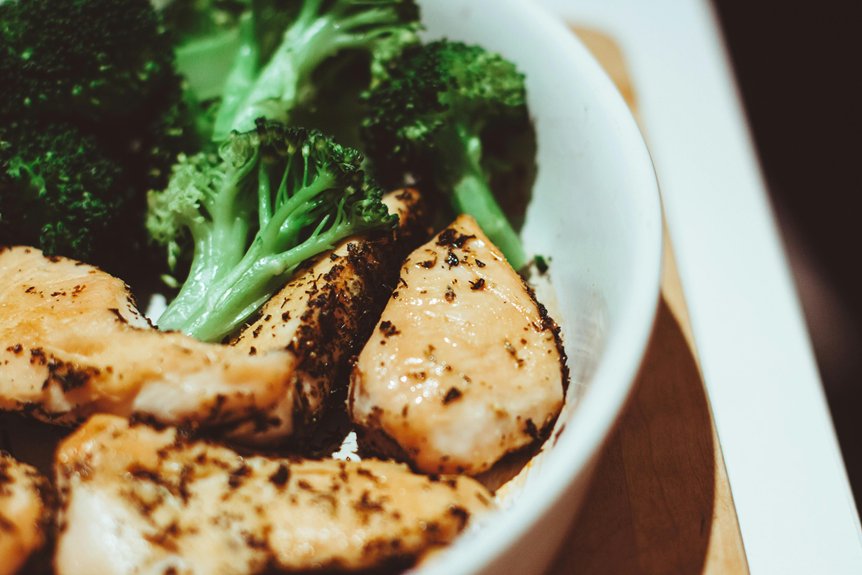
Regular fried chicken isn’t your healthiest choice—it’s loaded with trans fats and saturated fats that raise your LDL cholesterol and lower your HDL, boosting heart disease risk by up to 68% with frequent consumption. The deep-frying process creates oil-absorbing crusts that pack extra calories. Your best move? Swap it for air-fried chicken using rice flour coating, remove the skin, and pair it with steamed vegetables. There’s plenty more you can do to enjoy crispy chicken guilt-free.
Is Fried Chicken Actually Healthy?

How’s this for a tough truth: regular fried chicken isn’t doing your body any favors. When chicken gets dunked in hot oil, it absorbs massive amounts of fat—sometimes way more calories than grilled versions. Here’s where it gets tricky: many fried chicken joints use oils containing trans fats, which are basically your heart’s worst enemies. These trans fats raise your LDL cholesterol (the bad kind) while lowering your HDL cholesterol (the good kind). Research shows that eating fried chicken regularly links to serious heart problems, including heart disease and heart failure. I know fried chicken tastes amazing, but your cardiovascular system will thank you for making healthier swaps. Air-frying, grilling, or choosing skinless chicken parts gives you that satisfying taste without sabotaging your heart health.
Why Fried Chicken Absorbs So Much Oil

Ever wondered why fried chicken gets so greasy? When moisture leaves the chicken’s surface during cooking, it creates tiny craters that act like little oil sponges. Here’s where frying temperature matters: higher temperatures cook the outside faster, forming a crust that actually traps more oil inside. Lower temperatures reduce oil absorption but sacrifice that satisfying crunch we all crave. It’s a trade-off I’ve learned to navigate. The type of coating matters too. Batters heavy with rice flour produce drier, crispier crusts with less oil absorption than wheat flour-based batters. After frying, I always drain my chicken on multiple paper towel layers, which removes surface oil and cuts down on greasiness. This simple step makes a real difference in the final result.
Trans Fats and Saturated Fats: The Real Culprits in Fried Chicken
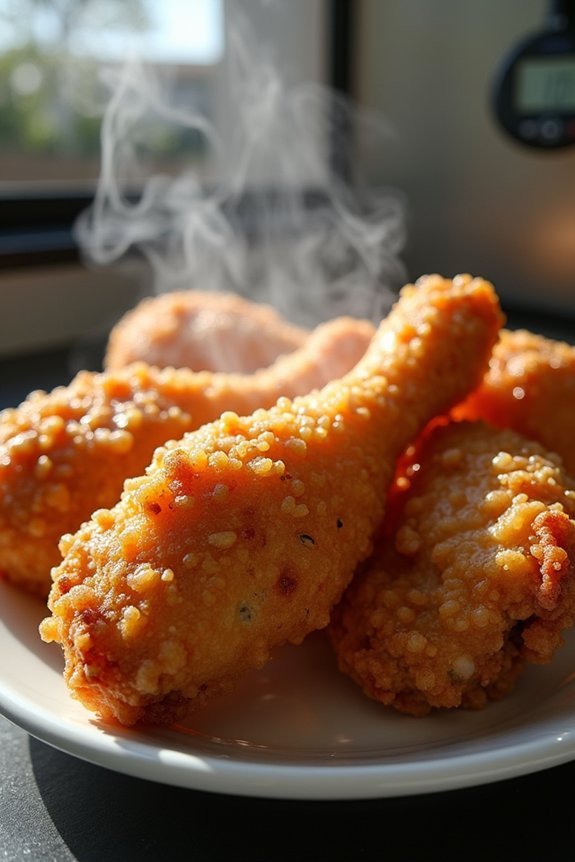
While draining that crispy chicken on paper towels definitely helps, it’s what’s already soaked into the meat that really matters for your health. When restaurants use partially hydrogenated oils for frying, they’re creating trans fats that wreak havoc on your cholesterol levels. Here’s what happens:
While draining fried chicken helps, what’s already soaked in matters most—trans fats from partially hydrogenated oils wreak havoc on your cholesterol.
- Trans fats raise your LDL (bad) cholesterol while lowering HDL (good) cholesterol
- Saturated fats from the chicken itself pile on additional cholesterol concerns
- This combination significantly increases your heart disease risk
I know it’s tempting to ignore this stuff, but here’s the thing: fried chicken typically contains both types of problematic fats simultaneously. That’s the real culprit behind why regular fried food consumption links directly to obesity, insulin resistance, and heart-related events. Even choosing healthier oils doesn’t solve the problem completely—the fat quantity remains dangerously high.
How Fried Chicken Increases Your Heart Disease Risk
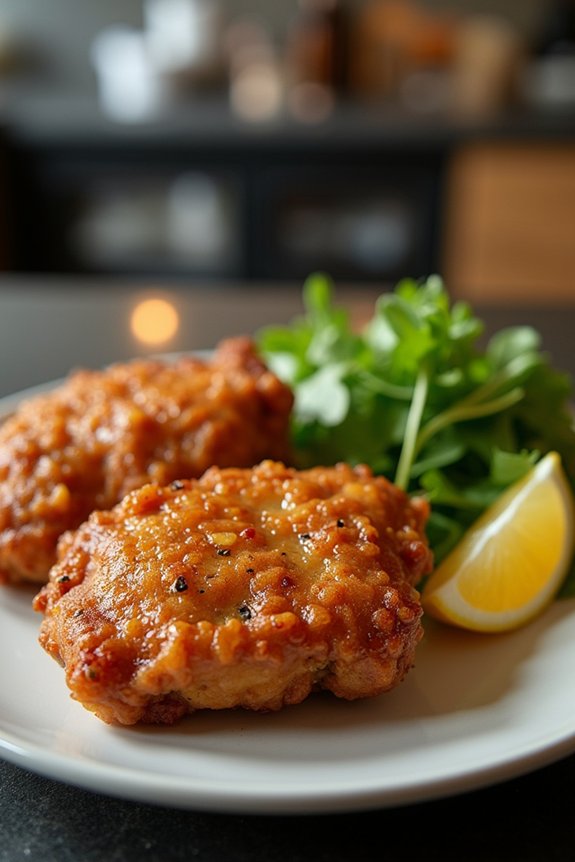
Why does eating fried chicken so often seem to damage your heart? When you consume fried chicken regularly, you’re introducing trans fats and saturated fats that directly harm your cardiovascular system. These fats elevate your LDL cholesterol—the “bad” kind—while reducing HDL cholesterol, your heart’s ally. Studies show the stakes are real: eating fried chicken just three times weekly increases heart disease risk by 18%. That number jumps to 68% for seven or more servings weekly. Women consuming one daily serving faced a 12% higher risk of heart-related death. Your arteries gradually narrow from cholesterol buildup, making heart attacks and heart failure more likely. Reducing fried food intake isn’t just smart—it’s your heart’s best investment.
Free Radicals and Cell Damage: What High Heat Does to Your Body
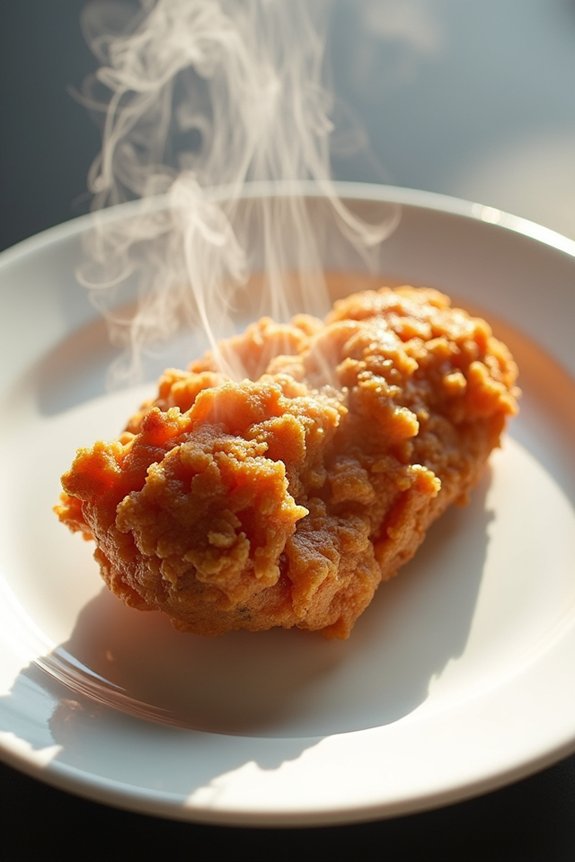
Beyond the cholesterol damage we’ve covered, there’s another reason fried chicken wreaks havoc on your body: the cooking method itself.
The cooking method itself—not just cholesterol—is why fried chicken wreaks havoc on your body.
When oil heats to frying temperatures—typically 350°F or higher—it triggers a chemical reaction that creates free radicals. These unstable molecules damage your cells and weaken your immune defenses. Here’s what happens:
- High heat breaks down oil molecules, releasing harmful compounds that penetrate your food
- Free radicals attack healthy cells, increasing oxidative stress throughout your body
- Your antioxidant defenses get overwhelmed, leaving you vulnerable to inflammation and disease
Think of free radicals as tiny wrecking balls inside your body. When you eat fried chicken regularly, you’re essentially inviting more of them in. This oxidative stress doesn’t just affect your heart—it impacts your gut health, immune system, and overall cellular function.
Fried Chicken and Weight Gain: The Obesity and Insulin Resistance Link
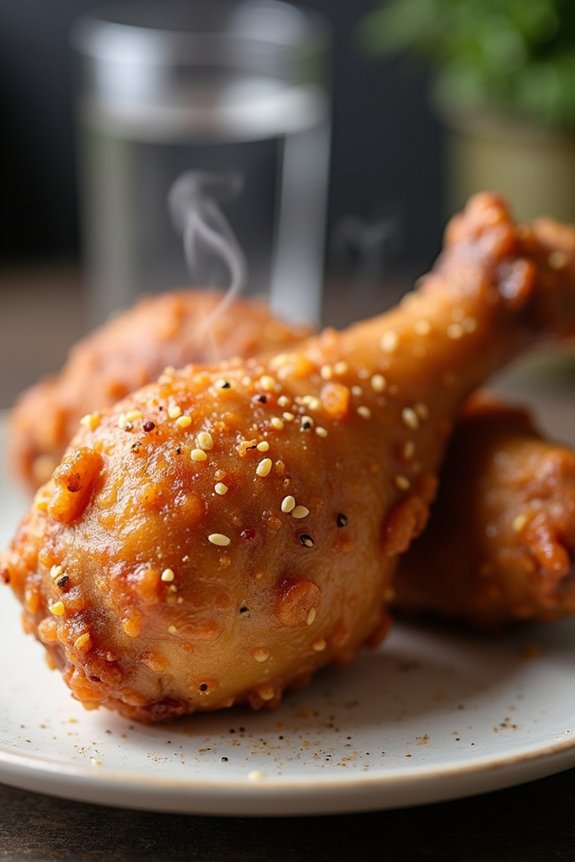
How much extra fat does your body absorb when you eat fried chicken instead of grilled? Plenty. When you bite into fried chicken, the meat soaks up oil during deep frying, loading your meal with extra calories that your body stores as fat. This excess fat consumption contributes directly to obesity and weight gain.
Here’s where it gets tricky: that absorbed oil also triggers insulin resistance. Your body struggles to regulate blood sugar properly, making weight management even harder. The deeper the fry and the hotter the oil, the more fat your chicken absorbs—it’s like a sponge in a deep-fryer.
Compared to grilled alternatives, fried chicken’s calorie and fat content make it a heavier choice for your health goals. Understanding this connection helps you make smarter decisions about what fuels your body.
How Often Can You Safely Eat Fried Chicken?

I’ll be honest with you: the research shows that how often you eat fried chicken matters just as much as whether you eat it at all. Studies reveal that eating fried foods even once weekly bumps up your heart disease risk by 18%, while consuming them four to six times weekly pushes that risk to around 25%—and hitting seven or more servings weekly can skyrocket your risk to a staggering 68%. The safest approach? Think of fried chicken as an occasional treat rather than a regular menu item, because even moderate weekly consumption adds up to real cardiovascular consequences over time.
Frequency And Mortality Risk
The research on fried chicken consumption and health outcomes is pretty straightforward: eating it regularly comes with real risks. I want to help you understand what the data actually shows about fried foods and mortality risk.
Here’s what matters most:
- Daily consumption raises your overall mortality risk by 13% and heart-related death risk by 12%
- Frequent eating (4–6 times weekly) increases heart disease risk to about 25%, jumping to 68% at seven-plus times weekly
- Moderate frequency (up to three times weekly) still carries an 18% increased heart disease risk
The pattern’s clear: the more often you eat fried chicken, the higher your mortality risk climbs. You’re not locked out of enjoying it—just limit frequency and explore healthier cooking methods instead.
Weekly Consumption Guidelines
Based on what the studies indicate, you’ll want to limit fried chicken to no more than three times per week if you’re concerned about your heart health. The research shows a clear pattern: eating fried chicken up to three times weekly links to an 18% higher heart disease risk. Push that to four or six times weekly, and the risk jumps to 25%. Once you hit seven or more times weekly? You’re looking at a 68% increased risk—that’s a dramatic leap.
Think of the three-times-weekly limit as your safe zone. It’s realistic and doesn’t require you to give up fried chicken entirely. You’re making a smart choice by staying within this boundary, protecting your cardiovascular system while still enjoying foods you love.
The Healthiest Ways to Cook Chicken Instead

How can you enjoy crispy, flavorful chicken without all the oil that comes with deep-frying? I’ve found several methods that deliver that satisfying crunch you’re craving while keeping your meal healthier.
- Air-fry or bake your chicken – These methods create a similar crust to deep-frying but use far fewer added fats, reducing calories while preserving protein.
- Choose leaner cuts and remove skin – I recommend using chicken breast instead of thigh and removing skin before cooking to lower total fat content.
- Pan-fry with olive oil at lower temperatures – This approach uses minimal oil compared to deep-frying, giving you that satisfying texture without excess grease.
Pair these cooking methods with fresh vegetables, salads, or yogurt-based dips. You’ll create balanced meals that taste great and fit your health goals perfectly.
Choose Chicken Breasts and Skip the Skin
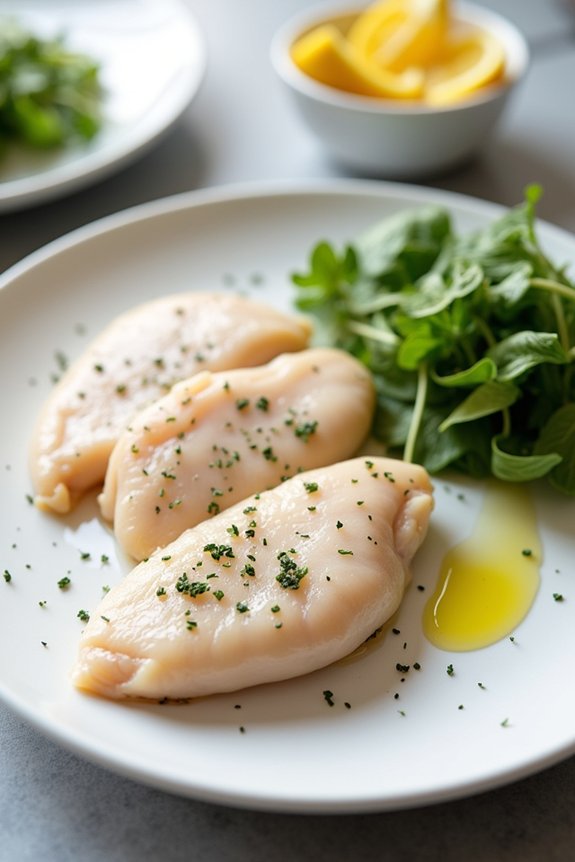
Want to cut down on fat while still enjoying fried chicken? I’d recommend choosing chicken breasts and removing the skin before cooking. Here’s why: breasts contain less total fat and fewer calories than thighs or wings. The skin itself holds most of the fat, so skipping it makes a real difference in your meal’s nutrition profile.
When you fry skinless breasts, you’re getting a protein-rich dish with substantially lower saturated fats. You’ll feel good about what you’re eating without sacrificing that satisfying fried chicken experience. For even better results, I suggest pairing your fried breasts with vegetables or a fresh salad instead of heavy sides. You could also use lighter breadings and lower-sodium coatings to keep things on track. This approach lets you enjoy fried chicken while supporting your health goals.
Air Frying: Get the Crunch Without the Oil
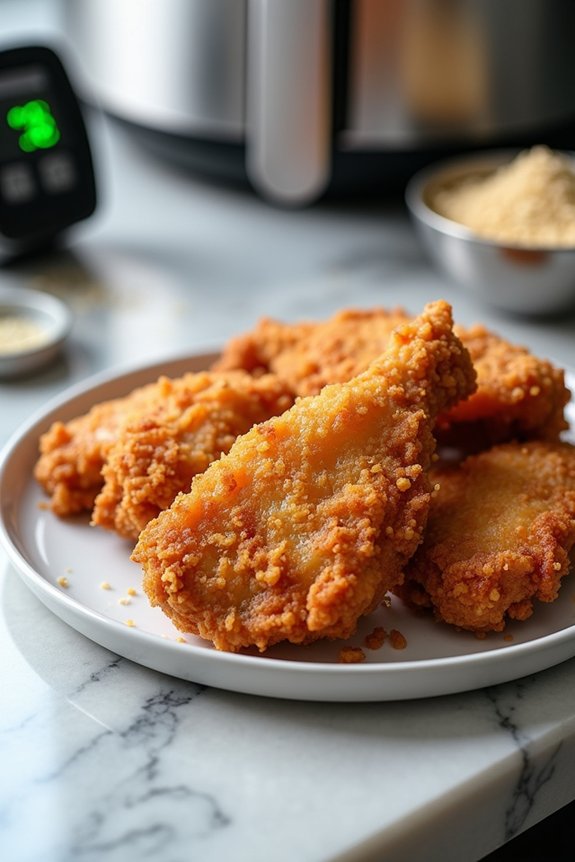
If you’re craving that satisfying crunch without all the oil, air frying is a breakthrough. I’ve found that air fryers circulate hot air to crisp coatings while using up to 90% less oil than traditional deep-frying. You’ll get that golden exterior you love without the guilt.
Here’s how to master it:
- Set the temperature to 180–200°C (350–400°F) and cook for 8–15 minutes depending on piece size
- Apply a light oil spray to enhance browning and texture—you’re not soaking anything here
- Use rice flour or gluten-free starches in your coating to boost crispiness naturally
The result? Practically no oil absorption. You’re joining countless people who’ve ditched deep-frying without sacrificing taste or texture.
Lighter Batters That Reduce Oil Absorption
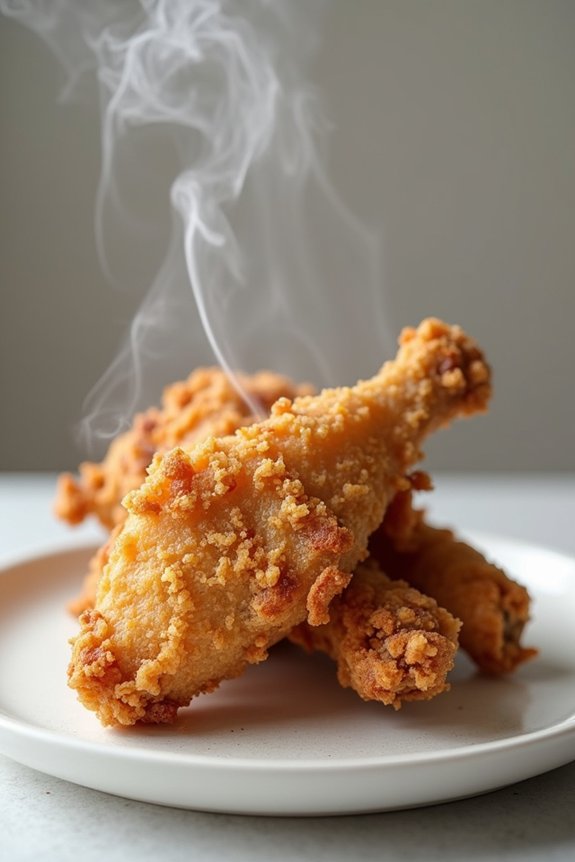
If you’re looking to enjoy fried chicken without all the excess oil, I’ll show you how batter composition makes a real difference—and it’s simpler than you’d think. Rice flour and cornstarch-based batters absorb considerably less oil than traditional wheat flour because they create a faster-drying, crispier crust that seals the chicken before it can soak up too much fat. By swapping heavy gluten-rich batters for these lighter alternatives, you’ll get that satisfying crunch while keeping your finished chicken noticeably less greasy.
Rice Flour Batter Benefits
Ever wonder why some fried chicken feels greasy while other pieces stay crispy and light? The secret’s in the batter. I’ve found that rice flour creates a real difference in how much oil your chicken absorbs during frying.
Rice flour batters work differently than traditional wheat-based ones. Here’s why they’re game-changers:
- Lower oil uptake – Rice flour reduces moisture absorption, meaning less grease soaks into the coating
- Crispier exterior – The batter creates surface crunch without those oily pockets you’d normally find
- Lighter finish – You’ll notice the chicken feels less heavy and tastes fresher
Korean fried chicken makers have known this for years. By shifting your batter toward rice flour or starches, you’re actively lowering the overall fat content. The result? Fried chicken that satisfies your cravings without leaving you feeling weighed down.
Gluten’s Role In Absorption
Now that you understand how rice flour outperforms wheat flour, here’s what’s actually happening inside the batter: gluten is the culprit behind greasy coatings.
Gluten creates strong protein networks that trap moisture and oil like tiny sponges. When you fry chicken with traditional wheat-based batters, that gluten matrix absorbs considerably more fat than you’d want. I’m talking about the difference between crispy and, well, let’s say “swimming in grease.”
| Batter Type | Gluten Content | Oil Absorption | Crispness | Exterior Feel |
|---|---|---|---|---|
| Wheat flour | High | High | Moderate | Greasy |
| Rice flour | Low | Low | High | Dry |
| Cornstarch blend | Minimal | Very low | High | Very crispy |
| All-purpose flour | High | High | Moderate | Heavy |
| Potato starch | None | Low | High | Light |
Batter Composition And Crispness
What’s the secret to that shatteringly crisp exterior you’re craving? It’s all about batter composition. I’ve found that choosing the right flour makes a real difference in how your fried chicken turns out.
Here’s what I’ve learned about reducing oil absorption:
- Rice flour–heavy batters create drier, crispier exteriors with markedly lower oil uptake than wheat-based options
- Gluten-free flours and starches resist moisture absorption, producing less greasy surfaces that feel lighter
- Weak gluten matrices prevent excess fat from soaking in, keeping your chicken from feeling oil-logged
When you skip strong gluten networks, you’re practically giving oil fewer places to settle. The batter stays drier, creating less surface porosity where oil would normally accumulate. Korean fried chicken makers figured this out long ago—they deliberately use rice flour to achieve that signature crispy, less-greasy bite you’re actually after.
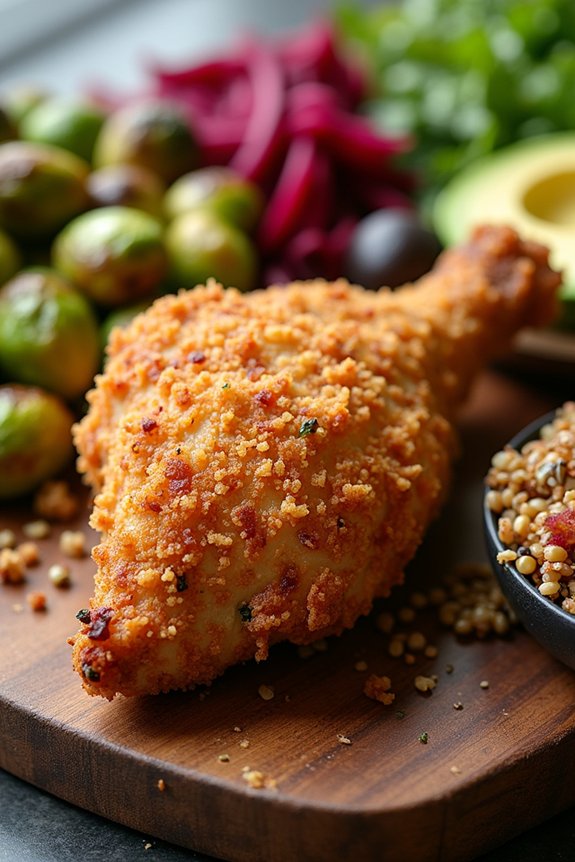
Pair Fried Chicken With Nutrient-Dense Sides
If you’re going to enjoy fried chicken, you’ve got a real opportunity to make the whole meal work harder for your body by choosing what goes on the plate alongside it. I recommend pairing it with steamed broccoli, quinoa, or mixed bean salad to boost protein variety and manage calorie risk. Adding colorful vegetables—think bell peppers or carrots—increases your antioxidant intake, which helps counteract oxidative stress from frying. A yogurt-based dip or olive-oil-drizzled greens supplies healthy fats and probiotics supporting gut health. Skip the high-sodium, high-sugar sides; instead, serve water or unsweetened beverages and control portions. These strategic choices transform fried chicken from a nutritional concern into a balanced meal packed with fiber, vitamins, and minerals your body actually needs.